Launch Falcon 9 / Starlink Group 17-33
Launch window open 09:05-13:05 PST (07:05-11:05 HT) for 25 satellites; first stage Booster B1088 is expected to land for 13th time on OCISLY ASDS barge in Pacific Ocean.
Launch window open 09:05-13:05 PST (07:05-11:05 HT) for 25 satellites; first stage Booster B1088 is expected to land for 13th time on OCISLY ASDS barge in Pacific Ocean.
Launch window 04:41-08:41 EST (23:41 Feb 6 - 03:41 Feb 7 HT) for 29 satellites; first stage Booster B1077 is expected to make 26th landing on JRTI ASDS barge in the Atlantic Ocean.
Launch window 06:00-10:00 PST (04:00-08:00 HT) for 25 satellites; first stage Booster B1081 expected to land for 22nd time on OCISLY ASDS barge in Pacific Ocean.
2 identical satellites, GSSAP-7 and GSSAP-8 (Geosynchronous Space Situational Awareness Program) to near-geosynchronous orbit ~36,000km above Earth equator, contributing to timely and accurate orbital predictions, further enabling space flight safety including satellite collision avoidance. Vulcan Centaur VC4S is a 2-stage-to-orbit heavy-lift rocket, developed to replace ULA Atlas V and ULA […]
To carry 32 satellites to ~600 km altitude LEO for broadband internet, part of projected 3,276 satellites
Launching 13:56 UTC+5 (22:56 on February 11 HT) for meteorological satellites to capture images of clouds and underlying Earth surface, and to collect and measure heliogeophysical and hydrometeorological data; launching on a 4-stage heavy-lift rocket
Launching NET 05:15 EST (00:15 HT); SpaceX Crew-12 is the 12th crewed operational flight of a Crew Dragon spacecraft to the International Space Station as part of NASA Commercial Crew Program; includes NASA Astronauts Commander Jessica Meir and Pilot Jack Hathaway, and Flight Engineers Sophie Adenot from France and Andrei […]
Launch window midnight - 04:00 PST (22:00 Feb 13 - 04:00 Feb 14 HT) for 25 satellites; first-stage Booster B1100 expected to make 3rd landing on OCISLY ASDS in the Pacific Ocean
Launch window 02:05-06:05 EST (21:05 Feb 15 - 01:05 Feb 16 HT) for 29 satellites. Booster B1077 expected to make 26th landing on JRTI ASDS barge in the Atlantic Ocean.
Launch window 17:00-21:00 EST (12:00-16:00 HT) for 29 satellites. Booster B1092, after this 10th reuse, expected land on JRTI ASDS in the Atlantic Ocean.
Launch window 12:00-16:00 PST for 25 satellites; 1st stage Booster B1063 expected to land after this 31st flight on ASDS OCISLY.
Launch window 12:00-16:00 PST for 25 satellites; 1st stage Booster B1093 expected to make landing on ASDS OCISLY after this 11th flight.
Launch window 21:04 Feb 21 - 01:04 Feb 22 EST (16:04-20:04 HT) for 29 satellites; newly commissioned Landing Zone 40, where the 1st stage booster for Dragon Crew-12 landed on February 13, 2026, could have the landing of 1st stage Booster B1067 after this 33rd flight, although it has been […]
Launch window open 15:00-19:45 EST (10:00-14:25 HT) for scramjet-powered hypersonic vehicle developed by Hypersonix of Australia launching on 2-stage orbital expendable orbital launch vehicle with electric-pump-fed engines.
Launch window 16:50-20:58 PST (14:50-18:58 HST) for test flight of 2-stage orbital expendable launch vehicle by Austin TX, USA company Firefly Aerospace.
Launch window 11:00-11:20 UTC+9 (16:00-16:20 Mar 3 HT) for 4 satellites to Sun-Synchronous Orbit, TATARA-1R, SC-Sat1a, HErO and AETS-1, launching on a 4-stage all-solid-fuel small-satellite vehicle Space One is a private launch service founded in 2018 by Canon Electronics, IHI Aerospace, Shimizu (construction company) and Development Bank of Japan (supported […]
Launch window 01:58-05:58 EST (20:58 Mar 3 - 00:58 Mar 4 HST) for 29 internet satellites; 1st stage Booster B1080 expected to land on ASDS ASOG after this flight, its 25th re-use.
Launch window 13:00-17:00 PST (11:00-15:00 HST) for 25 internet satellites; booster B1097 expected to land after this 7th re-use on ASDS barge OCISLY.
Launch window 02:59-06:58 PST (00:59-04:58 HST) for 25 internet satellites; after this 7th re-use, booster B1097 expected to land on ASDS barge OCISLY in the Pacific Ocean.
1st test flight of vertical-takeoff-and-vertical-landing RV-X small rocket (6.76 m tall, 1.83 m dia., 3,138 kg); 2nd test flight planned for March 14. RV-X is the first of two flight experiments planned by JAXA in developing a reusable 1st stage for a next-generation launch vehicle. A 2nd vehicle planned to […]
Launch window EDT 23:14 Mar 9 - 01:43 Mar 10 (17:14-19:43 Mar 9 HST); going to GTO, EchoStar 25 is a direct broadcast satellite for the DISH network, built on the Maxar 1300 series platform to deliver content across North America via a high-power, multi-spot beam payload.
Launch window open 17:50-19:50 PDT (14:50-16:50 HST) for test flight of multiple Block II systems including avionics and thermals although the last flight in the current configuration, ahead of the upgrade on Flight 8. Follows April 2025 launch failure.
Launch window 03:58-07:58 PDT (00:58-04:58 HST) for 25 internet satellites; after this 32nd re-use, booster B1071 expected to land on ASDS barge OCISLY in the Pacific Ocean.
Launch window 06:00-10:00 EDT (00:00-04:00 HST) for 29 internet satellites; after this 6th re-use, booster B1095 expected to land on ASDS barge JRTI.
Launch window 19:37-23:37 PDT (16:37-20:37 HST) for 25 internet satellites; after this 14th re-use, booster B1088 expected to land on ASDS barge OCISLY in the Pacific Ocean.
Launch window 07:11-11:11 EDT (01:11-05:11 HST) for 29 internet satellites; after this 11th re-use booster B1090 expected to land on ASDS barge ASOG in the Atlantic Ocean.
53-meter launcher to carry prototype cargo spacecraft designed for Tiangong Space Station resupply. Kinetica-2 capable of delivering up to 12,000 kg to LEO.
Anticipated return to Launch Complex 39B of Artemis II stack -- SLS and Orion capsule -- ahead of anticipated April 1 launch for Moon flyby with 4 Astronauts. Rollout takes 8 to 12 hours. See NASA Artemis blog at https://www.nasa.gov/blogs/artemis/ NASA YouTube channel is at https://www.youtube.com/watch?v=WMBJ-UOb6zU
16:59 UTC+5 (01:59 HST) to launch resupply mission to the International Space Station that was delayed from December 2025 after November launchpad damage at spaceport operated by Russia within Kazakhstan.
To include 10 ESA PNT satellites to work with Galileo and EGNOS constellations, 2 ESA demo satellites for Celeste planned constellation, and 2 Thales Alenia Space / GMV "Pathfinder A" satellites.
Launch window 03:20-04:17 PDT | 00:20-01:17 HST | 10:20-11:17 UTC for dozens of small microsatellites and nanosatellites for commercial and government customers to sun-synchronous orbit
Launch window 19:00-21:14 China Time | 01:00-03:14 HST | 11:00-13:14 UTC by Space Pioneer of Beijing, a private launch company founded in 2015 by Kang Yonglai. Tianlong-2 can take 4,000 kg to LEO and 3,000 kg to SSO via 3 stages powered by RP-1 and LOX.
Launch window 18:24-20:24 EDT | 22:24 UTC | 12:24 HST for crew of 4 in Orion spacecraft on around-the-Moon flight to last 9-10 days; 3 USA and 1 Canada Astronaut: Commander Reid Wiseman, Pilot Victor Glover, Mission Specialists Christina Koch and Jeremy Hansen; mission will also deploy numerous CubeSats; launch […]
2nd orbital launch, attempt for booster recovery, by commercial launch firm Landspace of China; follows successful 1st orbital launch of Zhuque-3 stainless steel methalox rocket
Launch scheduled for 16:00 Kazakhstan Time | 01:00 HST | 11:00 UTC for new launch vehicle, Soyuz-5, called "Irtysh", that can take 34,000 kg to LEO.
Launch window 21:30-21:47 China Time | 03:30-03:47 HST for 9th launch from Commercial LC-1, 59th launch from Wenchang. Long March 8 can take up to 5000 kg to a 700 km altitude Sun-synchronous orbit (SSO).
Launch window 07:30-12:30 PDT | 01:30-06:30 HST for an ESPA class satellite based on the Aegis Aerospace M-1 satellite bus used on the STPSat-4 mission for hosting research and technology demonstration payloads.
Set for 08:51 EDT (02:51 HST), 24th flight of Orbital ATK uncrewed supply craft and 23rd to ISS under Commercial Resupply Services contract with NASA; booster will attempt return to new Landing Zone 40 (LZ-40).
Launch window 03:35-03:46 China Time April 9 | 09:35-09:46 HST April 8 for the 23rd launch from Launch Complex 9A, and 153rd launch from Taiyuan Satellite Launch Center. The Long March 6A has solid rocket boosters.
Launch window 22:39 April 9 - 02:39 April 10 PDT | 16:39-20:39 April 9 HST for 25 internet satellites; Booster B1063 to land on ASDS OCISLY after this 32nd flight.
Launch window 02:57 - 06:57 EDT | 20:57 Apr 11 - 00:57 Apr 12 HST for 29 internet satellites; Booster 1080 expected to land on ASDS JRTI after this 26th flight.
Launch window 02:13-06:13 EDT | 20:13 Apr 13 - 00:13 Apr 14 HST, for 29 internet satellites. Booster B1080 planned to land on ASDS JRTI after this 26th launch.
Launch window 19:00-23:00 PDT | 16:00-20:00 HST, for 25 internet satellites. Booster B1082 expected to land on ASDS OCISLY after this 21st flight.
Launch window 12:10-12:24 China Time | 18:10-18:24 Apr 16 HST of 2-stage rocket used for taking satellites to LEO and SSO. This would be the 97th successful launch of a Long March 2D, out of 98 attempts.
Launch window 07:00-11:00 PDT | 04:00-08:00 HST for 25 internet satellites. Booster B1097 expected to land on ASDS OCISLY after this 8th flight.
Launch window 06:45-09:43 EDT | 00:45-03:43 HST for one AST Space Mobile satellite for cellular broadband, which features ~223-square-meter communications array making it the largest commercial deployment in LEO. Booster GS1-SN002 expected to land on ASDS Jacklyn after this 2nd flight.
Launch window open 02:48-04:05 EST | HST is 20:48-22:05 on Apr 19; 10th of 10 navigation satellites to MEO; 1st stage booster planned to land on autonomous spaceport drone ship (ASDS) in Atlantic Ocean.
Top four-fifths of the Space Launch System (SLS) core stage will be moved from NASA Michoud Assembly Facility to load on a barge for delivery to Kennedy Space Center. Media are invited. Speakers will be featured. The SLS is already begun in the Vehicle Assembly Building with the engine section […]
Launch window open 13:00-17:00 PDT | 16:00-20:00 HST for 25 internet satellites. Booster B1100 planned to land on ASDS OCISLY after this 5th flight. This is the booster with special "100" painted logo.
Launch window 20:00 Apr 21 - 01:00 Apr 22 EDT | 14:00-19:00 HST for sub-orbital Hypersonic Accelerator Suborbital Test Electron (HASTE) test program of Rocket Lab, using its electric-pump-fed engines.
Launch set for 15:09 New Zealand Standard Time | 03:00 UTC | 17:09 Apr 22 HST, for sending 8 separate spacecraft to SSO, including ones for education, for ocean monitoring, an ultra-small multispectral camera, and an antenna packed origami-style for unfurling to 25 times the packed size. The 8 satellites […]
Launch window 14:30-14:51 China Time | 06:30-06:51 UTC | HST is 20:30-20:51 on April 23. Chang Zhen 2D (CZ-2D) is expected to make its 103rd flight, powered by hypergolic fuels (toxic), typically to geostationary transfer orbit. This will be the 3rd flight of 2026 for CZ-2D.
Launch window 07:00-11:00 PDT | 04:00-08:00 HST for 25 internet satellites to LEO. First stage B1088 planned to land on ASDS OCISLY after this 15th flight.
First test after ULA Vulcan rocket launching from Florida on February 12, 2026, took a spacecraft to GSO but suffered an anomaly in one of the four solid rocket motors. NASA announcement week of March 11, 2026, said United Launch Alliance (ULA) Centaur V upper stage will be used for […]
Resupply mission to ISS set for 03:21 Baikonur Time UTC+5 | 22:21 UTC Apr 25| 12:21 HST Apr 25; with ~7,280 kg of cargo; after ~2 days, will rendezvous with ISS.
Launch window 20:52-21:21 EDT | 14:52-15:21 HST | UTC April 28 00:52-01:21, for 29 satellites to Low Earth Orbit for Amazon Leo internet system. Constellation planned to be composed of ~7,236 satellites. ULA is a joint venture of Lockheed Martin Space and Boeing Defense, Space & Security.
Launch window 10:21-11:46 EDT | 04:21-05:46 HST | 14:21-15:46 UTC for first Falcon Heavy launch since 2024, sending to Geostationary Transfer Orbit 3 Ka-band satellites offering 1-terabit-per-second capability. Side Booster B1072 expected to land again, after this 2nd flight, on Landing Zone 40 (LZ-40), triggering a sonic boom. Falcon Heavy […]
Launch window 05:51-06:39 French Guiana Time | 08:51-09:39 UTC | HST April 17 22:51-23:39, to carry 32 satellites to Low Earth Orbit for broadband internet, part of projected 7,236 satellites.
Flight hazard notices were filed for a launch between April 28 and 30. This first Long March 10B vehicle has had a successful wet dress rehearsal and was rolled back to integration facilities, likely to integrate the payload. After launch, China Academy of Launch Vehicle Technology will attempt recovery of […]
Launch window 19:00-23:00 PDT | 16:00-20:00 HST for 25 internet satellites to LEO. First stage booster B1071 expected to land on ASDS barge OCISLY in the Pacific Ocean after this 33rd use.
Launch window 13:33-17:33 PDT | 07:33-11:33 HST for 29 internet satellites to LEO. First stage B1069 expected to land on ASDS ASOG after this 31st flight.
Launch window 23:59 May 2 - 00:39 May 3 PDT | 01:59-02:39 CDT | 20:59-21:39 HST for ride-share of multiple satellites including first spacecraft of Wichita State University, Solar Neutrino Astro-Particle PhYsics (SNAPPY) 3U Cubesat, a test and background-measurement detector being put in polar orbit to explore the fusion core […]
Launch window 19:00-23:00 PDT | 16:00-20:00 HST for 24 internet satellites. Core booster B1081 expected to land on ASDS OCISLY after this 24th use. Its first use took Dragon Crew-7 to the ISS. OCISLY first use was to land the 1st stage for the flight of Dragon Crew-8.
Sport Launch, with FAA waiver to 7,000' AGL, 07:00-14:00 PDT, Lucerne Dry Lake Launch Site (34.496343, -116.958720), Cambria Road https://rocstock.org/lucerne-dry-lake-launch-site/. See organization knowledge base for instructions.
Launch window 07:00-11:00 PDT | 04:00-08:00 HST for 24 internet satellites. Booster B1103 expected to land on ASDS OCISLY after this 2nd flight.
Launch window 15:28-19:28 PDT | 12:28-16:28 HST for 13th batch of satellites built by Northrop Grumman and SpaceX for the National Reconnaissance Office.
Launch time set for 19:16 EDT | 13:16 HST | 23:16 UTC for 34th Commercial Resupply Services mission to the International Space Station under the Second contract between SpaceX and NASA. First stage booster is expected to return to launch site, Landing Zone 40, after a sonic boom. Courtesy of […]
Launch window 19:55-20:09 China Time | 01:55-02:09 HST for the 24th launch from Launch Complex 9A, and 154th launch from Taiyuan Satellite Launch Center. The Long March 6A has solid rocket boosters.
Launch window 07:00-11:00 PDT | 04:00-08:00 HST for 24 internet satellites. Booster B1097 expected to land on ASDS OCISLY after this 9th flight. These 24 will add to the 10,000+ Starlink satellites currently operational.
Launch window 08:50-09:04 EDT | 02:50-03:04 HST for mobile communications network satellites to LEO, replacing MDA existing ones with new ones built by Globalstar. Rocket Lab constructed the satellite buses and launch dispensers.
Set for 00:52 French Guiana Time UTC-3 | 17:52 HST May 18 to send astrophysics satellite to elliptical orbit. Joint mission between the European Space Agency and the Chinese Academy of Sciences to investigate the interaction between Earth’s protective shield – the magnetosphere – and the supersonic solar wind.
South Korea's solid‑fuel space launch vehicle, commonly abbreviated GYŪB (Korean: Goche Yeonlyo Uju Balsache or 고체연료 우주발사체), is an orbital booster developed by the state-run Agency for Defense Development (ADD). It is based on solid propellant stages, with a liquid-fuel post‑boost stage (PBS), designed to deploy small satellites—particularly synthetic aperture […]
Launch window 08:45-12:45 India Time | HST 17:15-21:15 May 20 for Earth-observing satellite to geostationary orbit above India. Expected to be 5th successful launch of GSLV Mk II.
29 satellites for broadband internet going to LEO on this launch, part of planned 7,000+ to be in 98 orbital planes in three altitudes, 590 / 610 / 630 kilometers. Atlas V rocket first stage uses RD-180 engine built by Russia that burns kerosene / liquid oxygen, and RL10 engine […]
Launch set for 21:30 New Zealand Daylight Time | HST 23:30 May 21 for Earth-imaging synthetic aperture radar satellite built by Synspective of Japan.
Launch window open 17:30-19:00 CDT | 12:30-14:00 HST | 22:30 UTC for 12th flight overall of 2-stage Starship vehicle and 1st of bigger / more-powerful Version 3 / V3, with higher thrust utilizing new Raptor 3 engines. Launch date subject to final final vehicle testing, site readiness (including the new […]
Another batch of 24 satellites to launch as part of the Starlink space-based Internet communication mega-constellation.
Launch scheduled for 23:08 Beijing Time | 15:08 UTC | 05:08 HST of 3 Taikonauts to Tiangong Space Station - one member to stay aboard Tiangong for one year, allowing for Pakistani Astronaut visit around October / November.
Launch window open 07:41-11:41 EDT | 11:41-15:41 UTC | 01:41-05:41 HST for 29 internet satellites; 1st-stage booster B1078 expected to land on ASDS ASOG after this 28th use.
Launch window open 07:00-11:00 PDT | 14:00-18:00 UTC | 04:00-08:00 HST for 24 internet satellites; 1st-stage booster B1082 expected to land on ASDS OCISLY after this 22nd use.
Launch window open 07:52-11:52 EDT | 11:52-15:52 UTC | 01:52-05:52 HST for 29 internet satellites; 1st-stage booster B1085 expected to land on ASDS ASOG after this 16th use.
Launch window open 19:33-20:02 EDT | 13:33-14:02 HST | 23:33 May 29 - 00:02 May 30 UTC for 29 communications satellites to LEO for broadband internet service.
Launch window 07:00-11:00 PDT | 14:00-18:00 UTC | 04:00-08:00 HST for 24 internet satellites; 1st stage booster B1088 is expected to return and land on ASDS OCISLY after this 16th flight.
Launch window 04:02-08:02 EDT | 08:02-12:02 UTC | HST 22:02 June 2 - 02:02 June 3 for 29 internet satellites; 1st stage reusable booster B1090 expected to land on ASDS ASOG after this 12th flight.
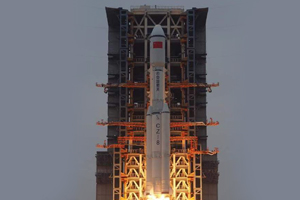
Unknown payload to launch on China's Long March 8 from the commercial pad at Wenchang.
Launch window open 14:00-18:00 Korea Time | 05:00-09:00 UTC | HST is 19:00-23:00 on June 7; to LEO for first orbital full-version launch after 2 sub-orbital tests.
Launch window 06:07-10:07 EDT | 10:07-14:07 UTC | 00:07-04:07 HST for 29 internet satellites; 1st stage booster B1067 expected to land on ASDS ASOG in the Atlantic Ocean after this 35th use.
Launch set for 16:20 Beijing Time | 23:20 UTC | HST 16:20 June 8.
Launch window 09:53-11:52 Japan Standard Time | 00:53-02:52 UTC | HST 14:53-16:52 June 9, although Launch Reserve Period goes through June 30. On board are a dummy main payload called Vehicle Evaluation Payload 5 or VEP-5, along with several small satellites: PETREL, STARS-X, BRO-22, VERTECS, and HORN-L/R space debris mitigation […]
Launch window 14:00-18:00 Beijing Time | 06:00-10:00 UTC | HST 20:00 June 9 - 00:00 June 10 for liquid-fueled rocket able to take ~25,000 kg to LEO or ~14,000 kg to GTO.
Launch window open 07:00-11:00 PDT | 14:00-18:00 UTC | 04:00-08:00 HST for 24 internet satellites; 1st stage booster B1071 expected to land on ASDS OCISLY in the Pacific Ocean after this 34th use.
Launch set for 00:00 EDT | 04:00 UTC | HST 18:00 June 10 for Hypersonic Accelerator Suborbital Test Electron (HASTE) program.
Launch window 08:27-12:27 EDT | 12:27-16:27 UTC | 02:27-06:27 HST for 29 internet satellites; 1st stage booster B1080 expected to land on ASDS ASOG in the Atlantic Ocean after this 27th use.
Launch window 07:00-11:00 PDT | 14:00-18:00 UTC | 04:00-08:00 HST|for 24 internet satellites; 1st stage booster B1093 expected to land on ASDS OCISLY in the Pacific Ocean after this 14th use.
08:53 local time; launch of broadband internet Amazon Leo, formerly known as Project Kuiper, satellites to Low Earth Orbit.
Launch 19:54-20:29 PDT of satellites for a reconnaissance satellite constellation built by SpaceX and Northrop Grumman for the National Reconnaissance Office (NRO) to provide imaging and other reconnaissance capabilities.
08:40 local time; launch of Synthetic aperture radar satellite for Japanese Earth imaging company Synspective to Sun-Synchronous Orbit.
Demonstration mission for SpaceX’s Project Starfall, which aims to mass-produce reentry capsules designed to autonomously transport valuable customer experiments and other payloads safely back from space to Earth, including for in-orbit manufacturing. The disk-shaped vehicle acts as an autonomous commercial platform for producing pharmaceuticals, semiconductors, and advanced crystals in microgravity. […]
Another batch of 24 Starlink satellites to launch to LEO for SpaceX's space-based Internet communication system.
Commercial communication satellites to launch to LEO for Shanghai Spacesail Technologies from Commercial LC-1 pad.
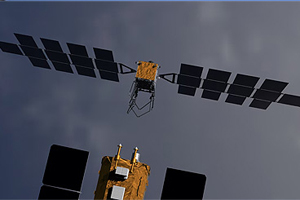
The mission aims for the LINK spacecraft to rendezvous with the Neil Gehrels Swift Observatory craft and boost its orbit, under a Small Business Innovation Research Phase 3 contract between NASA and Katalyst Space Technologies. Air launch-to-orbit is how the Pegasus XL operates. It can carry up to 443 kg […]
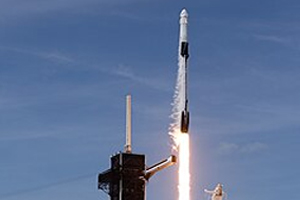
Dozens of microsatellites and nanosatellites for commercial and government customers to launch to Sun-Synchronous Orbit.
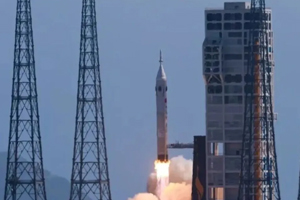
First launch of the Long March 10B rocket and an attempted booster recovery from sea. Long March 10B is a partially reusable cargo-optimized variant of China's next-generation Long March 10 rocket family. Launching from Commercial LC-2 pad.
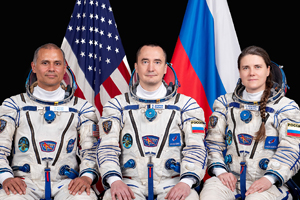
Launch set 19:43 Baikonur Time UTC+5 | 14:43 UTC | 04:43 HST for crewed mission to International Space Station: Roscosmos Cosmonauts Commander Pyotr Dubrov and Flight Engineer Anna Kikina, and NASA Astronaut Flight Engineer Anil Menon. The trio will spend ~8 months at the station.
Launching multiple satellites made by Lockheed Martin, it is one of 6 launches for USSF SDA for worldwide connectivity, which will be via Optical Inter-Satellite Links (OISLs) that have significantly better performance than radio frequency crosslinks.

First test flight of private company Skyroot Aerospace of India, launching its Vikram-1 vehicle with cubesats.
The Northrop Grumman SpaceLogistics MRV-1 mission features the first commercial robotic servicer Next Spaceflight. Equipped with robotic arms developed with DARPA and the U.S. Naval Research Laboratory SpaceNews, the MRV will transport and install up to thirty 400 kg Mission Extension Pods (MEPs) on satellites in GEO Supercluster. For this […]
Kinetica is a solid-propellant 4-stage light launch vehicle, 30m tall with fairing diameter 3.35m, able to send 4,000kg to LEO or 3,000kg to SSO.
Next launch for China's medium-range Long March 3B / E variant with higher payload fairing, larger boosters and fuel tanks.
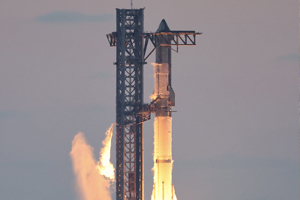
5:45pm CT for second test flight of the updated Starship Block 3 (V3) vehicle, utilizing Booster 20 and Ship 40; planned to splashdown in Pacific Ocean.
Another batch of 24 satellites to LEO for SpaceX's Starlink space-based Internet communication mega-constellation.
Another batch of 24 satellites for SpaceX's Starlink space-based Internet service.
Unknown payload launching from Launch Complex 9A launch pad.
Launch window opens 03:09am EDT for classified payload to launch for the US National Reconnaissance Office.
Launching from the Commercial LC-1 launch pad.
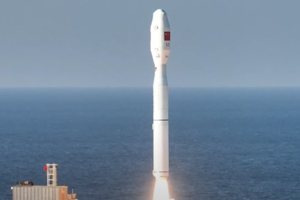
Smart Dragon-3 is a solid-fuel orbital rocket designed by a subsidiary of CASC for the commercial market.
To deliver AST SpaceMobile’s Block 2 BlueBird satellites to LEO for cellular broadband service coverage.
Another batch of 24 internet satellites to launch to LEO. First stage Booster B1093 expected to land on ASDS Of Course I Still Love You (OCISLY) after this 16th flight. These satellites add to the existing 10,897+ operational Starlink satellites.
A batch of 29 satellites to launch to LEO for the Starlink mega-constellation, which now exceeds 10,897 active satellites. The first stage B1085 is expected to land on the ASDS barge, A Shortfall of Gravitas (ASOG) having now completed 17 successful launch and landing missions.
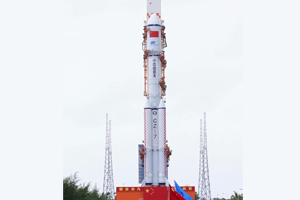
Undisclosed payload on China's Long March 7A rocket from Hainan Island.
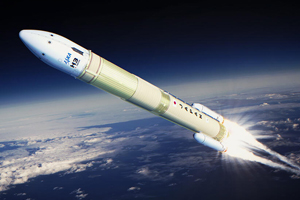
(No earlier than 10 Aug) Japan to launch the MICHIBIKI No. 7 | Quasi-Zenith Satellite System (QZS-7) navigation satellite. Launch window remains open through August 31, with flight times available in September as well.
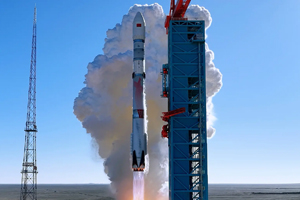
The second test launch of LandSpace's ZQ-3 rocket with undisclosed test payloads. Zhuque-3 first stage booster will attempt to land on its downrange landing pad.
Undisclosed payload launch to LEO. Second stage to attempt landing on ASDS barge, Of Course I Still Love You (OCISLY).
Launch of Globalstar global mobile communications satellite to LEO. Second stage is set to land on the SDS barge, A Shortfall of Gravitas (ASOG).
Classified mission for the United States Space Force.
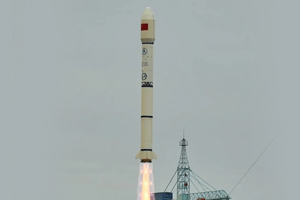
Local time 11:00 on Aug 17, the two-stage Long March 2C rocket is planned to launch with an unknown payload.
Another batch of 24 Starlink satellites to launch to LEO for SpaceX's space-based internet communication system.
29 SpaceX Starlink satellites to launch to LEO for the space-based internet mega-constellation. Falcon 9's first stage B1078 to land on the A Shortfall of Gravitas (ASOG) barge in the Atlantic Ocean after its flight.
Another batch of 27 satellites to launch to LEO for SpaceX's space-based internet mega-constellation. The Falcon 9 first stage is planned to launch on the Of Course I Still Love You (OCISLY) barge.
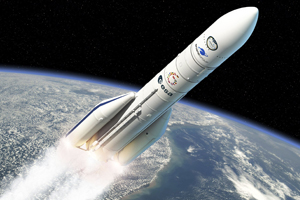
The 3rd of EUMETSAT's third generation of weather satellite, MTG-I2, to launch to Geostationary Transfer Orbit
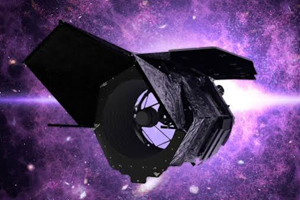
Launch set for 07:26 EDT | Roman spacecraft is 12.7 meters long and 4.4 meters wide when fully deployed. Its primary mirror is 2.4 meters in diameter, which is the same size as the Hubble Space Telescope's primary mirror. It will have sensitivity and resolution comparable to Hubble, but a […]
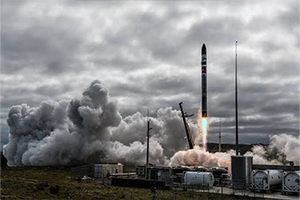
12:00 UTC | The 11th StriX Synthetic Aperture Radar (SAR) satellite will be sent to LEO for Synspective, a Japanese Earth observation company.
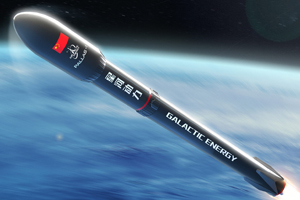
Private aerospace company headquartered in Beijing to launch the first orbital demo mission of the two-stage Pallas-1 rocket. Vehicle type: Height: Diameter: Payload capacity: Liftoff thrust: Goal: Test the maiden flight capabilities of the reusable Pallas-1 rocket system.
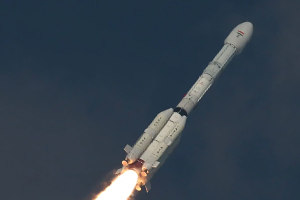
India to launch GISAT-1A (GEO Imaging Satellite) Earth observation satellite to geostationary orbit to facilitate continuous observation of Indian sub-continent, quick monitoring of natural hazards and disaster.
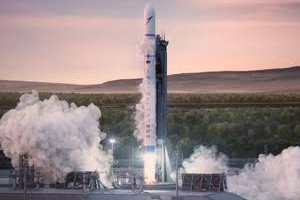
2nd test flight of Isar Spectrum launch vehicle, to carry 5 cubesats to SSO, and ESA "Boost!" experiment: * CyBEEsat (TU Berlin) * TriSat-S (University of Maribor) * Platform 6 (EnduroSat) * FramSat-1 (NTNU) * SpaceTeamSat1 (TU Wien Space Team) * Let It Go (Dcubed, non-separable experiment) Isar Aerospace is […]
02:49 AM EDT -- launch of SES O3b mPOWER mission to medium Earth orbit. O3b mPOWER is a communications satellite system owned and operated by the Luxembourgish company SES. The 87-minute launch window opens at 2:49 p.m. ET. If needed, a backup opportunity is available Monday, September 14 with the […]

The 9th flight of the Zhuque-2E medium-class launch vehicle by private company LandSpace of Beijing, founded in 2015.
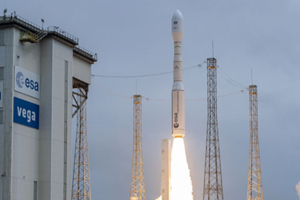
Launch to SSO for 3rd satellite in the Sentinel-3 constellation for optical, radar and altimetry data and for Fluorescence Explorer ("FLEX") of ESA Earth Explorer program to map vegetation fluorescence as a way to quantify photosynthetic activity.
(Estimated Date) Planned demonstration of in-space cryogenic storage and transferal by Eta Space and funded by NASA Tipping Point. Expected to be in orbit for 9 months.
Unknown payload expected to launch on Long March 12, a medium-lift vehicle that uses propellant of kerosene and liquid oxygen, able to place 10,000kg in LEO and 6,000kg in SSO.
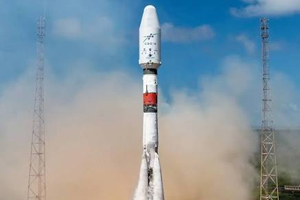
Resupply mission to launch to ISS and arrive within 3.5 hours.
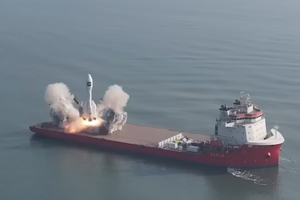
On Sep 16 local time ~1:55pm, private company Orienspace to launch Gravity-1 rocket from the offshore Haiyang launch site.
Launch of Synthetic aperture radar satellite to LEO for Japanese Earth imaging company Synspective to Sun-Synchronous Orbit.
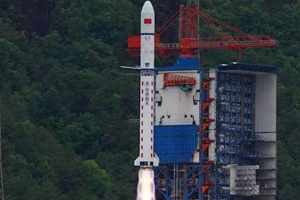
Unknown payload to launch on Long March 2D with YZ-3 upper stage variant.
16th launch of the Kinetica rocket -- a solid-propellant 4-stage light launch vehicle, 30m tall with fairing diameter 3.35m, able to send 4,000kg to LEO or 3,000kg to SSO.
07:56 EDT - launch of classified mission for the United States Space Force - livestream available.
Local time 12:15pm - Launch of Synthetic aperture radar satellite to LEO for Japanese Earth imaging company Synspective to Sun-Synchronous Orbit.
Launch window of 07:15-08:30 CDT for the 14th test flight of the two-stage Starship launch vehicle. This will be the 3rd flight of Starship V3, Ship 41 (upper stage) paired with Booster 21 (Super Heavy first stage). Both Booster 21 and Ship 41 are brand-new, freshly manufactured hardware making their […]
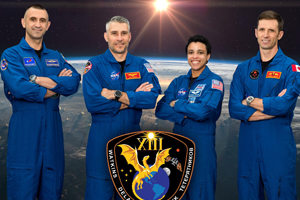
11:10 EDT - Launch to ISS of Jessica Watkins (NASA) – Commander, Luke Delaney (NASA) – Pilot, Joshua Kutryk (Canadian Space Agency) – Mission Specialist, and Sergey Teteryatnikov (Roscosmos) – Mission Specialist to join Expedition 75. The four crew members of the SpaceX Crew-12 mission, who have been on ISS […]