Rosetta Asteroid Flyby to Help Solve Solar System Mysteries
Still 4 years away from its ultimate destination, ESA’s Rosetta Spacecraft will make a close flyby of the little known asteroid 21 Lutetia this week. The spacecraft, with a box-type central structure measuring 2.8 m X 2.1 m X 2.0 m and a 32m solar panel span, will approach within 3,200 km of the space rock on July 10. It will then have a 2-hour window to beam the first close-up images of the asteroid back to Earth. Roughly 100 km in diameter, Lutetia is believed to be a “C-type” asteroid from the main belt between Mars and Jupiter yet some measurements indicate it may be an “M-type” with metals on its surface. Scientists hope the observations will contribute to the small body of knowledge about asteroids. Shortly after the flyby, Rosetta will enter deep space hibernation until awakening in 2014 when it reaches its final destination, Comet 67P / Churyomov-Gerasimenko. A 100 kg lander (TL) will then detach from Rosetta and become the 1st spacecraft to land on a comet. (Credit: ESA)
Australia Advancing Space Exploration with 2 Events
The National Space Society of Australia will hold the 11th Australian Space Development Conference (ASDC) on July 5-7 in Adelaide. Held every 2 years, the conference will provide a forum for Australia to showcase local innovation to the international space community and for industry professionals to advance space business within the country and the Asia-Pacific region. Conference chairs Kirby Ikin (BR) and Anthony Wicht (BL) will give a formal welcome address followed by keynote speaker and Minister for Innovation, Industry, Science and Research, Kim Carr (BCR). Sessions include advancing the Australian Space Research Program, entrepreneurial space, satellite technology for remote sensing and a look at the current launch market. Other speakers at the event include Phil Balaam of Arianespace, Cliff Perkins of Lockheed Martin, Max Vozoff (BCL) of SpaceX, Rich Davis of Northrop Grumman and Mike Gooding of Space Systems Loral. Orbital Sciences, Arianespace, CSIRO and Lockheed Martin are some of the international space companies sponsoring the event. Held in conjunction with this year’s ASDC is the Engineers Australia 16th National Space Engineering Symposium. Australia’s large land mass of 7617930 square kilometers makes it the ideal destination for cutting edge radio-astronomy including spacecraft tracking support for NASA and the proposed US$2 billion Square Kilometer Array project. (Credit: NSS Australia, Engineers Australia, Space X, dmp.wa.gov.au, NASA, macpadd.wordpress.com, IISR)
= All times for terrestrial events in local time unless noted. = All times for international terrestrial events in local time unless noted. = All times for space events, and… = All times for international space / astro events in Hawaii Standard Time unless noted. Add 10 hours to obtain UT (‘Universal Time;’ Greenwich, England).
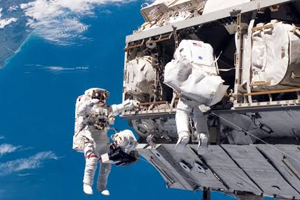
Jul 5 — International Space Station, LEO: E-24 crew currently unloading much needed cargo from Progress 38 which includes 869 kg of propellant, 50 kg of oxygen and air, 100 kg of water and 1210 kg of equipment, spare parts and experiment hardware.
Jul 5 — NASA Lunar Reconnaissance Orbiter (LRO), Lunar Orbit: Instruments aboard LRO continue to work nominally as they return detailed information of lunar imagery, topography and temperature measurements.
Jul 5 — Mars Rover Opportunity, Red Planet: Mars rover team members continue to name features around the rim of Endeavour Crater as they develop more in depth investigations when NASA’s Opportunity rover arrives.
Jul 5- Aug 13 — International Summer Institute For Modeling in Astrophysics,Santa Cruz CA: ‘ISIMA 2010: Transport Processes in Astrophysics;’ Course to address topical problems such as radiative transfer, transport of chemical species, momentum, magnetic fields and energy induced by waves or by hydrodynamical and magnetohydrodynamical turbulence.
Jul 5 — Mercury: 4.9° S of Pollux; 23:00.
Jul 5 — Asteroid 2010 MJ1: Near-Earth Flyby (0.097 AU).
Jul 5 — Asteroid 1850 Kohoutek: Closest Approach to Earth (0.977 AU).
Continued from . . .
Jan 30 — Museum of Science and Industry, Confucius Institute / University of Manchester, Manchester, United Kingdom: ‘Exhibition: From Gunpowder to Space Rockets – The China Space Program,’ includes models of ancient rockets, recent satellites, rockets, space ships and a lunar rover; through Aug 7.
Jun 26 — International Space University (ISU), Strasbourg, France and Stuttgart, Germany: ‘ISU Summer Session Program;’ through Aug 27.
Jul 8 — Lockheed Space Systems, NASA, New Orleans LA: Ceremony at NASA Michoud Assembly Facility to commemorate 37 years of successful tank deliveries and final external tank roll out for last space shuttle flight.’
Jul 8 — Moon: 8.3° N of Aldebaran.
Jul 8 — Asteroid 2001 KM20: Near-Earth Flyby (0.089 AU).
FRIDAY
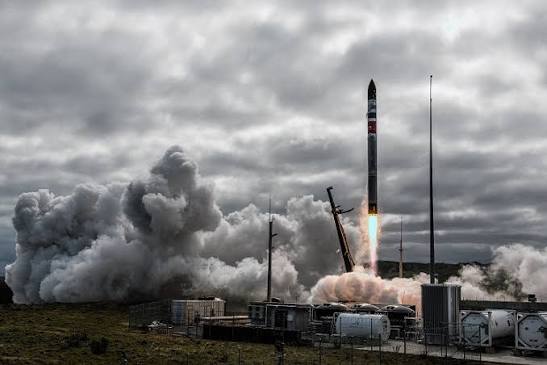
Jul 9 — USAF, Launch Minotaur 4 / STP SBSS, Vandenburg AFB CA: The Air Force Minotaur 4 rocket to launch 1st satellite of the Space-Based Surveillance System.
Jul 9 — Hampshire Astronomical Group, Hampshire, United Kingdom: ‘Pictures in the Sky,’ Ian Ridpath.
Jul 9 — Comet P / 2010 K2: Closest Approach to Earth (0.694 AU).
SATURDAY
Jul 10 — International Launch Services, Launch Proton / EchoStar 15, Baikonur Cosmodrome, Kazakhstan: An ILS Proton Rocket with a Breeze M upper stage to deploy EchoStar 15 telecommunications spacecraft satellite to provide direct-to-home broadcasting services.
Jul 11 — Total Solar Eclipse: 08:15-10:51; Eclipse is visible in the Cook Islands, French Polynesia, Easter Island, and in Southern Chile and Argentina.
Includes ~150 meetings covering the fields of COSPAR Scientific Commissions / Panels / Task Groups, such as SC B: The Earth-Moon System, Planets, and...
At the Palais des Nations and online. Outer space is entering a renewed phase of strategic importance, defined by rapid innovation, growing competition and deepening...
This international lunar science meeting has two objectives: to provide a platform for leading experts to review recent advances across lunar research, from the...
At CSIR International Convention Centre. Key topics are Earth Observation, Developing Space Tourism, Space Supply Manufacturing. Cultural tours are offered.
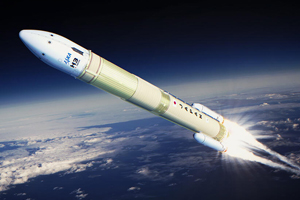
(No earlier than 10 Aug) Japan to launch the MICHIBIKI No. 7 | Quasi-Zenith Satellite System (QZS-7) navigation satellite. Launch window remains open through...
Participants will receive theoretical and hands-on training in electron imaging and X-ray spectroscopy for application to planetary samples. This training opportunity is targeted at...
"Leading Australia’s Space Future for Our Strategic Advantage". Southern Space 2026 brings together decision-makers who set the direction for Australia’s space sector. It is...
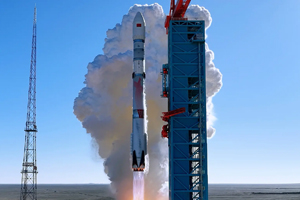
The second test launch of LandSpace's ZQ-3 rocket with undisclosed test payloads. Zhuque-3 first stage booster will attempt to land on its downrange landing...
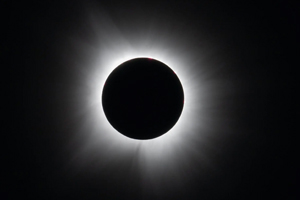
A total solar eclipse with a magnitude of 1.0386 (greatest eclipse 17:47:06 UTC) will be visible in parts of Greenland, Iceland, northern Russia, the Atlantic...
Includes presentation of the Neil Armstrong Award of Excellence, activities for the new class of Astronaut Scholars, 2-day Technical Conference where Scholars present their...
During U.S. spacewalk 97, two astronauts will replace a Space-to-Ground antenna on the orbital complex. The antenna is a critical communication system NASA uses...
Key themes include: Characterizing exoplanet-host solar-like stars; Star-planet interactions; Planet populations around solar-like stars. At University of Liège.
 Still 4 years away from its ultimate destination, ESA’s Rosetta Spacecraft will make a close flyby of the little known asteroid 21 Lutetia this week. The spacecraft, with a box-type central structure measuring 2.8 m X 2.1 m X 2.0 m and a 32m solar panel span, will approach within 3,200 km of the space rock on July 10. It will then have a 2-hour window to beam the first close-up images of the asteroid back to Earth. Roughly 100 km in diameter, Lutetia is believed to be a “C-type” asteroid from the main belt between Mars and Jupiter yet some measurements indicate it may be an “M-type” with metals on its surface. Scientists hope the observations will contribute to the small body of knowledge about asteroids. Shortly after the flyby, Rosetta will enter deep space hibernation until awakening in 2014 when it reaches its final destination, Comet 67P / Churyomov-Gerasimenko. A 100 kg lander (TL) will then detach from Rosetta and become the 1st spacecraft to land on a comet. (Credit: ESA)
 The National Space Society of Australia will hold the 11th Australian Space Development Conference (ASDC) on July 5-7 in Adelaide. Held every 2 years, the conference will provide a forum for Australia to showcase local innovation to the international space community and for industry professionals to advance space business within the country and the Asia-Pacific region. Conference chairs Kirby Ikin (BR) and Anthony Wicht (BL) will give a formal welcome address followed by keynote speaker and Minister for Innovation, Industry, Science and Research, Kim Carr (BCR). Sessions include advancing the Australian Space Research Program, entrepreneurial space, satellite technology for remote sensing and a look at the current launch market. Other speakers at the event include Phil Balaam of Arianespace, Cliff Perkins of Lockheed Martin, Max Vozoff (BCL) of SpaceX, Rich Davis of Northrop Grumman and Mike Gooding of Space Systems Loral. Orbital Sciences, Arianespace, CSIRO and Lockheed Martin are some of the international space companies sponsoring the event. Held in conjunction with this year’s ASDC is the Engineers Australia 16th National Space Engineering Symposium. Australia’s large land mass of 7617930 square kilometers makes it the ideal destination for cutting edge radio-astronomy including spacecraft tracking support for NASA and the proposed US$2 billion Square Kilometer Array project. (Credit: NSS Australia, Engineers Australia, Space X, dmp.wa.gov.au, NASA, macpadd.wordpress.com, IISR)
 = All times for terrestrial events in local time unless noted.
 = All times for international terrestrial events in local time unless noted.
 = All times for space events, and…
 = All times for international space / astro events in Hawaii Standard Time unless noted. Add 10 hours to obtain UT (‘Universal Time;’ Greenwich, England).
 Jul 5 — International Space Station, LEO: E-24 crew currently unloading much needed cargo from Progress 38 which includes 869 kg of propellant, 50 kg of oxygen and air, 100 kg of water and 1210 kg of equipment, spare parts and experiment hardware.
 Jul 5-7 — National Space Society Australia, Adelaide, Australia: ‘11th Australian Space Development Conference (ASDC).’
 Jul 5- Aug 13 — International Summer Institute For Modeling in Astrophysics, Santa Cruz CA: ‘ISIMA 2010: Transport Processes in Astrophysics;’ Course to address topical problems such as radiative transfer, transport of chemical species, momentum, magnetic fields and energy induced by waves or by hydrodynamical and magnetohydrodynamical turbulence.
  Jul 9 — USAF, Launch Minotaur 4 / STP SBSS, Vandenburg AFB CA: The Air Force Minotaur 4 rocket to launch 1st satellite of the Space-Based Surveillance System.