Joint AAS, CSA, JRS ISCOPS Event to Advance Space Exploration
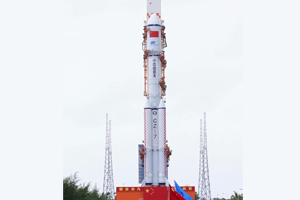
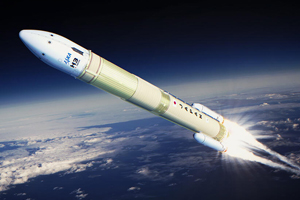
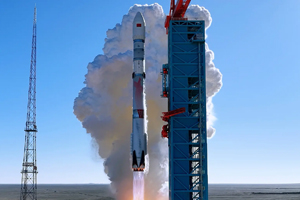
The American Astronautical Society (AAS), Chinese Society of Astronautics (CSA) and the Japanese Rocket Society (JRS) will hold the 12th International Space Conference of Pacific-basin Societies (ISCOPS) on July 27-30 in Montreal, Quebec, Canada. Space experts, scientists and industry leaders from around the world will gather to discuss topics related to this year’s theme, ‘Applications of Space Technology for Humanity,’ and exchange ideas regarding space technology and the future of space development within the Pacific basin. Session topics will include national and international space programs and technical sessions covering satellite communications, remote sensing, space transportation and propulsion and Moon, Mars and Robotic Exploration. Yukio Koyari of JAXA and Yunlong Lin of York University will co-chair a session on ‘Human Space Flight, Space Station and Pacific Space Ports and Lunar Research and Exploration,’ which will also feature a paper presentation by Trevor Sorensen of the University of Hawaii at Manoa. The event also includes an International Student Conference and Competition, awards banquet and a half-day technical visit to the Canadian Space Agency. Regional representatives in attendance include AAS Professors Peter Bainum and Arun Misra (TR), Zhang Chi of CSA and Yasuhiro Morita (CR) of JRS. (Credit: AAS, CSA, JRS, California Science Center, Moondaily.com, pbrc.soka.edu, china-defense-mashup.com)
EJSM 4th Instrument Workshop to Review Technical Challenges Posed by Jovian System
NASA and ESA will hold the 4th Europa Jupiter System Mission (EJSM) Instrument Workshop on July 26-29 in Pasadena CA. EJSM consists of 2 primary flight elements operating in the Jovian System: the NASA-led Jupiter Europa Orbiter (JEO) and the ESA-led Jupiter Ganymede Orbiter (JGO). Scheduled to launch NET 2018, JEO and JGO will carry 11 and 10 complimentary instruments, respectively, to monitor dynamic phenomena, map the Jovian magnetosphere and characterize water oceans beneath the ice shells of Europa and Ganymede (BL). Topics to be addressed at the workshop include Jovian radiation models, radiation shielding modeling results and the planned JEO and JGO architecture. Potential instrument providers for the spacecraft are encouraged to attend, as the workshop will provide information on the instrument Announcement of Opportunity, which is expected to be released in early 2011. Along with 2.5 days of plenary sessions, the workshop will include 2 short courses. The first course, taught by Henry B Garrett, of the Jet Propulsion Laboratory, on July 26, will focus on limiting the effects of the space environment on spacecraft systems. On July 29, Catharine Conley (BR), of NASA Headquarters, will teach a short course on planetary protection policy and requirements for outer planets missions. (Credit: NASA)
= All times for terrestrial events in local time unless noted. = All times for international terrestrial events in local time unless noted. = All times for space events, and… = All times for international space / astro events in Hawaii Standard Time unless noted. Add 10 hours to obtain UT (‘Universal Time;’ Greenwich, England).
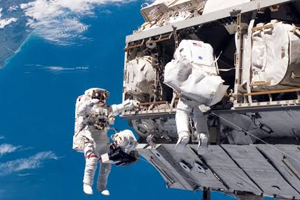
Jul 26 — International Space Station, LEO: E-24 flight engineers Fyodor Yurchikhin and Mikhail Kornienko prepare for 6-hour spacewalk scheduled to begin today at 23:45 EDT.
Jul 26 — NASA Lunar Reconnaissance Orbiter (LRO), Lunar Orbit: LRO operating nominally in low polar orbit (50km) and continues to return global data of lunar surface.
Jul 26 — Mars Odyssey, Red Planet: Scientists continue to monitor spacecraft after an unexpected performance by an electronic encoder caused it to go into safe-mode.
Jul 26 — American Astronautical Society,Online:AAS Award Nominations deadline to recognize the excellence and professional service of AAS members of the space community.
Jul 26 — Georgetown University McDonough School of Business, NASA,Washington DC: Public invited to a discussion with STS-132 shuttle crew at 18:30 EDT.
Jan 30 — Museum of Science and Industry, Confucius Institute / University of Manchester, Manchester, United Kingdom: ‘Exhibition: From Gunpowder to Space Rockets – The China Space Program,’ includes models of ancient rockets, recent satellites, rockets, space ships and a lunar rover; through Aug 7.
Jun 26 — International Space University (ISU), Strasbourg, France and Stuttgart, Germany: ‘ISU Summer Session Program;’ through Aug 27.
Jul 22 — Girl Scouts of Northern California, NASA Ames Research Center, Moffett Field CA: ‘Girl Scout Destination: The Future is Green,’ program to offer girls an opportunity to explore how green technology in astronomy, environment and robotics can help save Earth; through Aug 1.
Jul 28 — Moon: At Apogee (Distance 63.62 Earth-Radii); 14:00.
THURSDAY
Jul 29 — International Space University,Strasbourg, France: ‘Heavy-Lift Horror Stories,’ Gary Flandro.
Jul 29 — Challenger Center for Space Science Education, Online: Challenger Center to sponsor webcast to explore modeling and simulation for space systems with NASA simulation software manager Rebecca Mazzone.
Jul 30 — Moon: 5.9° NNW of Uranus, 12:00; 6.6° NNW of Jupiter; 16:00.
SATURDAY
Jul 31-Aug 4 — Astronomical Society of the Pacific, Boulder CO: ‘122nd ASP 2010 Meeting,’ includes ‘Cosmos in the Classroom 2010: A Hands-on Symposium on Teaching Introductory Astronomy” and ‘Making Connections In Education and Public Outreach: A Symposium for Those Working in EPO.
Jul 31 — Asteroid 1994 CB: Near-Earth Flyby (0.091 AU).
SUNDAY
Aug 1 — Cassini Equinox Mission, Deep Space: Scientists continue to investigate new images showing icy particles in Saturn’s F ring clumping into giant snowballs the gravitational pull of the moon Prometheus sloshes ring material around, creating wake channels that trigger formation of objects as large as 20 kilometers (12 miles) in diameter.
Aug 1-21 — International Astronomical Youth Camps (IAYC), Klingenthal, Germany: ‘IAYC 2010.’
Aug 1 — Alpha Capricornids Meteor Shower Peak: Radiating from Constellation Capricornus, this meteor shower produces some of the brightest meteors of the major showers.
Includes ~150 meetings covering the fields of COSPAR Scientific Commissions / Panels / Task Groups, such as SC B: The Earth-Moon System, Planets, and...
At the Palais des Nations and online. Outer space is entering a renewed phase of strategic importance, defined by rapid innovation, growing competition and deepening...
This international lunar science meeting has two objectives: to provide a platform for leading experts to review recent advances across lunar research, from the...
At CSIR International Convention Centre. Key topics are Earth Observation, Developing Space Tourism, Space Supply Manufacturing. Cultural tours are offered.
(No earlier than 10 Aug) Japan to launch the MICHIBIKI No. 7 | Quasi-Zenith Satellite System (QZS-7) navigation satellite. Launch window remains open through...
Participants will receive theoretical and hands-on training in electron imaging and X-ray spectroscopy for application to planetary samples. This training opportunity is targeted at...
"Leading Australia’s Space Future for Our Strategic Advantage". Southern Space 2026 brings together decision-makers who set the direction for Australia’s space sector. It is...
The second test launch of LandSpace's ZQ-3 rocket with undisclosed test payloads. Zhuque-3 first stage booster will attempt to land on its downrange landing...
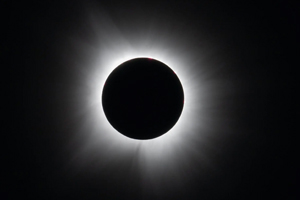
A total solar eclipse with a magnitude of 1.0386 (greatest eclipse 17:47:06 UTC) will be visible in parts of Greenland, Iceland, northern Russia, the Atlantic...
Includes presentation of the Neil Armstrong Award of Excellence, activities for the new class of Astronaut Scholars, 2-day Technical Conference where Scholars present their...
During U.S. spacewalk 97, two astronauts will replace a Space-to-Ground antenna on the orbital complex. The antenna is a critical communication system NASA uses...
Key themes include: Characterizing exoplanet-host solar-like stars; Star-planet interactions; Planet populations around solar-like stars. At University of Liège.
 The American Astronautical Society (AAS), Chinese Society of Astronautics (CSA) and the Japanese Rocket Society (JRS) will hold the 12th International Space Conference of Pacific-basin Societies (ISCOPS) on July 27-30 in Montreal, Quebec, Canada. Space experts, scientists and industry leaders from around the world will gather to discuss topics related to this year’s theme, ‘Applications of Space Technology for Humanity,’ and exchange ideas regarding space technology and the future of space development within the Pacific basin. Session topics will include national and international space programs and technical sessions covering satellite communications, remote sensing, space transportation and propulsion and Moon, Mars and Robotic Exploration. Yukio Koyari of JAXA and Yunlong Lin of York University will co-chair a session on ‘Human Space Flight, Space Station and Pacific Space Ports and Lunar Research and Exploration,’ which will also feature a paper presentation by Trevor Sorensen of the University of Hawaii at Manoa. The event also includes an International Student Conference and Competition, awards banquet and a half-day technical visit to the Canadian Space Agency. Regional representatives in attendance include AAS Professors Peter Bainum and Arun Misra (TR), Zhang Chi of CSA and Yasuhiro Morita (CR) of JRS. (Credit: AAS, CSA, JRS, California Science Center, Moondaily.com, pbrc.soka.edu, china-defense-mashup.com)
 NASA and ESA will hold the 4th Europa Jupiter System Mission (EJSM) Instrument Workshop on July 26-29 in Pasadena CA. EJSM consists of 2 primary flight elements operating in the Jovian System: the NASA-led Jupiter Europa Orbiter (JEO) and the ESA-led Jupiter Ganymede Orbiter (JGO). Scheduled to launch NET 2018, JEO and JGO will carry 11 and 10 complimentary instruments, respectively, to monitor dynamic phenomena, map the Jovian magnetosphere and characterize water oceans beneath the ice shells of Europa and Ganymede (BL). Topics to be addressed at the workshop include Jovian radiation models, radiation shielding modeling results and the planned JEO and JGO architecture. Potential instrument providers for the spacecraft are encouraged to attend, as the workshop will provide information on the instrument Announcement of Opportunity, which is expected to be released in early 2011. Along with 2.5 days of plenary sessions, the workshop will include 2 short courses. The first course, taught by Henry B Garrett, of the Jet Propulsion Laboratory, on July 26, will focus on limiting the effects of the space environment on spacecraft systems. On July 29, Catharine Conley (BR), of NASA Headquarters, will teach a short course on planetary protection policy and requirements for outer planets missions. (Credit: NASA)
 = All times for terrestrial events in local time unless noted.
 = All times for international terrestrial events in local time unless noted.
 = All times for space events, and…
 = All times for international space / astro events in Hawaii Standard Time unless noted. Add 10 hours to obtain UT (‘Universal Time;’ Greenwich, England).
 Jul 26 — International Space Station, LEO: E-24 flight engineers Fyodor Yurchikhin and Mikhail Kornienko prepare for 6-hour spacewalk scheduled to begin today at 23:45 EDT.
 Jul 26 — American Astronautical Society, Online: AAS Award Nominations deadline to recognize the excellence and professional service of AAS members of the space community.
 Jun 26 — International Space University (ISU), Strasbourg, France and Stuttgart, Germany: ‘ISU Summer Session Program;’ through Aug 27.