Africa to Benefit From Launch of 2 More Satellites
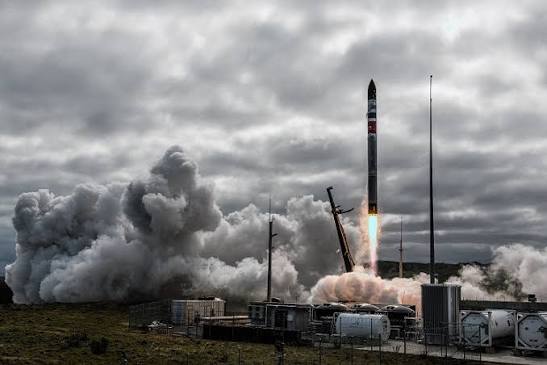
NET August 4, Arianespace aims to launch 2 satellites for Africa on its 196th mission to space from Kourou, French Guiana. The Ariane 5 heavy-lift vehicle (BR) will carry the dual Thales Alenia Space satellites, Nilesat-201 (TR) and RASCOM-QAF 1R (CR) into geosynchronous orbit. Weighing approximately 3200 kg and fitted with 24 Ku-band and 4 Ka-band transponders, the Nilesat-201 will deliver digital Direct-to-Home TV and radio broadcasting services to North Africa and the Middle East. The RASCOM-QAF 1R which weighs nearly 3000kg will cover Africa as well as some parts of Europe and Middle East. The service will ensure continuity of communications and information technologies for the region, particularly rural telephony, a fixed, wireless technology which extends high quality voice, data and video to locations with no telecom infrastructure. With revenue totaling 2 billion in 2009, Thales Alenia Space is becoming a European leader in satellite systems. It is located in 11 industrial sites including France, Belgium, Italy and Spain and has over 7200 employees. The Aug 4 launch will be the 3rd mission for Arianespace this year with 4 more launches planned for 2010. Pictured: Thales Alenia CEO Reynald Seznec (LC) (Credit: Thales Alenia, Arianespace, civnet.org)
13th Mars Society Convention to Advance Red Planet Focus
Hundreds of Mars experts and enthusiasts will attend the 13th Mars Society Convention on August 5-8 in Dayton, Ohio. Sponsored by the Mars Society, participants this year will discuss various topics on Mars exploration and review the latest results from Mars Spirit and Opportunity as well as Mars Express, Reconnaissance Orbiter and Phoenix missions. The event will also serve as a platform for exciting political discussion after the Senate Committee recently approved the NASA Authorization Act of 2010 which will allow immediate funding for NASA to develop heavy-launch vehicles. Mars Society President Robert Zubrin (TR) applauded the decision stating, “Heavy lift is the essential prerequisite for sending human explorers beyond low Earth orbit. We flew our first HLV, the Saturn V, in 1967, and two years later we were on the Moon. Lacking HLV capability since the 1970s, we have not gone anywhere in 37 years.” Conference sessions include the question of life on Mars, concepts for future robotic missions to Mars missions, habitat construction, Martian agriculture and aquaculture and making the Moon work for Mars. Some of the 16 speakers scheduled to speak are Virgin Galactic CEO George Whitesides (BR), Pathfinder Astronaut Chantelle Rose (TL), 4Frontiers Corporation VP Joseph Palaia and NASA Scientists David Chuss (BL). The event will also feature updates on the latest mission simulation at Mars Arctic Research Station and Mars Camp on Aug 7 to inspire STEM education. (Credit: The Mars Society, NASA)
= All times for terrestrial events in local time unless noted.
= All times for international terrestrial events in local time unless noted.
= All times for space events, and…
= All times for international space / astro events in Hawaii Standard Time unless noted. Add 10 hours to obtain UT (‘Universal Time;’ Greenwich, England).
Weekly Planet Watch – Morning Planets: Jupiter (S) / Evening Planets: Mercury (W), Venus (W), Mars (W), Saturn (W).
MONDAY
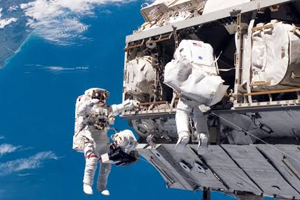
Aug 2 — International Space Station, LEO: E-24 crew members resume scientific research and prepare for upcoming Aug 5 spacewalk after a piece of debris from a Chinese satellite made a close pass by last week.
Aug 2 — NASA Lunar Reconnaissance Orbiter (LRO), Lunar Orbit: LRO operating nominally in low polar orbit (50km) and continues to return global data of lunar surface.
Aug 2 — Mars Phoenix Mission, Red Planet: Review of NASA Phoenix data by DLR Institute in Germany suggests Mars may contain liquid salt solutions (cryobrines) which could possibly be a fluid medium that supports life.
Jan 30 — Museum of Science and Industry, Confucius Institute / University of Manchester, Manchester, United Kingdom: ‘Exhibition: From Gunpowder to Space Rockets – The China Space Program,’ includes models of ancient rockets, recent satellites, rockets, space ships and a lunar rover; through Aug 7.
Jun 26 — International Space University (ISU), Strasbourg, France and Stuttgart, Germany: ‘ISU Summer Session Program;’ through Aug 27.
Jul 31 — Astronomical Society of the Pacific, Boulder CO: ‘122nd ASP 2010 Meeting,’ includes ‘Cosmos in the Classroom 2010: A Hands-on Symposium on Teaching Introductory Astronomy” and ‘Making Connections In Education and Public Outreach: A Symposium for Those Working in EPO; through Aug 4.
Aug 1 — International Astronomical Youth Camps (IAYC), Klingenthal, Germany: ‘IAYC 2010;’ through Aug 21.
TUESDAY
Aug 3 — NASA Johnson Space Center,Houston TX:News briefing to discuss upcoming spacewalk aboard the International Space Station (Aug 5) at 13:00 CDT.
Aug 4 — Arianespace, Launch Ariane 5 / Rascom-QAF 1R & Nilesat 201, Kourou, French Guiana: Arianespace Flight 196 to use Ariane 5 rocket with cryogenic upper stage to launch Rascom-QAF 1R communications satellite to serve Africa and Egypt’s COMS 1 satellite for direct broadcasting TV.
Aug 4 — The SETI Institute, Mountain View CA: Colloquium Series Lecture: ‘Titan Unveiled,’ Ralph Lorenz.
Aug 5-6 — NASA Advisory Council, Pasadena CA: ‘NAC Meeting.‘
Aug 5-8 — The Mars Society, Dayton OH: ‘13th International Mars Society Convention,’ Carolyn Porco, one of the world’s leading planetary scientists to give plenary talk.
Aug 7 — Canada France Hawaii Telescope, Keck Observatory, Kamuela HI:‘Waimea Solar System Walk,’ An interactive half-mile journey through Earth’s neighboring star and planets; Walk begins at Keck Observatory HQ and ends at Canada France Hawaii telescope HQ.
SUNDAY
Aug 8-12 — American Geophysical Union,Foz do Iguacu, Brazil: ‘The Meeting of the Americas 2010,’ science program to will cover topics in all areas of geophysical sciences.
Includes ~150 meetings covering the fields of COSPAR Scientific Commissions / Panels / Task Groups, such as SC B: The Earth-Moon System, Planets, and...
At the Palais des Nations and online. Outer space is entering a renewed phase of strategic importance, defined by rapid innovation, growing competition and deepening...
This international lunar science meeting has two objectives: to provide a platform for leading experts to review recent advances across lunar research, from the...
At CSIR International Convention Centre. Key topics are Earth Observation, Developing Space Tourism, Space Supply Manufacturing. Cultural tours are offered.
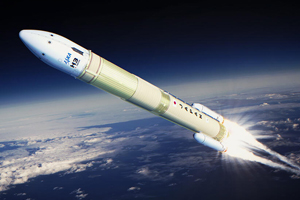
(No earlier than 10 Aug) Japan to launch the MICHIBIKI No. 7 | Quasi-Zenith Satellite System (QZS-7) navigation satellite. Launch window remains open through...
Participants will receive theoretical and hands-on training in electron imaging and X-ray spectroscopy for application to planetary samples. This training opportunity is targeted at...
"Leading Australia’s Space Future for Our Strategic Advantage". Southern Space 2026 brings together decision-makers who set the direction for Australia’s space sector. It is...
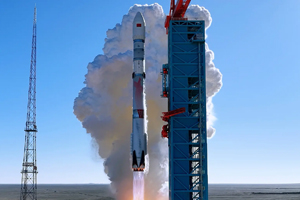
The second test launch of LandSpace's ZQ-3 rocket with undisclosed test payloads. Zhuque-3 first stage booster will attempt to land on its downrange landing...
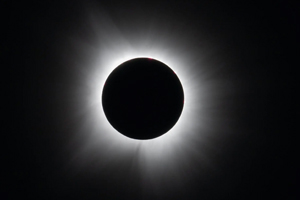
A total solar eclipse with a magnitude of 1.0386 (greatest eclipse 17:47:06 UTC) will be visible in parts of Greenland, Iceland, northern Russia, the Atlantic...
Includes presentation of the Neil Armstrong Award of Excellence, activities for the new class of Astronaut Scholars, 2-day Technical Conference where Scholars present their...
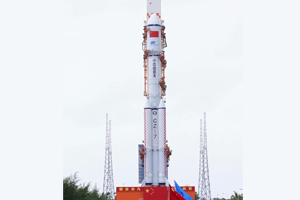
During U.S. spacewalk 97, two astronauts will replace a Space-to-Ground antenna on the orbital complex. The antenna is a critical communication system NASA uses...
Key themes include: Characterizing exoplanet-host solar-like stars; Star-planet interactions; Planet populations around solar-like stars. At University of Liège.
 NET August 4, Arianespace aims to launch 2 satellites for Africa on its 196th mission to space from Kourou, French Guiana. The Ariane 5 heavy-lift vehicle (BR) will carry the dual Thales Alenia Space satellites, Nilesat-201 (TR) and RASCOM-QAF 1R (CR) into geosynchronous orbit. Weighing approximately 3200 kg and fitted with 24 Ku-band and 4 Ka-band transponders, the Nilesat-201 will deliver digital Direct-to-Home TV and radio broadcasting services to North Africa and the Middle East. The RASCOM-QAF 1R which weighs nearly 3000kg will cover Africa as well as some parts of Europe and Middle East. The service will ensure continuity of communications and information technologies for the region, particularly rural telephony, a fixed, wireless technology which extends high quality voice, data and video to locations with no telecom infrastructure. With revenue totaling 2 billion in 2009, Thales Alenia Space is becoming a European leader in satellite systems. It is located in 11 industrial sites including France, Belgium, Italy and Spain and has over 7200 employees. The Aug 4 launch will be the 3rd mission for Arianespace this year with 4 more launches planned for 2010. Pictured: Thales Alenia CEO Reynald Seznec (LC) (Credit: Thales Alenia, Arianespace, civnet.org)
 Hundreds of Mars experts and enthusiasts will attend the 13th Mars Society Convention on August 5-8 in Dayton, Ohio. Sponsored by the Mars Society, participants this year will discuss various topics on Mars exploration and review the latest results from Mars Spirit and Opportunity as well as Mars Express, Reconnaissance Orbiter and Phoenix missions. The event will also serve as a platform for exciting political discussion after the Senate Committee recently approved the NASA Authorization Act of 2010 which will allow immediate funding for NASA to develop heavy-launch vehicles. Mars Society President Robert Zubrin (TR) applauded the decision stating, “Heavy lift is the essential prerequisite for sending human explorers beyond low Earth orbit. We flew our first HLV, the Saturn V, in 1967, and two years later we were on the Moon. Lacking HLV capability since the 1970s, we have not gone anywhere in 37 years.” Conference sessions include the question of life on Mars, concepts for future robotic missions to Mars missions, habitat construction, Martian agriculture and aquaculture and making the Moon work for Mars. Some of the 16 speakers scheduled to speak are Virgin Galactic CEO George Whitesides (BR), Pathfinder Astronaut Chantelle Rose (TL), 4Frontiers Corporation VP Joseph Palaia and NASA Scientists David Chuss (BL). The event will also feature updates on the latest mission simulation at Mars Arctic Research Station and Mars Camp on Aug 7 to inspire STEM education. (Credit: The Mars Society, NASA)
 = All times for terrestrial events in local time unless noted.
 = All times for international terrestrial events in local time unless noted.
 = All times for space events, and…
 = All times for international space / astro events in Hawaii Standard Time unless noted. Add 10 hours to obtain UT (‘Universal Time;’ Greenwich, England).
 Aug 2 — International Space Station, LEO: E-24 crew members resume scientific research and prepare for upcoming Aug 5 spacewalk after a piece of debris from a Chinese satellite made a close pass by last week.
 Aug 2-5 — American Institute Of Aeronautics And Astronautics, Toronto, Ontario, Canada: ‘AIAA Astrodynamics Specialist / AIAA Atmospheric Flight Mechanics / AIAA Atmospheric Space Environments / AIAA Guidance Navigation and Control / AIAA Modeling and Simulation Technologies.’
 Aug 2-6 — NASA Jet Propulsion Laboratory, Pasadena CA: ‘22nd NASA Planetary Science Summer School.’