Emerging Galaxy Forum Asia Architecture to Advance Education, Philanthropy
With its pioneering launch on 4 July 2008 in California, USA, the Galaxy Forum program is beginning to catalyze classrooms throughout Hawaii, mainland USA, Canada and China with its mission to enhance and advance 21st Century Education through awareness of our Milky Way Galaxy. Now entering its third year, the Galaxy Forum architecture is emerging in Asia with Forums scheduled in Bangalore, India (9 August), Beijing, China (14 Aug) and Tokyo, Japan (4 December), and others being planned for 2011 and beyond. Following 2 successful Galaxy Forums in Beijing in 2008 and 2009, this year’s China event will take place at the Beijing Planetarium 23-meter Dome featuring prominent astronomy artist and Galaxy Garden creator Jon Lomberg (BL) and International Lunar Observatory Association Director Steve Durst (CL). China press coverage on the Galaxy Forum Beijing is expected to attract considerable national and international attention throughout the world’s most populous country and beyond. The events in India and Japan will be hosted at the Nehru Planetarium and Miraikan Space and Science Center, respectively. The Galaxy Forums connect educators, teachers, students and astronomers of all kinds in a series of community events featuring local experts discussing topics related to our Galaxy and others, as well as ways to integrate learning about our place in the Galaxy into all levels of all classrooms around the world. Galaxy Forum is also designed to attract philanthropic sponsors for the upcoming International Lunar Observatory mission, set to conduct observation and communication on the surface of the Moon NET December 2012 starting with the highly directional, educational and iconic “Galaxy First Light” image. Pictured: Professor U.R. Rao (BC) (Credit: Galaxy Garden, Nehru Planetarium, Beijing Planetarium, ISRO, ILOA)
Small Satellites, Space Elevator Focus of Innovative Technology Conferences
Space industry leaders and advocates worldwide will gather in the USA to discuss the latest technological advances in space exploration. On August 9-12, the American Institute of Aeronautics and Astronautics and Utah State University will hold the 24th Annual Conference on Small Satellites in Logan UT. Small satellites have become instrumental in the space community with low manufacturing costs and a proven track record in scientific and commercial missions. This year’s theme, ‘Connecting the Dots: Bringing Visionaries, System Implementers & Mission Sponsors Together,’ will focus on the increasing need for small satellites and enhancing synergistic efforts between technology advocates and investors. Jean‐Michel Contant (TL), International Academy of Astronautics Secretary General will deliver the keynote address followed by technical sessions covering mission payloads, future missions of small satellites and a current market overview. Undergraduate and graduate students will also showcase their work on small satellite concepts and missions in the 18th Frank J. Redd Scholarship Competition. On Aug 13-15, The Space Engineering and Science Institute will present the 4th Space Elevator Conference in Redmond WA. Participants will discuss the International Space Elevator Consortium study on space debris and the 4 Pillars of Space Elevator Development in fields of science / technical, political / social, legal and economic. The 3-day technical event will feature SE overview, a keynote address on space debris mitigation by Jerome Pearson (BR), The NASA Centennial Challenge and Strong Tether Competition, 5 minute shotgun science sessions and free public presentations. (Credit: smallsat.org, spaceelevatorblog.com, NASA, n2jrf.com, Alan Chan)
= All times for terrestrial events in local time unless noted.
= All times for international terrestrial events in local time unless noted.
= All times for space events, and…
= All times for international space / astro events in Hawaii Standard Time unless noted. Add 10 hours to obtain UT (‘Universal Time;’ Greenwich, England).
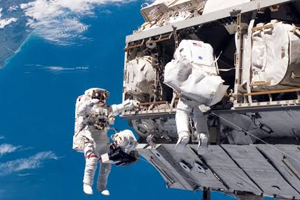
Aug 9 — International Space Station, LEO: E-24 crew members prepare for upcoming spacewalk on Wednesday to restore a faulty cooling system.
Aug 9 — NASA Lunar Reconnaissance Orbiter (LRO), Lunar Orbit: LRO operating nominally in low polar orbit (50km) and continues to return global data of lunar surface.
Aug 9 — Mars Reconnaissance Orbiter, Red Planet: Scientists continue observations of Mars surface with MRO HiRISE Camera, recently adding 314 images to teams camera site and NASA’s Planetary Data System.
Aug 9 — Moon: 3.6° SSW of Beehive Cluster, 00:00; New Moon, 17:08.
Continued from . . .
Jun 26 — International Space University (ISU), Strasbourg, France and Stuttgart, Germany: ‘ISU Summer Session Program;’ through Aug 27.
Aug 1 — International Astronomical Youth Camps (IAYC), Klingenthal, Germany: ‘IAYC 2010;’ through Aug 21.
Aug 8 — American Geophysical Union,Foz do Iguacu, Brazil: ‘The Meeting of the Americas 2010,’ science program to will cover topics in all areas of geophysical sciences; through Aug 12.
Aug 10 — Ames Research Center, Moffett Field CA: NASA Chief Technologist Bobby Braun to hold media briefing to discuss important role of ARC to advance NASA innovation and technology at 13:00 PDT.
Aug 11 — Asteroid 3173 McNaught: Closest Approach to Earth (0.772 AU)
THURSDAY
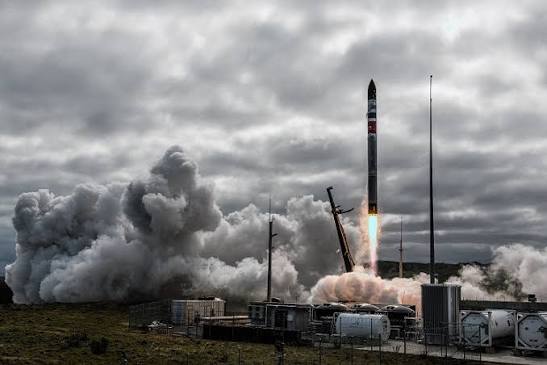
Aug 12 — United Launch Alliance, Launch Atlas 5 / AEHF 1, Cape Canaveral FL: ULA Rocket Atlas 5 to launch 1st Advanced Extremely High Frequency satellite of the Space-Based Surveillance System to track satellites in orbit around Earth.
Aug 12 — Perseids Meteor Shower Peak: One of the year’s most impressive meteor showers with 50-80 meteors per hour, radiating from constellation Perseus.
Aug 12 — Moon: 7.3° SSW of Saturn, 16:00; 4.2° SSW of Venus; 22:00.
Aug 12 — Asteroid 2010 HZ103: Near-Earth Flyby (0.053 AU)
Aug 13-15 — The SETI Institute, Santa Clara CA: ‘SETIcon 2010.’
Aug 13 — Moon: 5.5° SSW of Mars; 16:00.
Aug 13 — Asteroid 2002 AC9: Near-Earth Flyby (0.044 AU)
SATURDAY
Aug 14 — United Launch Alliance LLC, Launch Atlas 5 / AEHF 1,Cape Canaveral FL: The United Launch Alliance Atlas 5 (AV-019) rocket set to launch USAF 1st Advanced Extremely High Frequency (AEHF) satellite.
Includes ~150 meetings covering the fields of COSPAR Scientific Commissions / Panels / Task Groups, such as SC B: The Earth-Moon System, Planets, and...
At the Palais des Nations and online. Outer space is entering a renewed phase of strategic importance, defined by rapid innovation, growing competition and deepening...
This international lunar science meeting has two objectives: to provide a platform for leading experts to review recent advances across lunar research, from the...
At CSIR International Convention Centre. Key topics are Earth Observation, Developing Space Tourism, Space Supply Manufacturing. Cultural tours are offered.
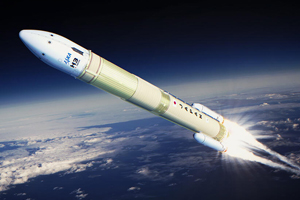
(No earlier than 10 Aug) Japan to launch the MICHIBIKI No. 7 | Quasi-Zenith Satellite System (QZS-7) navigation satellite. Launch window remains open through...
Participants will receive theoretical and hands-on training in electron imaging and X-ray spectroscopy for application to planetary samples. This training opportunity is targeted at...
"Leading Australia’s Space Future for Our Strategic Advantage". Southern Space 2026 brings together decision-makers who set the direction for Australia’s space sector. It is...
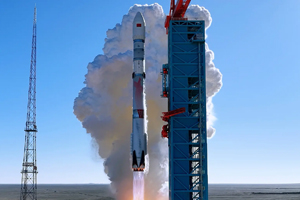
The second test launch of LandSpace's ZQ-3 rocket with undisclosed test payloads. Zhuque-3 first stage booster will attempt to land on its downrange landing...
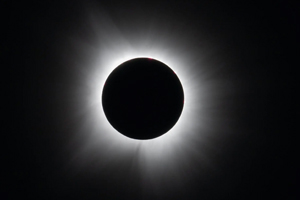
A total solar eclipse with a magnitude of 1.0386 (greatest eclipse 17:47:06 UTC) will be visible in parts of Greenland, Iceland, northern Russia, the Atlantic...
Includes presentation of the Neil Armstrong Award of Excellence, activities for the new class of Astronaut Scholars, 2-day Technical Conference where Scholars present their...
During U.S. spacewalk 97, two astronauts will replace a Space-to-Ground antenna on the orbital complex. The antenna is a critical communication system NASA uses...
Key themes include: Characterizing exoplanet-host solar-like stars; Star-planet interactions; Planet populations around solar-like stars. At University of Liège.
 With its pioneering launch on 4 July 2008 in California, USA, the Galaxy Forum program is beginning to catalyze classrooms throughout Hawaii, mainland USA, Canada and China with its mission to enhance and advance 21st Century Education through awareness of our Milky Way Galaxy. Now entering its third year, the Galaxy Forum architecture is emerging in Asia with Forums scheduled in Bangalore, India (9 August), Beijing, China (14 Aug) and Tokyo, Japan (4 December), and others being planned for 2011 and beyond. Following 2 successful Galaxy Forums in Beijing in 2008 and 2009, this year’s China event will take place at the Beijing Planetarium 23-meter Dome featuring prominent astronomy artist and Galaxy Garden creator Jon Lomberg (BL) and International Lunar Observatory Association Director Steve Durst (CL). China press coverage on the Galaxy Forum Beijing is expected to attract considerable national and international attention throughout the world’s most populous country and beyond. The events in India and Japan will be hosted at the Nehru Planetarium and Miraikan Space and Science Center, respectively. The Galaxy Forums connect educators, teachers, students and astronomers of all kinds in a series of community events featuring local experts discussing topics related to our Galaxy and others, as well as ways to integrate learning about our place in the Galaxy into all levels of all classrooms around the world. Galaxy Forum is also designed to attract philanthropic sponsors for the upcoming International Lunar Observatory mission, set to conduct observation and communication on the surface of the Moon NET December 2012 starting with the highly directional, educational and iconic “Galaxy First Light” image. Pictured: Professor U.R. Rao (BC) (Credit: Galaxy Garden, Nehru Planetarium, Beijing Planetarium, ISRO, ILOA)
 Space industry leaders and advocates worldwide will gather in the USA to discuss the latest technological advances in space exploration. On August 9-12, the American Institute of Aeronautics and Astronautics and Utah State University will hold the 24th Annual Conference on Small Satellites in Logan UT. Small satellites have become instrumental in the space community with low manufacturing costs and a proven track record in scientific and commercial missions. This year’s theme, ‘Connecting the Dots: Bringing Visionaries, System Implementers & Mission Sponsors Together,’ will focus on the increasing need for small satellites and enhancing synergistic efforts between technology advocates and investors. Jean‐Michel Contant (TL), International Academy of Astronautics Secretary General will deliver the keynote address followed by technical sessions covering mission payloads, future missions of small satellites and a current market overview. Undergraduate and graduate students will also showcase their work on small satellite concepts and missions in the 18th Frank J. Redd Scholarship Competition. On Aug 13-15, The Space Engineering and Science Institute will present the 4th Space Elevator Conference in Redmond WA. Participants will discuss the International Space Elevator Consortium study on space debris and the 4 Pillars of Space Elevator Development in fields of science / technical, political / social, legal and economic. The 3-day technical event will feature SE overview, a keynote address on space debris mitigation by Jerome Pearson (BR), The NASA Centennial Challenge and Strong Tether Competition, 5 minute shotgun science sessions and free public presentations. (Credit: smallsat.org, spaceelevatorblog.com, NASA, n2jrf.com, Alan Chan)
 = All times for terrestrial events in local time unless noted.
 = All times for international terrestrial events in local time unless noted.
 = All times for space events, and…
 = All times for international space / astro events in Hawaii Standard Time unless noted. Add 10 hours to obtain UT (‘Universal Time;’ Greenwich, England).
 Aug 9 — International Space Station, LEO: E-24 crew members prepare for upcoming spacewalk on Wednesday to restore a faulty cooling system.
 Aug 9 — International Lunar Observatory Association, Bangalore, India: ‘Galaxy Forum India 2010: Galaxy Education in the 21st Century,’ held at Nehru Planetarium.
 Aug 9-12 — American Institute of Aeronautics and Astronautics, Utah State University, Logan UT: ‘24th Annual Conference on Small Satellites: Bringing Visionaries, System Implementers and Mission Sponsors Together.’
 Aug 12 — United Launch Alliance, Launch Atlas 5 / AEHF 1, Cape Canaveral FL: ULA Rocket Atlas 5 to launch 1st Advanced Extremely High Frequency satellite of the Space-Based Surveillance System to track satellites in orbit around Earth.