Antarctica Astronomy & Astrophysics Meeting in China
Antarctica provides one of the best environments on Earth for astronomical observation. Significant astronomical buildup is expected on the southernmost continent over the next decade to take advantage of these ideal conditions. Astronomers and astronomical engineers will come together in Xi’an China on August 18-21 to plan these next steps during the meeting entitled, “Astronomy & Astrophysics in Antarctica.” The goals for the meeting are to explore the site properties, evaluate the risks involved and assess the technical challenges in building astronomical instruments on the Antarctica Plateau. Additional topics for the meeting include prioritizing science programs for the upcoming years and exploring how to maximize international cooperation on the continent. Particular attention will be paid to Dome A, considered for many years to be the ultimate observing site on the plateau, and hence the Earth. With 4,093 m altitude (highest on the continent), low water vapor content and average winter temperatures of -70 degrees C (coldest on Earth), Dome A is seen as an ideal site for infrared and sub-millimeter observations. During the meeting, Michael Ashley (BL), of the California Institute of Technology, will speak about PLATO operations and Dome A site properties and Li-Fan Wang (BR), of the Chinese Center for Antarctic Astronomy (CCAA), will give a lecture on Antarctica Schmidt Telescopes. Cosponsors include the CCAA, Key Laboratories of Radio Astronomy and the National Astronomical Observatories, CAS. (Credit: unsw.edu.au, tamu.edu, NAOC, CCAA)
Aquarius Satellite Mission Focus of von Karman Lecture Series
The Jet Propulsion Laboratory in Pasadena CA will hold the next von Karman Lecture Series, ‘Aquarius: Studying Sea Surface Salinity (SSS) from Space’ on August 19-20. Guest lecturer and Aquarius Project Manager Amit Sen (BR) will discuss the satellite mission set to launch NET 2011. Data gathered will provide the 1st global observations of SSS and an in-depth understanding of the correlation between the Earth’s water cycle, ocean circulation and climate. Set to last 3 years, the mission will deliver 150km resolution SSS maps and achieve an accuracy of 0.2 psu, approximately a ‘pinch’ of a teaspoon of salt in 3.8L of water. The science instruments on board Aquarius include 3 radiometers for salinity detection and a scatterometer to ensure correct readings. By tracking SSS, scientists can monitor land runoff, melting / freezing of sea ice and evaporation / precipitation over the oceans to predict future climate conditions. The mission is currently being developed by NASA JPL and GSFC as well as international cooperation with the Argentina space agency, Comision Nacional de Actividades Espaciales (CONAE). The mission is expected to cost US$242 million. (Credit: NASA, CONAE)
= All times for terrestrial events in local time unless noted.
= All times for international terrestrial events in local time unless noted.
= All times for space events, and…
= All times for international space / astro events in Hawaii Standard Time unless noted. Add 10 hours to obtain UT (‘Universal Time;’ Greenwich, England).
Weekly Planet Watch – Morning Planets: Jupiter (S) / Evening Planets: Venus (W), Mars (W), Saturn (W), Jupiter (ESE).
MONDAY
Aug 16 — International Space Station, LEO: Flight Engineers Doug Wheelock and Tracy Caldwell-Dyson to install spare pump on S1 truss and prepare for a possible 4th spacewalk to clean up work site.
Aug 16 — NASA Lunar Reconnaissance Orbiter (LRO), Lunar Orbit: Spacecraft continues to capture detailed imagery at 0.50 m/pixels which allow scientists to further study volcanic features sinuous rilles, mare domes, non-mare domes and pyroclastic deposits.
Aug 16 — Mars Rover Spirit, Red Planet: Scientists continue “Sweep & Beep” (20-minute listening intervals) to investigate current state of rover which has remained silent since March 22, 2010.
Aug 16 — University of Calgary Institute for Space Imaging Science, Calgary, Alberta, Canada: ‘GALFACTS / POSSUM 2010 Workshop.’
Aug 20 — US Space and Rocket Center, Huntsville AL: ‘Space Camp Hall of Fame,’ to honor graduates, former employees and supporters who have distinguished themselves in their respective careers or made considerable in-kind contributions in an effort to help further the goals of the Space Camp program
SATURDAY
Aug 21 — San Diego Space Society, Space Travelers Emporium, San Diego CA: ‘Project Build Session,’ get together with other SD Space members to work on rockets, rovers and plenty of other projects to build.
Aug 21-27 — International Mineralogical Association (IMA), Budapest, Hungary: ‘20th General Meeting of the IMA 2010,’ which will feature special sessions on Planetary Mineralogy.
Includes ~150 meetings covering the fields of COSPAR Scientific Commissions / Panels / Task Groups, such as SC B: The Earth-Moon System, Planets, and...
At the Palais des Nations and online. Outer space is entering a renewed phase of strategic importance, defined by rapid innovation, growing competition and deepening...
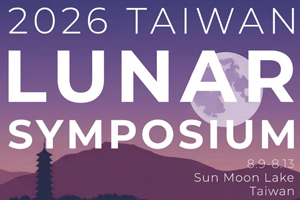
This international lunar science meeting has two objectives: to provide a platform for leading experts to review recent advances across lunar research, from the...
At CSIR International Convention Centre. Key topics are Earth Observation, Developing Space Tourism, Space Supply Manufacturing. Cultural tours are offered.
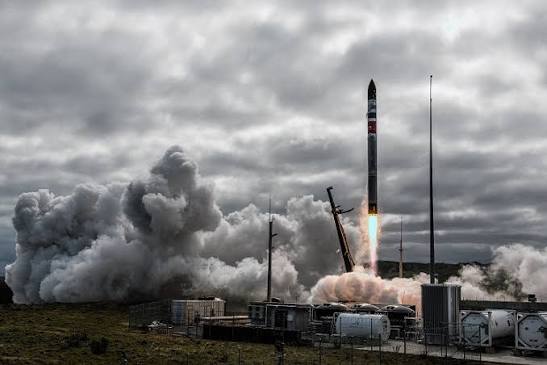
(No earlier than 10 Aug) Japan to launch the MICHIBIKI No. 7 | Quasi-Zenith Satellite System (QZS-7) navigation satellite. Launch window remains open through...
Participants will receive theoretical and hands-on training in electron imaging and X-ray spectroscopy for application to planetary samples. This training opportunity is targeted at...
"Leading Australia’s Space Future for Our Strategic Advantage". Southern Space 2026 brings together decision-makers who set the direction for Australia’s space sector. It is...
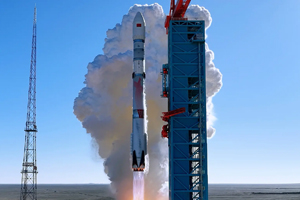
The second test launch of LandSpace's ZQ-3 rocket with undisclosed test payloads. Zhuque-3 first stage booster will attempt to land on its downrange landing...
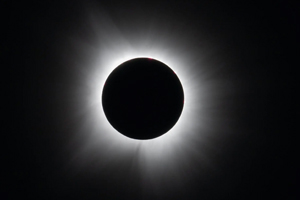
A total solar eclipse with a magnitude of 1.0386 (greatest eclipse 17:47:06 UTC) will be visible in parts of Greenland, Iceland, northern Russia, the Atlantic...
Includes presentation of the Neil Armstrong Award of Excellence, activities for the new class of Astronaut Scholars, 2-day Technical Conference where Scholars present their...
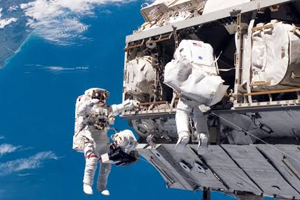
During U.S. spacewalk 97, two astronauts will replace a Space-to-Ground antenna on the orbital complex. The antenna is a critical communication system NASA uses...
Key themes include: Characterizing exoplanet-host solar-like stars; Star-planet interactions; Planet populations around solar-like stars. At University of Liège.
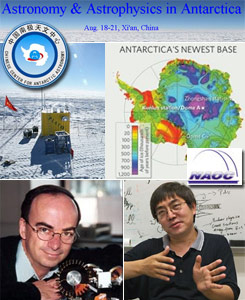 Antarctica provides one of the best environments on Earth for astronomical observation. Significant astronomical buildup is expected on the southernmost continent over the next decade to take advantage of these ideal conditions. Astronomers and astronomical engineers will come together in Xi’an China on August 18-21 to plan these next steps during the meeting entitled, “Astronomy & Astrophysics in Antarctica.” The goals for the meeting are to explore the site properties, evaluate the risks involved and assess the technical challenges in building astronomical instruments on the Antarctica Plateau. Additional topics for the meeting include prioritizing science programs for the upcoming years and exploring how to maximize international cooperation on the continent. Particular attention will be paid to Dome A, considered for many years to be the ultimate observing site on the plateau, and hence the Earth. With 4,093 m altitude (highest on the continent), low water vapor content and average winter temperatures of -70 degrees C (coldest on Earth), Dome A is seen as an ideal site for infrared and sub-millimeter observations. During the meeting, Michael Ashley (BL), of the California Institute of Technology, will speak about PLATO operations and Dome A site properties and Li-Fan Wang (BR), of the Chinese Center for Antarctic Astronomy (CCAA), will give a lecture on Antarctica Schmidt Telescopes. Cosponsors include the CCAA, Key Laboratories of Radio Astronomy and the National Astronomical Observatories, CAS. (Credit: unsw.edu.au, tamu.edu, NAOC, CCAA)
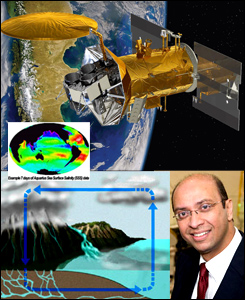 The Jet Propulsion Laboratory in Pasadena CA will hold the next von Karman Lecture Series, ‘Aquarius: Studying Sea Surface Salinity (SSS) from Space’ on August 19-20. Guest lecturer and Aquarius Project Manager Amit Sen (BR) will discuss the satellite mission set to launch NET 2011. Data gathered will provide the 1st global observations of SSS and an in-depth understanding of the correlation between the Earth’s water cycle, ocean circulation and climate. Set to last 3 years, the mission will deliver 150km resolution SSS maps and achieve an accuracy of 0.2 psu, approximately a ‘pinch’ of a teaspoon of salt in 3.8L of water. The science instruments on board Aquarius include 3 radiometers for salinity detection and a scatterometer to ensure correct readings. By tracking SSS, scientists can monitor land runoff, melting / freezing of sea ice and evaporation / precipitation over the oceans to predict future climate conditions. The mission is currently being developed by NASA JPL and GSFC as well as international cooperation with the Argentina space agency, Comision Nacional de Actividades Espaciales (CONAE). The mission is expected to cost US$242 million. (Credit: NASA, CONAE)
 = All times for terrestrial events in local time unless noted.
 = All times for international terrestrial events in local time unless noted.
 = All times for space events, and…
 = All times for international space / astro events in Hawaii Standard Time unless noted. Add 10 hours to obtain UT (‘Universal Time;’ Greenwich, England).
 Aug 16 — International Space Station, LEO: Flight Engineers Doug Wheelock and Tracy Caldwell-Dyson to install spare pump on S1 truss and prepare for a possible 4th spacewalk to clean up work site.
 Aug 16 — University of Calgary Institute for Space Imaging Science, Calgary, Alberta, Canada: ‘GALFACTS / POSSUM 2010 Workshop.’
 Aug 16-18 — NASA, Gaylord National Harbor MD: ‘1st Information Technology Summit.’