Many Firsts to Be Accomplished in Polar Orbit by Fram2
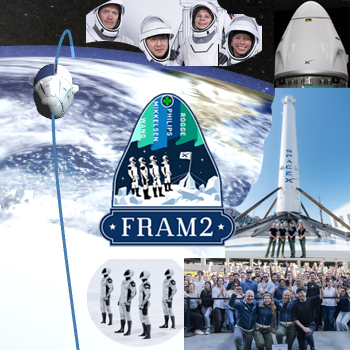
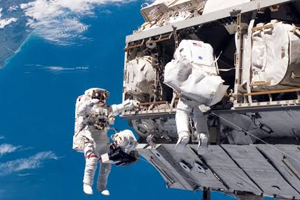
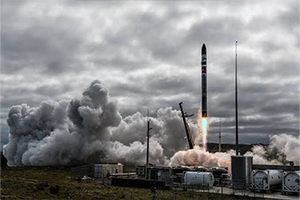
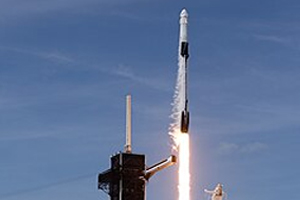
The privately funded Fram2 mission sees 4 astronauts aboard a Crew Dragon spacecraft atop a Falcon 9, launching NET Mar 31 from Florida and headed to LEO, ~430km, as the first human spaceflight over Earth polar regions. Poles are invisible to astronauts on the ISS. Apollo Astronauts could see them, but only from far away. Mission Commander and funder Chun Wang has been to the North Pole and hopes to “make space more accessible to us all. The 22 science and research projects onboard will inform how we prepare for future missions.” Born in China, living in Norway, he is a cryptocurrency miner and citizen of Malta. Top-notch polar guide Eric Philips of Australia, at age 62 becoming the astronaut he wanted to be as a kid, will be the 4th Australian astronaut and 1st to orbit. Also on crew are innovators in using equipment in harsh conditions, one in cameras, one in robotics. Jannicke Mikkelsen, filmmaker born in Edinburgh, now a Norwegian citizen, flew in honor of the 50th anniversary of Apollo 11 on the Guinness-record G650ER flight between the poles in about 46 hours. Fram2 will make that trip in 46 minutes. Rabea Rogge will be the first female German astronaut. She is pursuing a PhD in Norway, works to advance robotic technology in extreme environments. Fram means forward in Norwegian. Other firsts include growing mushrooms, being X-rayed in space, having brain MRI immediately after landing. (Image credits: Fram2/SpaceX)
MONDAY
☆Mar 31 — International Space Station, ~415-km LEO: Expedition 72 crew of Commander Alex Ovchinin, Ivan Vagner, Don Pettit, and recently arrived SpaceX Crew-10 Anne McClain, Nichole Ayers, Takuya Onishi, Kirill Peskov are expecting arrival of 3 more crew launching on Soyuz MS-27 early next week.
☆Mar 31 — Tiangong Space Station, ~390-km LEO: 2 of Shenzhou 19 three-member crew installing final portion of space debris shielding, riding the robotic arm to photograph portions of the exterior while coordinating with team member not on EVA; conducting experiments in a high-temperature cabinet and using new health assessment system; Shenzhou-20 atop Long March 2F are always on standby should a quick launch be required.
★ Mar 31 — SpaceX, Launch Falcon 9 / Crew Dragon, Cape Canaveral SFS FL: First human spaceflight to LEO over polar regions; 3-5-day research mission named “Fram2” after Norwegian polar research ship; funded by Mission Commander Chun Wang, crew includes Jannicke Mikkelsen, Eric Philips, Rabea Rogge; launch window opens 21:47 EDT.
● Mar 31 — NASA, Online / Washington DC: Registration due for Phase 1 of NASA LunaRecycle Challenge; offers up to US$3M in prizes for design / development of lunar mission recycling solutions.
● = Terrestrial and o = International terrestrial events in local time; ☾ = Moon, ★ = Space and ☆ = International space events in Hawai’i time unless noted.
Solar System Complete: Juno@Jupiter for ~6 More Months, Saturn-Uranus-Neptune-Kuiper Belt Exploration
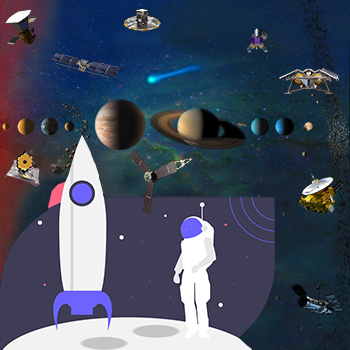
Awe-inspiring NASA Juno spacecraft is headed toward its 70th science flyby / 71st perijove on April 1. There are, sadly, only 5 more close flybys of the gas giant before the craft is directed into the atmosphere of Jupiter for a controlled destruction after September 17. During Juno’s prime mission (the first 35 orbits of Jupiter), it collected 3+ terabits of science data. The ESA JUICE probe has 2 flybys of Earth and 1 of asteroid 223 Rosa to complete before its planned arrival at Jupiter in July 2031. The mission will have close flybys of Galileo moons Europa and Ganymede, and impact the latter after at least 4.5 years of science. Recently Saturn was confirmed by the IAU to have an additional 128 moons (thanks to the use of the Canada-France-Hawai’i Telescope), bringing its total to 274. The next mission to Saturn may be the proposed NASA Dragonfly mission, a rotorcraft drone launching in July 2028 to land on Titan in 2034. The CNSA Tianwen-4 mission, launching around 2029, will have two spacecraft—one will explore Jupiter and its moon Callisto, and the other will flyby Uranus in 2045. Not yet approved, the proposed Tianwen-5 could be a dedicated Uranus or Neptune mission, and Tianwen-6 could reach the Kuiper Belt / interstellar space. The NASA New Horizons is expected to leave the Kuiper belt between 2028 and 2029. (Image credits: NASA, ESA, SwRI, CNSA, ASI, et al)
Ongoing…
☾ Jan 15 – Jun 5+ — Hakuto-R M2 “Resilience”, Elliptical Lunar Orbit:ispace Japan Resilience lander due on Moon June 5 with ~5-kg micro-rover and other payloads; to Mare Frigoris, ~60.5°N, 4.6°W; launched from FL Jan 15.
● Mar 10 – Apr 16 — American Institute of Aeronautics and Astronautics (AIAA), Online / Reston VA: Course: Design of Space Launch Vehicles; 36 classroom hours, 3.6 CEU/PDH; US$695-1,695.
☾ Mar 30 — Firefly Aerospace Blue Ghost Lunar Lander Mission 1, Mare Crisium ~18.56°N, 61.81°E, Lunar Surface: Firefly Aerospace may attempt to revive lunar lander after lunar sunrise.
★ NET Mar 24 — NASA, University of Alaska Fairbanks, Launch 2 Malemute, then Black Brant XII / tracers, Poker Flat Research Range, Fairbanks AK: Black Brant launch to altitude 250km into auroral substorm hoped before launch window closes Apr 6, Malemutes flew Mar 26; seeking info on far upper atmosphere; updates here.
●Mar 28 – Apr 20 — The Kennedy Center, Washington DC:EARTH to SPACE: Arts Breaking the Sky; international festival will feature Apollo 16 Moonwalker Charlie Duke, many showings of Tom Hanks The Moonwalkers in 360° format, Astrolab FLEX lunar rover, other lunar / space presentations.
☆ NET Mar 29 — Isar Aerospace / Launch Spectrum, Tromso, Norway: First orbital flight of the Isar Spectrum launch vehicle; test flight to SSO.
TUESDAY
☆ Apr 1 — Deep Space, Solar Elliptical Orbit: Parker Solar Probe is headed for its next close approach in June, relying on a carbon foam shield designed to protect from temperatures ~1,430° C —hot enough to melt steel—while keeping instruments behind it at room temperature; the probe creators—40+ partner organizations—are receiving the Robert J. Collier Trophy.
● Apr 1 — The Kennedy Center, Washington DC: Charlie Duke, 1 of 4 living Astronauts who has walked on the Moon, featured in the 2 STARMUS events today at EARTH to SPACE: Arts Breaking the Sky international festival; 17:00 and 20:00 EDT.
● Apr 3 — Beyond Earth Institute, Online / New York NY: Sustaining Innovation in the New Space Age; panel discussion via zoom; panel members from Japan, UK, Italy, USA; 09:00-10:30 EDT.
● Apr 3-5 — American Institute of Aeronautics and Astronautics (AIAA), NC, MN and OH:Regional Student Conferences.
☆ Apr 4 — Apollo Asteroid 2020 FH4: Near-Earth Flyby (0.032 AU)
SATURDAY
★ Apr 5 — Juno, Perijove 71 / 70th Science Flyby,Jupiter Orbit: NASA craft to perform Jupiter flyby during Perijove 71, its 71st close flyby of Jupiter and 70th science flyby with instruments turned on.
●Apr 6-9 — Navy League of the United States, National Harbor MD: Sea-Air-Space 2025; features newly confirmed 79th Secretary of the Navy, John C. Phelan; Navy League founded 1902.
☾ Apr 6 — Moon: 2.72° NNE of Beehive Cluster, 10:00.
☆ Apr 6 — Apollo Asteroid 2025 DV40: Near-Earth Flyby (0.042 AU)
At the Spokane Convention Center. The meeting will have a broad scope, with a wide-ranging program of science and workforce topics, and celebrating planetary...
Convene, connect, and collaborate at the 19th annual von Braun Space Exploration Symposium! This year’s event will spotlight how bold ideas, emerging technologies, and...
Themes include: Space & the Arctic; Space & AI; Space & International Collaboration. There is a Student Session, a Technical Session, a Frontier Session,...
Oslo Spaceport Norway offers monthly a knowledgeable speaker and opportunity for networking, 17:00-20:00 local time; free entry but registration required. Ground Control is for...
45 satellites to launch for Amazon Leo, formerly named Project Kuiper. This LEO mega constellation will offer broadband internet access with 3,276 satellites.
Occurring 31 October from 09:00-11:00 local time (16:00-18:00 HST, 19:00-21:00 PDT, 22:00-24:00 EDT on 30 October), this Galaxy Forum will be in hybrid format...
Originally planned around this date for Wenchang, China -- TBC (to be confirmed); As the only professional association for astronauts, ASE supports the advancement of...
Coordinating Division Division C Education, Outreach and Heritage The IAU Symposium on Innovative Research and Techniques in Astronomy Communication will take place from November...
Change clocks back 1 hour from Daylight Saving to Standard Time; does not include Hawai’i, Arizona (except the Navajo Nation), American Samoa, Guam, Northern...
ESWW is the main annual event in the European Space Weather and Space Climate calendar. It is an international meeting organised annually within the...
IAU Symposium: IAUS409 - A Journey Towards Effective Astronomy Communication; online and at National Astronomical Observatory of Japan, 2-21-2 Osawa Mitaka, Tokyo. Topics include:...
Launch Complex 1, ~39°S, Mahia Peninsula, New Zealand
iQPS Launch 9, an Earth observation satellite with Synthetic aperture radar for Japan-based imaging company iQPS, to launch on "The Sea God Surveys" mission...
Launch window 10:34am - 2:34pm local time for the 15th batch of classified satellites for a reconnaissance constellation built by SpaceX and Northrop Grumman...