IAA, JAXA Symposium Asks Space Sector: ‘What Can We Do for Our Mother Earth?’
The International Academy of Astronautics, the Japan Aerospace Exploration Agency Global and the Government of Aichi prefecture, Japan are hosting a symposium on Global Climate Change on August 30-31 in Nagoya City, Japan. With global temperatures currently rising at a rate of .16°C / decade, climate change is quickly becoming one of the most urgent issues for humanity’s sustainable future. Space systems have played an important role in climate studies by collecting many different types of information about our planet and its climate on a global scale. Advanced space technologies, such as alternative energy development and space resource utilization, could also provide solutions to help curb the potentially devastating effects of climate change. Topics for the symposium include Earth observation from space, space-ground system integration, application of space technology, alternative energy / resources from space and environment conscious space development. The symposium kicks off the IAA 50th anniversary celebration. A parallel workshop to provide focused input to the IAA climate change / green systems study group report is set for Aug 31. The workshop is in preparation for the planned ‘Heads of Space Agencies Summit’ in Washington DC on Nov 17. (Credit: IAA, JAXA, NASA)
International Focus to Advance Venus Exploration
The mysteries of Venus will be discussed at the 2010 Venus Exploration Analysis Group (VEXAG) International Workshop on August 30-September 2 in Madison WI. With the theme, ‘Venus, Our Closest Earth-like Planet: From Surface to Thermosphere – How does it Work?’ the conference will feature over 75 comprehensive presentations from international researchers and scientists who will attempt to answer this question. Despite nearly 5 decades of data gathered by various spacecrafts such as Mariner 5 & 10, Venera, Pioneer Venus, VeGa 1 & 2, Galileo and MESSENGER, questions still linger in regards to the dynamics, chemistry, climatology and evolution of the Venus atmosphere and implications for Earth’s own climate evolution. The Workshop will synthesize scientific data between various international missions with presentations given by JAXA scientists Takeshi Imamura (TR) and Masato Nakamura on the Japanese Venus Orbiter ‘Akatsuki’ (TC) launched earlier this year in May. Paris Observatory scientist Thomas Widemann (BR) will be on hand to discuss Venus science from Earth-based observations. The Workshop will be followed by the 8th VEXAG meeting on Sep 2 which will summarize Venus missions Akatsuki, Venus-Express (BL), the Venus In-Situ Explorer Project (C) and several student-based projects. (Credit: VEXAG, JAXA, Paris Observatory, ESA, NASA)
= All times for terrestrial events in local time unless noted.
= All times for international terrestrial events in local time unless noted.
= All times for space events, and…
= All times for international space / astro events in Hawaii Standard Time unless noted. Add 10 hours to obtain UT (‘Universal Time;’ Greenwich, England).
Weekly Planet Watch – Morning Planets: Jupiter (S) / Evening Planets: Venus (WSW), Mars (WSW), Saturn (WSW), Jupiter (ESE).
MONDAY
Aug 30 — International Space Station, LEO: All systems aboard the station continue to function well following spacewalks as E-24 crew members continue with maintenance and science activities.
Aug 30 — NASA Lunar Reconnaissance Orbiter (LRO), Lunar Orbit: LRO operating nominally in low polar orbit (50km) and continues to return global data of lunar surface.
Aug 30 — Mars, Red Planet: Upcoming 2011 Mars missions include NASA Mars Science Laboratory rover, Russia Phobos-Grunt mission and China Yinghuo orbiter.
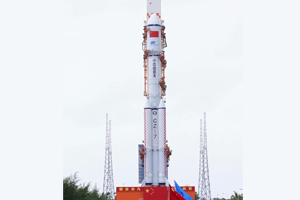
NET Aug 30 — Xichang Satellite Launch Center, Launch Long March 3B / Chinasat 6A, Xichang, China: Chinese Long March 3B Rocket to launch Chinasat 6A communications satellite.
Aug 30 — Asteroid 4055 Magellan: Closest Approach to Earth (0.560 AU).
Continued from . . .
Aug 23 — Student Association for Space Exploration, Barcelona, Spain: ‘Space Camp Barcelona,’ for students 8-12 who are interested science, technology and space; through Sep 3.
Aug 31 — Asteroid 1999 CG9: Near-Earth Flyby (0.083 AU).
Aug 31 — Asteroid 1566 Icarus: Closest Approach to Earth (0.602 AU).
WEDNESDAY
Sep 1 —Deep Space: Scientists continue to observe newly discovered Solar System 127-light years from Earth containing 5 new Exoplanets approximately 12-25 times Earth’s Mass and a 6th planet with 64 times Earth’s mass.
Sep 1, 3 — SHIFTboston, Boston MA / Online: Sep 1 Application deadline for Moon Capital Competition to design a 2nd generation living and working Moon habitat; Sep 3 submission deadline due online.
Includes ~150 meetings covering the fields of COSPAR Scientific Commissions / Panels / Task Groups, such as SC B: The Earth-Moon System, Planets, and...
At the Palais des Nations and online. Outer space is entering a renewed phase of strategic importance, defined by rapid innovation, growing competition and deepening...
This international lunar science meeting has two objectives: to provide a platform for leading experts to review recent advances across lunar research, from the...
At CSIR International Convention Centre. Key topics are Earth Observation, Developing Space Tourism, Space Supply Manufacturing. Cultural tours are offered.
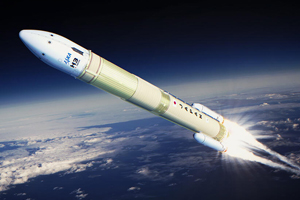
(No earlier than 10 Aug) Japan to launch the MICHIBIKI No. 7 | Quasi-Zenith Satellite System (QZS-7) navigation satellite. Launch window remains open through...
Participants will receive theoretical and hands-on training in electron imaging and X-ray spectroscopy for application to planetary samples. This training opportunity is targeted at...
"Leading Australia’s Space Future for Our Strategic Advantage". Southern Space 2026 brings together decision-makers who set the direction for Australia’s space sector. It is...
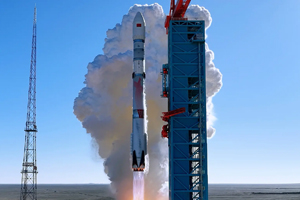
The second test launch of LandSpace's ZQ-3 rocket with undisclosed test payloads. Zhuque-3 first stage booster will attempt to land on its downrange landing...
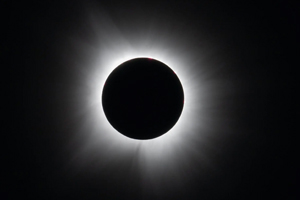
A total solar eclipse with a magnitude of 1.0386 (greatest eclipse 17:47:06 UTC) will be visible in parts of Greenland, Iceland, northern Russia, the Atlantic...
Includes presentation of the Neil Armstrong Award of Excellence, activities for the new class of Astronaut Scholars, 2-day Technical Conference where Scholars present their...
During U.S. spacewalk 97, two astronauts will replace a Space-to-Ground antenna on the orbital complex. The antenna is a critical communication system NASA uses...
Key themes include: Characterizing exoplanet-host solar-like stars; Star-planet interactions; Planet populations around solar-like stars. At University of Liège.
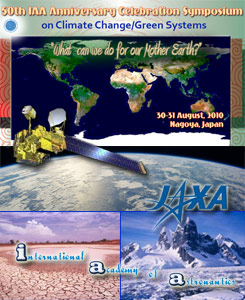 The International Academy of Astronautics, the Japan Aerospace Exploration Agency Global and the Government of Aichi prefecture, Japan are hosting a symposium on Global Climate Change on August 30-31 in Nagoya City, Japan. With global temperatures currently rising at a rate of .16°C / decade, climate change is quickly becoming one of the most urgent issues for humanity’s sustainable future. Space systems have played an important role in climate studies by collecting many different types of information about our planet and its climate on a global scale. Advanced space technologies, such as alternative energy development and space resource utilization, could also provide solutions to help curb the potentially devastating effects of climate change. Topics for the symposium include Earth observation from space, space-ground system integration, application of space technology, alternative energy / resources from space and environment conscious space development. The symposium kicks off the IAA 50th anniversary celebration. A parallel workshop to provide focused input to the IAA climate change / green systems study group report is set for Aug 31. The workshop is in preparation for the planned ‘Heads of Space Agencies Summit’ in Washington DC on Nov 17. (Credit: IAA, JAXA, NASA)
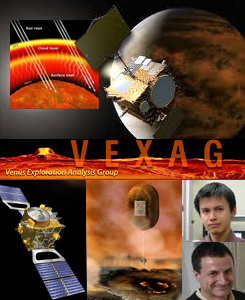 The mysteries of Venus will be discussed at the 2010 Venus Exploration Analysis Group (VEXAG) International Workshop on August 30-September 2 in Madison WI. With the theme, ‘Venus, Our Closest Earth-like Planet: From Surface to Thermosphere – How does it Work?’ the conference will feature over 75 comprehensive presentations from international researchers and scientists who will attempt to answer this question. Despite nearly 5 decades of data gathered by various spacecrafts such as Mariner 5 & 10, Venera, Pioneer Venus, VeGa 1 & 2, Galileo and MESSENGER, questions still linger in regards to the dynamics, chemistry, climatology and evolution of the Venus atmosphere and implications for Earth’s own climate evolution. The Workshop will synthesize scientific data between various international missions with presentations given by JAXA scientists Takeshi Imamura (TR) and Masato Nakamura on the Japanese Venus Orbiter ‘Akatsuki’ (TC) launched earlier this year in May. Paris Observatory scientist Thomas Widemann (BR) will be on hand to discuss Venus science from Earth-based observations. The Workshop will be followed by the 8th VEXAG meeting on Sep 2 which will summarize Venus missions Akatsuki, Venus-Express (BL), the Venus In-Situ Explorer Project (C) and several student-based projects. (Credit: VEXAG, JAXA, Paris Observatory, ESA, NASA)
 = All times for terrestrial events in local time unless noted.
 = All times for international terrestrial events in local time unless noted.
 = All times for space events, and…
 = All times for international space / astro events in Hawaii Standard Time unless noted. Add 10 hours to obtain UT (‘Universal Time;’ Greenwich, England).
 Aug 30 — International Space Station, LEO: All systems aboard the station continue to function well following spacewalks as E-24 crew members continue with maintenance and science activities.