EuroSpaceward Conference to Focus on Carbon Nanotechnology and Space Elevator Systems
The 4th International Conference of EuroSpaceward: Carbon Nanotechnology and Space Elevator Systems will take place in Luxembourg on December 4-5. Carbon nanotubes have been constructed with length-to-diameter ratio of up to 132,000,000:1, significantly larger than any other material. Experts from around the world will discuss the latest research showing how the unique mechanical properties of this material can be exploited to facilitate the space elevator. Vesselin Shanov (TL), who has grown record length carbon nanotube arrays (BL) with his team at the University of Cincinnati, USA, will give the opening Keynote lecture on ‘Advances in synthesis and application of carbon nanotube materials.’ New research on space elevator systems and reports of international climber contests will be the focus of day 2 of the event. Akira Tsuchida of JAXA and Ted Semon (CL) of the International Space Elevator Consortium will provide outlooks on the future of space elevator work during the closing session. (Credit: EuroSpaceward, International Space Elevator Consortium)
Panel Discussion Set to Focus on Space Policy Implementation
Implementing National Space Policy will be the topic of a panel discussion on December 3 at the Space Enterprise Council (SEC) headquarters in Washington DC. Sponsored by SEC and the George Marshall Institute, the event will provide a forum for space experts and former congressional members to focus on lessons learned from past and present space policies and how it can be applied to current and future policies. Panelists include former Executive Secretary and White House National Space Council member Mark Albrecht (C), former Director of the Space Policy Institute John Logsdon (L), current House Armed Services Committee Kari Bingen, former retired Air Force Major Rosie Rosenberg and former Appropriations clerk, Paul Carliner (R). With its diverse membership and affiliation with TechAmerica, the SEC works to advance the interests of USA companies through advocacy with policymakers as well as provide an ideal business environment for space enterprise. (Credit: Space Enterprise Council, Geore Marshall Institute, NASA, 123nonstop.com, xprize.org)
= All times for terrestrial events in local time unless noted.
= All times for international terrestrial events in local time unless noted.
= All times for space events, and…
= All times for international space / astro events in Hawaii Standard Time unless noted. Add 10 hours to obtain UT (‘Universal Time;’ Greenwich, England).
Nov 29 — International Space Station, LEO: E-25 crew members continue science and maintenance activities as they prepare for the arrival of STS-133 Discovery crew.
Nov 29 — NASA Lunar Reconnaissance Orbiter (LRO), Lunar Orbit: All systems nominal in scientific phase of mission as LRO continues to return data from the Moon.
Nov 29 — Mars Rovers Opportunity & Spirit, Red Planet: Mars Rover Opportunity continues trek to Endeavour Crater, recently crossing 25km odometry mark; ‘Sweep & Beep’ paging techniques for Spirit have been unsuccessful as it remains silent at Home Plate.
Dec 1 — Deep Space, Milky Way: Scientists continue to observe HIBP 13044 b, an exoplanet with a minimum mass 1.25 times that of Jupiter that entered our galaxy from another galaxy.
Dec 1-2 — ESA, Frascati, Italy: ‘Terrafirma 6th User Workshop,’ event to share in the applications and understanding of ground movement monitoring which are emerging from this state-of-the-art satellite technology.
Dec 1 — Asteroid 2005 GC120: Near-Earth Flyby (0.043 AU).
THURSDAY
Dec 2 — Moon: 6.2° SSW of Venus; 08:00.
FRIDAY
NET Dec 3 — NASA, Launch Discovery STS-133,Cape Canaveral FL: USA mission to the International Space Station set to deliver the Express Logistics Carrier 4, a Multi-Purpose Logistics Module and critical spare components. Delayed from Nov 1, 2 & 4.
Dec 4 — Asteroid 5790 Nagasaki: Closest Approach to Earth (1.539 AU).
SUNDAY
NET Dec 5 — RSA, Launch Proton / Glonass, Baikonur Cosmodrome, Kazakhstan: RSA Proton Rocket to deploy trio of satellites for the Glonass navigation system.
Dec 5 — Mercury: 6.4° S of Pluto; 07:36.
Dec 5 — Moon: 2.5° N of Antares, 00:00; New Moon (Beginning of Lunation 1088).
Includes ~150 meetings covering the fields of COSPAR Scientific Commissions / Panels / Task Groups, such as SC B: The Earth-Moon System, Planets, and...
At the Palais des Nations and online. Outer space is entering a renewed phase of strategic importance, defined by rapid innovation, growing competition and deepening...
This international lunar science meeting has two objectives: to provide a platform for leading experts to review recent advances across lunar research, from the...
At CSIR International Convention Centre. Key topics are Earth Observation, Developing Space Tourism, Space Supply Manufacturing. Cultural tours are offered.
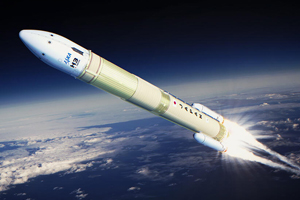
(No earlier than 10 Aug) Japan to launch the MICHIBIKI No. 7 | Quasi-Zenith Satellite System (QZS-7) navigation satellite. Launch window remains open through...
Participants will receive theoretical and hands-on training in electron imaging and X-ray spectroscopy for application to planetary samples. This training opportunity is targeted at...
"Leading Australia’s Space Future for Our Strategic Advantage". Southern Space 2026 brings together decision-makers who set the direction for Australia’s space sector. It is...
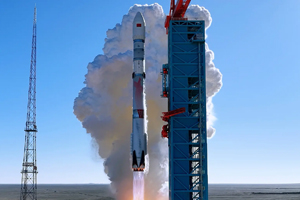
The second test launch of LandSpace's ZQ-3 rocket with undisclosed test payloads. Zhuque-3 first stage booster will attempt to land on its downrange landing...
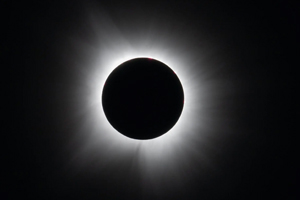
A total solar eclipse with a magnitude of 1.0386 (greatest eclipse 17:47:06 UTC) will be visible in parts of Greenland, Iceland, northern Russia, the Atlantic...
Includes presentation of the Neil Armstrong Award of Excellence, activities for the new class of Astronaut Scholars, 2-day Technical Conference where Scholars present their...
During U.S. spacewalk 97, two astronauts will replace a Space-to-Ground antenna on the orbital complex. The antenna is a critical communication system NASA uses...
Key themes include: Characterizing exoplanet-host solar-like stars; Star-planet interactions; Planet populations around solar-like stars. At University of Liège.
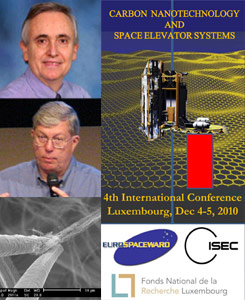 The 4th International Conference of EuroSpaceward: Carbon Nanotechnology and Space Elevator Systems will take place in Luxembourg on December 4-5. Carbon nanotubes have been constructed with length-to-diameter ratio of up to 132,000,000:1, significantly larger than any other material. Experts from around the world will discuss the latest research showing how the unique mechanical properties of this material can be exploited to facilitate the space elevator. Vesselin Shanov (TL), who has grown record length carbon nanotube arrays (BL) with his team at the University of Cincinnati, USA, will give the opening Keynote lecture on ‘Advances in synthesis and application of carbon nanotube materials.’ New research on space elevator systems and reports of international climber contests will be the focus of day 2 of the event. Akira Tsuchida of JAXA and Ted Semon (CL) of the International Space Elevator Consortium will provide outlooks on the future of space elevator work during the closing session. (Credit: EuroSpaceward, International Space Elevator Consortium)
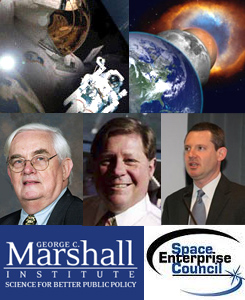 Implementing National Space Policy will be the topic of a panel discussion on December 3 at the Space Enterprise Council (SEC) headquarters in Washington DC. Sponsored by SEC and the George Marshall Institute, the event will provide a forum for space experts and former congressional members to focus on lessons learned from past and present space policies and how it can be applied to current and future policies. Panelists include former Executive Secretary and White House National Space Council member Mark Albrecht (C), former Director of the Space Policy Institute John Logsdon (L), current House Armed Services Committee Kari Bingen, former retired Air Force Major Rosie Rosenberg and former Appropriations clerk, Paul Carliner (R). With its diverse membership and affiliation with TechAmerica, the SEC works to advance the interests of USA companies through advocacy with policymakers as well as provide an ideal business environment for space enterprise. (Credit: Space Enterprise Council, Geore Marshall Institute, NASA, 123nonstop.com, xprize.org)
 = All times for terrestrial events in local time unless noted.
 = All times for international terrestrial events in local time unless noted.
 = All times for space events, and…
 = All times for international space / astro events in Hawaii Standard Time unless noted. Add 10 hours to obtain UT (‘Universal Time;’ Greenwich, England).
 Nov 29 — International Space Station, LEO: E-25 crew members continue science and maintenance activities as they prepare for the arrival of STS-133 Discovery crew.