Space X Launch Seeks to Prove Capabilities of New USA Commercial Space Vehicles
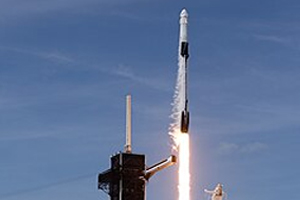
The 1st of 3 planned Space X Falcon 9 demonstration launches for NASA’s Commercial Orbital Transportation Services (COTS) program is currently scheduled for NET Tuesday, December 7 from Complex 40 at Cape Canaveral Air Force Station in Florida. Launch opportunities are also available on Dec 8 and 9. This will be the 1st flight of the Dragon spacecraft and the 1st commercial attempt to re-enter a spacecraft from orbit, a feat achieved by only 6 nations or government agencies (USA, Russia, China, Japan, India and ESA). To prolong its contract with NASA, Space X needs to demonstrate that its space capsule can achieve separation and orbital insertion, perform at least 4 orbits, re-enter Earth’s atmosphere and splash down in the Pacific Ocean. Its controllers also need to demonstrate various capabilities such as trajectory control, engine firing and maneuvering abilities. A prelaunch news conference is planned for Monday, Dec 6 at 13:30 at the press site at NASA’s Kennedy Space Center. (Credit: SpaceX)
ISRO to Launch GSAT-5 Communications Satellite NET Dec 10
The Indian Space Research Organization (ISRO) will advance with plans to launch the Geosynchronous Satellite Launch Vehicle (GSLV)-F06 (L) NET December 10 from Satish Dhawan Space Center, India. The GSLV will carry the GSAT-5 (INSAT-4D) (TR) communications satellite into Low Earth Orbit to replace the aged INSAT-2E as well as make up for the partial failure of the INSAT 4B, which lost 12 transponders from a power failure. With a mission life of 12 years, GSAT-5 (INSAT-4D) was configured as an exclusive C-band communication satellite and will carry 12 normal C-band transponders as well as 6 extended C-band transponders positioned at 83° east longitude. This will provide wider uplink and downlink coverage over India, Asia, Eastern Europe and Africa. ISRO also has plans to launch the PSLV / Resourcesat-2 (BR) NET January 2011. Pictured: ISRO Chairman K Radhakrishnan. (Credit: ISRO, Satnews)
= All times for terrestrial events in local time unless noted.
= All times for international terrestrial events in local time unless noted.
= All times for space events, and…
= All times for international space / astro events in Hawaii Standard Time unless noted. Add 10 hours to obtain UT (‘Universal Time;’ Greenwich, England).
Dec 6 — International Space Station, LEO: Remaining 3 E-26 crew members continue with ongoing maintenance and scientific projects while preparing for arrival of 3 additional flight engineers on Dec 17.
Dec 6 — NASA Lunar Reconnaissance Orbiter (LRO), Lunar Orbit: All systems nominal in scientific phase of mission as LRO continues to return data from the Moon.
Dec 6 — Mars Reconnaissance Orbiter, Red Planet: NASA MRO continues to collect data of Mars with HiRISE camera, recently making 16,784 images available to the public.
Dec 6 — The Space Show, Nationwide: This week’s Space Show continues to cover important space issues with informative interviews from space advocates.
Dec 6 — Phoenicid Meteors: The Phoenicid meteors radiate from the far southern Constellation Phoenix and may produce either a few meteors per hour or several hundred; Difficult to see in Northern Hemisphere.
Dec 6 — Asteroid 2000 AC6: Near-Earth Flyby (0.064 AU).
TUESDAY
Dec 7 — JAXA Akatsuki (Planet – C),Venus Orbit: Venus Orbit Insertion; Begin mission to map the circulation and vertical structure of the planet’s thick clouds.
NET Dec 7— SpaceX, Launch Falcon 9 / Dragon C1,Cape Canaveral FL: SpaceX Falcon 9 rocket to launch 1st Dragon C1 spacecraft which is intended to serve as resupply missions to the ISS. *Postponed until NET Dec 9.
Dec 7 — Puppid – Velid Meteors: Although this shower is weak, it does produce extremely bright fireballs and contains a series of radiants located at the southern constellations of Carina, Puppis, Pyxis and Vela.
Dec 8 — The Academy of Program / Project Engineering Leadership, Washington DC: ‘Masters with Masters,’ a series that brings together 2 master practitioners to reflect on their experiences, lessons learned and thoughts about upcoming challenges; With guest speakers NASA Administrator Charles Bolden and German Aerospace Center Chairman Johan-Dietrich Worner.
Dec 9 — Monocerotoid Meteors: A moderate shower radiating from Constellation Monoceros.
FRIDAY
NET Dec 10 — ISRO, Launch GSLV / GSAT 5,Sriharikota, India: ISRO to launch GSAT 5 communications satellite which will cover India, Asia, Africa and parts of Europe.
Dec 10 — NASA Headquarters, Washington DC: ‘NASA Public Day,’ for interested proposers to develop / manage US share of the International Space Station as a national laboratory.
Includes ~150 meetings covering the fields of COSPAR Scientific Commissions / Panels / Task Groups, such as SC B: The Earth-Moon System, Planets, and...
At the Palais des Nations and online. Outer space is entering a renewed phase of strategic importance, defined by rapid innovation, growing competition and deepening...
This international lunar science meeting has two objectives: to provide a platform for leading experts to review recent advances across lunar research, from the...
At CSIR International Convention Centre. Key topics are Earth Observation, Developing Space Tourism, Space Supply Manufacturing. Cultural tours are offered.
(No earlier than 10 Aug) Japan to launch the MICHIBIKI No. 7 | Quasi-Zenith Satellite System (QZS-7) navigation satellite. Launch window remains open through...
Participants will receive theoretical and hands-on training in electron imaging and X-ray spectroscopy for application to planetary samples. This training opportunity is targeted at...
"Leading Australia’s Space Future for Our Strategic Advantage". Southern Space 2026 brings together decision-makers who set the direction for Australia’s space sector. It is...
The second test launch of LandSpace's ZQ-3 rocket with undisclosed test payloads. Zhuque-3 first stage booster will attempt to land on its downrange landing...
A total solar eclipse with a magnitude of 1.0386 (greatest eclipse 17:47:06 UTC) will be visible in parts of Greenland, Iceland, northern Russia, the Atlantic...
Includes presentation of the Neil Armstrong Award of Excellence, activities for the new class of Astronaut Scholars, 2-day Technical Conference where Scholars present their...
During U.S. spacewalk 97, two astronauts will replace a Space-to-Ground antenna on the orbital complex. The antenna is a critical communication system NASA uses...
Key themes include: Characterizing exoplanet-host solar-like stars; Star-planet interactions; Planet populations around solar-like stars. At University of Liège.
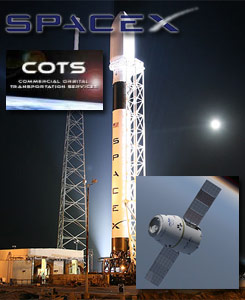 The 1st of 3 planned Space X Falcon 9 demonstration launches for NASA’s Commercial Orbital Transportation Services (COTS) program is currently scheduled for NET Tuesday, December 7 from Complex 40 at Cape Canaveral Air Force Station in Florida. Launch opportunities are also available on Dec 8 and 9. This will be the 1st flight of the Dragon spacecraft and the 1st commercial attempt to re-enter a spacecraft from orbit, a feat achieved by only 6 nations or government agencies (USA, Russia, China, Japan, India and ESA). To prolong its contract with NASA, Space X needs to demonstrate that its space capsule can achieve separation and orbital insertion, perform at least 4 orbits, re-enter Earth’s atmosphere and splash down in the Pacific Ocean. Its controllers also need to demonstrate various capabilities such as trajectory control, engine firing and maneuvering abilities. A prelaunch news conference is planned for Monday, Dec 6 at 13:30 at the press site at NASA’s Kennedy Space Center. (Credit: SpaceX)
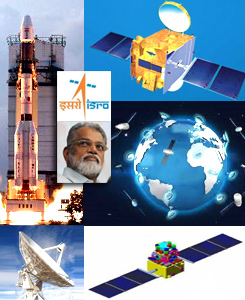 The Indian Space Research Organization (ISRO) will advance with plans to launch the Geosynchronous Satellite Launch Vehicle (GSLV)-F06 (L) NET December 10 from Satish Dhawan Space Center, India. The GSLV will carry the GSAT-5 (INSAT-4D) (TR) communications satellite into Low Earth Orbit to replace the aged INSAT-2E as well as make up for the partial failure of the INSAT 4B, which lost 12 transponders from a power failure. With a mission life of 12 years, GSAT-5 (INSAT-4D) was configured as an exclusive C-band communication satellite and will carry 12 normal C-band transponders as well as 6 extended C-band transponders positioned at 83° east longitude. This will provide wider uplink and downlink coverage over India, Asia, Eastern Europe and Africa. ISRO also has plans to launch the PSLV / Resourcesat-2 (BR) NET January 2011. Pictured: ISRO Chairman K Radhakrishnan. (Credit: ISRO, Satnews)
 = All times for terrestrial events in local time unless noted
 .
. = All times for international terrestrial events in local time unless noted.
 = All times for space events, and…
 = All times for international space / astro events in Hawaii Standard Time unless noted. Add 10 hours to obtain UT (‘Universal Time;’ Greenwich, England).
 Dec 6 — International Space Station, LEO: Remaining 3 E-26 crew members continue with ongoing maintenance and scientific projects while preparing for arrival of 3 additional flight engineers on Dec 17.