GRAIL Spacecraft Readied for 2012 Moon Exploration
The Gravitational Recovery and Interior Laboratory (GRAIL) spacecraft is set to launch to the Moon on a Delta 2 rocket NET September 8 from Cape Canaveral FL. GRAIL, composed of 2 separate orbiters, GRAIL A and B, and weighing a total of 132kg, will fly in tandem to measure the lunar gravity field in unmatched detail. Powered by an MR-106L 22 Newton liquid hydrazine thruster and 2 solar arrays, GRAIL will engage in a low energy trans-lunar cruise to reduce fuel requirements. The spacecraft is expected to reach the lunar South Pole by New Year’s Eve 2012 where it will execute a 38-minute insertion maneuver. After the orbit period reduction phase, the spacecraft will be put in near-polar, near-circular orbit 55km above the lunar surface and begin the 90-day science phase of the mission, followed by a 5-day decommissioning period. Included on each spacecraft is the Moon Knowledge Acquired by Middle School Students (MoonKAM), led by astronaut Sally Ride (TL-R) and her team at Sally Ride Science which aims to engage middle schools across the country in lunar exploration. The US$496.2M GRAIL mission is part of the NASA Discovery Program seeking “to achieve outstanding results by launching many smaller missions using fewer resources and shorter development times.” Pictured: GRAIL PI Maria Zuber (TL). (Credit: NASA, moonkam.ucsd.edu)
Galaxy Forum 2011 India
The International Lunar Observatory Association of Hawaii and JW Nehru Planetarium of Bangalore present Galaxy Forum India 2011: Astronomy Education in the 21st Century – Our Place in the Milky Way and Beyondon September 8-9. This national event is being organized for India science educators with the collaboration of the Bangalore Association of Science Education (BASE) and the Government of Karnataka’s Department of Science and Technology. Astronomy experts, India space leaders and teachers from across the country will gather to present on the Galaxy, stars, the Moon, cutting edge research, discoveries and astronautical missions, as well as 21st Century Education developments. Former India President ‘Rocket Man’ APJ Abdul Kalam will inaugurate the 2-day event as India maintains trajectory towards a leadership role in international space exploration and research. Indigenous space technology and orbital launch system development has for many years been a growing national focus and source of inspiration for the next generation of India pioneers. (Credit: ILOA, NASA, ISRO)
= All times for terrestrial events in local time unless noted.
= All times for international terrestrial events in local time unless noted.
= All times for space events, and…
= All times for international space / astro events in Hawaii Standard Time unless noted. Add 10 hours to obtain UT (‘Universal Time;’ Greenwich, England).
Weekly Planet Watch – Morning Planets: Mercury (ENE), Mars (E), Jupiter (S) / Evening Planets: Saturn (W).
MONDAY
Sep 5 — International Space Station, LEO: E-28 crew members continue their daily regimen of science experiments and maintenance work.
Sep 5 — NASA Lunar Reconnaissance Orbiter (LRO), Lunar Orbit: All systems nominal in scientific phase of mission as LRO continues to make digital elevation and terrain maps that will be a fundamental reference for future human exploration.
Sep 5 — Mars Rover Opportunity, Red Planet: Scientists continue to study recent imagery from Endeavour Crater featuring the horizon, soil and nearby rocks that are unlike any the rover has seen during its 7 years roaming the Martian plains.
Sep 6 — NASA, National Science Teachers Association, Webinar: ‘Engineering Design Process: On the Moon,’ with presenters Jordan Snyder and Kristy Hill at 18:30-20:00 EDT.
Sep 6 — Johnson Space Center, Kennedy Space Center, Houston TX; Cape Canaveral FL: ‘Space Station Crew News Conference,’ with E-28 astronauts Ron Garan and Mike Fossum at 09:30 CDT
Sep 7 — NASA Headquarters, Washington DC:Media teleconference to discuss new observations about solar flares from the NASA Solar Dynamics Observatory that can impact communication and navigation systems at 13:00 EDT.
Sep 7 — Lunar and Planetary Institute, Johns Hopkins University, University of Maryland, Online: ‘Online Workshop on Lunar Swirls.’
Sep 7 — Space Florida, Technological Research & Development Authority, Cape Canaveral FL: ‘Igniting Innovation (I2) Capital Acceleration Showcase,’ Space Florida to award $100,000 to an I2 Capital Acceleration Showcase presenter’s company.
Sep 7-8 —Kennedy Space Center, Cape Canaveral FL: ‘GRAIL Moon Mission Launch Tweet-up,’ 2-day launch Tweet-up for 150 NASA Twitter followers.
Sep 7-10 —American Astronomical Society – High Energy Astrophysics Division (HEAD), Newport RI: ‘HEAD 2011 Meeting.’
THURSDAY
NET Sep 8 —ULA, Launch Delta 2 / GRAIL, Cape Canaveral FL: ULA Delta 2 rocket set to launch the Gravity Recovery and Interior Laboratory (GRAIL) mission for NASA; launch windows at 08:37:06 and 09:16:12 EDT.
Sep 8 — NASA, National Science Teachers Association, Webinar: ‘Weather and Climate: Satellite Meteorology,’ with presenters Rudo Kashiri and Kristy Hill at 18:30-20:00 EDT.
Sep 8 —Alliant Techsystems Inc., Aerospace Systems test facility, Promontory UT: Full-scale test of a five-segment, solid rocket motor, 16:05 EDT.
Sep 8-9 — NASTAR Center, Philadelphia PA: ‘Spaceflight Participant Training Program,’ 2-Day program specifically designed to prepare future astronauts who wish to fly on upcoming commercial suborbital / orbital vehicles.
Sep 9 — Epsilon Perseid Meteors: Meteor shower produces 12-15 meteors per hour very low in the NE sky and appears to radiate from Constellation Perseus.
Sep 10 — Adler Planetarium, Chicago IL: ‘Celestial Ball 2011,’ attended by more than 600 of Chicago’s civic, cultural, and philanthropic leaders and raises over US$500,000 annually.
Sep 11-17 — UC Berkeley Center for Integrative Planetary Science, Center for Interdisciplinary Exploration and Research in Astrophysics, Moran WY: ‘Conference: Extreme Solar Systems 2.’
Includes ~150 meetings covering the fields of COSPAR Scientific Commissions / Panels / Task Groups, such as SC B: The Earth-Moon System, Planets, and...
At the Palais des Nations and online. Outer space is entering a renewed phase of strategic importance, defined by rapid innovation, growing competition and deepening...
This international lunar science meeting has two objectives: to provide a platform for leading experts to review recent advances across lunar research, from the...
At CSIR International Convention Centre. Key topics are Earth Observation, Developing Space Tourism, Space Supply Manufacturing. Cultural tours are offered.
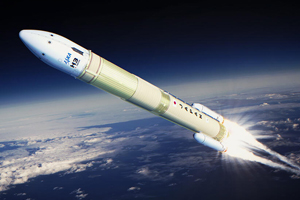
(No earlier than 10 Aug) Japan to launch the MICHIBIKI No. 7 | Quasi-Zenith Satellite System (QZS-7) navigation satellite. Launch window remains open through...
Participants will receive theoretical and hands-on training in electron imaging and X-ray spectroscopy for application to planetary samples. This training opportunity is targeted at...
"Leading Australia’s Space Future for Our Strategic Advantage". Southern Space 2026 brings together decision-makers who set the direction for Australia’s space sector. It is...
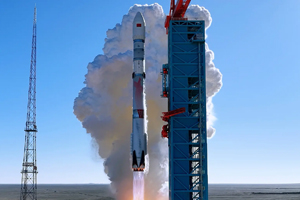
The second test launch of LandSpace's ZQ-3 rocket with undisclosed test payloads. Zhuque-3 first stage booster will attempt to land on its downrange landing...
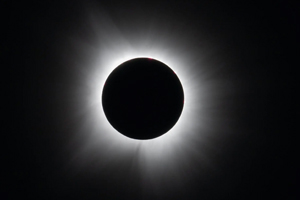
A total solar eclipse with a magnitude of 1.0386 (greatest eclipse 17:47:06 UTC) will be visible in parts of Greenland, Iceland, northern Russia, the Atlantic...
Includes presentation of the Neil Armstrong Award of Excellence, activities for the new class of Astronaut Scholars, 2-day Technical Conference where Scholars present their...
During U.S. spacewalk 97, two astronauts will replace a Space-to-Ground antenna on the orbital complex. The antenna is a critical communication system NASA uses...
Key themes include: Characterizing exoplanet-host solar-like stars; Star-planet interactions; Planet populations around solar-like stars. At University of Liège.
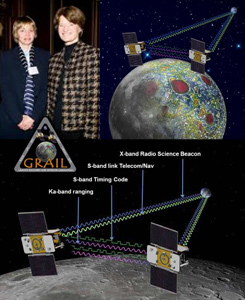 The Gravitational Recovery and Interior Laboratory (GRAIL) spacecraft is set to launch to the Moon on a Delta 2 rocket NET September 8 from Cape Canaveral FL. GRAIL, composed of 2 separate orbiters, GRAIL A and B, and weighing a total of 132kg, will fly in tandem to measure the lunar gravity field in unmatched detail. Powered by an MR-106L 22 Newton liquid hydrazine thruster and 2 solar arrays, GRAIL will engage in a low energy trans-lunar cruise to reduce fuel requirements. The spacecraft is expected to reach the lunar South Pole by New Year’s Eve 2012 where it will execute a 38-minute insertion maneuver. After the orbit period reduction phase, the spacecraft will be put in near-polar, near-circular orbit 55km above the lunar surface and begin the 90-day science phase of the mission, followed by a 5-day decommissioning period. Included on each spacecraft is the Moon Knowledge Acquired by Middle School Students (MoonKAM), led by astronaut Sally Ride (TL-R) and her team at Sally Ride Science which aims to engage middle schools across the country in lunar exploration. The US$496.2M GRAIL mission is part of the NASA Discovery Program seeking “to achieve outstanding results by launching many smaller missions using fewer resources and shorter development times.” Pictured: GRAIL PI Maria Zuber (TL). (Credit: NASA, moonkam.ucsd.edu)
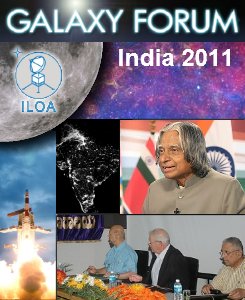 The International Lunar Observatory Association of Hawaii and JW Nehru Planetarium of Bangalore present Galaxy Forum India 2011: Astronomy Education in the 21st Century – Our Place in the Milky Way and Beyond on September 8-9. This national event is being organized for India science educators with the collaboration of the Bangalore Association of Science Education (BASE) and the Government of Karnataka’s Department of Science and Technology. Astronomy experts, India space leaders and teachers from across the country will gather to present on the Galaxy, stars, the Moon, cutting edge research, discoveries and astronautical missions, as well as 21st Century Education developments. Former India President ‘Rocket Man’ APJ Abdul Kalam will inaugurate the 2-day event as India maintains trajectory towards a leadership role in international space exploration and research. Indigenous space technology and orbital launch system development has for many years been a growing national focus and source of inspiration for the next generation of India pioneers. (Credit: ILOA, NASA, ISRO)
 = All times for terrestrial events in local time unless noted.
 = All times for international terrestrial events in local time unless noted.
 = All times for space events, and…
 = All times for international space / astro events in Hawaii Standard Time unless noted. Add 10 hours to obtain UT (‘Universal Time;’ Greenwich, England).
 Sep 5 — International Space Station, LEO: E-28 crew members continue their daily regimen of science experiments and maintenance work.