Suborbital Scientist Training 3-Day Program Offered by NASTAR
The National AeroSpace Training and Research (NASTAR) Center has organized a Suborbital Scientist Training Program on September 12-14 in Philadelphia PA. This program provides invaluable training to prospective ‘Suborbital Scientist-Astronauts’ who must endure the physiological and psychological rigors of spaceflight. NASTAR also serves a vital role for Commercial, NewSpace companies providing low-cost space access. NASTAR presently serves as the official training provider to Virgin Galactic and has assisted nearly 200 people with space training. Day 1 begins with courses in Altitude Physiology followed by a high altitude flight to 5.49km. On days 2 and 3, participants will use the Space Training Simulator (STS-400) and perform tolerance flights at 3Gz, 3Gx, 6Gz, 6Gx to isolate the G vector forces as well as a 3G and 6G suborbital space flight. Participants must be 18 years of age or older and meet NASTAR simulator requirements as well as provide a current FAA Medical Class 3 Certificate. Pictured: Virgin Galactic CEO Richard Branson (TR-L) (Credit: NASTAR, Virgin Galactic)
UN Symposium to Support Basic Space Technology Capacity of Developing Countries
Space technology continues to advance, yet several developing countries still lack the human and technological resources required to reap the benefits of even the most basic space-related activities like meteorology, communications and natural resource management. The United Nations, with the support of the government of Austria and ESA, has organized the Basic Space Technology Initiative (BSTI) to promote the use of space technology and its applications for sustainable development. The 3rd in a series of 3 BIST symposiums on Small Satellite Programs for Sustainable Development will take place on September 13-16 in Graz, Austria. The focus for this year’s event is on “Implementing Small Satellite Programs: Technical, Managerial, Regulatory and Legal Issues.” A series of invited technical presentations will cover topics such as small satellite programs world-wide, programmatic and managerial Issues, regulatory and legal issues, and working groups on the future of BSTI. Peter Martinez (L) of the National Research Foundation, South Africa, and Werner Balogh (R) of UNOOSA will give keynote addresses at the event. (Credit: ESA, UNOOSA)
= All times for terrestrial events in local time unless noted.
= All times for international terrestrial events in local time unless noted.
= All times for space events, and…
= All times for international space / astro events in Hawaii Standard Time unless noted. Add 10 hours to obtain UT (‘Universal Time;’ Greenwich, England).
Weekly Planet Watch – Morning Planets: Mercury (E), Mars (E), Jupiter (S) / Evening Planets: Jupiter (ENE) Saturn (W).
MONDAY
Sep 12 — International Space Station, LEO: E-28 crew Cmdr Andrey Borisenko and Flight Engineers Alexander Samokutyaev and Ron Garan continue preparations for their departure and return to Earth in the steppe of Kazakhstan on Sep 16 aboard a Soyuz TMA-21 spacecraft.
Sep 12 — NASA Lunar Reconnaissance Orbiter (LRO), Lunar Orbit: All systems nominal in scientific phase of mission as LRO continues to make digital elevation and terrain maps that will be a fundamental reference for future human exploration.
Sep 12 — ESA Mars Express, Red Planet: Scientists continue to study recent imagery from spacecraft showing a 115 square kilometer delta in Eberswalde crater- an indication of Mars’ past, wetter climate.
Sep 12, 19 — Rice University, Houston TX: ‘Houston We Have a Space Program,’ featuring panelists Peggy Whitson, Franklin Chang Diaz, Jim Newman and Eileen Stansbery.
Sep 12 — Earth Observatory of Singapore, Nanyang Technological University, Singapore; Online: Conference registration deadline for ‘5th Asian Space Conference.’
Sep 12-14 — NASTAR Center, Philadelphia PA: ‘NASTAR Suborbital Scientist Training Program,’ provides researchers, professors and graduate students with hands-on space flight physiology training to prepare them to design experiments and perform research aboard commercial suborbital space flights.
Sep 11 — UC Berkeley Center for Integrative Planetary Science, Center for Interdisciplinary Exploration and Research in Astrophysics, Moran WY: ‘Conference: Extreme Solar Systems 2;’ through Sep 17.
TUESDAY
Sep 13 — Kennedy Space Center, Alliant Techsystems (ATK), Cape Canaveral FL: NASA and Alliant Techsystems managers to announce agreement that could accelerate the availability of US commercial crew transportation capabilities at 15:00 EDT.
Sep 13 — US Space Walk of Fame Foundation, Titusville FL: ‘Ask the Astronauts,’ live interactive sessions with astronaut Gerald Carr.
Sep 13 — Asteroid 2062 Aten: Closest Approach to Earth (0.586 AU).
WEDNESDAY
NET Sep 14 — ILS, Launch Proton / QuetzSat 1, Baikonur Cosmodrome, Kazakhstan: An ILS Proton rocket with Breeze M upper stage set to deploy the QuetzSat 1 satellite to provide direct television broadcasting services to Mexico.
Sep 16 — Asteroid Near Earth Flyby: 2011 LJ19 (0.037 AU); 1991 TF3 (0.086 AU).
Sep 16 — Moon: 4.6° N of Jupiter; 07:00.
SATURDAY
NET Sep 17 — Arianespace, Launch Ariane 5 / Arabsat 5C & SES 2, Kourou, French Guiana: An Arianespace 5 ECA rocket, designated VA204 to launch the Arabsat 5C and SES 2 communications satellites which will provide communications and television broadcast services to the Middle East and Africa.
Sep 17 — Sally Ride Science, Fairfax VA: ‘Sally Ride Science Festival,’ featuring former NASA Astronaut Pam Melroy.
Includes ~150 meetings covering the fields of COSPAR Scientific Commissions / Panels / Task Groups, such as SC B: The Earth-Moon System, Planets, and...
At the Palais des Nations and online. Outer space is entering a renewed phase of strategic importance, defined by rapid innovation, growing competition and deepening...
This international lunar science meeting has two objectives: to provide a platform for leading experts to review recent advances across lunar research, from the...
At CSIR International Convention Centre. Key topics are Earth Observation, Developing Space Tourism, Space Supply Manufacturing. Cultural tours are offered.
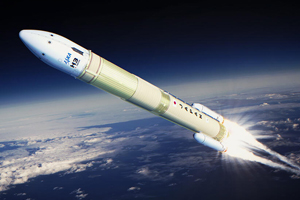
(No earlier than 10 Aug) Japan to launch the MICHIBIKI No. 7 | Quasi-Zenith Satellite System (QZS-7) navigation satellite. Launch window remains open through...
Participants will receive theoretical and hands-on training in electron imaging and X-ray spectroscopy for application to planetary samples. This training opportunity is targeted at...
"Leading Australia’s Space Future for Our Strategic Advantage". Southern Space 2026 brings together decision-makers who set the direction for Australia’s space sector. It is...
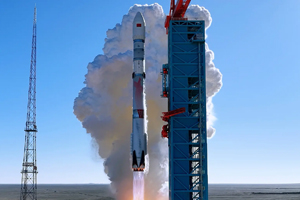
The second test launch of LandSpace's ZQ-3 rocket with undisclosed test payloads. Zhuque-3 first stage booster will attempt to land on its downrange landing...
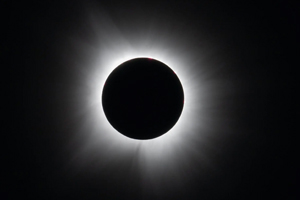
A total solar eclipse with a magnitude of 1.0386 (greatest eclipse 17:47:06 UTC) will be visible in parts of Greenland, Iceland, northern Russia, the Atlantic...
Includes presentation of the Neil Armstrong Award of Excellence, activities for the new class of Astronaut Scholars, 2-day Technical Conference where Scholars present their...
During U.S. spacewalk 97, two astronauts will replace a Space-to-Ground antenna on the orbital complex. The antenna is a critical communication system NASA uses...
Key themes include: Characterizing exoplanet-host solar-like stars; Star-planet interactions; Planet populations around solar-like stars. At University of Liège.
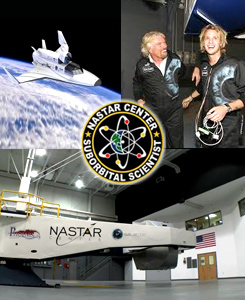 The National AeroSpace Training and Research (NASTAR) Center has organized a Suborbital Scientist Training Program on September 12-14 in Philadelphia PA. This program provides invaluable training to prospective ‘Suborbital Scientist-Astronauts’ who must endure the physiological and psychological rigors of spaceflight. NASTAR also serves a vital role for Commercial, NewSpace companies providing low-cost space access. NASTAR presently serves as the official training provider to Virgin Galactic and has assisted nearly 200 people with space training. Day 1 begins with courses in Altitude Physiology followed by a high altitude flight to 5.49km. On days 2 and 3, participants will use the Space Training Simulator (STS-400) and perform tolerance flights at 3Gz, 3Gx, 6Gz, 6Gx to isolate the G vector forces as well as a 3G and 6G suborbital space flight. Participants must be 18 years of age or older and meet NASTAR simulator requirements as well as provide a current FAA Medical Class 3 Certificate. Pictured: Virgin Galactic CEO Richard Branson (TR-L) (Credit: NASTAR, Virgin Galactic)
 Space technology continues to advance, yet several developing countries still lack the human and technological resources required to reap the benefits of even the most basic space-related activities like meteorology, communications and natural resource management. The United Nations, with the support of the government of Austria and ESA, has organized the Basic Space Technology Initiative (BSTI) to promote the use of space technology and its applications for sustainable development. The 3rd in a series of 3 BIST symposiums on Small Satellite Programs for Sustainable Development will take place on September 13-16 in Graz, Austria. The focus for this year’s event is on “Implementing Small Satellite Programs: Technical, Managerial, Regulatory and Legal Issues.” A series of invited technical presentations will cover topics such as small satellite programs world-wide, programmatic and managerial Issues, regulatory and legal issues, and working groups on the future of BSTI. Peter Martinez (L) of the National Research Foundation, South Africa, and Werner Balogh (R) of UNOOSA will give keynote addresses at the event. (Credit: ESA, UNOOSA)
 = All times for terrestrial events in local time unless noted.
 = All times for international terrestrial events in local time unless noted.
 = All times for space events, and…
 = All times for international space / astro events in Hawaii Standard Time unless noted. Add 10 hours to obtain UT (‘Universal Time;’ Greenwich, England).
 Sep 12 — International Space Station, LEO: E-28 crew Cmdr Andrey Borisenko and Flight Engineers Alexander Samokutyaev and Ron Garan continue preparations for their departure and return to Earth in the steppe of Kazakhstan on Sep 16 aboard a Soyuz TMA-21 spacecraft.