Sea Launch Return-to-Flight Reflects Advantages of Pacific Space Access
On September 22, a Sea Launch Zenit 3SL Rocket will take off from the ocean-based Odyssey Launch Platform located directly on the equator at 154° West longitude – due South of Hawaii. The mission will place the 4600kg communications satellite ‘Atlantic Bird 7’, built by Astrium, into a geostationary orbit at 7° W, a prime location for Eutelsat’s digital broadcasting markets in the Middle East and North Africa. Sea Launch offers several advantages to its payload customers including superior value / cost advantages, a heavy lift capacity of more than 6100kg, a Pacific equatorial launch site that provides maximum lift capacity, and proven components from the world’s premier companies such as Boeing and RSC-Energia. Sea launching technology has long been considered a potential provider of human Pacific space access, and if based in Hawaii it could become an ideal platform for space cooperation between Asia and America. This will be the company’s 1st launch since April 2009. (Credit: Sea Launch, space.skyrocket.de)
1st Space Access 2011 International Conference in Paris
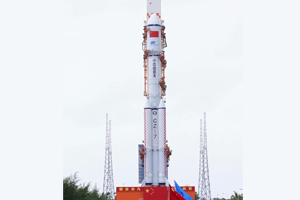
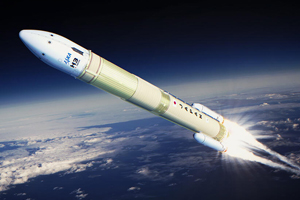
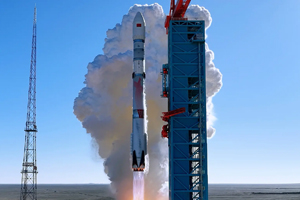
The 1st Space Access International Conference organized by ASTech Paris will be held in Paris, France, on September 21-23. Sponsored in part by the National Center for Space Studies and ESA, the premiere event will provide a forum for stakeholders, institutional strategists, agencies, and research organizations to address dependable and affordable access to space. The conference will feature 24 sessions on concepts, development, propulsion, and architecture systems of new generation launchers, as well as new approaches in space exploration. Several presenters include Misuzu Onuki (C) of the Space Frontier Foundation and Kent Rominger of ATK. There will be 4 special plenary sessions with JAXA scientist Shinya Ohkubo presenting on the H-3 launch system concept and NASA MSFC Engineering Director Dan Dumbacher (B) on upcoming human spaceflight plans for NASA. SpaceX VP of Commercial Sales Christopher Bauer will be part of a Roundtable discussion on ‘Which Breakthrough for Access to Space: Technological / Strategic / Economic / Political?’ Other topics will include the diverse approach and evolution of China and India launchers, emerging space nations Brazil and South Korea developing space access capability and the future of Sea Launch after recent reorganization. Pictured: ASTech Paris Region President Alain Coutrot (TL). (Credit: ASTech Paris Region, ISRO, SpaceX, NASA, spaceweddingrings.com)
= All times for terrestrial events in local time unless noted.
= All times for international terrestrial events in local time unless noted.
= All times for space events, and…
= All times for international space / astro events in Hawaii Standard Time unless noted. Add 10 hours to obtain UT (‘Universal Time;’ Greenwich, England).
Sep 19 — International Space Station, LEO: E-29 crew members Cmdr Mike Fossum and Flight Engineers Satoshi Furukawa and Sergei Volkov continue onboard maintenance and science experiments as they await arrival of NASA astronaut Dan Burbank and Russian cosmonauts Anton Shkaplerov and Anatoly Ivanishin NET Nov.
Sep 19 — NASA Lunar Reconnaissance Orbiter (LRO), Lunar Orbit: All systems nominal in scientific phase of mission as LRO continues to make digital elevation and terrain maps that will be a fundamental reference for future human exploration.
Sep 19 — Mars Reconnaissance Orbiter, Red Planet: NASA spacecraft continues successful operations of capturing imagery from HiRISE Camera that shows banded features, dunes in Western Arabia Terra, colorful rocks in Terra Sabaea and a channel cut into an impact crater.
Sep 19 — Comet P / 2011 R2 (PANSTARRS): Closest Approach to Earth (1.071 AU).
Continued from . . .
Sep 12 — Rice University, Houston TX: ‘Houston We Have a Space Program,’ featuring panelists Peggy Whitson, Franklin Chang Diaz, Jim Newman and Eileen Stansbery; through Sep 19.
TUESDAY
NET Sep 20 — Arianespace, Launch Ariane 5 / Arabsat 5C & SES 2, Kourou, French Guiana: An Arianespace 5 ECA rocket, designated VA204 to launch the Arabsat 5C and SES 2 communications satellites which will provide communications and television broadcast services to the Middle East and Africa.
Sep 20 — NASA Headquarters, Washington DC: NASA to hold media teleconference at 13:00 EDT to announce the company that will lead the agency’s Composite Cryotank Technologies Demonstration effort.
Sep 20 — US Space Walk of Fame Foundation, Titusville FL: ‘Ask the Astronauts,’ live interactive session with astronaut Robert Crippen.
Sep 20-28 — NASA, Virginia Beach; Charlottesville; Stuart; VA: ‘NASA Driven to Explore / Touch the Moon in Virginia,’ Public to have rare chance to touch a nearly 4-billion-year-old piece of Moon rock and learn about the solar system.
Sep 20 — Moon: At Last Quarter; 03:39.
WEDNESDAY
Sep 21 — The SETI Institute, Mountain View CA: Colloquium Series Lecture: ‘SpaceX and the Dragon Spacecraft,’ Abhishek Tripathi.
NET Sep 22 — Sea Launch, Launch Zenit 3SL / Atlantic Bird 7, Odyssey Platform, Pacific Ocean: The Sea Launch Zenit 3SL rocket set to carry into orbit Eutelsat Atlantic Bird 7 communications satellite to provide digital broadcasting services over the Middle East & North Africa.
Sep 22 — Fall / Autumn Equinox: The Sun rises exactly in the east traveling through the sky for 12 hours and sets exactly in the west; Every place on Earth experiences a 12-hour day twice a year on the Spring and Fall Equinox; 23:06.
Sep 22 — Moon: 9.6° SSW of Pollux, 03:00; 4.6° SSW of Mars, 18:00.
Sep 23 — Excalibur Almaz (EA), Clear Lake TX: Open House event for students to view EA Reusable Return Vehicle at 08:30 CDT.
Sep 23 — Moon: 5.2° SSW of Beehive Cluster; 05:00.
SATURDAY
Sep 24 — NASA Upper Atmosphere Research Satellite: Decommissioned climate satellite launched on September 15, 1991 by Space Shuttle Discovery set to make an uncontrolled re-entry through the atmosphere with approximately 26 pieces of the 35-foot-long, 5681kg satellite to impact Earth.
Sep 24 — Sally Ride Science, Baton Rouge LA: ‘Sally Ride Science Festival,’ featuring former NASA Astronaut Wendy Lawrence.
NET Sep 25 — RSA, Launch Soyuz / Glonass M, Plesetsk Cosmodrome, Russia: A Russian government Soyuz rocket set to launch a Glonass K navigation satellite.
Sep 25 – Oct 1 — Center for Lunar Science and Exploration, Winslow AZ: ‘Meteor Crater Field Camp,’ a week long field class and research project based at Barringer Meteorite Crater.
Includes ~150 meetings covering the fields of COSPAR Scientific Commissions / Panels / Task Groups, such as SC B: The Earth-Moon System, Planets, and...
At the Palais des Nations and online. Outer space is entering a renewed phase of strategic importance, defined by rapid innovation, growing competition and deepening...
This international lunar science meeting has two objectives: to provide a platform for leading experts to review recent advances across lunar research, from the...
At CSIR International Convention Centre. Key topics are Earth Observation, Developing Space Tourism, Space Supply Manufacturing. Cultural tours are offered.
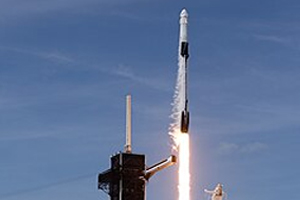
(No earlier than 10 Aug) Japan to launch the MICHIBIKI No. 7 | Quasi-Zenith Satellite System (QZS-7) navigation satellite. Launch window remains open through...
Participants will receive theoretical and hands-on training in electron imaging and X-ray spectroscopy for application to planetary samples. This training opportunity is targeted at...
"Leading Australia’s Space Future for Our Strategic Advantage". Southern Space 2026 brings together decision-makers who set the direction for Australia’s space sector. It is...
The second test launch of LandSpace's ZQ-3 rocket with undisclosed test payloads. Zhuque-3 first stage booster will attempt to land on its downrange landing...
A total solar eclipse with a magnitude of 1.0386 (greatest eclipse 17:47:06 UTC) will be visible in parts of Greenland, Iceland, northern Russia, the Atlantic...
Includes presentation of the Neil Armstrong Award of Excellence, activities for the new class of Astronaut Scholars, 2-day Technical Conference where Scholars present their...
During U.S. spacewalk 97, two astronauts will replace a Space-to-Ground antenna on the orbital complex. The antenna is a critical communication system NASA uses...
Key themes include: Characterizing exoplanet-host solar-like stars; Star-planet interactions; Planet populations around solar-like stars. At University of Liège.
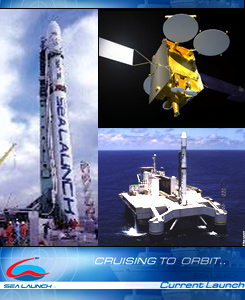 On September 22, a Sea Launch Zenit 3SL Rocket will take off from the ocean-based Odyssey Launch Platform located directly on the equator at 154° West longitude – due South of Hawaii. The mission will place the 4600kg communications satellite ‘Atlantic Bird 7’, built by Astrium, into a geostationary orbit at 7° W, a prime location for Eutelsat’s digital broadcasting markets in the Middle East and North Africa. Sea Launch offers several advantages to its payload customers including superior value / cost advantages, a heavy lift capacity of more than 6100kg, a Pacific equatorial launch site that provides maximum lift capacity, and proven components from the world’s premier companies such as Boeing and RSC-Energia. Sea launching technology has long been considered a potential provider of human Pacific space access, and if based in Hawaii it could become an ideal platform for space cooperation between Asia and America. This will be the company’s 1st launch since April 2009. (Credit: Sea Launch, space.skyrocket.de)
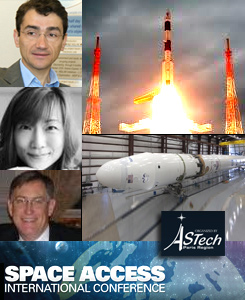 The 1st Space Access International Conference organized by ASTech Paris will be held in Paris, France, on September 21-23. Sponsored in part by the National Center for Space Studies and ESA, the premiere event will provide a forum for stakeholders, institutional strategists, agencies, and research organizations to address dependable and affordable access to space. The conference will feature 24 sessions on concepts, development, propulsion, and architecture systems of new generation launchers, as well as new approaches in space exploration. Several presenters include Misuzu Onuki (C) of the Space Frontier Foundation and Kent Rominger of ATK. There will be 4 special plenary sessions with JAXA scientist Shinya Ohkubo presenting on the H-3 launch system concept and NASA MSFC Engineering Director Dan Dumbacher (B) on upcoming human spaceflight plans for NASA. SpaceX VP of Commercial Sales Christopher Bauer will be part of a Roundtable discussion on ‘Which Breakthrough for Access to Space: Technological / Strategic / Economic / Political?’ Other topics will include the diverse approach and evolution of China and India launchers, emerging space nations Brazil and South Korea developing space access capability and the future of Sea Launch after recent reorganization. Pictured: ASTech Paris Region President Alain Coutrot (TL). (Credit: ASTech Paris Region, ISRO, SpaceX, NASA, spaceweddingrings.com)
 = All times for terrestrial events in local time unless noted.
 = All times for international terrestrial events in local time unless noted.
 = All times for space events, and…
 = All times for international space / astro events in Hawaii Standard Time unless noted. Add 10 hours to obtain UT (‘Universal Time;’ Greenwich, England).
 Sep 19 — International Space Station, LEO: E-29 crew members Cmdr Mike Fossum and Flight Engineers Satoshi Furukawa and Sergei Volkov continue onboard maintenance and science experiments as they await arrival of NASA astronaut Dan Burbank and Russian cosmonauts Anton Shkaplerov and Anatoly Ivanishin NET Nov.