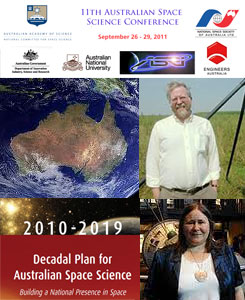
With 2 major space science events this week, Australia scientists, engineers, educators and government officials will have ample opportunity to showcase their research and refine the country’s plan for the future. The 11th Australian Space Science Conference (ASSC) will be held at the Australian National University in Canberra on September 26-29. Jointly sponsored and organized by the National Committee for Space Science (NCSS) and the National Space Society of Australia, ASSC is intended to be the primary space science event in the country where delegates present their research to a peer reviewed forum. Invited speakers for this year’s event include Harvey Butcher of the Mt Stromlo New Space Technology Center, and space science educator Kerrie Dougherty of Powerhouse Museum. This year’s ASSC will run in conjunction with the NCSS workshop on implementing Australia’s 1st Decadal Plan for Space Science, which was published in late 2010. The Decadal Plan is intended to build a true Australian presence in space by investing almost $AUD140 M from new government funding sources into large projects that combine research infrastructure with exciting, broad-based science. At the 1-day event, the scientific community and associated stakeholders in Government and industry will discuss the plan, the Government responses, and proceed with implementation of the Plan’s recommendations. (Credit: NCSS, NSS-Australia)
SpaceX Leader, Innovator Elon Musk to Outline Future of Space Travel at NPC Event
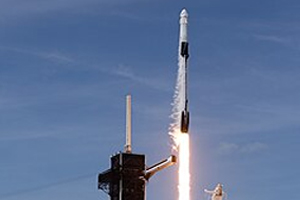
Space Exploration Technologies (SpaceX) CEO Elon Musk will be the featured speaker at a National Press Club Luncheon on September 29 in Washington DC. The PayPal co-founder turned space entrepreneur will be on hand to discuss the future of human spaceflight followed by a question and answer session. SpaceX, a Hawthorne CA based company of 1500 employees developed the Falcon 1 and Falcon 9 reusable launch vehicles as well as the Dragon spacecraft. It is also currently developing the 1,400,000kg Falcon Heavy super-heavy lift launch vehicle, which can carry 2 times the payload of a space shuttle. SpaceX recently won a NASA Commercial Orbital Transportation Services (COTS) contract to fly resupply missions to the International Space Station (ISS) and beyond. NET Nov 30, the Falcon 9 rocket is set to launch its 2nd Dragon spacecraft on the COTS-2 mission to demonstrate rendezvous and berthing with the ISS as well as deliver 2 small Orbcomm communications satellites. SpaceX plans to fly its 1st human mission by 2014. (Credit: SpaceX)
= All times for terrestrial events in local time unless noted.
= All times for international terrestrial events in local time unless noted.
= All times for space events, and…
= All times for international space / astro events in Hawaii Standard Time unless noted. Add 10 hours to obtain UT (‘Universal Time;’ Greenwich, England).
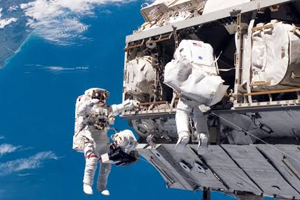
Sep 26 — International Space Station, LEO: E-29 crew members Cmdr Mike Fossum, Satoshi Furukawa and Sergei Volkov continue with ongoing science activities and ISS maintenance; remainder of crew expected to launch from Kazakhstan NET Nov 13.
Sep 26 — NASA Lunar Reconnaissance Orbiter (LRO), Lunar Orbit: All systems nominal in scientific phase of mission as LRO continues to make digital elevation and terrain maps that will be a fundamental reference for future human exploration.
Sep 26 — Mars Rover Opportunity, Red Planet: Opportunity continues to study ‘Chester Lake’ rock outcrop on the rim of Endeavour Crater; Total odometry is over 33km.
Sep 26-29 — National Council For Science and Technology, United Nations Office for Outer Space Affairs, et al, Mombasa, Kenya: ‘4th African Leadership Conference for Sustainable Development,’ featuring a visit to San Marco Satellite and Launching Station Malindi.
Sep 20 — NASA, Virginia Beach; Charlottesville; Stuart; VA : ‘NASA Driven to Explore / Touch the Moon in Virginia,’ Public to have rare chance to touch a nearly 4-billion-year-old piece of Moon rock and learn about the solar system; through Sep 28.
Sep 25 — Center for Lunar Science and Exploration, Winslow AZ: ‘Meteor Crater Field Camp,’ a week long field class and research project based at Barringer Meteorite Crater; through Oct 1.
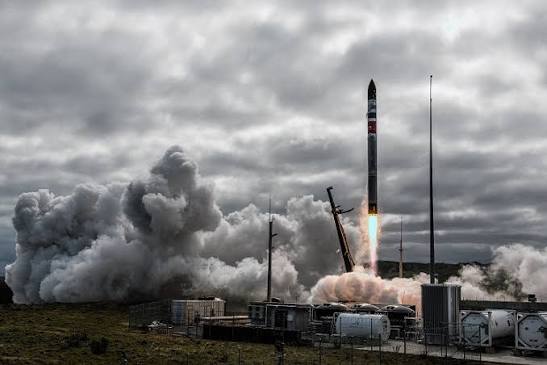
NET Sep 27 — USAF, Launch Minotaur 4 / TacSat 4, Kodiak Launch Complex AK: The Air Force Minotaur 4 rocket set to launch the experimental TacSat 4 demonstration satellite for the military Operationally Responsive Space office.
Sep 28 — Asteroid 2009 SH2: Near-Earth Flyby (0.077 AU).
THURSDAY
NET Sep 29 — ILS, Launch Proton / QuetzSat1, Baikonur Cosmodrome, Kazakhstan: An ILS Proton rocket with a Breeze M upper stage set to deploy Quetzsat 1 satellite to provide direct television broadcasting services to Mexico.
Sep 29 — The National Press Club, Washington DC: ‘National Press Club Luncheon,’ featuring SpaceX CEO Elon Musk.
Oct 1 — Lunar Return / 2-Year Countdown: China set to land Chang’e-3 spacecraft on Moon NET 2013, marking 1st robotic lunar landing in 37 years.
Oct 1 — Deep Space, Exoplanets:An international team of scientists continue 200-hour observing program with NASA Hubble Space Telescope to explore ‘Hot Jupiters’, exoplanets similar in size to Jupiter but with temperatures of 1,000° Kelvin or more.
NET Oct 1 — RSA, Launch Soyuz / Glonass M, Plesetsk Cosmodrome, Russia: A Russian government Soyuz rocket set to launch a Glonass K navigation satellite.
Includes ~150 meetings covering the fields of COSPAR Scientific Commissions / Panels / Task Groups, such as SC B: The Earth-Moon System, Planets, and...
At the Palais des Nations and online. Outer space is entering a renewed phase of strategic importance, defined by rapid innovation, growing competition and deepening...
This international lunar science meeting has two objectives: to provide a platform for leading experts to review recent advances across lunar research, from the...
At CSIR International Convention Centre. Key topics are Earth Observation, Developing Space Tourism, Space Supply Manufacturing. Cultural tours are offered.
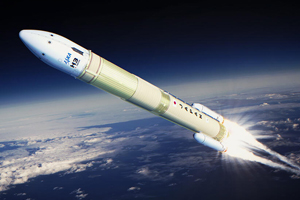
(No earlier than 10 Aug) Japan to launch the MICHIBIKI No. 7 | Quasi-Zenith Satellite System (QZS-7) navigation satellite. Launch window remains open through...
Participants will receive theoretical and hands-on training in electron imaging and X-ray spectroscopy for application to planetary samples. This training opportunity is targeted at...
"Leading Australia’s Space Future for Our Strategic Advantage". Southern Space 2026 brings together decision-makers who set the direction for Australia’s space sector. It is...
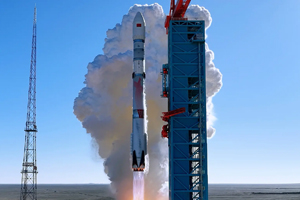
The second test launch of LandSpace's ZQ-3 rocket with undisclosed test payloads. Zhuque-3 first stage booster will attempt to land on its downrange landing...
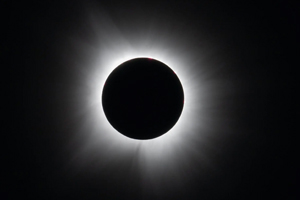
A total solar eclipse with a magnitude of 1.0386 (greatest eclipse 17:47:06 UTC) will be visible in parts of Greenland, Iceland, northern Russia, the Atlantic...
Includes presentation of the Neil Armstrong Award of Excellence, activities for the new class of Astronaut Scholars, 2-day Technical Conference where Scholars present their...
During U.S. spacewalk 97, two astronauts will replace a Space-to-Ground antenna on the orbital complex. The antenna is a critical communication system NASA uses...
Key themes include: Characterizing exoplanet-host solar-like stars; Star-planet interactions; Planet populations around solar-like stars. At University of Liège.

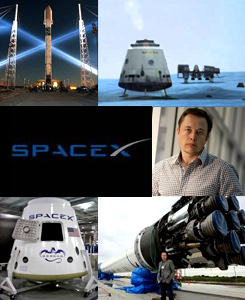 Space Exploration Technologies (SpaceX) CEO Elon Musk will be the featured speaker at a National Press Club Luncheon on September 29 in Washington DC. The PayPal co-founder turned space entrepreneur will be on hand to discuss the future of human spaceflight followed by a question and answer session. SpaceX, a Hawthorne CA based company of 1500 employees developed the Falcon 1 and Falcon 9 reusable launch vehicles as well as the Dragon spacecraft. It is also currently developing the 1,400,000kg Falcon Heavy super-heavy lift launch vehicle, which can carry 2 times the payload of a space shuttle. SpaceX recently won a NASA Commercial Orbital Transportation Services (COTS) contract to fly resupply missions to the International Space Station (ISS) and beyond. NET Nov 30, the Falcon 9 rocket is set to launch its 2nd Dragon spacecraft on the COTS-2 mission to demonstrate rendezvous and berthing with the ISS as well as deliver 2 small Orbcomm communications satellites. SpaceX plans to fly its 1st human mission by 2014. (Credit: SpaceX)
 = All times for terrestrial events in local time unless noted.
 = All times for international terrestrial events in local time unless noted.
 = All times for space events, and…
 = All times for international space / astro events in Hawaii Standard Time unless noted. Add 10 hours to obtain UT (‘Universal Time;’ Greenwich, England).
 Sep 26 — International Space Station, LEO: E-29 crew members Cmdr Mike Fossum, Satoshi Furukawa and Sergei Volkov continue with ongoing science activities and ISS maintenance; remainder of crew expected to launch from Kazakhstan NET Nov 13.
 Sep 26-29 — Australian Academy of Science, National Space Society of Australia, Canberra, Australia: ‘11th Australian Space Science Conference.’
 NET Sep 27 — USAF, Launch Minotaur 4 / TacSat 4, Kodiak Launch Complex AK: The Air Force Minotaur 4 rocket set to launch the experimental TacSat 4 demonstration satellite for the military Operationally Responsive Space office.
 Sep 27 — Stennis Space Center, Stennis Space Center MS: ‘NASA Stennis Business Consortium.’