ILOA Demonstrates ILO-X Lunar-Based Observation / Communication Device from Summit of Mauna Kea, HI
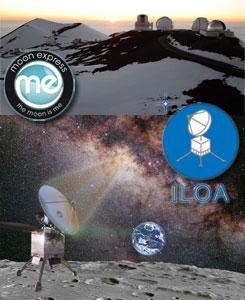
During its annual Board of Directors Meeting on Hawai`i Island, the International Lunar Observatory Association plans to conduct a Global Technology Demonstration of its ILO-X precursor instrument near the summit of Mauna Kea on the evening of December 18 or 19, weather permitting. The Google Lunar X Prize team Moon Express is developing a 2-kg observation instrument for ILOA to be delivered to the Moon on its NET Dec 2013 mission. Science and astronomy teams from Canada, China, India, Japan, Europe and Africa will remotely control the flight design prototype camera and mount, capturing Galaxy images from the world’s premier astronomy site. Space Age Publishing Company intends to pioneer Lunar Commercial Communications by broadcasting Space Calendar with value-added data from the South Pole of the Moon via the ILO-X, and soon thereafter, from the multi-functional ILO-1 spacecraft. As an initial demonstration of Space Calendar Lunar Broadcasting, one of the images captured by the ILO-X instrument during the Global Demo will be updated to this edition of Space Calendar. (Image Credit: ILOA, Moon Express)
E-30 Crew Members to Join Comrades Aboard ISS
Three remaining members of Expedition-30 will launch aboard a Soyuz TMA-03 rocket to the International Station from Baikonur, Kazakhstan NET Dec 21. Russia Cosmonaut Oleg Kononenko, NASA astronaut Don Pettit and ESA astronaut Andre Kuipers will join Cmdr Dan Burbank and flight engineers Anton Shkaplerov and Anatoly Ivanishin who have been onboard the orbiting outpost since Nov 16. On Dec 19-20, NASA TV will air several pre-launch activities including the rocket roll-out and a final pre-launch conference with the E-30 crew. During his 5-month PromISSe mission, ESA astronaut Andre Kuipers will conduct more than 20 ESA experiments and around 15 from other Station partners. One experiment called ‘Mission-X: Train Like an Astronaut,’ will include participation from thousands of students around the world who will perform physical exercises and classroom lessons to compete to become as fit as astronauts. Kononenko, Pettit and Kuipers will remain onboard as Expedition-31. Their mission will include greeting the SpaceX Dragon C2 spacecraft NET Feb 7 which will demonstrate rendezvous and berthing with the ISS for cargo-delivery. (Image Credit: NASA)
= All times for terrestrial events in local time unless noted.
= All times for international terrestrial events in local time unless noted.
= All times for space events, and…
= All times for international space / astro events in Hawaii Standard Time unless noted. Add 10 hours to obtain UT (‘Universal Time;’ Greenwich, England).
Dec 19 — International Space Station, LEO: E-30 crew members continue science and maintenance activities as they prepare for the Dec 23 arrival of Oleg Kononenko, Don Pettit and Andre Kuipers.
Dec 19 — NASA Lunar Reconnaissance Orbiter (LRO), Lunar Orbit: LRO continues to function nominally in its 50±15 km near-circular orbit as it makes digital elevation and terrain maps that will be a fundamental reference for future human exploration.
Dec 19 — ESA Mars Express, Red Planet: Scientists continue to analyze data from the Mars Advanced Radar for Subsurface and Ionosphere Sounding (MARSIS) instrument on board the Mars Express which recently completed a subsurface sounding campaign over the planet’s North Pole.
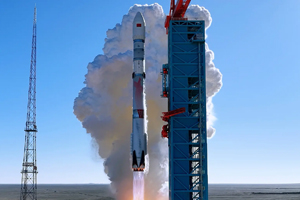
NET Dec 19 — CNSA, Launch Long March 3B / Nigcomsat 1R,Xichang, China: A Chinese Long March 3B rocket set to launch the Nigcomsat 1R satellite for Nigeria which will fly in the Long March 3B/E configuration with an enlarged 1st stage and liquid-fueled strap-on boosters.
Dec 19-23 — University of North Alabama (UNA), Florence AL: ‘Star of Bethlehem,’ 18:00-19:00 CST.
Dec 19-24 — Willard Smith Planetarium, Seattle WA: ‘Star of Bethlehem.’
Dec 19 — Moon: 2.0° SSW of Spica, 14:00; 6.3° SSW of Saturn, 20:00.
Dec 20 — NASA, RSA, NASA TV; Baikonur Cosmodrome, Kazakhstan: ‘Expedition-30 Prelaunch News Conference,’ with remaining E-30 crew members Don Pettit, Oleg Kononenko and Andre Kuipers.
Dec 20 — San Diego Space Society, San Diego CA: ‘Space Night In.’
Dec 20-22 — Boonshoft Museum of Discovery, Dayton OH: ‘Star of Bethlehem,’ planetarium show.
Dec 20 — December Leo Minorids: This minor meteor shower is best observed in the Northern Hemisphere and appears to radiate from the constellation Leo.
Dec 20 — Coma Berenicid Meteors: Appearing to radiate from constellation Coma Berenices, this minor meteor shower emitting a handful of bright meteors per hour.
Dec 20 — Asteroid (Near-Earth Flyby): 2011 OV18 (0.050 AU); 2008 YQ27 (0.099 AU).
WEDNESDAY
NET Dec 21 — RSA, Launch Soyuz / ISS 29S, Baikonur Cosmodrome, Kazakhstan: A Russian government Soyuz rocket set to launch next Expedition crew members to the International Space Station.
Dec 21 — Fiske Planetarium and Science Center, Boulder CO: ‘Season of Light,’ A holiday show which examines solstice celebrations and astronomical signs such as the Christmas star.
Dec 21 — Winter Solstice: The Sun, appearing to travel along the ecliptic, reaches the point where it is farthest South of the celestial equator; 19:30.
Dec 21 — Moon: At Perigee (Distance: 364800km); 17:00.
THURSDAY
Dec 22 — Marshall Allworth Planetarium, Duluth MN: ‘Winter Solstice Celebration,’ featuring free planetarium shows every half-hour from 18:00-21:00 CST.
Dec 22 — Ursids Meteor Shower Peak: Appearing to radiate from constellation Ursa Minor, this shower can produce short-lived outbursts of up to 100 meteors per hour.
Dec 22 — Moon: 2.7° SSW of Mercury, 16:00; 4.2° N of Antares, 17:00.
Dec 23 — ‘Imiloa Astronomy Center, Hilo HI: ‘Mystery of the Christmas Star,’ planetarium show to trace the footsteps of ancient Babylonian astronomers.
SATURDAY
Dec 24 — Moon: 6.5° NNE of Antares, 04:00; New Moon, 08:07.
Dec 24 — Asteroid 2008 AF3: Near-Earth Flyby (0.092 AU).
SUNDAY
Dec 25 — Sokendai Graduate University for Advanced Studies, Toki, Japan: Registration deadline for ‘Sokendai Asian Winter School 2012,’ to be held February 14-17, 2012.
Includes ~150 meetings covering the fields of COSPAR Scientific Commissions / Panels / Task Groups, such as SC B: The Earth-Moon System, Planets, and...
At the Palais des Nations and online. Outer space is entering a renewed phase of strategic importance, defined by rapid innovation, growing competition and deepening...
This international lunar science meeting has two objectives: to provide a platform for leading experts to review recent advances across lunar research, from the...
At CSIR International Convention Centre. Key topics are Earth Observation, Developing Space Tourism, Space Supply Manufacturing. Cultural tours are offered.
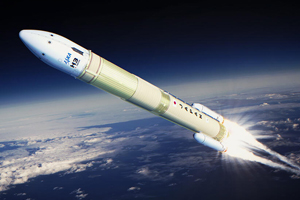
(No earlier than 10 Aug) Japan to launch the MICHIBIKI No. 7 | Quasi-Zenith Satellite System (QZS-7) navigation satellite. Launch window remains open through...
Participants will receive theoretical and hands-on training in electron imaging and X-ray spectroscopy for application to planetary samples. This training opportunity is targeted at...
"Leading Australia’s Space Future for Our Strategic Advantage". Southern Space 2026 brings together decision-makers who set the direction for Australia’s space sector. It is...
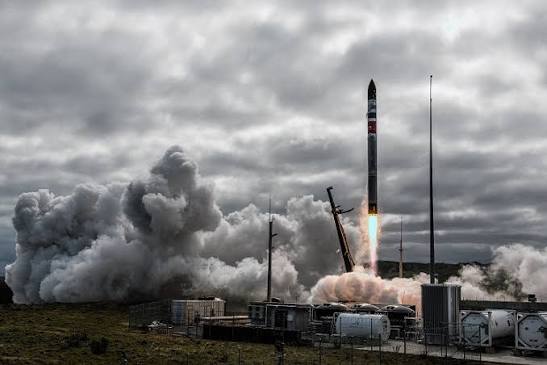
The second test launch of LandSpace's ZQ-3 rocket with undisclosed test payloads. Zhuque-3 first stage booster will attempt to land on its downrange landing...
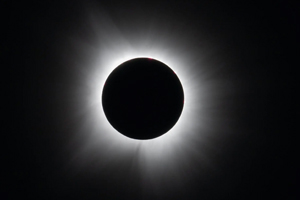
A total solar eclipse with a magnitude of 1.0386 (greatest eclipse 17:47:06 UTC) will be visible in parts of Greenland, Iceland, northern Russia, the Atlantic...
Includes presentation of the Neil Armstrong Award of Excellence, activities for the new class of Astronaut Scholars, 2-day Technical Conference where Scholars present their...
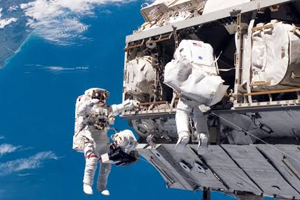
During U.S. spacewalk 97, two astronauts will replace a Space-to-Ground antenna on the orbital complex. The antenna is a critical communication system NASA uses...
Key themes include: Characterizing exoplanet-host solar-like stars; Star-planet interactions; Planet populations around solar-like stars. At University of Liège.
 During its annual Board of Directors Meeting on Hawai`i Island, the International Lunar Observatory Association plans to conduct a Global Technology Demonstration of its ILO-X precursor instrument near the summit of Mauna Kea on the evening of December 18 or 19, weather permitting. The Google Lunar X Prize team Moon Express is developing a 2-kg observation instrument for ILOA to be delivered to the Moon on its NET Dec 2013 mission. Science and astronomy teams from Canada, China, India, Japan, Europe and Africa will remotely control the flight design prototype camera and mount, capturing Galaxy images from the world’s premier astronomy site. Space Age Publishing Company intends to pioneer Lunar Commercial Communications by broadcasting Space Calendar with value-added data from the South Pole of the Moon via the ILO-X, and soon thereafter, from the multi-functional ILO-1 spacecraft. As an initial demonstration of Space Calendar Lunar Broadcasting, one of the images captured by the ILO-X instrument during the Global Demo will be updated to this edition of Space Calendar. (Image Credit: ILOA, Moon Express)
 Three remaining members of Expedition-30 will launch aboard a Soyuz TMA-03 rocket to the International Station from Baikonur, Kazakhstan NET Dec 21. Russia Cosmonaut Oleg Kononenko, NASA astronaut Don Pettit and ESA astronaut Andre Kuipers will join Cmdr Dan Burbank and flight engineers Anton Shkaplerov and Anatoly Ivanishin who have been onboard the orbiting outpost since Nov 16. On Dec 19-20, NASA TV will air several pre-launch activities including the rocket roll-out and a final pre-launch conference with the E-30 crew. During his 5-month PromISSe mission, ESA astronaut Andre Kuipers will conduct more than 20 ESA experiments and around 15 from other Station partners. One experiment called ‘Mission-X: Train Like an Astronaut,’ will include participation from thousands of students around the world who will perform physical exercises and classroom lessons to compete to become as fit as astronauts. Kononenko, Pettit and Kuipers will remain onboard as Expedition-31. Their mission will include greeting the SpaceX Dragon C2 spacecraft NET Feb 7 which will demonstrate rendezvous and berthing with the ISS for cargo-delivery. (Image Credit: NASA)
 = All times for terrestrial events in local time unless noted.
 = All times for international terrestrial events in local time unless noted.
 = All times for space events, and…
 = All times for international space / astro events in Hawaii Standard Time unless noted. Add 10 hours to obtain UT (‘Universal Time;’ Greenwich, England).
 Dec 19 — International Space Station, LEO: E-30 crew members continue science and maintenance activities as they prepare for the Dec 23 arrival of Oleg Kononenko, Don Pettit and Andre Kuipers.