America, China and the Moon’s South Pole
Re: USA Pres. Obama 2012 Space Opportunities
The 21st Century Rush to the rich, resource-drenched Lunar South Pole is dawning through global attention, consensus and activity from scientists, scholars, independent enterprises and national governments. Since the USA 1994 Clementine and 1998 Lunar Prospector orbiters first surveyed the vast Aitken Basin and detected significant ice-water at the poles, the Moon’s South Pole consistently has become the destination of choice — ie, India-Russia Chandrayaan-2 South Pole lander-rover, Canada-Europe SP lander research, Japan SELENE-1 / 2 and USA LRO / L-Cross orbiters / landers / impactors, ILOA Malapert Mt ILO-1, Shackleton Energy Company, Google Lunar X Prize Team Phoenicia, Odyssey Moon, etc.. And while China has yet to declare for the Moon’s South Pole, a successful 2013 Chang’e-3 touchdown at the earlier-visited lunar equator would restore Earth operations on the Moon for the first time in 37 years and position China’s Chang’e-4 for a South Pole landing in 2014.
Where then is the USA? For the Moon and American 21st Century Success, will a US government Mid-Course Correction, as Neil Armstrong and top space leaders urge, advance American leadership on the Moon again? Within 12-24 months, at very low cost for perhaps a power station prototype, the brilliant and competent pioneers at NASA — at Ames and JPL, Johnson, Marshall, Kennedy, Goddard and Glenn, can open a new world at the 8th Continent’s South Pole — possibly the most strategic, valuable real estate in the Solar System. (Image Credit: NASA, CNSA, JAXA)
Clarke Odyssey Lecture at British Interplanetary Society
The British Interplanetary Society (BIS) will hold a lecture on ‘Arthur’s Vision for Homo Sapiens in Space’ on January 18 at their Headquarters in London, England. Speaker Kelvin Long will review some of Arthur Clarke’s original ideas and how they relate to the modern world. Made up of over 900 Corporate Fellows and over 1300 individual Members, the BIS is the world’s longest established international organization devoted to supporting and promoting space exploration and astronautics. Clarke, once a chairman for the BIS, is one of the most well known space visionaries and science writers of our time, having written over 70 books of science and science-fiction. His famous prediction of geostationary satellite communications published in 1945 materialized 20 years later with the launch of the Intelsat 1, the 1st commercial geostationary satellite on April 6, 1965. Geostationary Orbit, a circular orbit 35,786 km above the Earth’s equator and following the direction of the Earth’s rotation, is sometimes referred to as the Clarke Orbit. Clarke can also be credited with introducing the concept of a space elevator in his 1979 novel The Fountains of Paradise. The BIS lecture will provide participants with a positive and optimistic vision that Clarke saw for our species, and describe a possible future for humans in space, to the Moon, planets and beyond. (Image Credit:BIS, Hardy, Clarke)
= All times for terrestrial events in local time unless noted.
= All times for international terrestrial events in local time unless noted.
= All times for space events, and…
= All times for international space / astro events in Hawaii Standard Time unless noted. Add 10 hours to obtain UT (‘Universal Time;’ Greenwich, England).
Jan 16 — International Space Station, LEO: E-30 crew members continue with a variety of scientific research and maintenance duties after conducting a debris avoidance maneuver for the station last Friday due to a piece of Iridium satellite debris.
Jan 16 — NASA Lunar Reconnaissance Orbiter (LRO), Lunar Orbit: LRO continues to function nominally in its 50±15 km near-circular orbit as it makes digital elevation and terrain maps that will be a fundamental reference for future human exploration.
Jan 16 — Mars Reconnaissance Orbiter (MRO), Red Planet: NASA spacecraft operating nominally; HiRISE camera onboard MRO close to capturing nearly 22,000 images of Mars’ surface at unprecedented resolution, averaging about 25 centimeters per pixel.
Jan 16 — Asteroid 2011 YH40: Near-Earth Flyby (0.014 AU).
Continued from…
Jan 9 — International Space University, University of South Australia, Adelaide, Australia: ‘Southern Hemisphere Summer Program;’ Feb 11.
Jan 14 — The GLOBE Program, The National Optical Astronomy Observatory, Global: ‘GLOBE at Night: Less of Our Light, More Star Light,’ event to raise public awareness of the impact of light pollution by inviting citizen-scientists to measure their night sky brightness and submit their observations to a website from a computer or smart phone; Jan 23.
TUESDAY
Jan 17 — NASA Headquarters, Washington DC:News conference to announce names selected from a nationwide student contest for GRAIL twin spacecraft that will study the Moon at 13:00 EST.
Jan 18 — Moon: 6.1° S of Saturn, 07:00; At Perigee (Distance: 369,882 km), 12:00.
THURSDAY
NET Jan 19 — ULA, Launch Delta 4 / WGS 4, Cape Canaveral FL: A ULA Delta 4 rocket set to launch the 4th Wideband Global SATCOM spacecraft, formerly known as the Wideband Gapfiller Satellite.
Jan 20 — USA President Barack Obama Starts 4th Year in Office With New Space Enterprise?, Washington DC: Major space initiative in next week’s State-of-the-Union address would boost 21st Century technologies and economies.
Jan 20 — Asteroid 2012 AX: Near-Earth Flyby (0.074 AU).
SATURDAY
NET Jan 21 — ILS, Launch Proton / SES 4, Baikonur Cosmodrome, Kazakhstan: An ILS Proton rocket with a Breeze M upper stage set to deploy the SES 4 satellite to provide telecommunications services over the Americas, Africa, Europe and Middle East.
Includes ~150 meetings covering the fields of COSPAR Scientific Commissions / Panels / Task Groups, such as SC B: The Earth-Moon System, Planets, and...
At the Palais des Nations and online. Outer space is entering a renewed phase of strategic importance, defined by rapid innovation, growing competition and deepening...
This international lunar science meeting has two objectives: to provide a platform for leading experts to review recent advances across lunar research, from the...
At CSIR International Convention Centre. Key topics are Earth Observation, Developing Space Tourism, Space Supply Manufacturing. Cultural tours are offered.
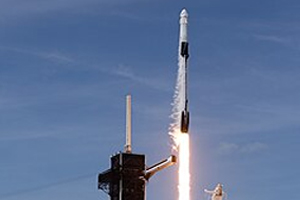
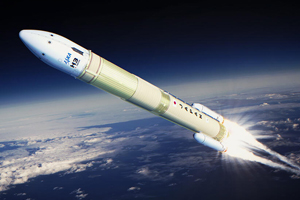
(No earlier than 10 Aug) Japan to launch the MICHIBIKI No. 7 | Quasi-Zenith Satellite System (QZS-7) navigation satellite. Launch window remains open through...
Participants will receive theoretical and hands-on training in electron imaging and X-ray spectroscopy for application to planetary samples. This training opportunity is targeted at...
"Leading Australia’s Space Future for Our Strategic Advantage". Southern Space 2026 brings together decision-makers who set the direction for Australia’s space sector. It is...
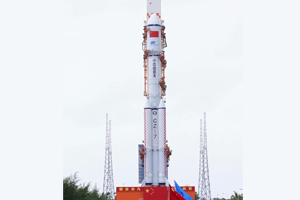
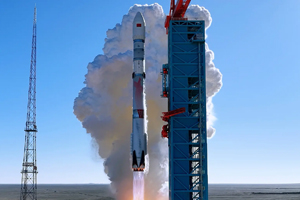
The second test launch of LandSpace's ZQ-3 rocket with undisclosed test payloads. Zhuque-3 first stage booster will attempt to land on its downrange landing...
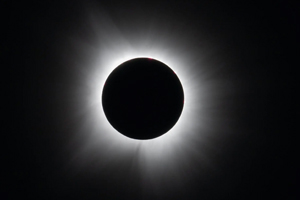
A total solar eclipse with a magnitude of 1.0386 (greatest eclipse 17:47:06 UTC) will be visible in parts of Greenland, Iceland, northern Russia, the Atlantic...
Includes presentation of the Neil Armstrong Award of Excellence, activities for the new class of Astronaut Scholars, 2-day Technical Conference where Scholars present their...
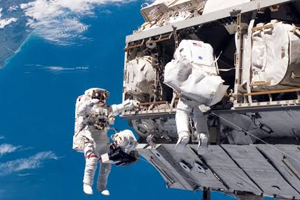
During U.S. spacewalk 97, two astronauts will replace a Space-to-Ground antenna on the orbital complex. The antenna is a critical communication system NASA uses...
Key themes include: Characterizing exoplanet-host solar-like stars; Star-planet interactions; Planet populations around solar-like stars. At University of Liège.
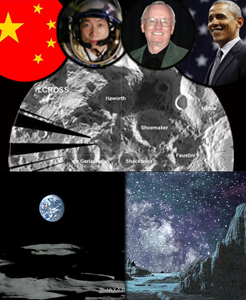 The 21st Century Rush to the rich, resource-drenched Lunar South Pole is dawning through global attention, consensus and activity from scientists, scholars, independent enterprises and national governments. Since the USA 1994 Clementine and 1998 Lunar Prospector orbiters first surveyed the vast Aitken Basin and detected significant ice-water at the poles, the Moon’s South Pole consistently has become the destination of choice — ie, India-Russia Chandrayaan-2 South Pole lander-rover, Canada-Europe SP lander research, Japan SELENE-1 / 2 and USA LRO / L-Cross orbiters / landers / impactors, ILOA Malapert Mt ILO-1, Shackleton Energy Company, Google Lunar X Prize Team Phoenicia, Odyssey Moon, etc.. And while China has yet to declare for the Moon’s South Pole, a successful 2013 Chang’e-3 touchdown at the earlier-visited lunar equator would restore Earth operations on the Moon for the first time in 37 years and position China’s Chang’e-4 for a South Pole landing in 2014.
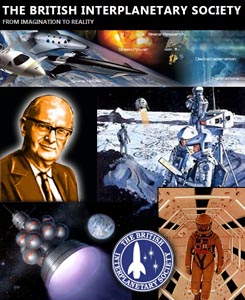 The British Interplanetary Society (BIS) will hold a lecture on ‘Arthur’s Vision for Homo Sapiens in Space’ on January 18 at their Headquarters in London, England. Speaker Kelvin Long will review some of Arthur Clarke’s original ideas and how they relate to the modern world. Made up of over 900 Corporate Fellows and over 1300 individual Members, the BIS is the world’s longest established international organization devoted to supporting and promoting space exploration and astronautics. Clarke, once a chairman for the BIS, is one of the most well known space visionaries and science writers of our time, having written over 70 books of science and science-fiction. His famous prediction of geostationary satellite communications published in 1945 materialized 20 years later with the launch of the Intelsat 1, the 1st commercial geostationary satellite on April 6, 1965. Geostationary Orbit, a circular orbit 35,786 km above the Earth’s equator and following the direction of the Earth’s rotation, is sometimes referred to as the Clarke Orbit. Clarke can also be credited with introducing the concept of a space elevator in his 1979 novel The Fountains of Paradise. The BIS lecture will provide participants with a positive and optimistic vision that Clarke saw for our species, and describe a possible future for humans in space, to the Moon, planets and beyond. (Image Credit:BIS, Hardy, Clarke)
 = All times for terrestrial events in local time unless noted.
 = All times for international terrestrial events in local time unless noted.
 = All times for space events, and…
 = All times for international space / astro events in Hawaii Standard Time unless noted. Add 10 hours to obtain UT (‘Universal Time;’ Greenwich, England).
 Jan 16 — International Space Station, LEO: E-30 crew members continue with a variety of scientific research and maintenance duties after conducting a debris avoidance maneuver for the station last Friday due to a piece of Iridium satellite debris.