Orion Spacecraft Full-Scale Test Version to be Featured in 3 Cities
Residents in 3 states will have the chance to see a full-scale test version of the NASA Orion Multi-Purpose Crew Vehicle spacecraft (TR), which will one day serve as the vehicle to transport astronauts beyond low-Earth orbit. One of the planned stops includes the Science Museum Oklahoma (BL) in Oklahoma City on January 23-25. The 23-ton spacecraft built by Lockheed-Martin has a diameter of 5m and is designed to carry 4 astronauts (C). In 2014, NASA plans to conduct the 1st Exploration Flight Test (EFT-1) of Orion aboard a Delta 4 Heavy rocket (BR) from Kennedy Space Center, Cape Canaveral FL. The spacecraft will fly 2 high-apogee orbits and conclude with a high-energy re-entry through Earth’s atmosphere. NASA Officials plan to launch Orion aboard the US$10B giant rocket, Space Launch System (TL), a heavy lifter capable of lifting up to 70 tons of payload, NET 2017 and possible human missions by 2021. To date NASA has spent nearly US$5B on Orion. Orion will continue to make its cross-country journey on Jan 27-29 in Dallas TX and Jan 31-Feb 2 in Huntsville AL. (Image Credit: NASA, launchphotography.com, wired.com, Science Museum OK)
ILOA Galaxy Forum 2012 and Galaxy Poster Advancing 21st Century Education Worldwide
International Lunar Observatory Association’s Galaxy Forums are advancing 21st Century Education worldwide with the launch of a Galaxy Poster and exciting initiatives in Africa, Europe and South America. The ILOA 2012 Galaxy Poster is a powerful resource representing the next dimension beyond maps of the World and Solar System. Distributed free by the non-profit ILOA to Galaxy Forum participants and associated institutions around the world, the Poster includes a Milky Way schematic based on the latest research and insets outlining dimensional / compositional features. Since taking flight on July 4, 2008 to support ILOA’s mission to expand human understanding of the Galaxy and Cosmos through observations from the Moon, the Galaxy Forum initiative has resulted in 33 events spanning 16 unique centers of science, education, exploration and enterprise from Vancouver to Cape Town, from New York and Kansas to Bangalore and Beijing. This year a pan-Africa forum will build on joint efforts with SAAO and the IAU Office of Astronomy for Development. In Europe, the program is being boosted by collaboration with the International Space University at Strasbourg. Program development in South America is focused on cutting edge astronomy in Chile and Brazil. (Image Credit: ILOA)
= All times for terrestrial events in local time unless noted.
= All times for international terrestrial events in local time unless noted.
= All times for space events, and…
= All times for international space / astro events in Hawaii Standard Time unless noted. Add 10 hours to obtain UT (‘Universal Time;’ Greenwich, England).
Weekly Planet Watch – Morning Planets: Mars (S), Saturn (S) / Evening Planets: Venus (SW), Mars (E), Jupiter (S), Saturn (E).
MONDAY
Jan 23 — International Space Station, LEO: E-30 crew make last minute preparations for undocking of Progress 45 cargo ship today from the Pirs docking compartment at 17:10 EST for a destructive re-entry in the Earth’s atmosphere.
Jan 23 — NASA Lunar Reconnaissance Orbiter (LRO), Lunar Orbit: LRO continues to function nominally in its 50±15 km near-circular orbit as it makes digital elevation and terrain maps that will be a fundamental reference for future human exploration.
Jan 23 — Mars, Tempe AZ: Arizona State University Center for Meteorite Studies recently acquires new sample of rare Martian meteorite that fell in Southern Morocco, July 2011; 1st Martian fall in nearly 50 years, with less than 0.5% of meteorite falls originating from Mars.
Jan 23 — China Lunar New Year, Worldwide: China Lunar New Year 2012 Spring Festival marks the Year of the Dragon.
Jan 23 — Massachusetts Institute of Technology, Defense Advanced Research Projects Agency, NASA, Cambridge MA: ‘3rd Zero Robotics SPHERES Challenge,’ for high school students teams across the World.
Jan 23-25 — NASA, Oklahoma City OK:Test version of NASA Orion spacecraft at the Science Museum Oklahoma will give residents a chance to see a full scale test version of the vehicle that will take humans into deep space.
Jan 23 — Asteroid 2012 AC3: Near-Earth Flyby (0.073 AU).
Continued from…
Jan 9 — International Space University, University of South Australia, Adelaide, Australia: ‘Southern Hemisphere Summer Program;’ Feb 11.
Jan 14 — The GLOBE Program, The National Optical Astronomy Observatory, Global: ‘GLOBE at Night: Less of Our Light, More Star Light,’ event to raise public awareness of the impact of light pollution by inviting citizen-scientists to measure their night sky brightness and submit their observations to a website from a computer or smart phone; Jan 23.
Jan 22 — American Meteorological Society(AMS), New Orleans LA: ‘92nd AMS Annual Meeting,’ through Jan 26.
Jan 24 — Wallops Flight Facility, Wallops Island VA: ‘Wallops Media Roundtable,’ with NASA Chief Technologist Mason Peck at 11:00 EST.
WEDNESDAY
NET Jan 25 — RSA, Launch Soyuz / Progress 46P, Baikonur Cosmodrome, Kazakhstan: A Russian government Soyuz rocket set to launch the 46th Progress cargo delivery ship to the International Space Station.
Jan 25 — Stennis Space Center, Mountain View CA: Media invited to observe facilities used for testing the J-2X engines which will be used aboard new deep space rocket, Space Launch System (SLS).
Jan 27-29 — NASA, Houston TX:Test version of NASA Orion spacecraft at the American Airlines Center will give residents a chance to see a full scale test version of the vehicle that will take humans into deep space.
Jan 27 — Moon: 5.5° NNW of Uranus; 13:00.
SATURDAY
Jan 28 — 26th Challenger 51-L Observation, Nationwide USA: Shuttle accident took place 28 January 1986 killing seven crew members including Commander Francis R. “Dick” Scobee, its pilot, Michael J. Smith, and its crew, Christa McAuliffe (the 1st ‘Teacher in Space’), Mission Specialists Ellison S. Onizuka, Judith A. Resnick and Ronald E. McNair, along with Payload Specialist Gregory B. Jarvis.
NET Jan 28 — ILS, Launch Proton / SES 4, Baikonur Cosmodrome, Kazakhstan: An ILS Proton rocket with a Breeze M upper stage set to deploy the SES 4 satellite to provide telecommunications services over the Americas, Africa, Europe and Middle East.
Includes ~150 meetings covering the fields of COSPAR Scientific Commissions / Panels / Task Groups, such as SC B: The Earth-Moon System, Planets, and...
At the Palais des Nations and online. Outer space is entering a renewed phase of strategic importance, defined by rapid innovation, growing competition and deepening...
This international lunar science meeting has two objectives: to provide a platform for leading experts to review recent advances across lunar research, from the...
At CSIR International Convention Centre. Key topics are Earth Observation, Developing Space Tourism, Space Supply Manufacturing. Cultural tours are offered.
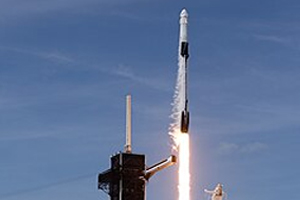
(No earlier than 10 Aug) Japan to launch the MICHIBIKI No. 7 | Quasi-Zenith Satellite System (QZS-7) navigation satellite. Launch window remains open through...
Participants will receive theoretical and hands-on training in electron imaging and X-ray spectroscopy for application to planetary samples. This training opportunity is targeted at...
"Leading Australia’s Space Future for Our Strategic Advantage". Southern Space 2026 brings together decision-makers who set the direction for Australia’s space sector. It is...
The second test launch of LandSpace's ZQ-3 rocket with undisclosed test payloads. Zhuque-3 first stage booster will attempt to land on its downrange landing...
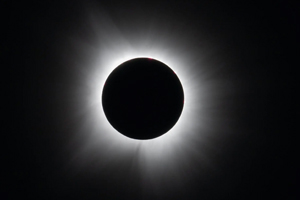
A total solar eclipse with a magnitude of 1.0386 (greatest eclipse 17:47:06 UTC) will be visible in parts of Greenland, Iceland, northern Russia, the Atlantic...
Includes presentation of the Neil Armstrong Award of Excellence, activities for the new class of Astronaut Scholars, 2-day Technical Conference where Scholars present their...
During U.S. spacewalk 97, two astronauts will replace a Space-to-Ground antenna on the orbital complex. The antenna is a critical communication system NASA uses...
Key themes include: Characterizing exoplanet-host solar-like stars; Star-planet interactions; Planet populations around solar-like stars. At University of Liège.
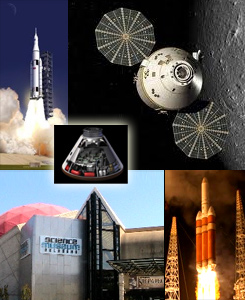 Residents in 3 states will have the chance to see a full-scale test version of the NASA Orion Multi-Purpose Crew Vehicle spacecraft (TR), which will one day serve as the vehicle to transport astronauts beyond low-Earth orbit. One of the planned stops includes the Science Museum Oklahoma (BL) in Oklahoma City on January 23-25. The 23-ton spacecraft built by Lockheed-Martin has a diameter of 5m and is designed to carry 4 astronauts (C). In 2014, NASA plans to conduct the 1st Exploration Flight Test (EFT-1) of Orion aboard a Delta 4 Heavy rocket (BR) from Kennedy Space Center, Cape Canaveral FL. The spacecraft will fly 2 high-apogee orbits and conclude with a high-energy re-entry through Earth’s atmosphere. NASA Officials plan to launch Orion aboard the US$10B giant rocket, Space Launch System (TL), a heavy lifter capable of lifting up to 70 tons of payload, NET 2017 and possible human missions by 2021. To date NASA has spent nearly US$5B on Orion. Orion will continue to make its cross-country journey on Jan 27-29 in Dallas TX and Jan 31-Feb 2 in Huntsville AL. (Image Credit: NASA, launchphotography.com, wired.com, Science Museum OK)
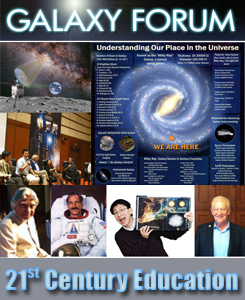 International Lunar Observatory Association’s Galaxy Forums are advancing 21st Century Education worldwide with the launch of a Galaxy Poster and exciting initiatives in Africa, Europe and South America. The ILOA 2012 Galaxy Poster is a powerful resource representing the next dimension beyond maps of the World and Solar System. Distributed free by the non-profit ILOA to Galaxy Forum participants and associated institutions around the world, the Poster includes a Milky Way schematic based on the latest research and insets outlining dimensional / compositional features. Since taking flight on July 4, 2008 to support ILOA’s mission to expand human understanding of the Galaxy and Cosmos through observations from the Moon, the Galaxy Forum initiative has resulted in 33 events spanning 16 unique centers of science, education, exploration and enterprise from Vancouver to Cape Town, from New York and Kansas to Bangalore and Beijing. This year a pan-Africa forum will build on joint efforts with SAAO and the IAU Office of Astronomy for Development. In Europe, the program is being boosted by collaboration with the International Space University at Strasbourg. Program development in South America is focused on cutting edge astronomy in Chile and Brazil. (Image Credit: ILOA)
 = All times for terrestrial events in local time unless noted.
 = All times for international terrestrial events in local time unless noted.
 = All times for space events, and…
 = All times for international space / astro events in Hawaii Standard Time unless noted. Add 10 hours to obtain UT (‘Universal Time;’ Greenwich, England).
 Jan 23 — International Space Station, LEO: E-30 crew make last minute preparations for undocking of Progress 45 cargo ship today from the Pirs docking compartment at 17:10 EST for a destructive re-entry in the Earth’s atmosphere.