Over 500 international space scientists, astronomers, researchers and entrepreneurs are expected to attend the 10th Arab Conference on Astronomy and Space Science on February 5-8 in Muscat, Oman. The annual event will be hosted by the Oman Astronomical Society and sponsored in part by the International Astronomical Union, NASA, ESA and the Inter-Islamic Network for Space Science and Technology. Participants at the event will discuss this year’s theme, ‘The Role of Astronomy and Space Sciences in Developing Contemporary Societies,’ as well as find ways to strengthen scientific cooperation in order to serve the region, its institutions and its members. Topics will cover peaceful usage of outer space technologies, space-based tourism, galactic research studies, space-based Earth observations as well as education and outreach. Attending will be Arab Union for Astronomy and Space Sciences President Hamid M.K Al-Naimy (CL) and George Mason University professor and NASA Goddard Researcher Aous Abdo (BL). Participants will represent countries across the Arabian Peninsula and North Africa as well as Nigeria, China, Iran, Russia, Malaysia, Canada, Europe, USA and New Zealand. (Image Credit: XCOR Aerospace, GMU, AUASS, Africasti.com, Google.com, Geographic.org)
Europe Focuses on Sun at Max Planck Institute Seminar this week and ESA Solar Orbiter Mission Approved for 2017
Max Planck Institute seminar focused on solar wind and the corona coincides with recent approval of the ESA Solar Orbiter mission for launch in 2017. The meeting, titled From the Heliosphere into the Sun – Sailing Against the Wind, held January 31 – February 3 at the Physikzentrum Bad Honnef near Bonn, Germany, is funded by the WE-Heraeus Foundation. Intended as a forum to discuss advances in solar science over the last 3 decades, including the first high-resolution X-ray and EUV observations of the corona and the first detailed measurements of the ion and electron velocity distribution functions in the inner heliosphere, the meeting will also look towards future research. The Solar Orbiter mission recently selected by ESA will carry its telescopes closer to the Sun than any spacecraft in history, within 0.28AU, providing unprecedented resolution of solar features. Moreover, the spacecraft’s orbit will reach speeds almost matching the axial rotation of the Sun, 7.189x10³km/h at the equator, thereby allowing for several days of contiguous data on evolving storms in the heliosphere. (Image Credit: MPS, ESA, SXT, Hinode X-Ray Telescope)
= All times for terrestrial events in local time unless noted.
= All times for international terrestrial events in local time unless noted.
= All times for space events, and…
= All times for international space / astro events in Hawaii Standard Time unless noted. Add 10 hours to obtain UT (‘Universal Time;’ Greenwich, England).
Weekly Planet Watch – Morning Planets: Mars (S), Saturn (S) / Evening Planets: Venus (SW), Mars (E), Jupiter (S).
MONDAY
Jan 30 — International Space Station, LEO: E-30 crew members continue to unload 2.9 tons of food, fuel and equipment from Progress 46 as well as continue ongoing science and maintenance activities.
Jan 30 — NASA Lunar Reconnaissance Orbiter (LRO), Lunar Orbit: LRO continues to function nominally in its 50±15 km near-circular orbit as it makes digital elevation and surface maps that will be a fundamental reference for future human exploration.
Jan 30 — Mars Rover Opportunity, Red Planet: NASA rover recently discovers mineral vein, ‘Homestake,’ one of many newly discovered Martian gypsum veins which indicates the existence of water.
Jan 31 — NASA Headquarters, Washington DC:NASA to host science update to discuss new analysis from the Interstellar Boundary Explorer spacecraft at 13:00 EST.
Jan 31 – Feb 2 — NASA, Huntsville AL:Test version of NASA Orion spacecraft at the US Space & Rocket Center will give residents a chance to see a full scale test version of the vehicle that will take humans into deep space.
Jan 31 — Asteroid 433 Eros: Closest Approach to Earth (0.177 AU).
WEDNESDAY
Feb 1 — NASA New Horizons Spacecraft, Deep Space: New Horizons probe entering home-stretch of its 9-year trip to dwarf planet, Pluto, recently completing 6 years of space flight; Pluto encounter to begin Jan 2015.
Feb 1 — Asteroid (Near-Earth Flyby): 2006 CJ (0.045 AU); 2008 EP6 (0.061 AU); 2006 SU217 (0.072 AU); 278381 (0.073 AU).
THURSDAY
Feb 2 — US Space and Rocket Center, Huntsville AL: ‘Lecture: Pass the Torch,’ featuring a presentation by NASA Orion Deputy Project Manager Mark Kirasich and Space Launch System Program Manager Todd May at 18:00 CST.
Includes ~150 meetings covering the fields of COSPAR Scientific Commissions / Panels / Task Groups, such as SC B: The Earth-Moon System, Planets, and...
At the Palais des Nations and online. Outer space is entering a renewed phase of strategic importance, defined by rapid innovation, growing competition and deepening...
This international lunar science meeting has two objectives: to provide a platform for leading experts to review recent advances across lunar research, from the...
At CSIR International Convention Centre. Key topics are Earth Observation, Developing Space Tourism, Space Supply Manufacturing. Cultural tours are offered.
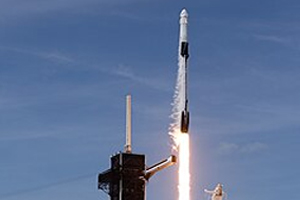
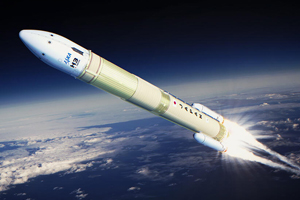
(No earlier than 10 Aug) Japan to launch the MICHIBIKI No. 7 | Quasi-Zenith Satellite System (QZS-7) navigation satellite. Launch window remains open through...
Participants will receive theoretical and hands-on training in electron imaging and X-ray spectroscopy for application to planetary samples. This training opportunity is targeted at...
"Leading Australia’s Space Future for Our Strategic Advantage". Southern Space 2026 brings together decision-makers who set the direction for Australia’s space sector. It is...
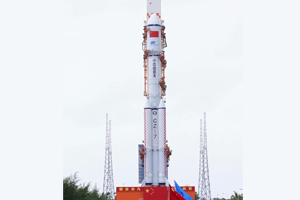
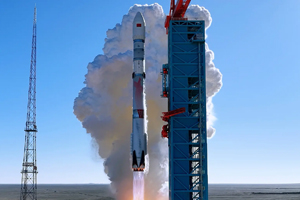
The second test launch of LandSpace's ZQ-3 rocket with undisclosed test payloads. Zhuque-3 first stage booster will attempt to land on its downrange landing...
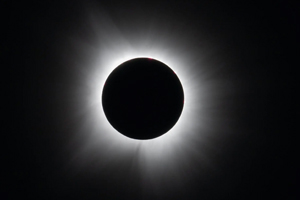
A total solar eclipse with a magnitude of 1.0386 (greatest eclipse 17:47:06 UTC) will be visible in parts of Greenland, Iceland, northern Russia, the Atlantic...
Includes presentation of the Neil Armstrong Award of Excellence, activities for the new class of Astronaut Scholars, 2-day Technical Conference where Scholars present their...
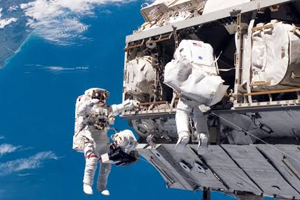
During U.S. spacewalk 97, two astronauts will replace a Space-to-Ground antenna on the orbital complex. The antenna is a critical communication system NASA uses...
Key themes include: Characterizing exoplanet-host solar-like stars; Star-planet interactions; Planet populations around solar-like stars. At University of Liège.
 Over 500 international space scientists, astronomers, researchers and entrepreneurs are expected to attend the 10th Arab Conference on Astronomy and Space Science on February 5-8 in Muscat, Oman. The annual event will be hosted by the Oman Astronomical Society and sponsored in part by the International Astronomical Union, NASA, ESA and the Inter-Islamic Network for Space Science and Technology. Participants at the event will discuss this year’s theme, ‘The Role of Astronomy and Space Sciences in Developing Contemporary Societies,’ as well as find ways to strengthen scientific cooperation in order to serve the region, its institutions and its members. Topics will cover peaceful usage of outer space technologies, space-based tourism, galactic research studies, space-based Earth observations as well as education and outreach. Attending will be Arab Union for Astronomy and Space Sciences President Hamid M.K Al-Naimy (CL) and George Mason University professor and NASA Goddard Researcher Aous Abdo (BL). Participants will represent countries across the Arabian Peninsula and North Africa as well as Nigeria, China, Iran, Russia, Malaysia, Canada, Europe, USA and New Zealand. (Image Credit: XCOR Aerospace, GMU, AUASS, Africasti.com, Google.com, Geographic.org)
 Max Planck Institute seminar focused on solar wind and the corona coincides with recent approval of the ESA Solar Orbiter mission for launch in 2017. The meeting, titled From the Heliosphere into the Sun – Sailing Against the Wind, held January 31 – February 3 at the Physikzentrum Bad Honnef near Bonn, Germany, is funded by the WE-Heraeus Foundation. Intended as a forum to discuss advances in solar science over the last 3 decades, including the first high-resolution X-ray and EUV observations of the corona and the first detailed measurements of the ion and electron velocity distribution functions in the inner heliosphere, the meeting will also look towards future research. The Solar Orbiter mission recently selected by ESA will carry its telescopes closer to the Sun than any spacecraft in history, within 0.28AU, providing unprecedented resolution of solar features. Moreover, the spacecraft’s orbit will reach speeds almost matching the axial rotation of the Sun, 7.189x10³km/h at the equator, thereby allowing for several days of contiguous data on evolving storms in the heliosphere. (Image Credit: MPS, ESA, SXT, Hinode X-Ray Telescope)
 = All times for terrestrial events in local time unless noted.
 = All times for international terrestrial events in local time unless noted.
 = All times for space events, and…
 = All times for international space / astro events in Hawaii Standard Time unless noted. Add 10 hours to obtain UT (‘Universal Time;’ Greenwich, England).
 Jan 30 — International Space Station, LEO: E-30 crew members continue to unload 2.9 tons of food, fuel and equipment from Progress 46 as well as continue ongoing science and maintenance activities.