Vega Inaugural Launch Set for Feb 13 from Kourou, French Guiana
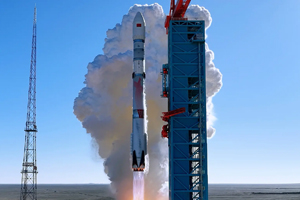
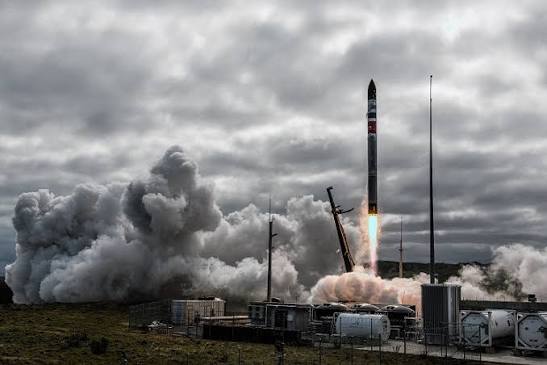
The maiden voyage of Europe’s Vega rocket (TR), VV01, is set to launch NET February 13 from Kourou, French Guiana (BR). Developed by ESA, the Italian Space Agency and CNES, the 4-stage, 30-Meter rocket weighs approximately 137,000kg and is designed to carry payloads weighing 300-1,500kg into orbit. Unlike other small launchers, Vega is able to place multiple payloads into various Low-Earth and Sun-Synchronous orbits. The main payloads for the inaugural flight include the Italian Space Agency Laser Relativity Satellite (LARES) (CL), which will study the Lense-Thirring effect caused by Earth’s gravity, the 12.5-kg ALMASat-1 (BL), and 7 CubeSats from various universities in Europe. In its qualification flight, Vega will insert the 400-kg LARES satellite into a 1,450km orbit. Europe has spent nearly €700M (US$924M) on the Vega launch system in hopes that it will provide a safe and reliable way to carry science and Earth observation satellites into orbit while complimenting the heavy Ariane 5 and Soyuz rockets. If the launch is successful, ESA will plan 5 further missions using the Vega rocket before 2016. Pictured: ESA Director General Jean-Jacques Dordain. (Image Credit: ESA, Arianespace, space.skyrocket.de, en.rian.ru)
Commercial Crew Development – Round 3 NASA Tender Announcement On February 7
Efforts to establish new USA human spaceflight capability continue with the NASA CCDev program despite budgetary constraints imposed by Congress. The Commercial Crew Integrated Capability or CCiCap solicitation is intended to advance the design and development of an integrated crew transportation system that includes spacecraft, launch vehicle, ground and missions systems. Companies will have 45 days from February 7th to submit proposals. Decisions are expected this July or August and the base period is through May 2014. With the USA currently dependent on Russia for rides to the International Space Station, NASA and the American space community are looking to private companies for access to low-Earth orbit. Eager to fill this demand, 4 companies entered Space Act Agreements under CCDev Round 2: SpaceX, Sierra Nevada Corp, Boeing and Blue Origin. Program Manager Ed Mango says a majority of the US$406M 2012 CCDev budget will be spent on Round 2 agreements, though NASA anticipates awarding at least 2 new funded SAAs for Round 3. The goal is to have an operational Commercial Crew program by the middle of this decade, but current funding reductions and technical delays could push that back as far as 2018. (Image Credit: NASA, SpaceX, SNC, Boeing)
= All times for terrestrial events in local time unless noted.
= All times for international terrestrial events in local time unless noted.
= All times for space events, and…
= All times for international space / astro events in Hawaii Standard Time unless noted. Add 10 hours to obtain UT (‘Universal Time;’ Greenwich, England).
Weekly Planet Watch – Morning Planets: Mars (S), Saturn (S) / Evening Planets: Venus (SW), Mars (E), Jupiter (SSW).
MONDAY
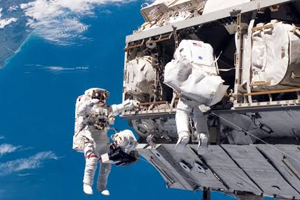
Feb 6 — International Space Station, LEO: E-30 crew members continue maintenance and science activities after flight engineers Anton Shkaplerov and Oleg Kononenko recently completed the 162nd, 5.5-hr spacewalk aboard the ISS.
Feb 6 — NASA Lunar Reconnaissance Orbiter (LRO), Lunar Orbit: LRO continues to function nominally in its 50±15 km near-circular orbit as it makes digital elevation and surface maps that will be a fundamental reference for future human exploration.
Feb 6 — Mars Rover Opportunity, Red Planet: Decreasing energy levels with the approach of the winter solstice continue to inhibit rover abilities; Total odometry: 34,361.37 meters.
Feb 8 — American Institute of Aeronautics and Astronautics – San Francisco, Silicon Valley Space Center, Moffett Field CA: ‘Lunar Mining,’ John Chapman.
Feb 8 — Marshall Space Flight Center, Huntsville AL: Registration deadline for ‘19th Annual Great Moonbuggy Race,’ on Apr 13-14.
Feb 8 — Intech Science Center, Winchester, United Kingdom: Space Lecture Series: ‘Living in the Sun’s Atmosphere,’ Lucie Green.
Feb 11 — Zero Gravity Corporation, San Francisco CA: ‘Zero-G Flight Experience,’ a once-in-a-lifetime opportunity to experience weightlessness onboard a specially modified Boeing 727.
Feb 11 — Moon: At Perigee (Distance: 367,919 km); 08:00.
Feb 11 — Asteroid 2009 DT10s: Near-Earth Flyby (0.027 AU).
Feb 11 — Asteroid 5649 Donnashirley: Closest Approach to Earth (1.004 AU).
Feb 12-21 — The GLOBE Program, The National Optical Astronomy Observatory, Global: ‘GLOBE at Night: Less of Our Light, More Star Light,’ event to raise public awareness of the impact of light pollution by inviting citizen-scientists to measure their night sky brightness and submit their observations to a website from a computer or smart phone.
Includes ~150 meetings covering the fields of COSPAR Scientific Commissions / Panels / Task Groups, such as SC B: The Earth-Moon System, Planets, and...
At the Palais des Nations and online. Outer space is entering a renewed phase of strategic importance, defined by rapid innovation, growing competition and deepening...
This international lunar science meeting has two objectives: to provide a platform for leading experts to review recent advances across lunar research, from the...
At CSIR International Convention Centre. Key topics are Earth Observation, Developing Space Tourism, Space Supply Manufacturing. Cultural tours are offered.
(No earlier than 10 Aug) Japan to launch the MICHIBIKI No. 7 | Quasi-Zenith Satellite System (QZS-7) navigation satellite. Launch window remains open through...
Participants will receive theoretical and hands-on training in electron imaging and X-ray spectroscopy for application to planetary samples. This training opportunity is targeted at...
"Leading Australia’s Space Future for Our Strategic Advantage". Southern Space 2026 brings together decision-makers who set the direction for Australia’s space sector. It is...
The second test launch of LandSpace's ZQ-3 rocket with undisclosed test payloads. Zhuque-3 first stage booster will attempt to land on its downrange landing...
A total solar eclipse with a magnitude of 1.0386 (greatest eclipse 17:47:06 UTC) will be visible in parts of Greenland, Iceland, northern Russia, the Atlantic...
Includes presentation of the Neil Armstrong Award of Excellence, activities for the new class of Astronaut Scholars, 2-day Technical Conference where Scholars present their...
During U.S. spacewalk 97, two astronauts will replace a Space-to-Ground antenna on the orbital complex. The antenna is a critical communication system NASA uses...
Key themes include: Characterizing exoplanet-host solar-like stars; Star-planet interactions; Planet populations around solar-like stars. At University of Liège.
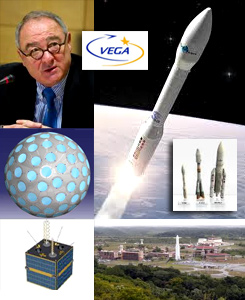 The maiden voyage of Europe’s Vega rocket (TR), VV01, is set to launch NET February 13 from Kourou, French Guiana (BR). Developed by ESA, the Italian Space Agency and CNES, the 4-stage, 30-Meter rocket weighs approximately 137,000kg and is designed to carry payloads weighing 300-1,500kg into orbit. Unlike other small launchers, Vega is able to place multiple payloads into various Low-Earth and Sun-Synchronous orbits. The main payloads for the inaugural flight include the Italian Space Agency Laser Relativity Satellite (LARES) (CL), which will study the Lense-Thirring effect caused by Earth’s gravity, the 12.5-kg ALMASat-1 (BL), and 7 CubeSats from various universities in Europe. In its qualification flight, Vega will insert the 400-kg LARES satellite into a 1,450km orbit. Europe has spent nearly €700M (US$924M) on the Vega launch system in hopes that it will provide a safe and reliable way to carry science and Earth observation satellites into orbit while complimenting the heavy Ariane 5 and Soyuz rockets. If the launch is successful, ESA will plan 5 further missions using the Vega rocket before 2016. Pictured: ESA Director General Jean-Jacques Dordain. (Image Credit: ESA, Arianespace, space.skyrocket.de, en.rian.ru)
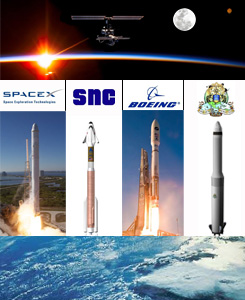 Efforts to establish new USA human spaceflight capability continue with the NASA CCDev program despite budgetary constraints imposed by Congress. The Commercial Crew Integrated Capability or CCiCap solicitation is intended to advance the design and development of an integrated crew transportation system that includes spacecraft, launch vehicle, ground and missions systems. Companies will have 45 days from February 7th to submit proposals. Decisions are expected this July or August and the base period is through May 2014. With the USA currently dependent on Russia for rides to the International Space Station, NASA and the American space community are looking to private companies for access to low-Earth orbit. Eager to fill this demand, 4 companies entered Space Act Agreements under CCDev Round 2: SpaceX, Sierra Nevada Corp, Boeing and Blue Origin. Program Manager Ed Mango says a majority of the US$406M 2012 CCDev budget will be spent on Round 2 agreements, though NASA anticipates awarding at least 2 new funded SAAs for Round 3. The goal is to have an operational Commercial Crew program by the middle of this decade, but current funding reductions and technical delays could push that back as far as 2018. (Image Credit: NASA, SpaceX, SNC, Boeing)
 = All times for terrestrial events in local time unless noted.
 = All times for international terrestrial events in local time unless noted.
 = All times for space events, and…
 = All times for international space / astro events in Hawaii Standard Time unless noted. Add 10 hours to obtain UT (‘Universal Time;’ Greenwich, England).
 Feb 6 — International Space Station, LEO: E-30 crew members continue maintenance and science activities after flight engineers Anton Shkaplerov and Oleg Kononenko recently completed the 162nd, 5.5-hr spacewalk aboard the ISS.
 Feb 8 — Marshall Space Flight Center, Huntsville AL: Registration deadline for ‘19th Annual Great Moonbuggy Race,’ on Apr 13-14.