Canada Eyes Leadership Role In Lunar Mineral Exploration
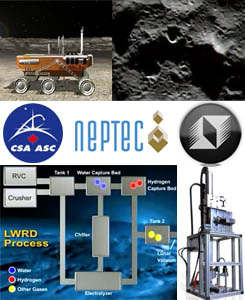
Amidst renewed global enthusiasm for Moon exploration and enterprise the Canadian Space Agency is leading development of prototype equipment destined for mineral exploration at the Moon South Pole. Since 2004, CSA, NASA, Neptec and NORCAT have been collaborating on a lunar hydrogen / water-ice hunting rover-mounted drilling experiment called RESOLVE. Lead Scientist and former PI of LCROSS, Tony Colaprete, says equipment will be ready to fly by the end of 2014 but may have to wait till the end of the decade for a ride on SLS. Dale Boucher of NORCAT estimates the cost of soft-landing one-liter of water on the Moon at US$250,000; Red Whittaker’s Astrobotic Technology Inc. is asking lunar-lander payload customers for US$1.8M/kg. Thus, in-situ extraction of lunar water is seen as essential to sustaining efficient human habitation. The CSA is known for producing useful space hardware like the famous Canadarm aboard ISS and the country at-large excels in mining. John Chapman of J.A. Chapman Mining Services notes 43% of world-wide mineral exploration is conducted by Canadian companies. Combining these two areas of expertise to develop innovative solutions for extraterrestrial mining on the Moon, Mars, asteroids and beyond seems a logical, though clearly challenging, synthesis. (Image Credit: CSA, Neptec, NORCAT)
3D Space Printing Technology Talk at AIAA-SF
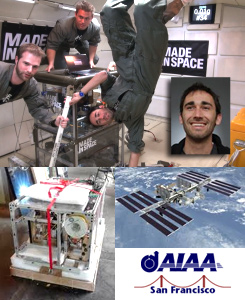
3D printing and in-space manufacturing will be the focus of a talk by Made in Space CTO and Co-Founder Jason Dunn at AIAA – San Francisco on March 5 in Mountain View CA. 3D printing, an additive technology process that builds parts by melting layers to the exact geometry defined by a 3D CAD model, could dramatically advance space exploration and commercialization. Materials can vary from hard plastics to metals. Implementing this technology in space will offer astronauts the freedom to make what they need on demand without having to rely on transport from Earth. The printer could build space-station parts, astronaut tools, satellites and even spacecraft. With additive manufacturing, structures and components would be lighter, cheaper and more optimized. Made in Space Inc estimates these parts would reduce the structural mass of objects by at least 30%, since they would not need to survive Earth’s gravity or extreme G-forces of launching into orbit. Other advantages of 3D printing include immediate production time with minimal human involvement and limited material waste. This USA start-up company from Singularity University could see its first 3D printer reach the International Space Station by 2014. (Image Credit: AIAA-SF, NASA, Made In Space Inc)
= All times for terrestrial events in local time unless noted.
= All times for international terrestrial events in local time unless noted.
= All times for space events, and…
= All times for international space / astro events in Hawaii Standard Time unless noted. Add 10 hours to obtain UT (‘Universal Time;’ Greenwich, England).
Weekly Planet Watch – Morning Planets: Saturn (S) / Evening Planets: Mercury (W), Venus (SW), Mars (E), Jupiter (SW).
MONDAY
Mar 5 — International Space Station, LEO: E-30 crew members continue to work with a variety of scientific experiments from around the world and conduct maintenance of the systems aboard the orbiting laboratory.
Mar 5 — Lunar Reconnaissance Orbiter (LRO), Lunar Orbit: Recent imagery from LRO Camera shows how the crust of the Moon is slightly stretched, forming small valleys; Images suggest the Moon has experienced relatively recent geologic activity.
Mar 5 — Mars Odyssey Orbiter, Red Planet: Thermal Emission Imaging System (THEMIS) camera on NASA spacecraft continues successful observation of Mars 10 years on, circling the Red Planet nearly 45,000 times and taking more than half a million images at infrared and visible wavelengths.
Mar 1 — Hawai`i Island Chamber of Commerce, Japanese Chamber of Commerce and Industry of Hawaii, et al, Hilo HI: ‘Journey Through the Universe Week 2012;’ Mar 9.
Mar 7 — Moon: 9.1° SSW of Mars, 14:00; Full Moon (Worm Moon), 23:41.
Mar 7 — Asteroid 2710 Veverka: Closest Approach to Earth (1.126 AU).
THURSDAY
Mar 8 — NASA Headquarters, Washington DC: ‘Women, Aerospace and Innovation,’ public event featuring senior government leaders, scientists and innovators in celebration of Women’s History Month.
Includes ~150 meetings covering the fields of COSPAR Scientific Commissions / Panels / Task Groups, such as SC B: The Earth-Moon System, Planets, and...
At the Palais des Nations and online. Outer space is entering a renewed phase of strategic importance, defined by rapid innovation, growing competition and deepening...
This international lunar science meeting has two objectives: to provide a platform for leading experts to review recent advances across lunar research, from the...
At CSIR International Convention Centre. Key topics are Earth Observation, Developing Space Tourism, Space Supply Manufacturing. Cultural tours are offered.
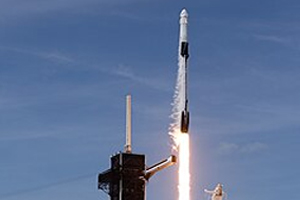
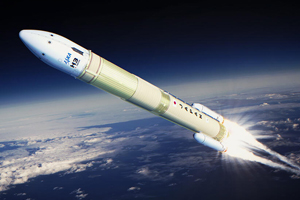
(No earlier than 10 Aug) Japan to launch the MICHIBIKI No. 7 | Quasi-Zenith Satellite System (QZS-7) navigation satellite. Launch window remains open through...
Participants will receive theoretical and hands-on training in electron imaging and X-ray spectroscopy for application to planetary samples. This training opportunity is targeted at...
"Leading Australia’s Space Future for Our Strategic Advantage". Southern Space 2026 brings together decision-makers who set the direction for Australia’s space sector. It is...
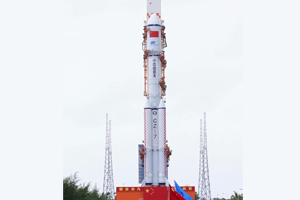
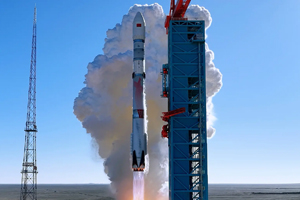
The second test launch of LandSpace's ZQ-3 rocket with undisclosed test payloads. Zhuque-3 first stage booster will attempt to land on its downrange landing...
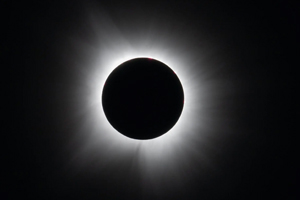
A total solar eclipse with a magnitude of 1.0386 (greatest eclipse 17:47:06 UTC) will be visible in parts of Greenland, Iceland, northern Russia, the Atlantic...
Includes presentation of the Neil Armstrong Award of Excellence, activities for the new class of Astronaut Scholars, 2-day Technical Conference where Scholars present their...
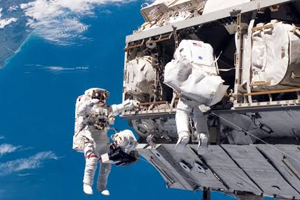
During U.S. spacewalk 97, two astronauts will replace a Space-to-Ground antenna on the orbital complex. The antenna is a critical communication system NASA uses...
Key themes include: Characterizing exoplanet-host solar-like stars; Star-planet interactions; Planet populations around solar-like stars. At University of Liège.
 Amidst renewed global enthusiasm for Moon exploration and enterprise the Canadian Space Agency is leading development of prototype equipment destined for mineral exploration at the Moon South Pole. Since 2004, CSA, NASA, Neptec and NORCAT have been collaborating on a lunar hydrogen / water-ice hunting rover-mounted drilling experiment called RESOLVE. Lead Scientist and former PI of LCROSS, Tony Colaprete, says equipment will be ready to fly by the end of 2014 but may have to wait till the end of the decade for a ride on SLS. Dale Boucher of NORCAT estimates the cost of soft-landing one-liter of water on the Moon at US$250,000; Red Whittaker’s Astrobotic Technology Inc. is asking lunar-lander payload customers for US$1.8M/kg. Thus, in-situ extraction of lunar water is seen as essential to sustaining efficient human habitation. The CSA is known for producing useful space hardware like the famous Canadarm aboard ISS and the country at-large excels in mining. John Chapman of J.A. Chapman Mining Services notes 43% of world-wide mineral exploration is conducted by Canadian companies. Combining these two areas of expertise to develop innovative solutions for extraterrestrial mining on the Moon, Mars, asteroids and beyond seems a logical, though clearly challenging, synthesis. (Image Credit: CSA, Neptec, NORCAT)
 3D printing and in-space manufacturing will be the focus of a talk by Made in Space CTO and Co-Founder Jason Dunn at AIAA – San Francisco on March 5 in Mountain View CA. 3D printing, an additive technology process that builds parts by melting layers to the exact geometry defined by a 3D CAD model, could dramatically advance space exploration and commercialization. Materials can vary from hard plastics to metals. Implementing this technology in space will offer astronauts the freedom to make what they need on demand without having to rely on transport from Earth. The printer could build space-station parts, astronaut tools, satellites and even spacecraft. With additive manufacturing, structures and components would be lighter, cheaper and more optimized. Made in Space Inc estimates these parts would reduce the structural mass of objects by at least 30%, since they would not need to survive Earth’s gravity or extreme G-forces of launching into orbit. Other advantages of 3D printing include immediate production time with minimal human involvement and limited material waste. This USA start-up company from Singularity University could see its first 3D printer reach the International Space Station by 2014. (Image Credit: AIAA-SF, NASA, Made In Space Inc)
 = All times for terrestrial events in local time unless noted.
 = All times for international terrestrial events in local time unless noted.
 = All times for space events, and…
 = All times for international space / astro events in Hawaii Standard Time unless noted. Add 10 hours to obtain UT (‘Universal Time;’ Greenwich, England).
 Mar 5 — International Space Station, LEO: E-30 crew members continue to work with a variety of scientific experiments from around the world and conduct maintenance of the systems aboard the orbiting laboratory.