China Gears Up For Human Space / Multi-World Exploration With New Launch Systems and Hainan Space Port
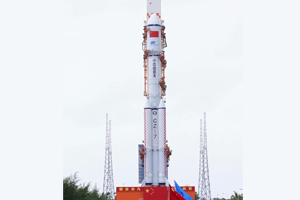
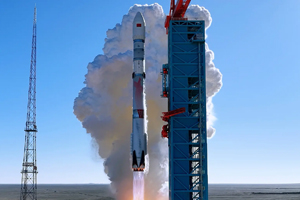
Progress continues on development of the Long March-5 and Long March-7 rocket launch systems. Deputy head of the China Academy of Launch Vehicle Technology Liang Xiaohong (TR) indicates that the LM-5, with a maximum LEO payload capacity of 25 tons and geosynchronous orbit payload capacity of 14 tons, will make its maiden flight in 2014. The LM-7 system will be ready for launch within 5 years. The new Wenchang Satellite Launch Center on Hainan Island is due for completion in 2013. At only 19 degrees north latitude, it is China’s best available site for launching geosynchronous satellites, heavy satellites, large space station components, deep space probes, lunar and interplanetary missions. This summer China plans to conduct a crewed space rendezvous and docking mission with Tiangong-1 as a precursor to continued development of a dedicated space station, the core module of which is scheduled for a LM-5 launch by 2020. The Chang’e Moon exploration program is also advancing with the Chang’e-3 soft-landing/rover and the Chang’e-5 sample return missions slated for 2013 and 2017 respectively. While commentators in the West, most recently Neil deGrasse Tyson, foresee a new space race, international cooperation rather than competition may be the most successful model for humanity’s multi-world ambitions. (Image Credit: CNSA, Xin Hua)
43rd Lunar and Planetary Science Pre-Conference Events in Woodlands, Texas
Several space events will take place in the build-up to the much anticipated ‘43rd Lunar and Planetary Science Conference’ on March 19-23 in Woodlands TX. Flexure Engineering and the University of Houston will host the ‘2nd Lunar Superconductor Applications Workshop’ on Mar 15-16. Fifty international scientists and technologists will attend the ‘Invite-Only’ event to discuss funding for commercial and scientific ventures at the Moon South Pole, which has become the destination of choice because of its rich resource potential. Attendees include Keynote speaker David Gump (C) of Astrobotic and NASA LCROSS PI Anthony Colaprete (B). On Mar 17-18, Brown University, the Vernadsky Institute, MIT and the NASA Lunar Science Institute will co-sponsor ‘Microsymposium 53: Early History of the Terrestrial Planets.’ Scientists will discuss recent discoveries from LRO, LCROSS, GRAIL-A / B and MESSENGER, and evaluate future exploration goals for the Moon and Mercury. Co-Conveners in attendance include Carle Pieters (T), Maria Zuber, James Head and Harald Hiesinger. On March 18, NASA and the Lunar Planetary Institute will host an ‘Undergraduate Planetary Science Research Conference’ for those currently conducting research in planetary sciences, astrobiology and lunar sciences. Students will be able to present posters to peers and the science community, attend panel sessions and meet mentors. (Image Credit: NASA, Astrobotic, LPI, Brown University)
= All times for terrestrial events in local time unless noted.
= All times for international terrestrial events in local time unless noted.
= All times for space events, and…
= All times for international space / astro events in Hawaii Standard Time unless noted. Add 10 hours to obtain UT (‘Universal Time;’ Greenwich, England).
Weekly Planet Watch – Morning Planets: Saturn (S) / Evening Planets: Mercury (W), Venus (W), Mars (S), Jupiter (SW).
MONDAY
Mar 12 — International Space Station, LEO: E-30 crew members continue maintaining and monitoring USA / Russia segment systems, transferring cargo and performing science experiments.
Mar 12 — Lunar Reconnaissance Orbiter (LRO), Lunar Orbit: Lunar scientists continue to study recent images from LRO which show more detail of Apollo 15 landing site; New images captured when the spacecraft lowered its mapping orbit from 50km to 25 km.
Mar 12 — ESA Mars Express, Red Planet: The unique elliptical polar orbit of Mars Express allows scientists to see the gravitational field of Phobos in unprecedented detail, prompting Shanghai Astronomical Observatory and Technical University Berlin to recently update working models of the Martian moon.
Mar 12 — National Air and Space Museum, Applied Physics Lab, Arlington VA: ‘3rd Space Policy and History Forum,’ featuring Virgin Galactic EVP and CTO Steve Isakowitz.
Mar 12 — International Academy of Astronautics (IAA), Paris, France: ‘IAA Spring Dinner.’
Mar 12 — Asteroid (Near-Earth Flyby): 2012 DW60 (0.006 AU); 2010 SV3 (0.058 AU).
TUESDAY
Mar 13 — NASA Headquarters, Washington DC:Media briefing at 12:00 EDT to discuss upcoming launch of the Nuclear Spectroscopic Telescope Array set to launch NET Mar 22.
Mar 13-22 — The GLOBE Program, The National Optical Astronomy Observatory, Global: ‘GLOBE at Night: Less of Our Light, More Star Light,’ event to raise public awareness of the impact of light pollution by inviting citizen-scientists to measure the brightness of the local night sky and submit their observations to a website from a computer or smart phone.
Mar 14 — Asteroid 2008 EY5: Near-Earth Flyby (0.088 AU).
THURSDAY
Mar 15 — NASA, L’Garde Inc, Tustin CA:NASA Chief Technologist Mason Peck to visitL’Garde Inc in Tustin, Calif at 09:00 PDT to highlight ways government can partner with small business to help create the jobs of the future through investment in science and technology.
Mar 17 — Zero Gravity Corporation, Washington DC: ‘Zero-G Flight Experience,’ a once-in-a-lifetime opportunity to experience weightlessness onboard a specially modified Boeing 727.
Includes ~150 meetings covering the fields of COSPAR Scientific Commissions / Panels / Task Groups, such as SC B: The Earth-Moon System, Planets, and...
At the Palais des Nations and online. Outer space is entering a renewed phase of strategic importance, defined by rapid innovation, growing competition and deepening...
This international lunar science meeting has two objectives: to provide a platform for leading experts to review recent advances across lunar research, from the...
At CSIR International Convention Centre. Key topics are Earth Observation, Developing Space Tourism, Space Supply Manufacturing. Cultural tours are offered.
(No earlier than 10 Aug) Japan to launch the MICHIBIKI No. 7 | Quasi-Zenith Satellite System (QZS-7) navigation satellite. Launch window remains open through...
Participants will receive theoretical and hands-on training in electron imaging and X-ray spectroscopy for application to planetary samples. This training opportunity is targeted at...
"Leading Australia’s Space Future for Our Strategic Advantage". Southern Space 2026 brings together decision-makers who set the direction for Australia’s space sector. It is...
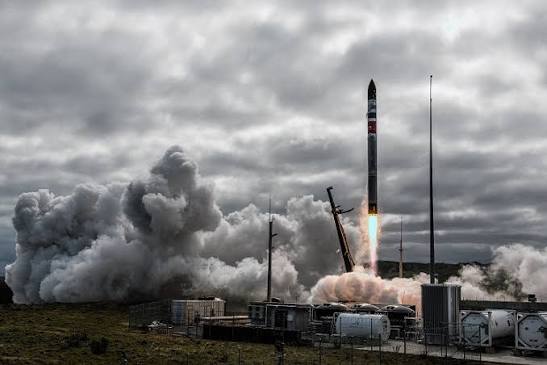
The second test launch of LandSpace's ZQ-3 rocket with undisclosed test payloads. Zhuque-3 first stage booster will attempt to land on its downrange landing...
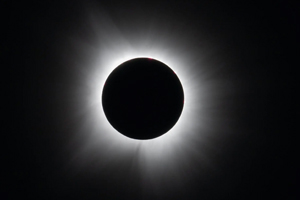
A total solar eclipse with a magnitude of 1.0386 (greatest eclipse 17:47:06 UTC) will be visible in parts of Greenland, Iceland, northern Russia, the Atlantic...
Includes presentation of the Neil Armstrong Award of Excellence, activities for the new class of Astronaut Scholars, 2-day Technical Conference where Scholars present their...
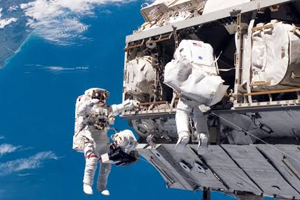
During U.S. spacewalk 97, two astronauts will replace a Space-to-Ground antenna on the orbital complex. The antenna is a critical communication system NASA uses...
Key themes include: Characterizing exoplanet-host solar-like stars; Star-planet interactions; Planet populations around solar-like stars. At University of Liège.
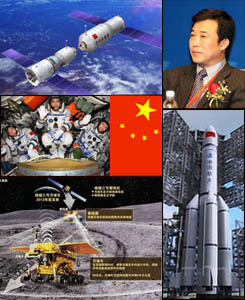 Progress continues on development of the Long March-5 and Long March-7 rocket launch systems. Deputy head of the China Academy of Launch Vehicle Technology Liang Xiaohong (TR) indicates that the LM-5, with a maximum LEO payload capacity of 25 tons and geosynchronous orbit payload capacity of 14 tons, will make its maiden flight in 2014. The LM-7 system will be ready for launch within 5 years. The new Wenchang Satellite Launch Center on Hainan Island is due for completion in 2013. At only 19 degrees north latitude, it is China’s best available site for launching geosynchronous satellites, heavy satellites, large space station components, deep space probes, lunar and interplanetary missions. This summer China plans to conduct a crewed space rendezvous and docking mission with Tiangong-1 as a precursor to continued development of a dedicated space station, the core module of which is scheduled for a LM-5 launch by 2020. The Chang’e Moon exploration program is also advancing with the Chang’e-3 soft-landing/rover and the Chang’e-5 sample return missions slated for 2013 and 2017 respectively. While commentators in the West, most recently Neil deGrasse Tyson, foresee a new space race, international cooperation rather than competition may be the most successful model for humanity’s multi-world ambitions. (Image Credit: CNSA, Xin Hua)
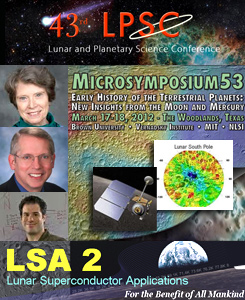 Several space events will take place in the build-up to the much anticipated ‘43rd Lunar and Planetary Science Conference’ on March 19-23 in Woodlands TX. Flexure Engineering and the University of Houston will host the ‘2nd Lunar Superconductor Applications Workshop’ on Mar 15-16. Fifty international scientists and technologists will attend the ‘Invite-Only’ event to discuss funding for commercial and scientific ventures at the Moon South Pole, which has become the destination of choice because of its rich resource potential. Attendees include Keynote speaker David Gump (C) of Astrobotic and NASA LCROSS PI Anthony Colaprete (B). On Mar 17-18, Brown University, the Vernadsky Institute, MIT and the NASA Lunar Science Institute will co-sponsor ‘Microsymposium 53: Early History of the Terrestrial Planets.’ Scientists will discuss recent discoveries from LRO, LCROSS, GRAIL-A / B and MESSENGER, and evaluate future exploration goals for the Moon and Mercury. Co-Conveners in attendance include Carle Pieters (T), Maria Zuber, James Head and Harald Hiesinger. On March 18, NASA and the Lunar Planetary Institute will host an ‘Undergraduate Planetary Science Research Conference’ for those currently conducting research in planetary sciences, astrobiology and lunar sciences. Students will be able to present posters to peers and the science community, attend panel sessions and meet mentors. (Image Credit: NASA, Astrobotic, LPI, Brown University)
 = All times for terrestrial events in local time unless noted.
 = All times for international terrestrial events in local time unless noted.
 = All times for space events, and…
 = All times for international space / astro events in Hawaii Standard Time unless noted. Add 10 hours to obtain UT (‘Universal Time;’ Greenwich, England).
 Mar 12 — International Space Station, LEO: E-30 crew members continue maintaining and monitoring USA / Russia segment systems, transferring cargo and performing science experiments.