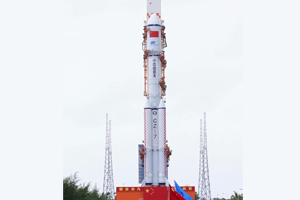
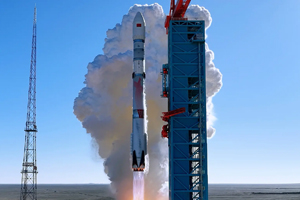
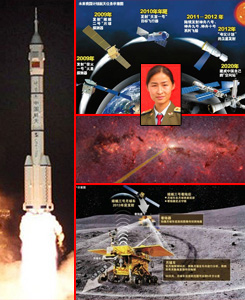
Steady progress by China in space development and exploration continues. The Shenzhou 9 mission to the indigenous 8.5-metric ton orbiting space station precursor, Tiangong 1, is a signal achievement in human spaceflight for the burgeoning China space program, not least because the crew of 3 includes the first female Taikonaut Liu Yang. Advanced preparations are also underway for launch of the Chang’e-3 robotic lander mission to the surface of the Moon in 2013. Barring any early attempt from GLXP contenders, this is likely to be the first spacecraft to make a soft, controlled landing on the lunar surface since Luna 24 on August 7, 1976. There are growing indications that China is opening up to international collaboration. The International Lunar Observatory Association is preparing a proposal for Milky Way Galaxy, astronomical imaging with the lander-mounted telescope. Chang’e-4 is a second lander / rover mission that, if Chang’e-3 is successful at Sinus Iridum (44.1° N), could break new ground at the Moon South Pole. Chang’e-5 is planned for 2017 as a sample return mission. (Image Credit: CNSA, ILOA)
Japan Developments in 21st Century Space Endeavors
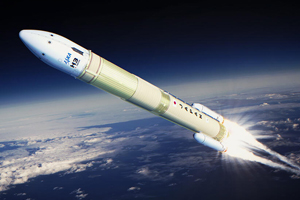
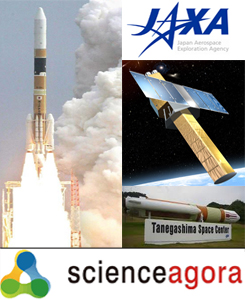
Space agency JAXA plans to launch the next H-2A/HTV NLT March 2013, having successfully conducted its first commercial payload launch of 1 South Korea and 3 Japan satellites on May 18 from Tanegashima Space Center. The next H-2B/HTV launch to provide the International Space Station with food and other supplies is scheduled for July 21, with two more launches for HTV technical trials scheduled in 2013. JAXA also plans to launch ASTRO-H in 2014 using an H-2A rocket — its 6th X-ray observation satellite designed to explore the structure and evolution of the universe. Japan was an early innovator in this field and continues to lead the world in X-ray astronomy satellite technology. Upcoming events in Tokyo include the International Lunar Observatory Association (ILOA) Galaxy Forum, which is tentatively scheduled for September, and Science Agora 2012, which will be held in November. The Galaxy Forum advances 21st Century Education worldwide to provide greater global awareness, capabilities and action in Galaxy science, exploration and enterprise. Under the theme of “Discovering the Science in Your Life,” Science Agora 2012 fosters science communication, enabling interaction between scientists and the rest of society. (Image Credit: AFP / JIJI, Akihiro Ikeshita / JAXA)
= All times for terrestrial events in local time unless noted.
= All times for international terrestrial events in local time unless noted.
= All times for space events, and…
= All times for international space / astro events in Hawaii Standard Time unless noted. Add 10 hours to obtain UT (‘Universal Time;’ Greenwich, England).
Jun 18 — CNSA, Launch Long March / Shenzhou 9, Jiuquan, China: Shenzhou 9 should be in orbit if June 16 launch was successful and on time.
Jun 18 — International Space Station, LEO: Expedition 31 crew continue to use the Alpha Magnetic Spectrometer-02, the solar arrays that power the space station, to conduct high energy physics research, measure cosmic radiation and search for dark matter and anti-matter.
Jun 18 — Lunar Reconnaissance Orbiter (LRO), Lunar Orbit: NASA LRO functioning nominally in its 50±15 km near-circular orbit as it makes digital elevation and surface maps that will be fundamental references for future human exploration.
Jun 18 — Mars Rover Opportunity, Red Planet: Opportunity is investigating light-toned veins around the north end of Cape York on the rim of Endeavour Crater.
Jun 18 — Jupiter Juno Mission, Jupiter Trajectory: Juno spacecraft has 4 instruments turned on: the Magnetometer experiment (FGM & ASC), JEDI, MWR and Waves; Tests were recently performed in preparation for upcoming deep space maneuvers.
Jun 18 — ULA, Launch Atlas 5 / NROL 38, Vandenberg AFB CA: A ULA Atlas 5 rocket set to launch a classified spacecraft payload for the USA National Reconnaissance Office; NET 2:26.
Jun 18 – Jul 26 — NASA Explorer Schools, Various NASA centers: ‘NASA Explorer Schools Summer Workshop;’ workshops to include ‘Extreme Green’ at the Glenn Research Center in Cleveland, OH; ‘Airborne Research Experience’ at Dryden Flight Research Center in Edwards, CA; ‘There is More to Light than Meets the Eye’ at the Goddard Space Flight Center in Greenbelt, MD; and ‘Atmospheric Science’ at Wallops Island, VA.
Jun 16-22 — National Space Grant Program, Colorado Space Grant Consortium, Wallops Flight Facility, et al, Wallops Flight Facility VA: ‘RockOn! 2012: The Next How-To Workshop.’
Jun 19 — International Launch Services, Launch Proton / SES 5, Baikonur Cosmodrome, Kazakhstan: An ILS Proton rocket with a Breeze M upper stage set to deploy the SES 5 satellite which will provide communications services over Africa, Europe and the Middle East; 6:24.
Jun 20 — American Institute of Aeronautics and Astronautics – San Francisco, Mountain View CA: ‘AIAA-SF Honors and Awards Banquet,’ featuring a talk by Seth Shostak of the SETI Institute on ‘Looking for Life Beyond Earth.’
Jun 20 — Summer Solstice: Days are longer and nights shortest (opposite in southern hemisphere) as the Sun, traveling along the ecliptic, reaches a point farthest north of the celestial equator; 13:07.
Jun 20 — Venus: 3.0° NW of Aldebaran; 05:00.
Jun 20 — Mercury: 5.1° SSW of Pollux; 11:00.
Jun 20 — Asteroid 2012 LF4: Near-Earth Flyby (0.0352 AU).
Includes ~150 meetings covering the fields of COSPAR Scientific Commissions / Panels / Task Groups, such as SC B: The Earth-Moon System, Planets, and...
At the Palais des Nations and online. Outer space is entering a renewed phase of strategic importance, defined by rapid innovation, growing competition and deepening...
This international lunar science meeting has two objectives: to provide a platform for leading experts to review recent advances across lunar research, from the...
At CSIR International Convention Centre. Key topics are Earth Observation, Developing Space Tourism, Space Supply Manufacturing. Cultural tours are offered.
(No earlier than 10 Aug) Japan to launch the MICHIBIKI No. 7 | Quasi-Zenith Satellite System (QZS-7) navigation satellite. Launch window remains open through...
Participants will receive theoretical and hands-on training in electron imaging and X-ray spectroscopy for application to planetary samples. This training opportunity is targeted at...
"Leading Australia’s Space Future for Our Strategic Advantage". Southern Space 2026 brings together decision-makers who set the direction for Australia’s space sector. It is...
The second test launch of LandSpace's ZQ-3 rocket with undisclosed test payloads. Zhuque-3 first stage booster will attempt to land on its downrange landing...
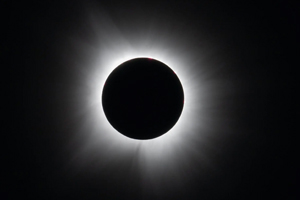
A total solar eclipse with a magnitude of 1.0386 (greatest eclipse 17:47:06 UTC) will be visible in parts of Greenland, Iceland, northern Russia, the Atlantic...
Includes presentation of the Neil Armstrong Award of Excellence, activities for the new class of Astronaut Scholars, 2-day Technical Conference where Scholars present their...
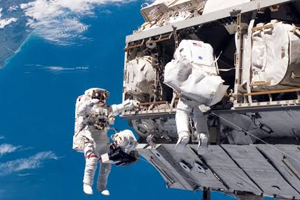
During U.S. spacewalk 97, two astronauts will replace a Space-to-Ground antenna on the orbital complex. The antenna is a critical communication system NASA uses...
Key themes include: Characterizing exoplanet-host solar-like stars; Star-planet interactions; Planet populations around solar-like stars. At University of Liège.
 Steady progress by China in space development and exploration continues. The Shenzhou 9 mission to the indigenous 8.5-metric ton orbiting space station precursor, Tiangong 1, is a signal achievement in human spaceflight for the burgeoning China space program, not least because the crew of 3 includes the first female Taikonaut Liu Yang. Advanced preparations are also underway for launch of the Chang’e-3 robotic lander mission to the surface of the Moon in 2013. Barring any early attempt from GLXP contenders, this is likely to be the first spacecraft to make a soft, controlled landing on the lunar surface since Luna 24 on August 7, 1976. There are growing indications that China is opening up to international collaboration. The International Lunar Observatory Association is preparing a proposal for Milky Way Galaxy, astronomical imaging with the lander-mounted telescope. Chang’e-4 is a second lander / rover mission that, if Chang’e-3 is successful at Sinus Iridum (44.1° N), could break new ground at the Moon South Pole. Chang’e-5 is planned for 2017 as a sample return mission. (Image Credit: CNSA, ILOA)
 Space agency JAXA plans to launch the next H-2A/HTV NLT March 2013, having successfully conducted its first commercial payload launch of 1 South Korea and 3 Japan satellites on May 18 from Tanegashima Space Center. The next H-2B/HTV launch to provide the International Space Station with food and other supplies is scheduled for July 21, with two more launches for HTV technical trials scheduled in 2013. JAXA also plans to launch ASTRO-H in 2014 using an H-2A rocket — its 6th X-ray observation satellite designed to explore the structure and evolution of the universe. Japan was an early innovator in this field and continues to lead the world in X-ray astronomy satellite technology. Upcoming events in Tokyo include the International Lunar Observatory Association (ILOA) Galaxy Forum, which is tentatively scheduled for September, and Science Agora 2012, which will be held in November. The Galaxy Forum advances 21st Century Education worldwide to provide greater global awareness, capabilities and action in Galaxy science, exploration and enterprise. Under the theme of “Discovering the Science in Your Life,” Science Agora 2012 fosters science communication, enabling interaction between scientists and the rest of society. (Image Credit: AFP / JIJI, Akihiro Ikeshita / JAXA)
 = All times for terrestrial events in local time unless noted.
 = All times for international terrestrial events in local time unless noted.
 = All times for space events, and…
 = All times for international space / astro events in Hawaii Standard Time unless noted. Add 10 hours to obtain UT (‘Universal Time;’ Greenwich, England).
 Jun 18 — International Space Station, LEO: Expedition 31 crew continue to use the Alpha Magnetic Spectrometer-02, the solar arrays that power the space station, to conduct high energy physics research, measure cosmic radiation and search for dark matter and anti-matter.