American Astronautical Society Hosts 1st Annual ISS R&D Conference
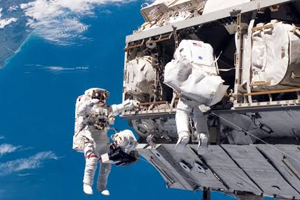
The American Astronautical Society along with NASA and the Center for Advancement of Science in Space are presenting the 1st Annual International Space Station (ISS) Research and Development Conference in Denver, Colorado from June 27 to 29. The conference will include parallel technical sessions and a separate workshop designed to update scientists on ISS research results and technological developments to explore how these accomplishments can be used to develop new ideas for experiments on the ISS. One of the highlights of the conference will be a luncheon on June 27 with guest speaker Astronaut E. Michael Fincke. Fincke was a crew member on ISS Expeditions 9 and 18 and flew on the final flight of Space Shuttle Endeavour. Top science and technology results will be presented from a wide range of studies, including microgravity research into the mechanisms and treatment of infectious diseases, novel fluid management systems aboard spacecraft and advanced diagnostic ultrasound in microgravity. Opportunities for exploration beyond Earth orbit include in-space robotic refueling and repair, optical communications, space-based, on-demand fabrication of metallic parts and environmental control and life support systems. (Image credit: NASA, AAS)
ESA Symposium in The Netherlands Featuring Moons
Formation and Evolution of Moons, an ESLAB Symposium, will be hosted by the European Space Agency and the European Space Research and Technology Center in Noordwijk, The Netherlands on June 25-28. Right now, including Luna, 170 known moons are in orbit around six of the eight planets and 7 known moons orbit three of the five dwarf planets. The primary goal of the symposium, namely understanding the formation and evolution of the natural satellites of the planets, is important to our wider understanding of the formation and evolution of the Solar System as a whole. There are 45 invited and contributed talks on: the Earth-Luna system, the natural satellites of the giant planets and of Pluto and dwarf planets, ring-moon interactions, Mars’ Phobos and Deimos, and the absence of moons around Mercury and Venus. The ESLAB is an annual meeting organized by the ESA Directorate of Science and Robotic Exploration Research and Scientific Support Department. Conference presentations will be posted on the web and a dedicated issue of an international peer-reviewed scientific journal is under consideration. (Image credit: ESA, NASA, Southwest Research Institute)
= All times for terrestrial events in local time unless noted.
= All times for international terrestrial events in local time unless noted.
= All times for space events, and…
= All times for international space / astro events in Hawaii Standard Time unless noted. Add 10 hours to obtain UT (‘Universal Time;’ Greenwich, England).
Jun 25 — Shenzhou 9, LEO: Preparing to undock from Tiangong 1 so crew can demonstrate manually-controlled docking procedure.
Jun 25 — International Space Station, LEO: Expedition 31 crew is continuing robotics test of remotely operated satellite refueling outside the orbiting complex, while new international crew, launching July 15, is taking part in final testing at Star City.
Jun 25 — New Horizons, Pluto Trajectory: Approaching Pluto, spacecraft is expected to execute flyby of Pluto and its moons in July 2015.
Jun 18 – Jul 26 — NASA Explorer Schools, Various NASA centers: ‘NASA Explorer Schools Summer Workshop;’ workshops to include ‘Extreme Green’ at the Glenn Research Center in Cleveland, OH; ‘Airborne Research Experience’ at Dryden Flight Research Center in Edwards, CA; ‘There is More to Light than Meets the Eye’ at the Goddard Space Flight Center in Greenbelt, MD; and ‘Atmospheric Science’ at Wallops Island, VA.
Jun 24-29 — The Center of Space Plasma and Aeronomic Research at the University of Alabama in Huntsville, Atomic Energy and Alternative Energies Commission / National Center for Scientific Research Simulator, Keauhou Hawai’i Island: ‘ASTRONUM 2012.’
Jun 24-29 — The Geochemical Society, The European Association of Geochemistry, Geotop University, Montréal, Canada: ‘Goldschmidt 2012.’
NET Jun 28 — ULA, Launch Delta 4 – Heavy / NROL 15, Cape Canaveral FL: A ULA Delta 4-Heavy rocket set to launch a classified spy satellite cargo for the USA National Reconnaissance Office.
NET Jun 29 — Shenzhou 9 Return to Earth, LEO: Expected return to Earth after 13 day mission to Tiangong 1, marking China’s longest human spaceflight to date.
SATURDAY
Jun 30 — San Diego Space Society, San Diego CA: ‘SEE Seminar Series: Space Experience Seminar,’ covering the latest information, perspectives and forecast for the growing Space Experience Economy.
SUNDAY
Jul 1 — NASA Voyager Mission, Heliosheath: Voyagers 1 & 2 continuing to send scientific information through Deep Space Network. After completing primary mission of exploring Jupiter and Saturn, spacecraft are now engaged in the Voyager Interstellar Mission to explore outermost edge of Sun’s domain.
NET Jul — RSA, Launch Starsem Soyuz / MetOp B, Plesetsk Cosmodrome, Russia: A Starsem Soyuz rocket set to launch the MetOp B weather satellite for ESA and the European Organization for the Exploitation of Meteorological Satellites.
Includes ~150 meetings covering the fields of COSPAR Scientific Commissions / Panels / Task Groups, such as SC B: The Earth-Moon System, Planets, and...
At the Palais des Nations and online. Outer space is entering a renewed phase of strategic importance, defined by rapid innovation, growing competition and deepening...
This international lunar science meeting has two objectives: to provide a platform for leading experts to review recent advances across lunar research, from the...
At CSIR International Convention Centre. Key topics are Earth Observation, Developing Space Tourism, Space Supply Manufacturing. Cultural tours are offered.
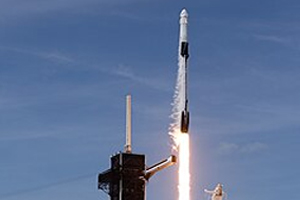
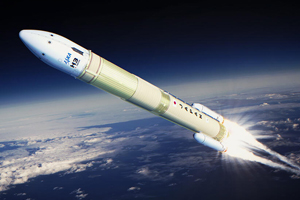
(No earlier than 10 Aug) Japan to launch the MICHIBIKI No. 7 | Quasi-Zenith Satellite System (QZS-7) navigation satellite. Launch window remains open through...
Participants will receive theoretical and hands-on training in electron imaging and X-ray spectroscopy for application to planetary samples. This training opportunity is targeted at...
"Leading Australia’s Space Future for Our Strategic Advantage". Southern Space 2026 brings together decision-makers who set the direction for Australia’s space sector. It is...
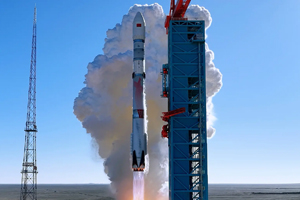
The second test launch of LandSpace's ZQ-3 rocket with undisclosed test payloads. Zhuque-3 first stage booster will attempt to land on its downrange landing...
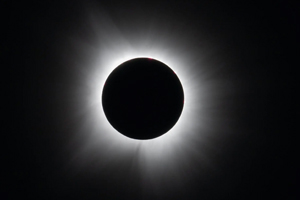
A total solar eclipse with a magnitude of 1.0386 (greatest eclipse 17:47:06 UTC) will be visible in parts of Greenland, Iceland, northern Russia, the Atlantic...
Includes presentation of the Neil Armstrong Award of Excellence, activities for the new class of Astronaut Scholars, 2-day Technical Conference where Scholars present their...
During U.S. spacewalk 97, two astronauts will replace a Space-to-Ground antenna on the orbital complex. The antenna is a critical communication system NASA uses...
Key themes include: Characterizing exoplanet-host solar-like stars; Star-planet interactions; Planet populations around solar-like stars. At University of Liège.
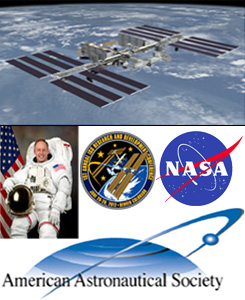 The American Astronautical Society along with NASA and the Center for Advancement of Science in Space are presenting the 1st Annual International Space Station (ISS) Research and Development Conference in Denver, Colorado from June 27 to 29. The conference will include parallel technical sessions and a separate workshop designed to update scientists on ISS research results and technological developments to explore how these accomplishments can be used to develop new ideas for experiments on the ISS. One of the highlights of the conference will be a luncheon on June 27 with guest speaker Astronaut E. Michael Fincke. Fincke was a crew member on ISS Expeditions 9 and 18 and flew on the final flight of Space Shuttle Endeavour. Top science and technology results will be presented from a wide range of studies, including microgravity research into the mechanisms and treatment of infectious diseases, novel fluid management systems aboard spacecraft and advanced diagnostic ultrasound in microgravity. Opportunities for exploration beyond Earth orbit include in-space robotic refueling and repair, optical communications, space-based, on-demand fabrication of metallic parts and environmental control and life support systems. (Image credit: NASA, AAS)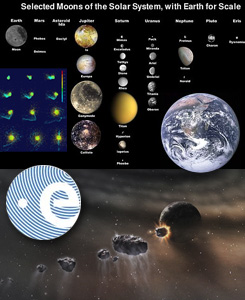
 = All times for terrestrial events in local time unless noted.
 = All times for international terrestrial events in local time unless noted.
 = All times for space events, and…
 = All times for international space / astro events in Hawaii Standard Time unless noted. Add 10 hours to obtain UT (‘Universal Time;’ Greenwich, England).
 Jun 25 — Shenzhou 9, LEO: Preparing to undock from Tiangong 1 so crew can demonstrate manually-controlled docking procedure.