International Lunar Observatory Association Advancing Moon Missions for Observation / Communication, Lunar Broadcasting and Galaxy 21st Century Education
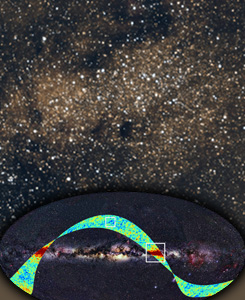
Galaxy Center: ILO-X image taken by Science Teams who remotely operated the instrument from Hawaii, USA mainland, Canada, China, Japan and Europe. Lower insert: ESA, LFI & HFI (Planck).
The Moon is our closest celestial neighbor and the object of significant and rapidly growing attention from the independent / national / international space science and exploration sector. On the leading edge of this global wave, the International Lunar Observatory Association (ILOA) is progressing on 4 separate missions to the lunar surface. The successful Global Demonstration of the 2kg ILO-X Precursor Instrument from Mauna Kea on Hawai’i Island Monday July 23 and next step Engineering Test Unit fabrication, lead to launch aboard a Moon Express spacecraft in 2014. Simultaneously, a framework is being developed for reciprocal collaboration between ILOA and National Astronomical Observatories / Chinese Academy of Sciences for lunar-based observations using instruments of the ILOA and the 15cm UV telescope on the China Chang’e-3 Moon Lander for 2013 launch, possibly in October. Primary contractor MDA of Canada, is finalizing an extensive 4 month pre-build study for the ILO-1 Mission. This, the primary ILOA mission, will land a multifunctional observation / communication instrument on Mons Malapert at the Moon South Pole NET 2015. Eventually, the ILOA hopes to contribute 10% of the funds necessary for a Human Exploration Lunar-landing Mission to service robotic installations and lay groundwork for permanent human settlement.
Curiosity Will Search for Conditions Conducive to Microbial Life on Mars
The Mars Curiosity rover is set to land inside Gale Crater near the base of Mount Sharp on the Red Planet at 22:31 PDT on Sunday, August 5. At a cost of over US $2.5 billion, Curiosity is carrying the most advanced payload of scientific gear ever used on Mars, a 75 kg payload 10 times more massive than those of previous Mars rovers. Unlike earlier rovers, the 899-kg Curiosity can process and distribute rock and soil samples to onboard test chambers for immediate analysis. The mission has 4 primary goals: to assess biological potential of target environments, characterize geology of the rover’s field site, investigate planetary processes relevant to past habitability and characterize the broad spectrum of surface radiation. Radiation data is critical for planning human exploration of Mars and relevant to assessing the planet’s ability to harbor life. Curiosity will steer itself during descent through Mars’ atmosphere with a series of S-curve maneuvers, then slow its descent with a parachute and retro rockets. The upper stage acts as a sky crane, lowering the upright rover on a tether to the surface. Advancing technologies for the precision landing of a heavy payload will yield research benefits that potentially prepare the way for future human missions. The landing will be celebrated live at PlanetFest 2012 and the 15th Annual International Mars Society Convention, both taking place in Pasadena CA. (Image Credit: NASA)
= All times for terrestrial events in local time unless noted.
= All times for international terrestrial events in local time unless noted.
= All times for space events, and…
= All times for international space / astro events in Hawaii Standard Time unless noted. Add 10 hours to obtain UT (‘Universal Time;’ Greenwich, England).
Jul 30 — ISS, LEO: Arrival of Progress M-16M/48P this week will be first ever demonstration of same-day launch to docking rendezvous for Progress, which will dock to ISS just six hours / four orbits after launch.
Jul 30 — Opportunity, Red Planet: Traversing through Sol 3020, total odometry 34,580.05 meters.
Jul 30 — Cassini, Saturn Orbit: Preparing for observation by remote sensing and active probing of Saturn’s rings.
Jul 30 — Sally Ride to be immortalized in celestial nomenclature when International Astronomical Union names asteroid in her memory.
Aug 1 — Deep Space: NASA Juno Spacecraft is traveling at 56,648 kph, approximately 718,070,400 km from Earth on trajectory for 2016 arrival at Jupiter.
NET Aug — ISRO, Launch PSLV / Spot 6,Satish Dhawan Space Center, Sriharikota, India: ISRO Polar Satellite Launch Vehicle set to launch Spot 6 remote sensing satellite for Astrium Services.
NET Aug — International Launch Services, Launch Proton / Intelsat 23,Baikonur Cosmodrome, Kazakhstan: Proton rocket with Breeze M upper stage will deploy Intelsat 23 satellite.
NET Aug — CNSA, Launch Long March 3B / Beidou,Xichang, China: A Chinese Long March rocket will launch two Beidou navigation satellites into medium Earth orbit.
NET Aug — Sea Launch, Launch Zenit 3SL / Intelsat 21, Odyssey Platform, Equator at 154° W: Sea Launch Zenit 3SL rocket to deliver Intelsat 21 communications satellite into orbit.
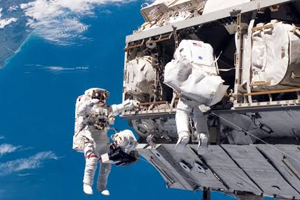
NET Aug — ISS, Spacewalk,LEO: Astronauts from Russia, America and Japan will be conducting spacewalk to install additional anti-meteorite panels on ISS.
Aug 1 — RSA, Launch Soyuz / Progress 48P, Baikonur Cosmodrome, Kazakhstan: An RSA Soyuz rocket set to launch 48th Progress cargo delivery ship to ISS, 09:35.
Aug 1 — ULA, Launch Atlas 5 / NROL 36, Vandenberg AFB CA: A ULA Atlas 5 rocket set to launch classified spacecraft payload for US National Reconnaissance Office, 21:00.
Aug 1 — Alpha Capricornids Meteor Shower Peak: Shower has reputation of producing among brightest meteors of major showers, with average magnitude estimated around 2.2.
Aug 1 — Moon: Full Moon, 17:26.
THURSDAY
Aug 2 — Arianespace, Launch Ariane 5 / Intelsat 20 & HYLAS 2,Kourou, French Guiana: Ariane 5 ECA rocket, designated VA208, to launch Intelsat 20 and HYLAS 2 communications satellites, 08:54.
Aug 4-5 — The Planetary Society, Pasadena CA: ‘Planetfest 2012.’ Two-day celebration of real-time landing of Curiosity on Mars. Play-by-play narration during spacecraft’s descent / landing, plus a peek at first images returned from mission.
Aug 4-14 — Brazil National Council for Scientific and Technological Development, Carlos Chagas Filho de Amparo Research Foundation of the State of Rio de Janeiro, Rio de Janeiro, Brazil: ‘The International Olympiad on Astronomy and Astrophysics.’
SUNDAY
Aug 5 — Mars Science Laboratory, Curiosity Rover, NASA JPL, Red Planet: Mars Curiosity Rover set to land on surface of Mars and begin mission to assess whether planet ever had environment able to support life, 22:31 PDT.
Includes ~150 meetings covering the fields of COSPAR Scientific Commissions / Panels / Task Groups, such as SC B: The Earth-Moon System, Planets, and...
At the Palais des Nations and online. Outer space is entering a renewed phase of strategic importance, defined by rapid innovation, growing competition and deepening...
This international lunar science meeting has two objectives: to provide a platform for leading experts to review recent advances across lunar research, from the...
At CSIR International Convention Centre. Key topics are Earth Observation, Developing Space Tourism, Space Supply Manufacturing. Cultural tours are offered.
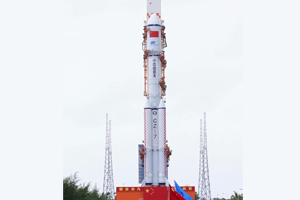
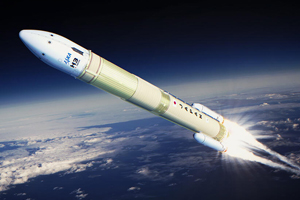
(No earlier than 10 Aug) Japan to launch the MICHIBIKI No. 7 | Quasi-Zenith Satellite System (QZS-7) navigation satellite. Launch window remains open through...
Participants will receive theoretical and hands-on training in electron imaging and X-ray spectroscopy for application to planetary samples. This training opportunity is targeted at...
"Leading Australia’s Space Future for Our Strategic Advantage". Southern Space 2026 brings together decision-makers who set the direction for Australia’s space sector. It is...
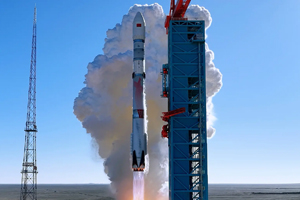
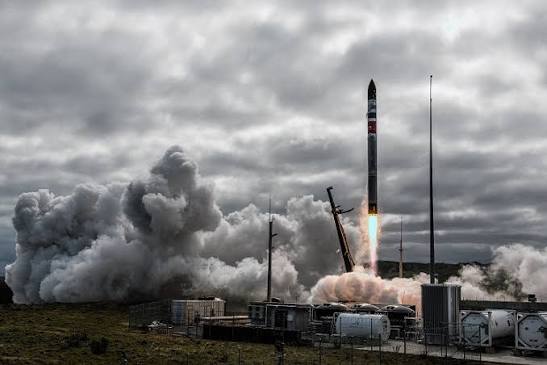
The second test launch of LandSpace's ZQ-3 rocket with undisclosed test payloads. Zhuque-3 first stage booster will attempt to land on its downrange landing...
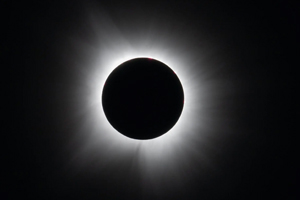
A total solar eclipse with a magnitude of 1.0386 (greatest eclipse 17:47:06 UTC) will be visible in parts of Greenland, Iceland, northern Russia, the Atlantic...
Includes presentation of the Neil Armstrong Award of Excellence, activities for the new class of Astronaut Scholars, 2-day Technical Conference where Scholars present their...
During U.S. spacewalk 97, two astronauts will replace a Space-to-Ground antenna on the orbital complex. The antenna is a critical communication system NASA uses...
Key themes include: Characterizing exoplanet-host solar-like stars; Star-planet interactions; Planet populations around solar-like stars. At University of Liège.
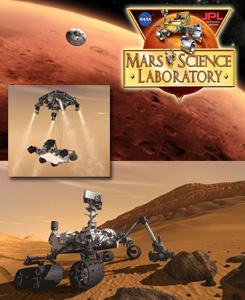 The Mars Curiosity rover is set to land inside Gale Crater near the base of Mount Sharp on the Red Planet at 22:31 PDT on Sunday, August 5. At a cost of over US $2.5 billion, Curiosity is carrying the most advanced payload of scientific gear ever used on Mars, a 75 kg payload 10 times more massive than those of previous Mars rovers. Unlike earlier rovers, the 899-kg Curiosity can process and distribute rock and soil samples to onboard test chambers for immediate analysis. The mission has 4 primary goals: to assess biological potential of target environments, characterize geology of the rover’s field site, investigate planetary processes relevant to past habitability and characterize the broad spectrum of surface radiation. Radiation data is critical for planning human exploration of Mars and relevant to assessing the planet’s ability to harbor life. Curiosity will steer itself during descent through Mars’ atmosphere with a series of S-curve maneuvers, then slow its descent with a parachute and retro rockets. The upper stage acts as a sky crane, lowering the upright rover on a tether to the surface. Advancing technologies for the precision landing of a heavy payload will yield research benefits that potentially prepare the way for future human missions. The landing will be celebrated live at PlanetFest 2012 and the 15th Annual International Mars Society Convention, both taking place in Pasadena CA. (Image Credit: NASA)
 = All times for terrestrial events in local time unless noted.
 = All times for international terrestrial events in local time unless noted.
 = All times for space events, and…
 = All times for international space / astro events in Hawaii Standard Time unless noted. Add 10 hours to obtain UT (‘Universal Time;’ Greenwich, England).
 Jul 30 — ISS, LEO: Arrival of Progress M-16M/48P this week will be first ever demonstration of same-day launch to docking rendezvous for Progress, which will dock to ISS just six hours / four orbits after launch.