South America and the Space Age: Chile Leading Astrophysics, Brazil Reigniting Astronautics
Chile continues to maintain a position at the leading edge of Astronomy, hosting 42% of current global astronomy infrastructure, a figure projected to rise to 70% by 2018. The high and dry 181,300-square kilometer Atacama Desert region is home to some of the latest developments including the Atacama Large Millimeter/sub-millimeter Array currently being constructed at 5000 meters above sea level in the Chajnantor plateau. ALMA, due for completion in March 2013, will consist of 66 12-meter and 7-meter radio telescopes coordinating observations with one millionth of a millionth of a second precision while operating at wavelengths of 0.3 to 9.6 mm to study star birth during the early universe and conduct detailed imaging of local star and planet formation. Brazil is working to reignite its astronautics programs / indigenous launch capabilities based around the Alcantara Launch Center, which benefits from an equatorial locale at just 2.3 degrees south longitude, ideal for launching to geostationary orbit. Recent resumption of a Brazil – Ukraine joint venture is building towards the launch of a Ukrainian Cyclone-4 rocket from Alcantara in 2013. (Image Credit: ALMA, Top Right: Antennae Galaxy – ALMA-Hubble Composite, Obozrevatel, LMA)
ASP Conference on Education and Public Outreach Promotes Science Literacy to Solve Critical Global Challenges
How do we raise the rational voice of science above the pervasive din of distractors, detractors, skeptics, deep-pocketed influencers and new media pundits? This is the central question addressed at the Astronomical Society of the Pacific (ASP) national conference on “Communicating Science,” held from August 4-8 in Tucson AZ. The ASP is the largest general astronomy society in the world, with members from over 70 nations. Partnering with the ASP are the American Geological Union, the world’s largest organization of Earth and space scientists, with 61,000 members around the globe and the National Optical Astronomy Observatory, the U.S. national observatory for ground-based nighttime astronomy. Scientists, NASA- and NSF-funded Education and Public Outreach program professionals, K-12 teachers, university educators and science writers will participate in the conference, with attendees invited to consider how best to share the results of their work with each other and the public. Much of the conference will consist of hands-on sessions focused on practicing effective techniques for sharing and discussing scientific work. Featured speakers to include prize-winning science journalist Charles Petit, Nobel Laureate and global climate change research pioneer Michael Mann and Sheila Tobias, author of Science Teaching as a Profession: Why it Isn’t and How it Could Be. (Image Credit: ASP, AGU, NOAO)
= All times for terrestrial events in local time unless noted.
= All times for international terrestrial events in local time unless noted.
= All times for space events, and…
= All times for international space / astro events in Hawaii Standard Time unless noted. Add 10 hours to obtain UT (‘Universal Time;’ Greenwich, England).
Aug 6 — ISS, LEO: ISS crew to attach more than 453 kg of cargo from Kounotori-3’s Unpressurized Logistics Carrier to experiment platform at end of Kibo module.
Aug 6 — Curiosity, Red Planet: Assuming Mars Science Laboratory landing went according to plans, rover should be performing initial health checkouts to begin its one Martian year mission.
Aug 6 — Juno, Jupiter Trajectory: Operating nominally with 4 instruments turned on, Juno is approximately 488 million km from Earth, traveling at velocity of 161,900 km/h.
Aug 6 — RSA, Launch Proton / Telkom 3 & Express MD2,Baikonur Cosmodrome, Kazakhstan: Telkom 3 to provide communications services over Indonesia; Express MD2 to provide secure communications for Russian government, digital broadcasting and Internet services.
Aug 4-14 — Brazil National Council for Scientific and Technological Development, Carlos Chagas Filho de Amparo Research Foundation of the State of Rio de Janeiro, Rio de Janeiro, Brazil: ‘The International Olympiad on Astronomy and Astrophysics.’
Aug 11 — Moon: 4.8° N of Aldebaran, 09:00; 0.68° E of Jupiter, 12:00.
SUNDAY
Aug 12 — RSA, Launch Proton / Intelsat 23,Baikonur Cosmodrome, Kazakhstan: ILS Proton rocket with Breeze M upper stage will deploy Intelsat 23 satellite to provide enhanced communications services over the Americas, Europe and Africa.
Aug 12 — Cassini, Saturn Orbit: Performing distant flyby of Telesto.
Aug 12 — Asteroid 37655 Illapa: Near-Earth Flyby (0.095 AU).
Aug 12 — Epsilon Perseid Meteor Shower Peak: Appearing to radiate from constellation Perseus, showers produce 50-80 meteors per hour, visible in NE skies.
Includes ~150 meetings covering the fields of COSPAR Scientific Commissions / Panels / Task Groups, such as SC B: The Earth-Moon System, Planets, and...
From 02 to 07 August 2026, a few thousand geoscientists across diverse disciplines will gather at the 23rd annual meeting of the Asia Oceania Geosciences...
At the Palais des Nations and online. Outer space is entering a renewed phase of strategic importance, defined by rapid innovation, growing competition and deepening...
This international lunar science meeting has two objectives: to provide a platform for leading experts to review recent advances across lunar research, from the...
At CSIR International Convention Centre. Key topics are Earth Observation, Developing Space Tourism, Space Supply Manufacturing. Cultural tours are offered.
(No earlier than 10 Aug) Japan to launch the MICHIBIKI No. 7 | Quasi-Zenith Satellite System (QZS-7) navigation satellite. Launch window remains open through...
Participants will receive theoretical and hands-on training in electron imaging and X-ray spectroscopy for application to planetary samples. This training opportunity is targeted at...
"Leading Australia’s Space Future for Our Strategic Advantage". Southern Space 2026 brings together decision-makers who set the direction for Australia’s space sector. It is...
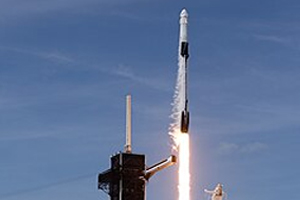
The second test launch of LandSpace's ZQ-3 rocket with undisclosed test payloads. Zhuque-3 first stage booster will attempt to land on its downrange landing...
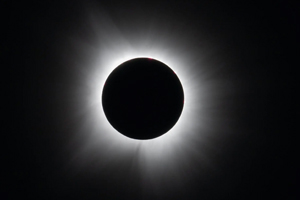
A total solar eclipse with a magnitude of 1.0386 (greatest eclipse 17:47:06 UTC) will be visible in parts of Greenland, Iceland, northern Russia, the Atlantic...
Includes presentation of the Neil Armstrong Award of Excellence, activities for the new class of Astronaut Scholars, 2-day Technical Conference where Scholars present their...
During U.S. spacewalk 97, two astronauts will replace a Space-to-Ground antenna on the orbital complex. The antenna is a critical communication system NASA uses...
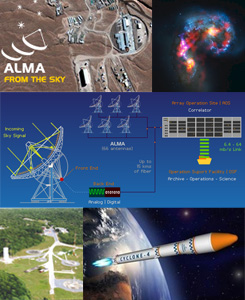 Chile continues to maintain a position at the leading edge of Astronomy, hosting 42% of current global astronomy infrastructure, a figure projected to rise to 70% by 2018. The high and dry 181,300-square kilometer Atacama Desert region is home to some of the latest developments including the Atacama Large Millimeter/sub-millimeter Array currently being constructed at 5000 meters above sea level in the Chajnantor plateau. ALMA, due for completion in March 2013, will consist of 66 12-meter and 7-meter radio telescopes coordinating observations with one millionth of a millionth of a second precision while operating at wavelengths of 0.3 to 9.6 mm to study star birth during the early universe and conduct detailed imaging of local star and planet formation. Brazil is working to reignite its astronautics programs / indigenous launch capabilities based around the Alcantara Launch Center, which benefits from an equatorial locale at just 2.3 degrees south longitude, ideal for launching to geostationary orbit. Recent resumption of a Brazil – Ukraine joint venture is building towards the launch of a Ukrainian Cyclone-4 rocket from Alcantara in 2013. (Image Credit: ALMA, Top Right: Antennae Galaxy – ALMA-Hubble Composite, Obozrevatel, LMA)
 How do we raise the rational voice of science above the pervasive din of distractors, detractors, skeptics, deep-pocketed influencers and new media pundits? This is the central question addressed at the Astronomical Society of the Pacific (ASP) national conference on “Communicating Science,” held from August 4-8 in Tucson AZ. The ASP is the largest general astronomy society in the world, with members from over 70 nations. Partnering with the ASP are the American Geological Union, the world’s largest organization of Earth and space scientists, with 61,000 members around the globe and the National Optical Astronomy Observatory, the U.S. national observatory for ground-based nighttime astronomy. Scientists, NASA- and NSF-funded Education and Public Outreach program professionals, K-12 teachers, university educators and science writers will participate in the conference, with attendees invited to consider how best to share the results of their work with each other and the public. Much of the conference will consist of hands-on sessions focused on practicing effective techniques for sharing and discussing scientific work. Featured speakers to include prize-winning science journalist Charles Petit, Nobel Laureate and global climate change research pioneer Michael Mann and Sheila Tobias, author of Science Teaching as a Profession: Why it Isn’t and How it Could Be. (Image Credit: ASP, AGU, NOAO)
 = All times for terrestrial events in local time unless noted.
 = All times for international terrestrial events in local time unless noted.
 = All times for space events, and…
 = All times for international space / astro events in Hawaii Standard Time unless noted. Add 10 hours to obtain UT (‘Universal Time;’ Greenwich, England).
 Aug 6 — ISS, LEO: ISS crew to attach more than 453 kg of cargo from Kounotori-3’s Unpressurized Logistics Carrier to experiment platform at end of Kibo module.