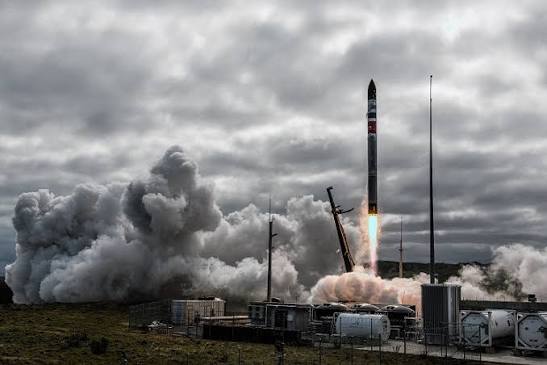
The ISU Southern Hemisphere Summer Space Program will be conducted at the University of South Australia, January 7 to February 8. The intensive 5-week program at the Mawson Lakes campus in Adelaide consists of 42 Core Lectures from faculty and invited experts covering all space disciplines. Other activities include 60 contact hours of hands-on workshops exploring local remote sensing data, GPS field exercises, and satellite data collection. There will also be a ‘White Paper’ group project – students will be assisted by faculty and invited experts in researching and jointly authoring a paper on the topic Developing A Sustainable Space Future for the Global South, to be presented at international conferences and submitted to various organizations and agencies. The program fee including tuition, accommodation and meals is 10,900 AUD (US$11,435) and successful completion can earn students ISU and UniSA certificates as well as recognized academic credit. Twenty-five years after its foundation ISU boasts 3,500 alumni from over 100 countries (shown in red). (Image Credit: ISU, NASA)
Mars Analog Mission and Food Study For Long-Term Space Exploration
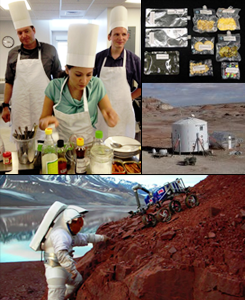
Hawaii Space Exploration Analog and Simulation (HI-SEAS) 6-member crew will be spending January 12-26 at the Mars Desert Research Station located in the Utah desert to prepare for a 120-day Mars exploration analog mission planned for spring 2013 on Hawai’i Island. Implemented by Cornell University and the University of Hawaii Manoa, this study funded by NASA Human Research Program will imitate the living and working experience of astronauts on long-term space exploration missions and compare crew-cooked versus pre-prepared food. More specifically, changes in crew nutritional intake, taste, smelling acuity and food choices as well as time, power and water required for food preparation / cleanup will be evaluated. Currently UH Manoa, Cornell and Pacific International Space Center for Exploration Systems (PISCES) are planning to develop a 274-square meter portable habitat on a half-acre site at an elevation of 2,590 meters on Mauna Loa, Hawaii which is intended to be used for 5 years and then disassembled. The crew will perform EVAs and research experiments while under strict regulations and experiencing communication delays similar to those expected for future long-term space exploration missions. Of the 700 applicants only 6 were selected: Simon Engler (L), Dr. Yajaira Sierra-Sastre (C), Dr. Oleg Abramov (R), Kate Greene, Dr. Sian Proctor and Angelo Vermeulen. (Image Credit: HI-SEAS, AMASE)
= All times for terrestrial events in local time unless noted.
= All times for international terrestrial events in local time unless noted.
= All times for space events, and…
= All times for international space / astro events in Hawaii Standard Time unless noted. Add 10 hours to obtain UT (‘Universal Time;’ Greenwich, England).
Jan 7 — ISS,LEO: Commander Ford and Expedition 34 crew collecting / storing blood and urine samples for future analysis; assembling Robonaut 2 for ground team remote testing; researchers conducting health studies on effects of long-term exposure to radiation in anticipation of NASA planned human asteroid mission 2021, Mars mission 2035 with potential travel time of 3 years.
Jan 7 — Chandra X-ray Observatory, HEO: Imaging brightest galaxies in sample of 18 galaxy clusters; data suggests ‘ultramassive’ black holes, 10-40B times the mass of Sun, may be more common than previously thought.
Jan 7 — Dawn,Main Asteroid Belt: Traveling about 0.3794 AU over 759 days to largest known asteroid Ceres (952 km diameter), approach scheduled for Feb 2015; images of 530-km diameter Vesta reveal gullies; scientists comparing straight gullies to dry material flows on Moon; unexpected curving gullies are similar to Mars / Earth.
Jan 7 — SpaceX, McGregor TX: NewSpace company building toward full, rapid rocket reusability; Grasshopper vertical takeoff vertical landing experimental technology demonstrator consisting of Falcon 9 rocket first stage, Merlin 1D engine and 4 steel landing legs with hydraulic dampers flew to 40 m in latest test, expected to go supersonic this year.
Jan 7 — Romanian Cosmonautics and Aeronautics Association (ARCA),Ramnicu Valcea, Romania: Testing parachutes for ESA 2016 ExoMars spacecraft lander; analyzing second stage of Haas 2C rocket in vertical, horizontal positions intended to launch European Lunar Explorer to Moon in pursuit of Google Lunar X PRIZE.
Jan 7 — Moon Express,Moffett Field CA: Advancing the return of human enterprise to surface of Moon; joined by Alan Stern as Chief Scientist and Tim Pickens as Chief Propulsion Officer; lander system designed around ‘common spacecraft bus’ also utilized for LADEE, next NASA mission to Moon launching Aug 12.
Jan 7-10— AIAA, Lockheed Martin, Grapevine TX:51st AIAA Aerospace Science Meeting; to include New Horizons Forum and Aerospace Exposition; held at Gaylord Texan Hotel and Convention Center.
Jan 7 — Asteroid 2002 AY1: Near-Earth Flyby (0.038 AU).
Jan 7 — Asteroid 2012 XZ132: Near-Earth Flyby (0.052 AU).
Jan 7 — Asteroid 2005 DD: Near-Earth Flyby (0.100 AU).
Continued from…
Dec 15 – Mar 3 — American Textile History Museum, The Smithsonian Institution Traveling Exhibition Service, et al,Lowell MA:Suited for Space Exhibition; displaying the evolution of spacesuit design and development; US$8 adult.
Jan 3-7 — Indian Science Research Organization Association, University of Calcutta, et al, Kolkata, India: 100th Indian Science Congress, with thousands of delegates analyzing, interacting on matters of science; held at University of Calcutta.
Jan 3-31 — U.S. Space and Rocket Center, Huntsville AL:Winter Home School Program; for ages 9-14 to learn about the history, technology, evolution of space travel; 08:30 – 11:30 CST every Thursday.
Jan 6-10 — American Meteorological Society, Austin TX:2nd Symposium on Planetary Atmospheres; to discuss advances in modeling, data assimilation, spacecraft observations of planetary atmospheres; held in conjunction with 93rd AMS Annual Meeting.
TUESDAY
Jan 8 — The National Academies, Stanford CA: Meeting 3: Human Spaceflight; closed meeting to discuss engineering, aeronautics, policies for science / technology; held at Stanford University.
Jan 8-22 — Scientific Preparatory Academy for Cosmic Explorers, King Abdulaziz City for Science and Technology, et al, Tenerife, Canary Islands:The 1st SPACE Retreat; for researchers from space-related areas to write theses / articles, meet with experts, expand knowledge with informal seminars.
Jan 8 — Moon: 5.9° N of Antares, 14:00.
WEDNESDAY
Jan 9 — NASA, Online: Application deadline, for USA K-12 teacher teams to participate in Teaching from Space Flight Week; a MicroGravity eXperience (Micro GX) involving online course and development / performance of reduced gravity experiment to occur Jul 12-20.
Jan 9 — Asteroid 99942 Apophis: Near-Earth Flyby (0.097 AU).
Jan 10 — W. M. Keck Observatory, Canada-France-Hawaii Telescope, Kamuela HI:Cosmic Discoveries and Waimea Community Association Town Meeting; information on recent discoveries, what lies ahead for astronomers in 2013 at CFHT and Keck Observatory; held in Keck Observatory conference room, 17:15 HST.
Jan 10-11 — NASA Outer Planets Assessment Group, Atlanta GA: NASA OPAG Meeting; to provide NASA with science input for planning, prioritizing outer planet exploration activities over next several decades.
Jan 10 — Moon: At Perigee (Distance: 359,642 km), 24:00; 2.8° NNW of Venus, 01:00.
Jan 10 — Asteroid 2012 YJ7: Near-Earth Flyby (0.050 AU).
FRIDAY
Jan 11 — Royal Astronomical Society, London, United Kingdom:RAS Discussion Meeting; includes presentations on Integrated Atmospheric and Space Science, The Planetary Systems of Evolved Stars; held at Piccadilly Burlington House.
Jan 11 — Space Center Houston, Houston TX:Lunch with an Astronaut, Leroy Chiao; US$49.95 adult.
Jan 11 — Moon: 5.8° N of Mercury, 02:00; New Moon, 09:44.
SATURDAY
Jan 12 — British Interplanetary Society, Droitwich Spa, United Kingdom: Space Day; free event for public to meet astronomers, space authors, rocket scientists; held at Droitwich Library in Victoria Square; 09:30 – 16:30 UT.
Jan 12-26 — Cornell University, University of Hawai`i – Manoa, NASA Human Research Program, Hanksville UT:Mars Analog Mission and Food Study; crew to spend 2 weeks in Mars Desert Research Station in preparation for 4-month stay in Hawaii habitat to explore new forms of food for long-term space exploration missions.
Includes ~150 meetings covering the fields of COSPAR Scientific Commissions / Panels / Task Groups, such as SC B: The Earth-Moon System, Planets, and...
From 02 to 07 August 2026, a few thousand geoscientists across diverse disciplines will gather at the 23rd annual meeting of the Asia Oceania Geosciences...
At the Palais des Nations and online. Outer space is entering a renewed phase of strategic importance, defined by rapid innovation, growing competition and deepening...
This international lunar science meeting has two objectives: to provide a platform for leading experts to review recent advances across lunar research, from the...
At CSIR International Convention Centre. Key topics are Earth Observation, Developing Space Tourism, Space Supply Manufacturing. Cultural tours are offered.
(No earlier than 10 Aug) Japan to launch the MICHIBIKI No. 7 | Quasi-Zenith Satellite System (QZS-7) navigation satellite. Launch window remains open through...
Participants will receive theoretical and hands-on training in electron imaging and X-ray spectroscopy for application to planetary samples. This training opportunity is targeted at...
"Leading Australia’s Space Future for Our Strategic Advantage". Southern Space 2026 brings together decision-makers who set the direction for Australia’s space sector. It is...
The second test launch of LandSpace's ZQ-3 rocket with undisclosed test payloads. Zhuque-3 first stage booster will attempt to land on its downrange landing...
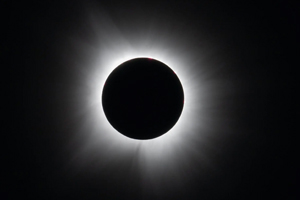
A total solar eclipse with a magnitude of 1.0386 (greatest eclipse 17:47:06 UTC) will be visible in parts of Greenland, Iceland, northern Russia, the Atlantic...
Includes presentation of the Neil Armstrong Award of Excellence, activities for the new class of Astronaut Scholars, 2-day Technical Conference where Scholars present their...
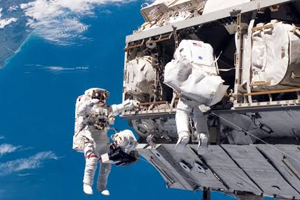
During U.S. spacewalk 97, two astronauts will replace a Space-to-Ground antenna on the orbital complex. The antenna is a critical communication system NASA uses...
 The ISU Southern Hemisphere Summer Space Program will be conducted at the University of South Australia, January 7 to February 8. The intensive 5-week program at the Mawson Lakes campus in Adelaide consists of 42 Core Lectures from faculty and invited experts covering all space disciplines. Other activities include 60 contact hours of hands-on workshops exploring local remote sensing data, GPS field exercises, and satellite data collection. There will also be a ‘White Paper’ group project – students will be assisted by faculty and invited experts in researching and jointly authoring a paper on the topic Developing A Sustainable Space Future for the Global South, to be presented at international conferences and submitted to various organizations and agencies. The program fee including tuition, accommodation and meals is 10,900 AUD (US$11,435) and successful completion can earn students ISU and UniSA certificates as well as recognized academic credit. Twenty-five years after its foundation ISU boasts 3,500 alumni from over 100 countries (shown in red). (Image Credit: ISU, NASA)
 Hawaii Space Exploration Analog and Simulation (HI-SEAS) 6-member crew will be spending January 12-26 at the Mars Desert Research Station located in the Utah desert to prepare for a 120-day Mars exploration analog mission planned for spring 2013 on Hawai’i Island. Implemented by Cornell University and the University of Hawaii Manoa, this study funded by NASA Human Research Program will imitate the living and working experience of astronauts on long-term space exploration missions and compare crew-cooked versus pre-prepared food. More specifically, changes in crew nutritional intake, taste, smelling acuity and food choices as well as time, power and water required for food preparation / cleanup will be evaluated. Currently UH Manoa, Cornell and Pacific International Space Center for Exploration Systems (PISCES) are planning to develop a 274-square meter portable habitat on a half-acre site at an elevation of 2,590 meters on Mauna Loa, Hawaii which is intended to be used for 5 years and then disassembled. The crew will perform EVAs and research experiments while under strict regulations and experiencing communication delays similar to those expected for future long-term space exploration missions. Of the 700 applicants only 6 were selected: Simon Engler (L), Dr. Yajaira Sierra-Sastre (C), Dr. Oleg Abramov (R), Kate Greene, Dr. Sian Proctor and Angelo Vermeulen. (Image Credit: HI-SEAS, AMASE)
 = All times for terrestrial events in local time unless noted.
 = All times for international terrestrial events in local time unless noted.
 = All times for space events, and…
 = All times for international space / astro events in Hawaii Standard Time unless noted. Add 10 hours to obtain UT (‘Universal Time;’ Greenwich, England).