Space Launch System and Orion Crew Vehicle Advancing
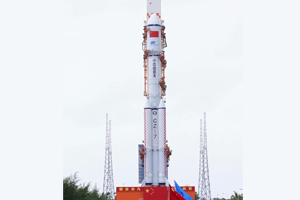
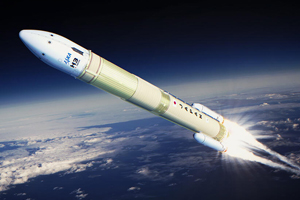
The future of USA national government space access and human space exploration, the Space Launch System, is ahead of schedule in the design process building towards uncrewed Exploration Mission-1 to circumnavigate the Moon in 2017 and the first crewed flight EM-2 in 2021. On December 20 NASA and Boeing completed a Preliminary Design Review of the core stage and avionics. The Block 1 configuration to be used in EM-1 consists of four shuttle-derived RS-25 engines with a total lift capacity of 70 metric tons to LEO and will be supplemented by the Interim Cryogenic Propulsion Stage for Earth departure. The Orion spacecraft, or Multi-Purpose Crew Vehicle, is being designed by Lockheed Martin to support up to 4 people on missions beyond LEO to the Moon, Mars, asteroids and other future destinations. Next week NASA will begin an integrated systems definition review of the SLS, Orion and supporting ground systems. One critical agenda item will be weight – with 33,112 kg budgeted the capsule is now running about 1,814 kg heavy, exceeding the capacity of the three 38-meter main parachutes. An Orion test module will fly on a Delta IV heavy in September 2014; the highly elliptical orbital trajectory will return the craft to Earth at near 80% the velocity of a return from the Moon. (Image Credit: NASA)
Solar 2013: Spacecraft, Increased Activity, India Largest Solar Telescope
The Johns Hopkins University Applied Physics Laboratory, Nagoya University and others host ‘Earth-Sun System Exploration 5 Conference: Earth Sun System Disturbances – Weak, Moderate and Extreme’ in Kailua-Kona, Hawai’i on January 13-19. Over 65 papers and 10 posters will be presented under sections such as ‘Solar Wind Driving the Magnetosphere’ and ‘More Global Simulations, Merging Theory (and planetary comparisons).’ Solar activity is predicted to increase in 2013, perhaps peaking to 69 sunspots in the fall. NASA Space Weather Services Lead Yihua Zheng (B) will present ‘Highlights of significant space weather events in 2012’ on Tuesday Jan 15. Yukitoshi Nishimura (T), from UCLA, will talk about ‘Auroral signature associated with flow outbursts measured by ARTEMIS’ on Thursday Jan 17. NASA is set to launch Interface Region Imaging Spectrograph space probe on April 29 to measure the flow of energy and plasma through the Sun’s atmosphere / heliosphere. ESA Solar Orbiter is expected to launch in 2017 and come within 0.28 AU of the Sun for high-resolution studies. Later this year India Institute of Astrophysics will start building the world’s largest solar telescope on the Himalayan foothills in Ladakh, India. It will have a 2-m aperture, is estimated to cost US$60M and may be completed by 2017. (Image Credit: JHU-APL NASA, UCLA)
= All times for terrestrial events in local time unless noted.
= All times for international terrestrial events in local time unless noted.
= All times for space events, and…
= All times for international space / astro events in Hawaii Standard Time unless noted. Add 10 hours to obtain UT (‘Universal Time;’ Greenwich, England).
Jan 14 — ISS,LEO: Cosmonauts Novitskiy, Tarelkin, Romanenko preparing Zvezda service module for arrival of “Nauka” multipurpose laboratory module expected to launch to ISS 2013 – 2014; Robotic Refueling Mission on Jan 14-24 to test ability of Canada Special Purpose Dexterous Manipulator robotic arm, NASA RRM module and 4 RRM tools, all controlled from Earth, to refuel triple-sealed satellites.
Jan 14 — Kepler Space Telescope, Heliocentric Orbit: Viewing an area up to 3,000 light years away to monitor brightness of more than 150K stars for 1,409 days so far; 2,740 potential planets orbiting 2,036 stars found; Earth-size candidate discoveries increased by 43% since last Feb; scientists predict Milky Way contains at least 100B planets.
Jan 14 — Cassini, Saturn Orbit: Producing mixed reflectivity readings of Titan methane-ethane lake surfaces; modeling suggests blocks of hydrocarbon ice could exist in southern hemisphere lakes / seas at 90.4 kelvin or lower; ice may be colorless with reddish-brown tint from atmosphere; will use radar instrument to test model, track seasonal changes.
Jan 14 — XCOR Aerospace Inc., Mojave CA: NewSpace company aiming to begin Lynx test flights this summer; selling US$95K tickets per passenger per flight, estimating 4 flights a day due to easy-to-load all-liquid fuel system; Buzz Aldrin, SXC and Axe Apollo Space Academy sponsoring global contest for 22 Lynx tickets.
Jan 14 — Bigelow Aerospace LLC, Las Vegas NV: Developing BEAM (Bigelow Expandable Activity Module) system for ISS with NASA US$17.8M contract; may be launched by SpaceX Falcon 9 or Orbital Antares rocket within 24 months.
Jan 14 — Commercial Spaceflight Federation, Washington DC: Association with 45 member organizations and 13 research and education affiliates, establishing higher safety levels for commercial human spaceflight industry, promoting growth of industry worldwide.
Jan 14-16 — NASA Small Bodies Assessment Group, Washington DC: 8th NASA Small Bodies Assessment Group Meeting; to identify scientific priorities / opportunities for exploration of asteroids, comets, interplanetary dust, small satellites, Trans-Neptunian Objects; held at Liaison Affinia Capitol Hill Hotel.
Dec 15 – Mar 3 — American Textile History Museum, The Smithsonian Institution Traveling Exhibition Service, et al,Lowell MA:Suited for Space Exhibition; displaying the evolution of spacesuit design and development; US$8 adult.
Jan 3-31 — U.S. Space and Rocket Center, Huntsville AL:Winter Home School Program; for ages 9-14 to learn about the history, technology, evolution of space travel; 08:30 – 11:30 CST every Thursday.
Jan 8-22 — Scientific Preparatory Academy for Cosmic Explorers, King Abdulaziz City for Science and Technology, et al, Tenerife, Canary Islands:The 1st SPACE Retreat; for researchers from space-related areas to write theses / articles, meet with experts, expand knowledge with informal seminars.
Jan 12-26 — Cornell University, University of Hawai`i – Manoa, NASA Human Research Program, Hanksville UT:Mars Analog Mission and Food Study; crew to spend 2 weeks in Mars Desert Research Station in preparation for 4-month stay in Hawaii habitat to explore new forms of food for long-term space exploration missions.
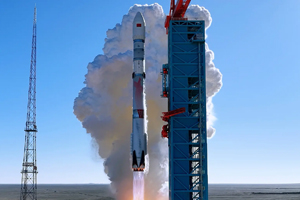
Jan 15 — RSA, Launch Rokot / 3 Rodnik satellites, Plesetsk Cosmodrome, Russia: Scheduled launch of Rokot carrier rocket with Briz-KM booster to deliver Rodnik-S N1, N2 and N3 communications satellites to orbit.
Jan 15 — The Space Transportation Association, Washington DC:STA Lifetime Achievement Award; presented to Ralph Hall and welcoming of new Chairman of the House Science, Space and Technology Committee, Lamar Smith; held at 2325 Rayburn House Office Building; 17:30 – 19:00 EST; free with reservation.
Jan 16-18 — The Korean Academy of Science and Technology (KAST), Hanyang University, World Class University, et al,Seoul, Gyeonggi, South Korea:Gravitational Waves: New Frontier.
Jan 18 — Space Center Houston, Houston TX:Lunch with an Astronaut, Brian Duffy; US$49.95 adult.
Jan 18 — Moon: At first quarter, 13:45.
SATURDAY
Jan 19 — AIAA, San Antonio TX:AIAA Educator Academy – Mars Rover; for educators to learn how to build Mars Rover with simple objects and create design projects for children; held at University of San Antonio, 08:00 CST.
Jan 19 — U.S. Space and Rocket Center, Huntsville AL:Teacher’s Day; Tennessee teachers plus 1 guest experience Space and Rocket Center workshops and exhibits free of charge; 09:00 – 17:00 CST.
Jan 19 – May 18 — University of California at Riverside ARTSblock Program, Riverside CA:Free Enterprise: The Art of Citizen Space Exploration; art exhibit with NewSpace movement theme; opening day panel discussion and reception at UCR starting at 15:00 PST, free.
Jan 20 — NASA Goddard Space Flight Center, Greenbelt MD:Sunday Experiment: Solar Dynamics Observatory; for families to learn about current / future science missions managed by NASA Goddard; held in Auditorium and Science Center / Sphere, 13:00 – 15:00 EST.
Includes ~150 meetings covering the fields of COSPAR Scientific Commissions / Panels / Task Groups, such as SC B: The Earth-Moon System, Planets, and...
From 02 to 07 August 2026, a few thousand geoscientists across diverse disciplines will gather at the 23rd annual meeting of the Asia Oceania Geosciences...
At the Palais des Nations and online. Outer space is entering a renewed phase of strategic importance, defined by rapid innovation, growing competition and deepening...
This international lunar science meeting has two objectives: to provide a platform for leading experts to review recent advances across lunar research, from the...
At CSIR International Convention Centre. Key topics are Earth Observation, Developing Space Tourism, Space Supply Manufacturing. Cultural tours are offered.
(No earlier than 10 Aug) Japan to launch the MICHIBIKI No. 7 | Quasi-Zenith Satellite System (QZS-7) navigation satellite. Launch window remains open through...
Participants will receive theoretical and hands-on training in electron imaging and X-ray spectroscopy for application to planetary samples. This training opportunity is targeted at...
"Leading Australia’s Space Future for Our Strategic Advantage". Southern Space 2026 brings together decision-makers who set the direction for Australia’s space sector. It is...
The second test launch of LandSpace's ZQ-3 rocket with undisclosed test payloads. Zhuque-3 first stage booster will attempt to land on its downrange landing...
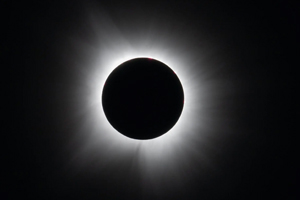
A total solar eclipse with a magnitude of 1.0386 (greatest eclipse 17:47:06 UTC) will be visible in parts of Greenland, Iceland, northern Russia, the Atlantic...
Includes presentation of the Neil Armstrong Award of Excellence, activities for the new class of Astronaut Scholars, 2-day Technical Conference where Scholars present their...
During U.S. spacewalk 97, two astronauts will replace a Space-to-Ground antenna on the orbital complex. The antenna is a critical communication system NASA uses...
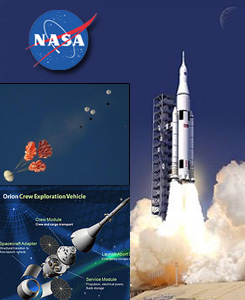 The future of USA national government space access and human space exploration, the Space Launch System, is ahead of schedule in the design process building towards uncrewed Exploration Mission-1 to circumnavigate the Moon in 2017 and the first crewed flight EM-2 in 2021. On December 20 NASA and Boeing completed a Preliminary Design Review of the core stage and avionics. The Block 1 configuration to be used in EM-1 consists of four shuttle-derived RS-25 engines with a total lift capacity of 70 metric tons to LEO and will be supplemented by the Interim Cryogenic Propulsion Stage for Earth departure. The Orion spacecraft, or Multi-Purpose Crew Vehicle, is being designed by Lockheed Martin to support up to 4 people on missions beyond LEO to the Moon, Mars, asteroids and other future destinations. Next week NASA will begin an integrated systems definition review of the SLS, Orion and supporting ground systems. One critical agenda item will be weight – with 33,112 kg budgeted the capsule is now running about 1,814 kg heavy, exceeding the capacity of the three 38-meter main parachutes. An Orion test module will fly on a Delta IV heavy in September 2014; the highly elliptical orbital trajectory will return the craft to Earth at near 80% the velocity of a return from the Moon. (Image Credit: NASA)
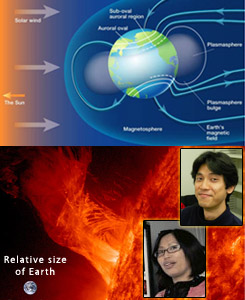 The Johns Hopkins University Applied Physics Laboratory, Nagoya University and others host ‘Earth-Sun System Exploration 5 Conference: Earth Sun System Disturbances – Weak, Moderate and Extreme’ in Kailua-Kona, Hawai’i on January 13-19. Over 65 papers and 10 posters will be presented under sections such as ‘Solar Wind Driving the Magnetosphere’ and ‘More Global Simulations, Merging Theory (and planetary comparisons).’ Solar activity is predicted to increase in 2013, perhaps peaking to 69 sunspots in the fall. NASA Space Weather Services Lead Yihua Zheng (B) will present ‘Highlights of significant space weather events in 2012’ on Tuesday Jan 15. Yukitoshi Nishimura (T), from UCLA, will talk about ‘Auroral signature associated with flow outbursts measured by ARTEMIS’ on Thursday Jan 17. NASA is set to launch Interface Region Imaging Spectrograph space probe on April 29 to measure the flow of energy and plasma through the Sun’s atmosphere / heliosphere. ESA Solar Orbiter is expected to launch in 2017 and come within 0.28 AU of the Sun for high-resolution studies. Later this year India Institute of Astrophysics will start building the world’s largest solar telescope on the Himalayan foothills in Ladakh, India. It will have a 2-m aperture, is estimated to cost US$60M and may be completed by 2017. (Image Credit: JHU-APL NASA, UCLA)
 = All times for terrestrial events in local time unless noted.
 = All times for international terrestrial events in local time unless noted.
 = All times for space events, and…
 = All times for international space / astro events in Hawaii Standard Time unless noted. Add 10 hours to obtain UT (‘Universal Time;’ Greenwich, England).