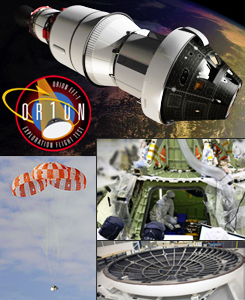
The Orion Multi-Purpose Crew Vehicle, designed to take humans farther into space than ever before, is on schedule for a September 18 Exploration Flight Test (EFT-1) from Kennedy Space Center in Cape Canaveral, Florida. Upcoming ground and air drop tests will validate the Forward Bay Cover jettison system allowing for parachute deployment. The heat shield will be attached this spring and protect the spacecraft and crew from temperatures close to 2,204°C (4,000°F). A Delta IV Heavy rocket will launch Orion to 5,794-km altitude – about 15 times higher than the ISS and 1/66th the distance to the Moon. After a 2-orbit 4-hour flight, Orion will reenter Earth atmosphere around 32,000 kph and use three 136-kg main parachutes to splashdown in the Pacific Ocean at 32 kph. Data collected from avionics, heat shielding, parachutes and other systems will be analyzed April 2015 by the Critical Design Review. The uncrewed 7-10 day Exploration Mission 1 (EM-1) flight around the Moon is scheduled to launch aboard the heavy-lift Space Launch System December 17, 2017. The first crewed flight (EM-2), scheduled for 2021, will send Astronauts to lunar orbit where they may explore and sample an asteroid if the Asteroid Redirect Mission is funded / successful. (Image Credit: NASA, M. Chambers)
Mexico Astronomy Research and Education Developments in the New Year
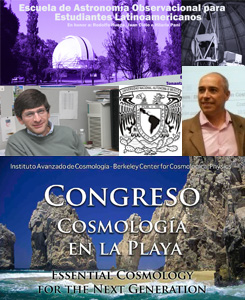
The Institute for Astronomy of the National Autonomous University of Mexico (IAUNAM) hosts a 20-day School of Observational Astronomy for Latin-American Students on January 12-31 at Tonantzintla, Puebla, Mexico. The course includes practice with the 1-meter telescope at the Tonantzintla Observatory and sessions at the Institute for Astrophysics, Optics and Electronics (INAOE). It is designed for students of Physics, Mathematics or Engineering with a strong interest in Astronomy, and the topics to be covered include astronomy of position and time, Sol, the Galaxy and extragalactic systems. The program is directed by Alberto Carramiñana Alonso of INAOE (R) and William Henry Lee Alardin of IAUNAM (L). There is also a conference on Essential Cosmology for the Next Generation dubbed ‘Cosmology on the Beach’ organized by the Berkeley Center for Cosmological Physics and the Advanced Institute for Cosmology, Mexico at Cabo San Lucas on Jan 13-17. A diverse range of presentations by eminent scholars in the field will combine elements of a winter school with discussions of latest research results. The purpose of the naturally and culturally beautiful setting is to catalyze young researchers to interact and generate new ideas. (Image Credit: IAUNAM, INAOE, BCCP)
= All times for terrestrial events in local time unless noted.
= All times for international terrestrial events in local time unless noted.
= All times for space events, and…
= All times for international space / astro events in Hawaii Standard Time unless noted. Add 10 hours to obtain UT (‘Universal Time;’ Greenwich, England).
Jan 13 — ISS, LEO: Expedition 38 transferring 1,261 kg of cargo from newly arrived Cygnus spacecraft; working with Matryoshka and Albedo radiation experiments, Coulomb Crystal charged particle experiment.
Jan 13 — ARTEMIS, Moon Orbit: Measuring electrostatic charge of lunar surface, interaction with and plasma wake that Moon creates in supersonic solar wind.
Jan 13 — Gaia, Sun–Earth Lagrange Point 2: Testing, calibrating instruments for another 4 months, will then begin 5-year mission to map more than 1B stars.
Jan 13 — Bigelow Aerospace LLC, Las Vegas NV: NewSpace company continuing to develop, test Expandable Activity Module scheduled to launch to ISS Dec 2014, attached Apr 2015.
Jan 13 — Copenhagen Suborbitals, Copenhagen, Denmark: Preparing for Heat-2X TM65 liquid propellant rocket flight test planned for Jun 21; developing Tycho Deep Space II human-rated capsule.
Jan 13 — Skybox Imaging Inc., Mountain View CA: Planning to launch SkySat-2 early 2014 to provide high-resolution images of Earth; SkySat-1 operating nominally in LEO.
Jan 1-14 — NASA Astrobiology Institute, University of Hawaii, Institute for Astronomy, Hawai`i Island & Oahu HI:UH-Nordic Astrobiology Winter School; to discuss extremophiles, water / ice in star & planet formation, in space, on early Earth, other planets.
Jan 6 – Feb 7 — International Space University, University of South Australia, Adelaide, Australia:Southern Hemisphere Summer Space Program; with emphasis on space applications, policy, services, science, systems engineering and technology, business and leadership, legal and regulatory issues.
Jan 10 – Feb 2 — The Arts Catalyst, London, United Kingdom:Republic of the Moon exhibit; featuring artwork, performances, workshops, music, talks, playful protests against lunar exploitation; at Bargehouse, Oxo Tower Wharf.
Jan 15 — Canadian Space Commerce Association, Toronto, Ontario, Canada: CSCA Meeting; Diane Francis to speak on “Pitch Coaching for Space Entrepreneurs.“
Jan 17 — Space Center Houston, Houston TX:Lunch with an Astronaut, David Hilmers; US$49.95 adult.
SATURDAY
Jan 18 — Phoenix Chapter of the National Space Society, Mesa AZ:Regular meeting of Phoenix NSS Chapter; Al Anzaldua from Tucson NSS Chapter will talk about how telerobotic spacecraft will be used to build cis-lunar space economy; at Humanist Community Center.
Includes ~150 meetings covering the fields of COSPAR Scientific Commissions / Panels / Task Groups, such as SC B: The Earth-Moon System, Planets, and...
From 02 to 07 August 2026, a few thousand geoscientists across diverse disciplines will gather at the 23rd annual meeting of the Asia Oceania Geosciences...
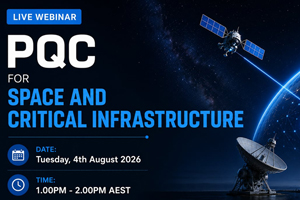
Virtual Series 2026 will offer deeper conversations on why PQC matters and the practical steps businesses should be taking; starts 1:00 pm AEST. Featuring:...
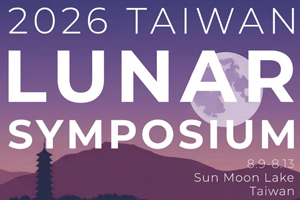
This international lunar science meeting has two objectives: to provide a platform for leading experts to review recent advances across lunar research, from the...
At CSIR International Convention Centre. Key topics are Earth Observation, Developing Space Tourism, Space Supply Manufacturing. Cultural tours are offered.
Participants will receive theoretical and hands-on training in electron imaging and X-ray spectroscopy for application to planetary samples. This training opportunity is targeted at...
"Leading Australia’s Space Future for Our Strategic Advantage". Southern Space 2026 brings together decision-makers who set the direction for Australia’s space sector. It is...
A total solar eclipse with a magnitude of 1.0386 (greatest eclipse 17:47:06 UTC) will be visible in parts of Greenland, Iceland, northern Russia, the Atlantic...
Includes presentation of the Neil Armstrong Award of Excellence, activities for the new class of Astronaut Scholars, 2-day Technical Conference where Scholars present their...
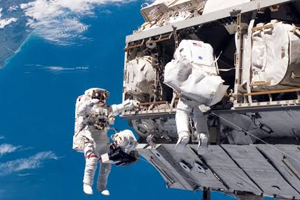
During U.S. spacewalk 97, two astronauts will replace a Space-to-Ground antenna on the orbital complex. The antenna is a critical communication system NASA uses...
Key themes include: Characterizing exoplanet-host solar-like stars; Star-planet interactions; Planet populations around solar-like stars. At University of Liège.
India orbiter surpasses another full year in lunar polar orbit since reaching the Moon in 2019; Chandrayaan-2 lander and rover were unsuccessful in lunar...
 The Orion Multi-Purpose Crew Vehicle, designed to take humans farther into space than ever before, is on schedule for a September 18 Exploration Flight Test (EFT-1) from Kennedy Space Center in Cape Canaveral, Florida. Upcoming ground and air drop tests will validate the Forward Bay Cover jettison system allowing for parachute deployment. The heat shield will be attached this spring and protect the spacecraft and crew from temperatures close to 2,204°C (4,000°F). A Delta IV Heavy rocket will launch Orion to 5,794-km altitude – about 15 times higher than the ISS and 1/66th the distance to the Moon. After a 2-orbit 4-hour flight, Orion will reenter Earth atmosphere around 32,000 kph and use three 136-kg main parachutes to splashdown in the Pacific Ocean at 32 kph. Data collected from avionics, heat shielding, parachutes and other systems will be analyzed April 2015 by the Critical Design Review. The uncrewed 7-10 day Exploration Mission 1 (EM-1) flight around the Moon is scheduled to launch aboard the heavy-lift Space Launch System December 17, 2017. The first crewed flight (EM-2), scheduled for 2021, will send Astronauts to lunar orbit where they may explore and sample an asteroid if the Asteroid Redirect Mission is funded / successful. (Image Credit: NASA, M. Chambers)
 The Institute for Astronomy of the National Autonomous University of Mexico (IAUNAM) hosts a 20-day School of Observational Astronomy for Latin-American Students on January 12-31 at Tonantzintla, Puebla, Mexico. The course includes practice with the 1-meter telescope at the Tonantzintla Observatory and sessions at the Institute for Astrophysics, Optics and Electronics (INAOE). It is designed for students of Physics, Mathematics or Engineering with a strong interest in Astronomy, and the topics to be covered include astronomy of position and time, Sol, the Galaxy and extragalactic systems. The program is directed by Alberto Carramiñana Alonso of INAOE (R) and William Henry Lee Alardin of IAUNAM (L). There is also a conference on Essential Cosmology for the Next Generation dubbed ‘Cosmology on the Beach’ organized by the Berkeley Center for Cosmological Physics and the Advanced Institute for Cosmology, Mexico at Cabo San Lucas on Jan 13-17. A diverse range of presentations by eminent scholars in the field will combine elements of a winter school with discussions of latest research results. The purpose of the naturally and culturally beautiful setting is to catalyze young researchers to interact and generate new ideas. (Image Credit: IAUNAM, INAOE, BCCP)
 = All times for terrestrial events in local time unless noted.
 = All times for international terrestrial events in local time unless noted.
 = All times for space events, and…
 = All times for international space / astro events in Hawaii Standard Time unless noted. Add 10 hours to obtain UT (‘Universal Time;’ Greenwich, England).