United States government and independent commercial missions to the next frontier of human expansion, Luna, need to accelerate. Cislunar baseline infrastructure is a catalyst to 21st Century Solar System exploration and development. China’s Chang’e-3 & Yutu spacecraft are now on the surface of the Moon, with a fleet of increasingly advanced siblings to follow. India is re-igniting its Chandrayaan Moon South Pole lander / rover project after successful flight of the indigenous heavy lift GSLV rocket. Korea, under the leadership of President Park Geun-hye, has declared ‘landing on the Moon’ a central national objective and has shortened the timeframe from 2025 to 2020. The USA cannot afford to be left behind the rising Lunar tide. President Obama, Congress and NASA leadership need to prioritize and accelerate plans for strategic and durable Moon South Pole exploration and infrastructure development – Morpheus, Mighty Eagle and Resolve should be streamlined and deployed as rapidly as possible. US Government assertion of the value and importance of the Moon will open major capital finance markets to independent lunar-focused enterprises including American teams competing in the Google Lunar X Prize – who need to finalize launch agreements in order to keep up with international competitors. Peaceful USA-International business and cooperation in Space will benefit from revision of complicating and harmful restrictions. Focus and determination along with expanding international cooperation could see USA robotic resource-focused missions to the South Pole of the Moon by 2016-2017, with Human Moon Missions by 2019-2020. (Image Credit: ILOA, NASA)
Jupiter / Solar System Human Mission Design Project, 2013-2017
While countries and companies worldwide develop technologies to explore the far-reaches of the Solar System and carry humans well beyond the Moon, 21st Century Human mission strategic planning is critical to identify a destination for maximizing exploration capabilities, rewards and potential. Jupiter in particular is a world worth aiming for – with more than 70% of the Solar System’s planetary mass, 67 known moons (some of which are the most geologically active known bodies), and clues to life beyond Earth & the formation of our Solar System. Outer Planets Assessment Group & Advanced Concepts Office of NASA, among others, continue evaluating SLS possibilities for exploring the Outer Solar System. The NASA Juno spacecraft (arriving at Jupiter July 4, 2016) will spend at least 2 years trying to solve some of its mysteries. The planned ESA JUICE spacecraft (launch 2022) will study 3 of the Galilean moons. This ‘Jupiter Human Mission Design Project’ (the 2nd of a 4-year study launched January 20, 2013) implores commitments to support bold and logical 21st Century exploration missions to take steps toward establishing Humans as a Multi World Species, give space programs a focused, effective direction and advance international cooperation, science and education. With enough data, support and resources, a Jupiter Human Mission in the 2030-2050 timeframe could be possible. Mars, Saturn, Uranus, Neptune, Pluto and the Kuiper Belt deserve equal attention as Human exploration destinations for our species to understand, survive in and master the Solar System. (Image Credit: W. Myers, NASA, Wayfare Entertainment, et al)
= All times for terrestrial events in local time unless noted.
= All times for international terrestrial events in local time unless noted.
= All times for space events, and…
= All times for international space / astro events in Hawaii Standard Time unless noted. Add 10 hours to obtain UT (‘Universal Time;’ Greenwich, England).
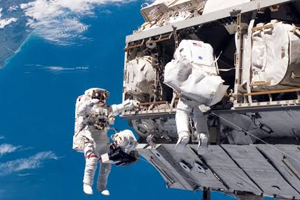
Jan 20 — ISS, LEO: Expedition 38 studying properties of ‘supercritical water,’ setting up science experiments brought aboard by Cygnus involving ant habitat, sloshy fluids for robotic satellites, antibiotic drug resistance; EVA 37a set for Jan 27.
Jan 20 — MAVEN, Mars Trajectory: Will soon complete slew maneuver to point High Gain Antenna at Earth for high-data rate communications session; Trajectory Correction Maneuvers are planned Feb, Jul, Sep; Mars arrival Sep 14.
Jan 20 — Rosetta,Comet 67P / Churyumov-Gerasimenko Trajectory: Rosetta spacecraft wakes from hibernation at 10:00 UT in preparation for ‘Jupiter-family’ comet rendezvous; scheduled to approach comet in May, launched Mar 2004.
Jan 20 — New Horizons, Pluto Trajectory: Mission control team testing antenna, uploading commands to Guidance & Control / Command & Data Handling systems, updating navigational star charts, conducting navigational tracking.
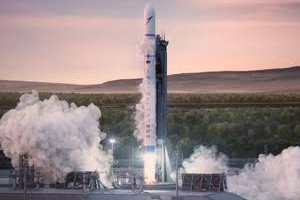
Jan 20 — Firefly Space Systems, Austin TX: NewSpace company planning to develop small satellite launch system for low-cost launches to Low Earth & Sun Synchronous Orbits.
Jan 20 — Planet Labs Inc.,San Francisco CA: Flock-1 constellation of 28 ‘Dove’ Earth observation satellites to be deployed from ISS JEM Small Satellite Orbital Deployer (J-SSOD) attached to Kibo laboratory’s robotic arm.
Jan 20 — PocketQube Shop, Glasgow, Scotland: Offering 1st commercial off-the-shelf components for 5-cm cubed, 150-gram spacecraft; structures can be stacked to allow for more missions.
Jan 20-24 — Las Cumbres Observatory Global Telescope Network, Royal Astronomical Society, NASA Exoplanet Science Institute, Santa Barbara CA:18th International Conference on Microlensing.
Jan 20 — Asteroid 277570 (2005 YP180): Near-Earth flyby (0.078 AU).
Jan 23 — United Launch Alliance, Launch Atlas 5 / TDRS L,Cape Canaveral AFS FL: United Launch Alliance Atlas 5 rocket to launch TDRS L communications / data relay satellite for NASA; Tracking and Data Relay Satellite System (TDRSS) connects mission control with ISS, other orbiting satellites; 21:05 – 21:45 EST.
Jan 23 — Moon: 1.3° NNE of Spica, 00:00; at last quarter, 19:20.
Jan 23 — Asteroid 2013 YS2: Near-Earth flyby (0.056 AU).
Jan 23 — Asteroid 2013 NC15: Near-Earth flyby (0.069 AU).
Jan 25 — Onizuka Memorial Committee, University of Hawaii – Hilo, Astronaut Ellison S. Onizuka Space Center, et al, Hilo HI:2014 Astronaut Ellison Onizuka Science Day; featuring Astronaut Keynote Speaker, 19 workshops, 18 interactive displays; free.
Includes ~150 meetings covering the fields of COSPAR Scientific Commissions / Panels / Task Groups, such as SC B: The Earth-Moon System, Planets, and...
From 02 to 07 August 2026, a few thousand geoscientists across diverse disciplines will gather at the 23rd annual meeting of the Asia Oceania Geosciences...
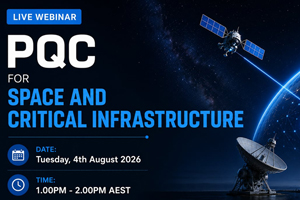
Virtual Series 2026 will offer deeper conversations on why PQC matters and the practical steps businesses should be taking; starts 1:00 pm AEST. Featuring:...
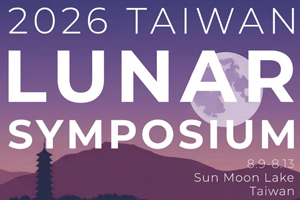
This international lunar science meeting has two objectives: to provide a platform for leading experts to review recent advances across lunar research, from the...
At CSIR International Convention Centre. Key topics are Earth Observation, Developing Space Tourism, Space Supply Manufacturing. Cultural tours are offered.
Participants will receive theoretical and hands-on training in electron imaging and X-ray spectroscopy for application to planetary samples. This training opportunity is targeted at...
"Leading Australia’s Space Future for Our Strategic Advantage". Southern Space 2026 brings together decision-makers who set the direction for Australia’s space sector. It is...
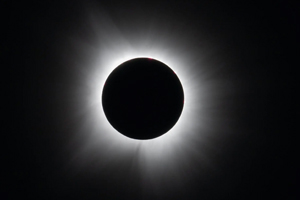
A total solar eclipse with a magnitude of 1.0386 (greatest eclipse 17:47:06 UTC) will be visible in parts of Greenland, Iceland, northern Russia, the Atlantic...
Includes presentation of the Neil Armstrong Award of Excellence, activities for the new class of Astronaut Scholars, 2-day Technical Conference where Scholars present their...
During U.S. spacewalk 97, two astronauts will replace a Space-to-Ground antenna on the orbital complex. The antenna is a critical communication system NASA uses...
Key themes include: Characterizing exoplanet-host solar-like stars; Star-planet interactions; Planet populations around solar-like stars. At University of Liège.
India orbiter surpasses another full year in lunar polar orbit since reaching the Moon in 2019; Chandrayaan-2 lander and rover were unsuccessful in lunar...
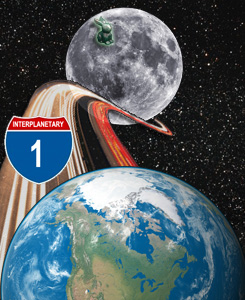 United States government and independent commercial missions to the next frontier of human expansion, Luna, need to accelerate. Cislunar baseline infrastructure is a catalyst to 21st Century Solar System exploration and development. China’s Chang’e-3 & Yutu spacecraft are now on the surface of the Moon, with a fleet of increasingly advanced siblings to follow. India is re-igniting its Chandrayaan Moon South Pole lander / rover project after successful flight of the indigenous heavy lift GSLV rocket. Korea, under the leadership of President Park Geun-hye, has declared ‘landing on the Moon’ a central national objective and has shortened the timeframe from 2025 to 2020. The USA cannot afford to be left behind the rising Lunar tide. President Obama, Congress and NASA leadership need to prioritize and accelerate plans for strategic and durable Moon South Pole exploration and infrastructure development – Morpheus, Mighty Eagle and Resolve should be streamlined and deployed as rapidly as possible. US Government assertion of the value and importance of the Moon will open major capital finance markets to independent lunar-focused enterprises including American teams competing in the Google Lunar X Prize – who need to finalize launch agreements in order to keep up with international competitors. Peaceful USA-International business and cooperation in Space will benefit from revision of complicating and harmful restrictions. Focus and determination along with expanding international cooperation could see USA robotic resource-focused missions to the South Pole of the Moon by 2016-2017, with Human Moon Missions by 2019-2020. (Image Credit: ILOA, NASA)
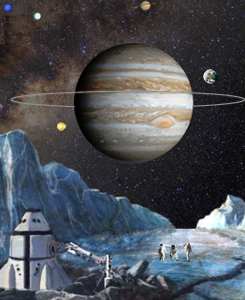 While countries and companies worldwide develop technologies to explore the far-reaches of the Solar System and carry humans well beyond the Moon, 21st Century Human mission strategic planning is critical to identify a destination for maximizing exploration capabilities, rewards and potential. Jupiter in particular is a world worth aiming for – with more than 70% of the Solar System’s planetary mass, 67 known moons (some of which are the most geologically active known bodies), and clues to life beyond Earth & the formation of our Solar System. Outer Planets Assessment Group & Advanced Concepts Office of NASA, among others, continue evaluating SLS possibilities for exploring the Outer Solar System. The NASA Juno spacecraft (arriving at Jupiter July 4, 2016) will spend at least 2 years trying to solve some of its mysteries. The planned ESA JUICE spacecraft (launch 2022) will study 3 of the Galilean moons. This ‘Jupiter Human Mission Design Project’ (the 2nd of a 4-year study launched January 20, 2013) implores commitments to support bold and logical 21st Century exploration missions to take steps toward establishing Humans as a Multi World Species, give space programs a focused, effective direction and advance international cooperation, science and education. With enough data, support and resources, a Jupiter Human Mission in the 2030-2050 timeframe could be possible. Mars, Saturn, Uranus, Neptune, Pluto and the Kuiper Belt deserve equal attention as Human exploration destinations for our species to understand, survive in and master the Solar System. (Image Credit: W. Myers, NASA, Wayfare Entertainment, et al)
 = All times for terrestrial events in local time unless noted.
 = All times for international terrestrial events in local time unless noted.
 = All times for space events, and…
 = All times for international space / astro events in Hawaii Standard Time unless noted. Add 10 hours to obtain UT (‘Universal Time;’ Greenwich, England).