Russia 21st Century Space Exploration: From Vostochny Cosmodrome to the Moon
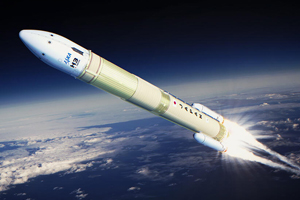
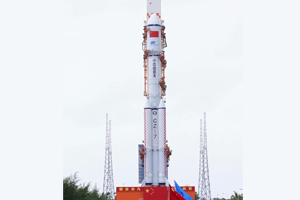
Major space faring power and nation first to orbit, Russia, is looking to the future. Development continues on the new “Eastern Spaceport” located at the 51st parallel north in the Amur Oblast of Outer Manchuria. Vostochny Cosmodrome will consist of 551.5 square kilometers and is expected to host 45% of Russia space launches by 2020. Russia currently pays Kazakhstan US$115M per year to lease the Baikonur Cosmodrome, home to about 65% of all Russian launches and 100% of the crewed Soyuz launches. The goal for Roscosmos is to reduce dependence on the external facility. Construction of the first launch pad commences May 15 and a maiden operational launch is set for 2018. The geography of the spaceport is crucial. It is near major ground transportation arteries but also remote, with clear flight paths over sparsely populated areas and large bodies of water including the Sea of Okhotsk and the Pacific Ocean. The site benefits from abundant availability of electricity as well as existing infrastructure from the former Svobodny Cosmodrome. Russia is also boldly affirming its determination to establish permanent operations on the Moon. Dmitry Rogozin, Deputy Minister of Russia Defense & Space Industry says, “…Moon is not intermediate point in the [space] race, it is a separate, even self-contained goal.” Russia is currently planning at least 3 near-term Lunar missions: the 2016 Luna-25 lander mission, the 2018 Luna-26 orbiter, and the 2019 Luna-27 South Pole resource-prospecting lander. (Image Credit: RSA, JAXA, Google Earth)
Space Events in Pasadena Highlight Technologies, Solar System Missions, Commercial Space
The Pasadena Convention Center in California is set to host SpaceOps 2014 (May 5-9) and Spacefest VI (May 8-11). Sponsored by JPL and AIAA, SpaceOps will bring together about 650 Space agency, industry and academia representatives from 20 countries to explore innovative ways to build, operate and integrate space systems. Over 300 technical papers will be presented on topics including Launch Vehicle Operations, Mission Systems Design, Space Communications, Data Management and Space Cyber Security. Some of the Plenary / Highlight speakers are William Gerstenmaier (L) NASA Human Exploration and Operations Administrator, Sandy Magnus (C) AIAA Executive Director, and Yongseung Kim (R) Korea Aerospace Research Institute Satellite Information Research Laboratory Executive Director. Dubbed ‘THE event for the space enthusiast of any stripe,’ Spacefest VI will feature Apollo Moon workers Buzz Aldrin, Gene Cernan, Alan Bean and other Astronauts. Notable speakers include Dr. Carolyn Porco (Cassini Imaging Team Leader), Andy Chaikin (Golden Spike Co.), Rick Tumlinson (SFF, DSI), Emily Lakdawalla (Planetary Society), Seth Shostak (SETI) and Bonnie Buratti (New Horizons Co-Investigator). Sunday panels will focus on Mars, Asteroids, Comets, Dwarf Planets, Voyager and Curiosity. (Image Credit: AIAA, JPL, NASA, Novaspace, ESA, KARI)
= All times for terrestrial events in local time unless noted.
= All times for international terrestrial events in local time unless noted.
= All times for space events, and…
= All times for international space / astro events in Hawaii Standard Time unless noted. Add 10 hours to obtain UT (‘Universal Time;’ Greenwich, England).
May 5 — ISS, LEO: Expedition 39 transferring cargo from Dragon spacecraft; mission control installing external OPALS laser communications experiment with Canadarm2; Wakata, Mastracchio, Tyurin preparing for return to Earth May 13, readying Soyuz TMA-11M.
May 5 — NEOWISE, LEO: Reactivated WISE spacecraft searching for potentially hazardous near-Earth objects; has discovered ~34,000 new asteroids (135 of which are NEOs) and 21 new comets.
May 5 — Spitzer, Heliocentric Orbit: Scanning skies with 2 infrared detector arrays; recently confirmed brown dwarf WISE J085510.83-071442.5 to be coldest known star, 4th closest star system (7.2 LY away).
May 5 — Astrobotic Technology Inc., Pittsburgh PA: NewSpace company selected (with Moon Express, Masten Space Systems) for Lunar CATALYST no-funds exchanged partnership to advance Lunar lander capabilities.
May 5 — Spaceflight Inc., Tukwila WA: Planning to launch “SHERPA” hosted payload and in-space transportation system to LEO Q3-Q4 2015 to deploy ~1,200 kgs of customer satellite payloads.
May 5 — Astronauts4Hire, Holiday FL: One of 100 non-profits participating in 90-day ‘Ticket to Rise’ fundraising campaign to provide 1 donor with Space Expedition Corp. Founders Ticket for XCOR Lynx Mark II flight.
May 5-9 — AIAA, Jet Propulsion Laboratory, Caltech/NASA, Pasadena CA:SpaceOps 2014: Exploring Innovation; 13th International Conference on Space Operations at Pasadena Convention Center.
May 6 — SETI Institute, Mountain View CA: SETI Talks: The Cepheid Galactic Internet; presented by Tony Zee of Kavli Institute for Theoretical Physics, UC Santa Barbara, 12:00 PDT.
May 6 — Eta Aquarids Meteor Shower Peak: The 1st of 2 showers that occur each year as a result of Earth passing through dust released by Halley’s Comet; meteors appear to radiate from Constellation Aquarius; Northern Hemisphere may see as few as 10 per hour, Southern Hemisphere may see up to 85 per hour.
May 6 — Moon: At apogee (distance 403,857 km), 00:00; first quarter Moon, 17:36.
May 6 — Asteroid 2014 HX164: Near-Earth flyby (0.003 AU).
May 7 — Asteroid 2014 HK4: Near-Earth flyby (0.080 AU).
THURSDAY
May 8 — ISS, LEO: Expedition 39 In-Flight Interview with Fox Business News; 16:55 UT, live coverage available.
May 8-11 — Novaspace, Pasadena CA:Spacefest VI; featuring astronomy, human & robotic space exploration, commercial space, space history; at Pasadena Convention Center.
FRIDAY
May 9 — NASA HQ, Solar System Exploration Research Virtual Institute, Online / Washington DC:Asteroid Grand Challenge: Virtual Seminar Series; Tim Spahr speaks on Minor Planet Center and the International Warning Network, 11:00 EDT.
May 10-11 — SpaceUp, Netherlands Space Society, Eye on Orbit, et al, Noordwijk, The Netherlands: SpaceUp Netherlands; the “unconference” where participants decide space issues / topics to discuss, schedule and structure of event; at Space Expo.
May 10 — Asteroid 2014 HA124: Near-Earth flyby (0.052 AU).
SUNDAY
May 11 — National Space Society of North Texas, Irving TX:Regular Meeting of the NSS of North Texas; to promote Space education, share information about local events & latest developments in Space exploration.
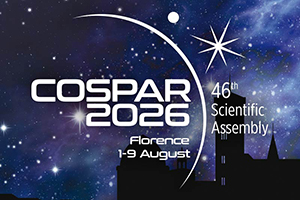
Includes ~150 meetings covering the fields of COSPAR Scientific Commissions / Panels / Task Groups, such as SC B: The Earth-Moon System, Planets, and...
From 02 to 07 August 2026, a few thousand geoscientists across diverse disciplines will gather at the 23rd annual meeting of the Asia Oceania Geosciences...
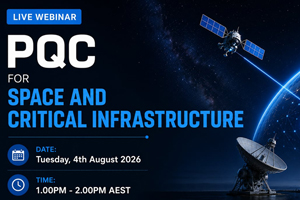
Virtual Series 2026 will offer deeper conversations on why PQC matters and the practical steps businesses should be taking; starts 1:00 pm AEST. Featuring:...
This international lunar science meeting has two objectives: to provide a platform for leading experts to review recent advances across lunar research, from the...
At CSIR International Convention Centre. Key topics are Earth Observation, Developing Space Tourism, Space Supply Manufacturing. Cultural tours are offered.
Participants will receive theoretical and hands-on training in electron imaging and X-ray spectroscopy for application to planetary samples. This training opportunity is targeted at...
"Leading Australia’s Space Future for Our Strategic Advantage". Southern Space 2026 brings together decision-makers who set the direction for Australia’s space sector. It is...
A total solar eclipse with a magnitude of 1.0386 (greatest eclipse 17:47:06 UTC) will be visible in parts of Greenland, Iceland, northern Russia, the Atlantic...
Includes presentation of the Neil Armstrong Award of Excellence, activities for the new class of Astronaut Scholars, 2-day Technical Conference where Scholars present their...
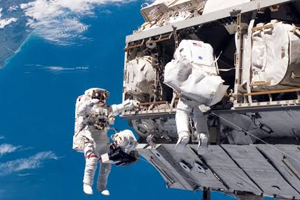
During U.S. spacewalk 97, two astronauts will replace a Space-to-Ground antenna on the orbital complex. The antenna is a critical communication system NASA uses...
Key themes include: Characterizing exoplanet-host solar-like stars; Star-planet interactions; Planet populations around solar-like stars. At University of Liège.
India orbiter surpasses another full year in lunar polar orbit since reaching the Moon in 2019; Chandrayaan-2 lander and rover were unsuccessful in lunar...
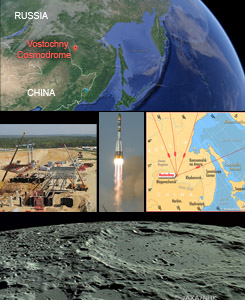 Major space faring power and nation first to orbit, Russia, is looking to the future. Development continues on the new “Eastern Spaceport” located at the 51st parallel north in the Amur Oblast of Outer Manchuria. Vostochny Cosmodrome will consist of 551.5 square kilometers and is expected to host 45% of Russia space launches by 2020. Russia currently pays Kazakhstan US$115M per year to lease the Baikonur Cosmodrome, home to about 65% of all Russian launches and 100% of the crewed Soyuz launches. The goal for Roscosmos is to reduce dependence on the external facility. Construction of the first launch pad commences May 15 and a maiden operational launch is set for 2018. The geography of the spaceport is crucial. It is near major ground transportation arteries but also remote, with clear flight paths over sparsely populated areas and large bodies of water including the Sea of Okhotsk and the Pacific Ocean. The site benefits from abundant availability of electricity as well as existing infrastructure from the former Svobodny Cosmodrome. Russia is also boldly affirming its determination to establish permanent operations on the Moon. Dmitry Rogozin, Deputy Minister of Russia Defense & Space Industry says, “…Moon is not intermediate point in the [space] race, it is a separate, even self-contained goal.” Russia is currently planning at least 3 near-term Lunar missions: the 2016 Luna-25 lander mission, the 2018 Luna-26 orbiter, and the 2019 Luna-27 South Pole resource-prospecting lander. (Image Credit: RSA, JAXA, Google Earth)
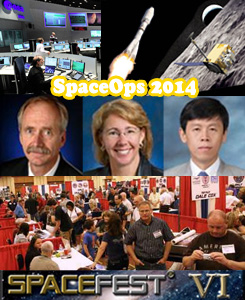 The Pasadena Convention Center in California is set to host SpaceOps 2014 (May 5-9) and Spacefest VI (May 8-11). Sponsored by JPL and AIAA, SpaceOps will bring together about 650 Space agency, industry and academia representatives from 20 countries to explore innovative ways to build, operate and integrate space systems. Over 300 technical papers will be presented on topics including Launch Vehicle Operations, Mission Systems Design, Space Communications, Data Management and Space Cyber Security. Some of the Plenary / Highlight speakers are William Gerstenmaier (L) NASA Human Exploration and Operations Administrator, Sandy Magnus (C) AIAA Executive Director, and Yongseung Kim (R) Korea Aerospace Research Institute Satellite Information Research Laboratory Executive Director. Dubbed ‘THE event for the space enthusiast of any stripe,’ Spacefest VI will feature Apollo Moon workers Buzz Aldrin, Gene Cernan, Alan Bean and other Astronauts. Notable speakers include Dr. Carolyn Porco (Cassini Imaging Team Leader), Andy Chaikin (Golden Spike Co.), Rick Tumlinson (SFF, DSI), Emily Lakdawalla (Planetary Society), Seth Shostak (SETI) and Bonnie Buratti (New Horizons Co-Investigator). Sunday panels will focus on Mars, Asteroids, Comets, Dwarf Planets, Voyager and Curiosity. (Image Credit: AIAA, JPL, NASA, Novaspace, ESA, KARI)
 = All times for terrestrial events in local time unless noted.
 = All times for international terrestrial events in local time unless noted.
 = All times for space events, and…
 = All times for international space / astro events in Hawaii Standard Time unless noted. Add 10 hours to obtain UT (‘Universal Time;’ Greenwich, England).