33rd National Space Society ISDC Explores Modern Space Renaissance
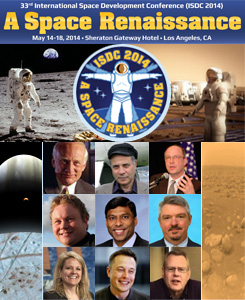
The National Space Society 33rd International Space Development Conference (ISDC 2014) is being held May 14-18 at the Sheraton Gateway Hotel in Los Angeles, California. The theme ‘A Space Renaissance’ highlights cutting-edge technologies, ideas and approaches to space exploration in the 21st Century. About 800 individuals will gather to exchange ideas on how humans should live and work in space, harness resources, and become a Multi World Species. In attendance will be (pictured L-R, T-B) Buzz Aldrin (Apollo 11), Robert Zubrin (Mars Society), John Spencer (STS), Bob Richards & Naveen Jain (ME), Mike Pinkston (OSC), and Gwynne Shotwell (SpaceX). Elon Musk will be presented with the NSS Robert A. Heinlein Memorial Award. Space Enterprise, Experience, Engagement, Policy, Solar Power and Settlement are among the 11 Tracks and Special Programming sessions. David Dunlop will be Chairing the May 16 Lunar Sub-Track of the NASA Exploration session which will include participation from GLXP Teams Moon Express, Penn State Lunar Lion and Synergy Moon. There is also a SpaceUp planned for May 18, tour of JPL, and an exhibit hall featuring SFF, ISU, ISEC and SEDS. (Image Credit: NSS, NASA, ESA, W. Myers, Mars One)
European Lunar Science Symposium in London
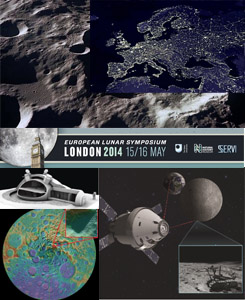
The Natural History Museum, in partnership with NASA Solar System Exploration Research Virtual Institute, hosts the 2nd European Lunar Symposium on May 15-16 in London, United Kingdom. The Science Organizing Committee is lead by Dr. Mahesh Anand of Open University and Prof. Sara Russell of Natural History Museum. The program consists of oral and poster presentations divided into 4 broad themes: Science of the Moon, Science on the Moon, Science from the Moon and Future Lunar Missions. Dr. James Carpenter of ESA co-chairs the Future Missions session and gives a talk on ‘Lunar exploration and science in ESA.’ Prof. Ralf Jaumann of DLR talks on “A Dedicated Small Lunar Exploration Orbiter and Mobile Payload Element.’ The conference materials note the “global surge in lunar exploration” and “current interests in exploration of the Moon ranging from astronomical, astrophysical, geological, commercial, resource utilization, and strategic considerations.” Much of the current focus for robotic and human exploration is on the south polar region with areas of relatively stable environmental conditions and apparently high concentrations of valuable resources. Dr. David Kring of LPI / SSERVI makes a keynote presentation Friday at 11:10 UT on ‘Exploring the lunar south polar region and far side with human and human-assisted sample return missions.’ This conference builds on the first European Lunar Science Symposium held in Berlin April 2012. (Image Credit: ESA, NASA)
= All times for terrestrial events in local time unless noted.
= All times for international terrestrial events in local time unless noted.
= All times for space events, and…
= All times for international space / astro events in Hawaii Standard Time unless noted. Add 10 hours to obtain UT (‘Universal Time;’ Greenwich, England).
May 12 — ISS, LEO: Expedition 40 begins after May 13 departure of 3 previous crew members; Dragon spacecraft being filled with experiments, cargo for return to Earth May 18; 4 newly installed exterior HD Earth Viewing cameras streaming video of Earth.
May 12 — ISS, LEO: Change of Command Ceremony; Koichi Wakata hands ISS command to Steve Swanson, 19:00 UT, live coverage available.
May 12 — Juno, Jupiter Trajectory: US$1.1B spacecraft in Quiet Cruise Phase until Jan 5, 2016, traveling at ~69,400 kph; in Main Asteroid Belt, now closer to Jupiter than it is to Sun.
May 12 — New Horizons, Pluto Trajectory: Mission team seeking 2.5 days on Hubble Space Telescope to locate Kuiper Belt Object for New Horizons to target after 1-year mission at Pluto.
May 12 — Copenhagen Suborbitals, Copenhagen, Denmark: NewSpace company planning for 90-second static test burn of TM65LE engine for HEAT2X rocket at 14:00 CEST May 17.
May 12 — Mars One, The Hague, The Netherlands: Continuing to interview / eliminate Mars Astronaut candidates from remaining 705 applicants; will begin construction of 1st Mars simulation outpost.
May 12 — Ventions LLC, San Francisco CA: Developing on-board pressurization systems for Mars sample return missions and low-cost 3U CubeSat propulsion system under NASA Small Business Innovation Research award.
May 13 — ISS, Undocking of Soyuz TMA-11M, LEO: Expedition 38/39 members Wakata, Mastracchio, Tyurin scheduled to return to Earth; undocking scheduled 22:33 UT, live coverage available.
May 13-14 — Maker Media, Oracle, Intel, Autodesk, Redwood City CA:MakerCon 2014; to feature Edward Wright, United States Rocket Academy founder and Citizens in Space program manager; at Oracle Conference Center.
May 14 — Moon: 0.56° S of Saturn, 02:00; Full (Flower Moon), 09:18.
THURSDAY
May 15 — United Launch Alliance, Launch Delta 4 / GPS 2F-6,Cape Canaveral AFS FL: ULA to launch Air Force 6th Block 2F navigation satellite for Global Positioning System; 20:08 – 20:26 EDT.
May 15 — RSA, Amur Oblast, Russia: Construction of first launch pad of new Vostochny Cosmodrome in Amur Oblast, Russia to begin today.
May 15-16 — NASA Solar System Exploration Research Virtual Institute, ESA, DLR, The Open University, London, United Kingdom:European Lunar Symposium; at Natural History Museum.
May 15 — Moon: 8.0° N of Antares, 12:00.
FRIDAY
May 16 — RSA, Launch Proton / Express AM4R, Baikonur Cosmodrome, Kazakhstan: Proton Rocket to launch Express AM4R satellite to provide television broadcasting, broadband Internet, multimedia services and mobile communications for the Russian Satellite Communications Co.
May 16 — Space Center Houston, Houston TX:Lunch with an Astronaut, John-David Bartoe; US$49.95 adult.
May 16 — Asteroid 2014 HL132: Near-Earth flyby (0.052 AU).
SATURDAY
May 17 — Cassini,Saturn Orbit: Titan flyby scheduled at 2,994-km altitude.
May 17 — Marshall Space Flight Center, NASA, ATK Aerospace Group, Salt Lake City UT:Launchfest 2014; twenty college & university teams launch rockets to 6,100-meter altitude.
May 17 — Asteroid 2010 JO33: Near-Earth flyby (0.010 AU).
May 17 — Asteroid 2014 JH15: Near-Earth flyby (0.020 AU).
SUNDAY
May 18 — ISS, Dragon spacecraft Undocking, LEO: Dragon spacecraft on CRS-3 mission to return to Earth, 13:00 UT, live coverage available.
Includes ~150 meetings covering the fields of COSPAR Scientific Commissions / Panels / Task Groups, such as SC B: The Earth-Moon System, Planets, and...
From 02 to 07 August 2026, a few thousand geoscientists across diverse disciplines will gather at the 23rd annual meeting of the Asia Oceania Geosciences...
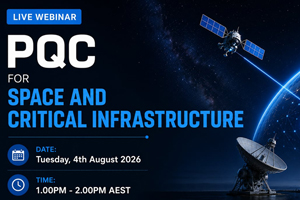
Virtual Series 2026 will offer deeper conversations on why PQC matters and the practical steps businesses should be taking; starts 1:00 pm AEST. Featuring:...
This international lunar science meeting has two objectives: to provide a platform for leading experts to review recent advances across lunar research, from the...
At CSIR International Convention Centre. Key topics are Earth Observation, Developing Space Tourism, Space Supply Manufacturing. Cultural tours are offered.
Participants will receive theoretical and hands-on training in electron imaging and X-ray spectroscopy for application to planetary samples. This training opportunity is targeted at...
"Leading Australia’s Space Future for Our Strategic Advantage". Southern Space 2026 brings together decision-makers who set the direction for Australia’s space sector. It is...
A total solar eclipse with a magnitude of 1.0386 (greatest eclipse 17:47:06 UTC) will be visible in parts of Greenland, Iceland, northern Russia, the Atlantic...
Includes presentation of the Neil Armstrong Award of Excellence, activities for the new class of Astronaut Scholars, 2-day Technical Conference where Scholars present their...
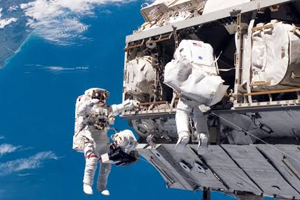
During U.S. spacewalk 97, two astronauts will replace a Space-to-Ground antenna on the orbital complex. The antenna is a critical communication system NASA uses...
Key themes include: Characterizing exoplanet-host solar-like stars; Star-planet interactions; Planet populations around solar-like stars. At University of Liège.
India orbiter surpasses another full year in lunar polar orbit since reaching the Moon in 2019; Chandrayaan-2 lander and rover were unsuccessful in lunar...
 The National Space Society 33rd International Space Development Conference (ISDC 2014) is being held May 14-18 at the Sheraton Gateway Hotel in Los Angeles, California. The theme ‘A Space Renaissance’ highlights cutting-edge technologies, ideas and approaches to space exploration in the 21st Century. About 800 individuals will gather to exchange ideas on how humans should live and work in space, harness resources, and become a Multi World Species. In attendance will be (pictured L-R, T-B) Buzz Aldrin (Apollo 11), Robert Zubrin (Mars Society), John Spencer (STS), Bob Richards & Naveen Jain (ME), Mike Pinkston (OSC), and Gwynne Shotwell (SpaceX). Elon Musk will be presented with the NSS Robert A. Heinlein Memorial Award. Space Enterprise, Experience, Engagement, Policy, Solar Power and Settlement are among the 11 Tracks and Special Programming sessions. David Dunlop will be Chairing the May 16 Lunar Sub-Track of the NASA Exploration session which will include participation from GLXP Teams Moon Express, Penn State Lunar Lion and Synergy Moon. There is also a SpaceUp planned for May 18, tour of JPL, and an exhibit hall featuring SFF, ISU, ISEC and SEDS. (Image Credit: NSS, NASA, ESA, W. Myers, Mars One)
 The Natural History Museum, in partnership with NASA Solar System Exploration Research Virtual Institute, hosts the 2nd European Lunar Symposium on May 15-16 in London, United Kingdom. The Science Organizing Committee is lead by Dr. Mahesh Anand of Open University and Prof. Sara Russell of Natural History Museum. The program consists of oral and poster presentations divided into 4 broad themes: Science of the Moon, Science on the Moon, Science from the Moon and Future Lunar Missions. Dr. James Carpenter of ESA co-chairs the Future Missions session and gives a talk on ‘Lunar exploration and science in ESA.’ Prof. Ralf Jaumann of DLR talks on “A Dedicated Small Lunar Exploration Orbiter and Mobile Payload Element.’ The conference materials note the “global surge in lunar exploration” and “current interests in exploration of the Moon ranging from astronomical, astrophysical, geological, commercial, resource utilization, and strategic considerations.” Much of the current focus for robotic and human exploration is on the south polar region with areas of relatively stable environmental conditions and apparently high concentrations of valuable resources. Dr. David Kring of LPI / SSERVI makes a keynote presentation Friday at 11:10 UT on ‘Exploring the lunar south polar region and far side with human and human-assisted sample return missions.’ This conference builds on the first European Lunar Science Symposium held in Berlin April 2012. (Image Credit: ESA, NASA)
 = All times for terrestrial events in local time unless noted.
 = All times for international terrestrial events in local time unless noted.
 = All times for space events, and…
 = All times for international space / astro events in Hawaii Standard Time unless noted. Add 10 hours to obtain UT (‘Universal Time;’ Greenwich, England).