Hawai`i Sea Launching Enterprise: Advantages and Opportunities
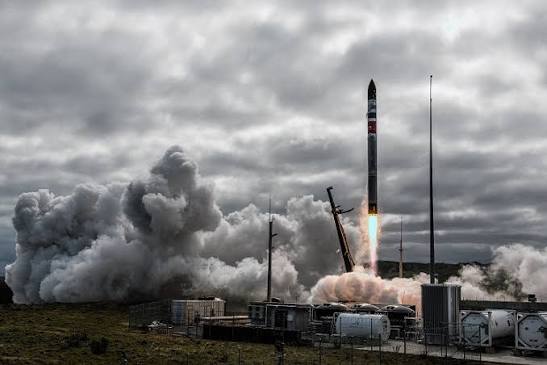
Sea Launch flight number 36 of the Zenit 3SL mission from the Odyssey Platform at the Equator 154°W is expected May 26 carrying the 5,967-kg Eutelsat 3B. This launch should remind everyone in the land of Aloha and around the Pacific Rim, of the advantages and opportunities of independent commercial sea launching operations homeported at Oahu. “Spaceport” initiatives are popping up across the USA and internationally, but very few, if any, can compete with the geographical and astronautical advantages of Hawaii. Clear equatorial and polar flight paths from USA southernmost latitude, could provide safer and more cost-effective access to primary commercial and exploration orbits. State of Hawaii leadership – political and cultural – may soon recognize the potential value of off-shore sea launching in terms of economic development, high tech jobs, 21st Century education and inspiration that would accrue as a result of establishing Hawaii as the central point of independent and commercial access to space across the Pacific. There is significant and long-standing interest in new lower-latitude launch capabilities from Korea, Japan, Russia, Canada, USA and other Pacific states which invest heavily in commercial and civilian space technologies and applications. (Image Credit: Sea Launch, Google, NASA)
India Focuses on Space Debris, GSLV, Mars Orbiter Mission and Chandrayaan-2
International and National efforts to track and minimize space debris are accelerating as the number of objects orbiting Earth rises every year – current estimates show 23,000 objects larger than 10 cm, 500,000 objects larger than 1 cm and millions of objects smaller than 1 cm. The National Conference on Space Debris Management and Mitigation Techniques organized by ISRO and Astronautical Society of India will be held May 20-21 at ISRO Headquarters in Bengaluru, India. There will be 8 Technical Sessions, 6 Invited Talks, a panel discussion and other presentations. Shri A S Ganeshan will chair the session on ‘Space Debris Modelling’ and Prof. G S Sachdeva will chair ‘Legal, Policy and Active Debris Removal.’ Topics discussed will include debris removal / recycle techniques, reentry predictions for the Phobos-Grunt satellite and spent stage of GSLV-D5 mission, and estimations of PSLV rocket body lifetimes in LEO. Looking to the future, human spaceflight safety and the need for “space in space” is of great concern as more countries, education centers and commercial customers gain access to LEO. ISRO is also working toward a July suborbital test flight of Geosynchronous Satellite Launch Vehicle (GSLV) Mk. 3 carrying a mock-up human crew module, expecting Mars Orbiter Mission (MOM) to reach Mars September 24, and developing the 2016-17 Chandrayaan-2 orbiter / lander / rover Moon mission. (Image Credit: ISRO, BBC, NASA, ASI)
= All times for terrestrial events in local time unless noted.
= All times for international terrestrial events in local time unless noted.
= All times for space events, and…
= All times for international space / astro events in Hawaii Standard Time unless noted. Add 10 hours to obtain UT (‘Universal Time;’ Greenwich, England).
May 19 — ISS, LEO: Expedition 40 Cmdr Swanson, Flight Engineers Skvortsov, Artemyev operate Station as 3-person crew until May 28; ground teams calibrating externally-mounted Optical Payload for Lasercomm Science (OPALS) system.
May 19 — ISEE-3, Heliocentric Orbit: International Sun-Earth Explorer team to attempt initial contact with 36-year old spacecraft this week from Arecibo Observatory in Puerto Rico.
May 19 — Kepler Space Telescope, Heliocentric Orbit: Observing in the ecliptic plane, performing Campaign 0 engineering test, collecting data on ~8,000 targets (including open star cluster M35).
May 19 — Curiosity, The Kimberley waypoint, Mars: Analyzing sample from recent drilling of rock ‘Windjana’ to learn more about the wet process that turned sand deposits into sandstone.
May 19 — Exos Aerospace, Mesquite TX: NewSpace company planning to develop suborbital and orbital rockets; purchased Armadillo Aerospace equipment and facility.
May 19 — Astroscale PTE. Ltd., Singapore: Plans to create space servicing system consisting of ‘Mother’ satellite releasing ‘satlets’ to deorbit defunct spacecraft.
May 19 — Swiss Space Systems (S3), Payerne, Switzerland: To construct spaceport on newly acquired land adjacent to Payerne airfield; inaugural launch planned for 2018 with CleanSpace One satellite.
May 19 — Glenn Research Center, NASA, Cleveland OH: National Lab Day; STEM event featuring facility tours, demonstrations, activities, Astronaut Douglas Wheelock.
May 20-21 — Arab Satellite Communications Organization, Yahsat Communications Company, SES, Thales Alenia Space, et al,Johannesburg, South Africa: SatCom2014; at Sandton Convention Centre.
May 20-24 — Citizens for Space Exploration, Washington DC: CSE 2014 Washington DC Trip; to meet with members of Congress or their staff to discuss benefits of space exploration.
May 20 — Asteroid 242708 (2005 UK1): Near-Earth flyby (0.094 AU).
May 21 — British Interplanetary Society, London, United Kingdom:Lecture: Virgin Spaceman; presented by Nigel Henbest, future Virgin Galactic space tourist No. 245.
May 21 — Moon: At last quarter, 02:59.
May 21 — Asteroid 2011 JR13: Near-Earth flyby (0.051 AU).
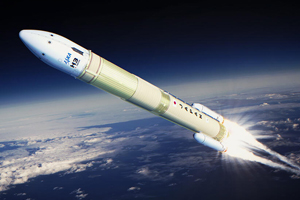
May 23 — JAXA, Launch H-2A / ALOS 2, Tanegashima Space Center, Japan: H-2A rocket to launch Advanced Land Observing Satellite (ALOS 2) for JAXA.
May 23 — NASA HQ, Solar System Exploration Research Virtual Institute, Online / Washington DC:Asteroid Grand Challenge: Virtual Seminar Series; Dan Mazanek (Langley Research Center) speaks on NEA deflection strategies, 11:00 EDT.
Includes ~150 meetings covering the fields of COSPAR Scientific Commissions / Panels / Task Groups, such as SC B: The Earth-Moon System, Planets, and...
From 02 to 07 August 2026, a few thousand geoscientists across diverse disciplines will gather at the 23rd annual meeting of the Asia Oceania Geosciences...
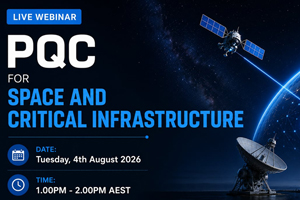
Virtual Series 2026 will offer deeper conversations on why PQC matters and the practical steps businesses should be taking; starts 1:00 pm AEST. Featuring:...
This international lunar science meeting has two objectives: to provide a platform for leading experts to review recent advances across lunar research, from the...
At CSIR International Convention Centre. Key topics are Earth Observation, Developing Space Tourism, Space Supply Manufacturing. Cultural tours are offered.
Participants will receive theoretical and hands-on training in electron imaging and X-ray spectroscopy for application to planetary samples. This training opportunity is targeted at...
"Leading Australia’s Space Future for Our Strategic Advantage". Southern Space 2026 brings together decision-makers who set the direction for Australia’s space sector. It is...
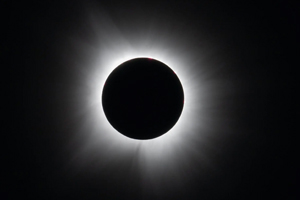
A total solar eclipse with a magnitude of 1.0386 (greatest eclipse 17:47:06 UTC) will be visible in parts of Greenland, Iceland, northern Russia, the Atlantic...
Includes presentation of the Neil Armstrong Award of Excellence, activities for the new class of Astronaut Scholars, 2-day Technical Conference where Scholars present their...
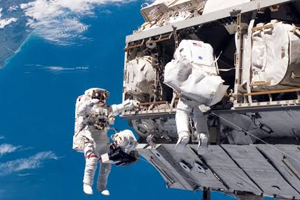
During U.S. spacewalk 97, two astronauts will replace a Space-to-Ground antenna on the orbital complex. The antenna is a critical communication system NASA uses...
Key themes include: Characterizing exoplanet-host solar-like stars; Star-planet interactions; Planet populations around solar-like stars. At University of Liège.
India orbiter surpasses another full year in lunar polar orbit since reaching the Moon in 2019; Chandrayaan-2 lander and rover were unsuccessful in lunar...
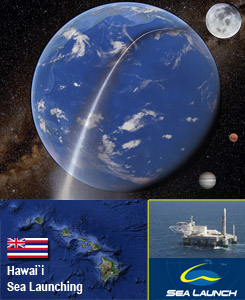 Sea Launch flight number 36 of the Zenit 3SL mission from the Odyssey Platform at the Equator 154°W is expected May 26 carrying the 5,967-kg Eutelsat 3B. This launch should remind everyone in the land of Aloha and around the Pacific Rim, of the advantages and opportunities of independent commercial sea launching operations homeported at Oahu. “Spaceport” initiatives are popping up across the USA and internationally, but very few, if any, can compete with the geographical and astronautical advantages of Hawaii. Clear equatorial and polar flight paths from USA southernmost latitude, could provide safer and more cost-effective access to primary commercial and exploration orbits. State of Hawaii leadership – political and cultural – may soon recognize the potential value of off-shore sea launching in terms of economic development, high tech jobs, 21st Century education and inspiration that would accrue as a result of establishing Hawaii as the central point of independent and commercial access to space across the Pacific. There is significant and long-standing interest in new lower-latitude launch capabilities from Korea, Japan, Russia, Canada, USA and other Pacific states which invest heavily in commercial and civilian space technologies and applications. (Image Credit: Sea Launch, Google, NASA)
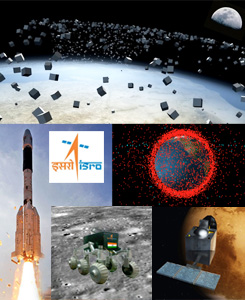 International and National efforts to track and minimize space debris are accelerating as the number of objects orbiting Earth rises every year – current estimates show 23,000 objects larger than 10 cm, 500,000 objects larger than 1 cm and millions of objects smaller than 1 cm. The National Conference on Space Debris Management and Mitigation Techniques organized by ISRO and Astronautical Society of India will be held May 20-21 at ISRO Headquarters in Bengaluru, India. There will be 8 Technical Sessions, 6 Invited Talks, a panel discussion and other presentations. Shri A S Ganeshan will chair the session on ‘Space Debris Modelling’ and Prof. G S Sachdeva will chair ‘Legal, Policy and Active Debris Removal.’ Topics discussed will include debris removal / recycle techniques, reentry predictions for the Phobos-Grunt satellite and spent stage of GSLV-D5 mission, and estimations of PSLV rocket body lifetimes in LEO. Looking to the future, human spaceflight safety and the need for “space in space” is of great concern as more countries, education centers and commercial customers gain access to LEO. ISRO is also working toward a July suborbital test flight of Geosynchronous Satellite Launch Vehicle (GSLV) Mk. 3 carrying a mock-up human crew module, expecting Mars Orbiter Mission (MOM) to reach Mars September 24, and developing the 2016-17 Chandrayaan-2 orbiter / lander / rover Moon mission. (Image Credit: ISRO, BBC, NASA, ASI)
 = All times for terrestrial events in local time unless noted.
 = All times for international terrestrial events in local time unless noted.
 = All times for space events, and…
 = All times for international space / astro events in Hawaii Standard Time unless noted. Add 10 hours to obtain UT (‘Universal Time;’ Greenwich, England).