China Robotic Moon Program Advancing into Third and Final Phase
The only nation active on the surface of the Moon, China, maintains successful operations of its Chang’e-3 Lander and Yutu Rover now in Lunar Night 6. Although Yutu has incurred mechanical issues, it continues to respond to ground control teams well past its 3-month given lifetime. Chang’e-3 Lander with Lunar Ultraviolet Telescope and Extreme Ultraviolet Camera, is also expected to perform past its December 14, one-year / thirteen-Lunar Day lifetime. The spacecraft hibernate / awake cycle is determined by astronomical factors (estimated here by SPC / ILOA), mechanical functions and performance, and ground control teams at the Very Long Baseline Interferometry center in Shanghai and observation stations in Xinjiang, Kunming and Beijing. Chang’e-4 (the twin of Chang’e-3) is being reconfigured due to the mission success; it may launch with different instruments to a new location or be combined with a future mission. Preparing for Phase 3, the Chang’e-5 sample return mission test satellite is scheduled to launch this June to attempt a Lunar Orbit Transfer and return to Earth. (Image Credit: ILOA, SPC, CNSA, Chinese Academy of Sciences, D. Davis)
Cubesat Workshop and SpaceX Dragon Mk 2 Unveiling in Southern California
The 3rd Interplanetary CubeSat Workshop, also known as iCubesat 2014, will be held in Pasadena CA on May 27-28. Sponsored by JA Initiative, National Radio Astronomical Observatory, Sinclair Interplanetary and others, conference talks and roundtables will focus on technology, science and collaboration. CubeSats have been limited to LEO so far, but beyond-LEO research is being conducted: the 2013 Vermont Lunar CubeSat is testing navigation components for a Moon mission, JPL is developing INSPIRE (Interplanetary NanoSpacecraft Pathfinder in Relevant Environment) to be placed in Earth-escape orbit, and continued LunarCubes Workshops bring together engineers and experts to advance the science and technology (the 4th Workshop will be held in Mountain View October 7-10). Hawthorne-based SpaceX promises to debut its human-rated Dragon Mk 2 capsule (DragonRider) on May 29. The company hopes to conduct 2 abort tests of the capsule this year, a pad-abort test and a high-altitude test, and launch the first orbital test flight with humans as early as 2015. Dragon Mk 2 is being designed to launch 7 astronauts to the ISS and remain there for at least 180 days. (Image Credit: JA Initiative, NASA, E. Raley, MSU, SpaceX)
= All times for terrestrial events in local time unless noted.
= All times for international terrestrial events in local time unless noted.
= All times for space events, and…
= All times for international space / astro events in Hawaii Standard Time unless noted. Add 10 hours to obtain UT (‘Universal Time;’ Greenwich, England).
May 26 — ISS, LEO: Expedition 40 preparing for arrival of Gerst, Suraev, Wiseman – crew orientation, media activities to follow; working on Resist Tubule botany experiment, Radi-N2 study to observe ISS neutron environment.
May 26 —Venus Climate Orbiter (Akatsuki), Solar Orbit / Venus Trajectory: Currently in Solar orbit due to main engine failure, JAXA US$300M spacecraft is expected to achieve Venus orbit Nov 2015 using small engine burns.
May 26 —Juno, Jupiter Trajectory: Approximately 450M km from Earth, traveling at 67,119 kph with one-way radio signal of about 25 minutes; in excellent health, operating nominally.
May 26 — SpaceX, McGregor TX: NewSpace company planning to conduct 2 DragonFly prototype propulsive assist landing tests from ~3,050 meters with parachutes; DragonFly will use 8 SuperDraco thrusters to make soft landings.
May 26 — Masten Space Systems, Mojave CA: Testing VTVL vehicles Xombie & Xaero, designing Xeus; working on Project Prometheus interface; negotiating no-funds-exchanged SAA with NASA for Lunar CATALYST.
May 26 — Dauria Aerospace, International Locations: Partnering with Elecnor Deimos to develop ‘Deimos Perseus’ satellite constellation with multispectral sensors to identify crop type, growth & health.
May 26 — Sea Launch, Launch Zenit 3SL / Eutelsat 3B, Odyssey Platform, Equator at 154° W: Sea Launch Zenit 3SL rocket to deliver Eutelsat 3B telecommunications satellite into orbit; will be 36th launch; 11:10 HST.
May 26 — Canadian Space Commerce Association,Toronto, Ontario, Canada: CSCA annual general meeting; at Blake, Cassels & Graydon LLP.
May 28 — British Interplanetary Society, London, United Kingdom:Lecture: An Evening on Titan; presented by Valerio Poggiali.
May 28-30 — Pacific International Space Center for Exploration Systems (PISCES), Lunar and Planetary Institute, USRA, Houston TX:Workshop on Planetary Volcanism; Postponed.
May 28 — Moon: New Moon, 08:42; 14:00° N of Aldebaran, 14:00.
THURSDAY
May 29 — RSA, Launch Soyuz TMA-13 / ISS 39S, Baikonur Cosmodrome, Kazakhstan: An RSA Soyuz rocket set to launch members of Expedition 40/41: Maxim Suraev of RSA, Reid Wiseman of NASA, Alexander Gerst of ESA; 01:57 local time, live coverage available.
May 29-30 — FAA Center of Excellence for Commercial Space Transportation, University of Colorado – Boulder, Stanford University Department of Aeronautics and Astronautics,Stanford CA:Emerging Space Industry Leaders (ESIL-06); for those interested in commercial space.
May 30 — The Space Show, Tiburon CA / Online: Dr. David Livingston talks with Emily Lakdawalla of The Planetary Society.
May 30 — Space Center Houston, Houston TX:Lunch with an Astronaut, Clay Anderson; US$49.95 adult.
SATURDAY
May 31 — Moon: 5.4° S of Jupiter, 20:00.
SUNDAY
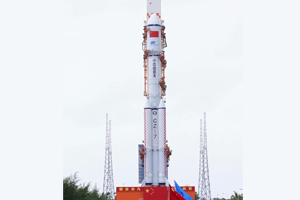
NLT Jun — CNSA, Wenchang Satellite Center, Hainan, China: Construction of Wenchang Satellite Center, also known as Hainan Space Launch Center, able to launch 10-12 rockets annually including Long March 5 and Long March 7, to be completed this month; will be China’s fourth and lowest latitude launch facility at 19° N.
NET Jun — CNSA, Launch Chang’e-5 Test Satellite, Xichang Satellite Launch Center, China: To launch Chang’e-5 sample return test satellite to Moon orbit; will attempt lunar orbit transfer and return to Earth.
NET Jun — International Launch Services, Launch Proton / Turksat 4B, Baikonur Cosmodrome, Kazakhstan: Proton rocket to deploy Turksat 4B communications satellite.
NET Jun — ISRO, Launch PSLV / Spot-7, Satish Dhawan Space Center, Sriharikota, India: Polar Satellite Launch Vehicle to launch Spot-7 commercial remote sensing satellite for Astrium Services.
Jun 1 — Deep Space: Voyager 1 with ~19 kg of propellant remaining, traveling at ~61,315 kph; Voyager 2 with ~25 kg of propellant, traveling at ~55,494 kph; both spacecraft & instruments continue to respond to commands, transmit data.
Jun 1-5 — American Astronomical Society, Boston MA:224th Meeting of the AAS; at Westin Copley Place hotel.
Jun 1 — Moon: 11.8° S of Pollux, 02:00.
Jun 1 — Asteroid 2008 WK32: Near-Earth flyby (0.073 AU).
Includes ~150 meetings covering the fields of COSPAR Scientific Commissions / Panels / Task Groups, such as SC B: The Earth-Moon System, Planets, and...
From 02 to 07 August 2026, a few thousand geoscientists across diverse disciplines will gather at the 23rd annual meeting of the Asia Oceania Geosciences...
Virtual Series 2026 will offer deeper conversations on why PQC matters and the practical steps businesses should be taking; starts 1:00 pm AEST. Featuring:...
This international lunar science meeting has two objectives: to provide a platform for leading experts to review recent advances across lunar research, from the...
At CSIR International Convention Centre. Key topics are Earth Observation, Developing Space Tourism, Space Supply Manufacturing. Cultural tours are offered.
Participants will receive theoretical and hands-on training in electron imaging and X-ray spectroscopy for application to planetary samples. This training opportunity is targeted at...
"Leading Australia’s Space Future for Our Strategic Advantage". Southern Space 2026 brings together decision-makers who set the direction for Australia’s space sector. It is...
A total solar eclipse with a magnitude of 1.0386 (greatest eclipse 17:47:06 UTC) will be visible in parts of Greenland, Iceland, northern Russia, the Atlantic...
Includes presentation of the Neil Armstrong Award of Excellence, activities for the new class of Astronaut Scholars, 2-day Technical Conference where Scholars present their...
During U.S. spacewalk 97, two astronauts will replace a Space-to-Ground antenna on the orbital complex. The antenna is a critical communication system NASA uses...
Key themes include: Characterizing exoplanet-host solar-like stars; Star-planet interactions; Planet populations around solar-like stars. At University of Liège.
India orbiter surpasses another full year in lunar polar orbit since reaching the Moon in 2019; Chandrayaan-2 lander and rover were unsuccessful in lunar...
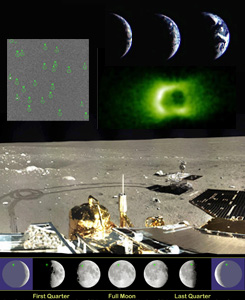 The only nation active on the surface of the Moon, China, maintains successful operations of its Chang’e-3 Lander and Yutu Rover now in Lunar Night 6. Although Yutu has incurred mechanical issues, it continues to respond to ground control teams well past its 3-month given lifetime. Chang’e-3 Lander with Lunar Ultraviolet Telescope and Extreme Ultraviolet Camera, is also expected to perform past its December 14, one-year / thirteen-Lunar Day lifetime. The spacecraft hibernate / awake cycle is determined by astronomical factors (estimated here by SPC / ILOA), mechanical functions and performance, and ground control teams at the Very Long Baseline Interferometry center in Shanghai and observation stations in Xinjiang, Kunming and Beijing. Chang’e-4 (the twin of Chang’e-3) is being reconfigured due to the mission success; it may launch with different instruments to a new location or be combined with a future mission. Preparing for Phase 3, the Chang’e-5 sample return mission test satellite is scheduled to launch this June to attempt a Lunar Orbit Transfer and return to Earth. (Image Credit: ILOA, SPC, CNSA, Chinese Academy of Sciences, D. Davis)
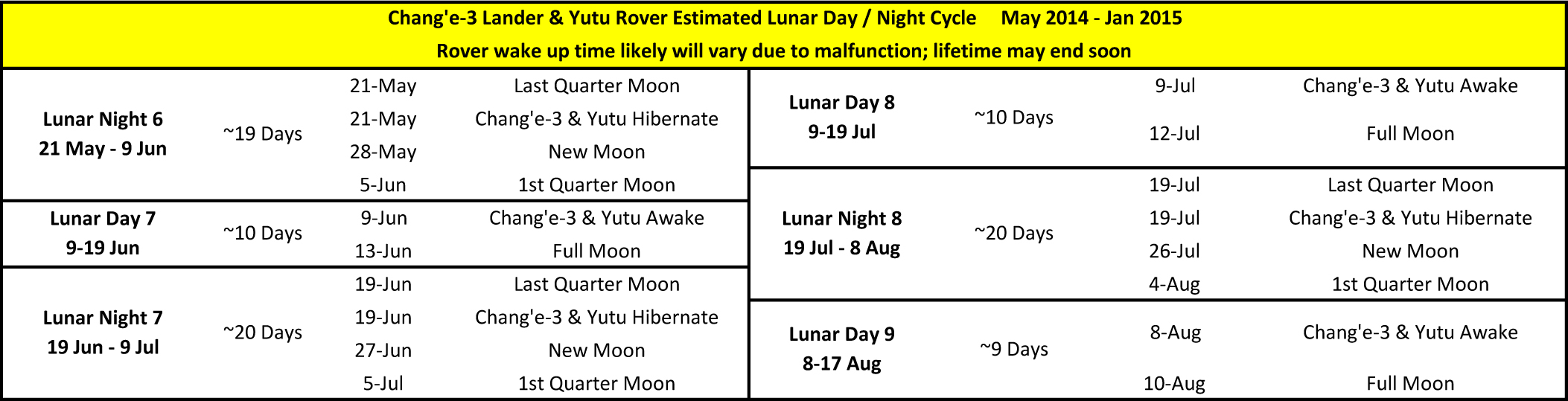 Timetable Continued Here
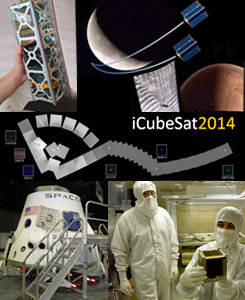 The 3rd Interplanetary CubeSat Workshop, also known as iCubesat 2014, will be held in Pasadena CA on May 27-28. Sponsored by JA Initiative, National Radio Astronomical Observatory, Sinclair Interplanetary and others, conference talks and roundtables will focus on technology, science and collaboration. CubeSats have been limited to LEO so far, but beyond-LEO research is being conducted: the 2013 Vermont Lunar CubeSat is testing navigation components for a Moon mission, JPL is developing INSPIRE (Interplanetary NanoSpacecraft Pathfinder in Relevant Environment) to be placed in Earth-escape orbit, and continued LunarCubes Workshops bring together engineers and experts to advance the science and technology (the 4th Workshop will be held in Mountain View October 7-10). Hawthorne-based SpaceX promises to debut its human-rated Dragon Mk 2 capsule (DragonRider) on May 29. The company hopes to conduct 2 abort tests of the capsule this year, a pad-abort test and a high-altitude test, and launch the first orbital test flight with humans as early as 2015. Dragon Mk 2 is being designed to launch 7 astronauts to the ISS and remain there for at least 180 days. (Image Credit: JA Initiative, NASA, E. Raley, MSU, SpaceX)
 = All times for terrestrial events in local time unless noted.
 = All times for international terrestrial events in local time unless noted.
 = All times for space events, and…
 = All times for international space / astro events in Hawaii Standard Time unless noted. Add 10 hours to obtain UT (‘Universal Time;’ Greenwich, England).