Hainan Island / Province Launch Center Coming Online for China
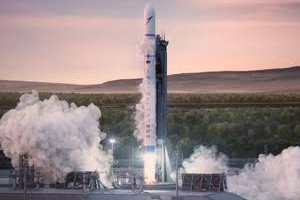
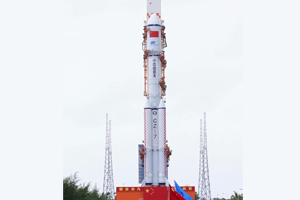
Construction at the Wenchang Satellite Launch Center (WSLC) on the island of Hainan in southeast China is set for completion this month. The 20-square kilometer ~US$330-million project includes two main launch complexes LC101 and LC102, a rocket assembly plant, a command center, two tracking stations and various offices. With relatively clear flight paths over water East toward GTO, South toward SSO and Southeast toward LEO, Hainan offers safe operational conditions close to population centers and thus provides major opportunities for community engagement. Chengmin Pei, Party chief of Wenchang, expects the launch center to boost tourism to this already well established destination, the self-styled “Hawaii” of China. There are plans for a grand space theme park and space research center. Pei estimates that the first launch could draw 300,000 visitors to the city. In addition to low-latitude (19°N) and therefore highly efficient launch profiles, the site offers more geographical advantages. Every other China launch facility is constrained by railroad transportation infrastructure to an overall rocket width of 3.35 meters, whereas coastal Wenchang allows much larger boosters, specifically the Long March 5 & 7 currently in development, to arrive by sea from manufacturing sites in Tianjin. WSLC will enable ambitious future Moon missions and large scale Space Station development. In nearby Macau on June 3-5 there is an International Symposium on Lunar and Planetary Science. (Image Credit: CNSA, CASIL, Padre Candalf)
Interplanetary Decelerator Technologies to be Tested off Kauai, Hawai`i
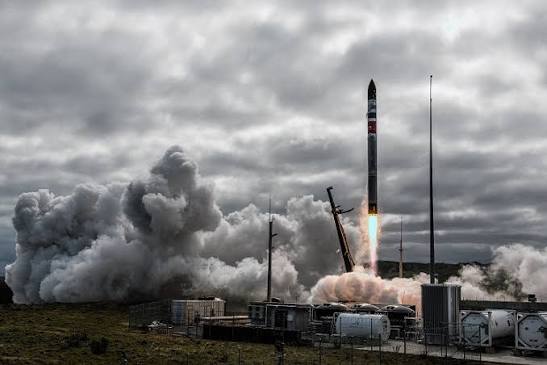
The first supersonic test flight of the Low-Density Supersonic Decelerator (LDSD) is scheduled to occur June 3 from the U.S. Navy Pacific Missile Range Facility at Barking Sands, Kauai Island, Hawaii. The mission is led by Jet Propulsion Laboratory, LDSD project manager Mark Adler (T) and principal investigator Ian Clark (B) with support from Marshall Space Flight Center and Wallops Flight Facility. During six planned tests this June, a balloon will carry the saucer-shaped vehicle to ~36.5 km and a booster rocket will lift it to ~55 km accelerating it to Mach 4. This altitude in the upper Stratosphere is most similar to the thin atmosphere of Mars. Three technologies will be tested: 2 Supersonic Inflatable Aerodynamic Decelerators (SIADs) and a Supersonic Disk Sail Parachute (SDSP). Designed after the Hawaiian pufferfish (‘o‘opu hue) to increase size without adding mass, the 6-meter-diameter and 8-meter-diameter SIAD balloon-like pressure vessels will inflate around the entry vehicle to slow it from Mach 3.5+ to Mach 2 or lower. A 30.5-meter-diameter SDSP will further slow the entry vehicle from ~Mach 2 to subsonic speeds. More flight tests are planned for 2015. If all goes well these devices could be used for Mars landings as early as 2018, and potentially for future missions to Jupiter and Saturn systems. (Image Credit: JPL, Caltech, NASA)
= All times for terrestrial events in local time unless noted.
= All times for international terrestrial events in local time unless noted.
= All times for space events, and…
= All times for international space / astro events in Hawaii Standard Time unless noted. Add 10 hours to obtain UT (‘Universal Time;’ Greenwich, England).
Jun 2 — ISS, LEO: Six-member crew preparing for Progress 53P undocking scheduled Jun 9, setting up METERON investigation to test remote control of Earth-based robots; 2 Russia & 3 USA EVAs planned during Expedition 40.
Jun 2 — Tiangong-1, LEO: Uncrewed station undergoing periodic in-orbit inspections, continuing to operate normally; scientific experiments, spacecraft platform testing to be conducted.
Jun 2 — Chang’e-3 Lander & Yutu Rover, Sinus Iridum / Mare Imbrium, 44.12°N 19.51°W, Moon Surface: Spacecraft, hibernating in Lunar Night 6, should continue to respond to ground control teams, perform various scientific investigations.
Jun 2 — Cassini, Saturn Orbit: Now on Saturn revolution 217, spacecraft making observations with 12 instruments; close flyby of Dione (516 km), distant flybys of 6 other moons set for Jun 16.
Jun 2 — Golden Spike Company, Boulder CO: NewSpace company advancing plans to offer Human Moon missions – US$1.55B for 2 astronauts / 2 Moonwalks / 50 kg of return samples or US$900M for 2-astronaut week-long orbital mission.
Jun 2 — XCOR Aerospace Inc., Mojave CA: Working on FAA spaceport license, hangar renovations to establish Research and Development Center in Midland TX; recently received US$14.2M investment.
Jun 2 — Made in Space, Moffett Field CA: Continuing to refine & test 3D printer scheduled to fly to ISS aboard SpaceX CRS 5 Dragon in October, will be 1st 3D printer in space; more advanced version to launch in 2015.
Jun 2-4 — International Astronautical Federation, UNESCO, ESA, JAXA, Paris, France:Global Space Applications Conference; at United Nations Educational, Scientific and Cultural Organization (UNESCO) HQ.
NLT Jun — CNSA, Wenchang Satellite Center, Hainan, China: Construction of Wenchang Satellite Center, also known as Hainan Space Launch Center, able to launch 10-12 rockets annually including Long March 5 and Long March 7, to be completed this month; will be China’s fourth and lowest latitude launch facility at 19° N.
NET Jun — CNSA, Launch Chang’e-5 Test Satellite, Xichang Satellite Launch Center, China: To launch Chang’e-5 sample return test satellite to Moon orbit; will attempt lunar orbit transfer and return to Earth.
Jun 1-5 — American Astronomical Society, Boston MA:224th Meeting of the AAS; at Westin Copley Place hotel.
Jun 3 — The Space Show, Tiburon CA / Online: Dr. David Livingston talks with Clay Mowry, head of Arianespace U.S. subsidiary.
Jun 3-5 — National Astronomical Observatories, Chinese Academy of Sciences, Macau University of Science and Technology, et al, Macau, China:International Symposium on Lunar and Planetary Science; to focus on exchange of Lunar & Planetary exploration data, especially related to Chang’e-3, LRO, other missions.
Jun 3 – Jun 2015 — Jet Propulsion Laboratory, Caltech/NASA, USN Pacific Missile Range Facility, Barking Sands, Kauai HI: NASA to test Low-Density Supersonic Decelerator (LDSD) for Mars entry vehicles; planned tests will boost vehicle up to 54.8 km using balloon and rocket stages; Jun 3 launch 08:00-09:30 HST, live coverage available.
Jun 3 — Asteroid 2014 KH39: Near-Earth flyby (0.003 AU).
Jun 3 — Asteroid 2014 KB46: Near-Earth flyby (0.054 AU).
Jun 3 — Asteroid 2014 HD3: Near-Earth flyby (0.088 AU).
Jun 4 – Aug 10 — Johns Hopkins University Applied Physics Laboratory, NASA, Laurel MD:2014 Internship Program; summer projects for students interested in working on NASA missions or space-related research opportunities at APL.
Includes ~150 meetings covering the fields of COSPAR Scientific Commissions / Panels / Task Groups, such as SC B: The Earth-Moon System, Planets, and...
From 02 to 07 August 2026, a few thousand geoscientists across diverse disciplines will gather at the 23rd annual meeting of the Asia Oceania Geosciences...
Virtual Series 2026 will offer deeper conversations on why PQC matters and the practical steps businesses should be taking; starts 1:00 pm AEST. Featuring:...
This international lunar science meeting has two objectives: to provide a platform for leading experts to review recent advances across lunar research, from the...
At CSIR International Convention Centre. Key topics are Earth Observation, Developing Space Tourism, Space Supply Manufacturing. Cultural tours are offered.
Participants will receive theoretical and hands-on training in electron imaging and X-ray spectroscopy for application to planetary samples. This training opportunity is targeted at...
"Leading Australia’s Space Future for Our Strategic Advantage". Southern Space 2026 brings together decision-makers who set the direction for Australia’s space sector. It is...
A total solar eclipse with a magnitude of 1.0386 (greatest eclipse 17:47:06 UTC) will be visible in parts of Greenland, Iceland, northern Russia, the Atlantic...
Includes presentation of the Neil Armstrong Award of Excellence, activities for the new class of Astronaut Scholars, 2-day Technical Conference where Scholars present their...
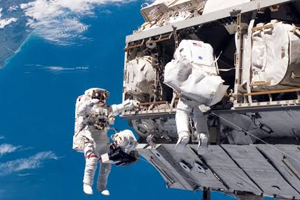
During U.S. spacewalk 97, two astronauts will replace a Space-to-Ground antenna on the orbital complex. The antenna is a critical communication system NASA uses...
Key themes include: Characterizing exoplanet-host solar-like stars; Star-planet interactions; Planet populations around solar-like stars. At University of Liège.
India orbiter surpasses another full year in lunar polar orbit since reaching the Moon in 2019; Chandrayaan-2 lander and rover were unsuccessful in lunar...
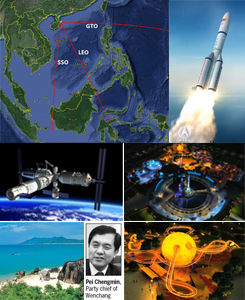 Construction at the Wenchang Satellite Launch Center (WSLC) on the island of Hainan in southeast China is set for completion this month. The 20-square kilometer ~US$330-million project includes two main launch complexes LC101 and LC102, a rocket assembly plant, a command center, two tracking stations and various offices. With relatively clear flight paths over water East toward GTO, South toward SSO and Southeast toward LEO, Hainan offers safe operational conditions close to population centers and thus provides major opportunities for community engagement. Chengmin Pei, Party chief of Wenchang, expects the launch center to boost tourism to this already well established destination, the self-styled “Hawaii” of China. There are plans for a grand space theme park and space research center. Pei estimates that the first launch could draw 300,000 visitors to the city. In addition to low-latitude (19°N) and therefore highly efficient launch profiles, the site offers more geographical advantages. Every other China launch facility is constrained by railroad transportation infrastructure to an overall rocket width of 3.35 meters, whereas coastal Wenchang allows much larger boosters, specifically the Long March 5 & 7 currently in development, to arrive by sea from manufacturing sites in Tianjin. WSLC will enable ambitious future Moon missions and large scale Space Station development. In nearby Macau on June 3-5 there is an International Symposium on Lunar and Planetary Science. (Image Credit: CNSA, CASIL, Padre Candalf)
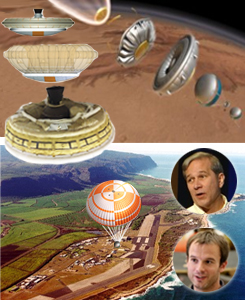 The first supersonic test flight of the Low-Density Supersonic Decelerator (LDSD) is scheduled to occur June 3 from the U.S. Navy Pacific Missile Range Facility at Barking Sands, Kauai Island, Hawaii. The mission is led by Jet Propulsion Laboratory, LDSD project manager Mark Adler (T) and principal investigator Ian Clark (B) with support from Marshall Space Flight Center and Wallops Flight Facility. During six planned tests this June, a balloon will carry the saucer-shaped vehicle to ~36.5 km and a booster rocket will lift it to ~55 km accelerating it to Mach 4. This altitude in the upper Stratosphere is most similar to the thin atmosphere of Mars. Three technologies will be tested: 2 Supersonic Inflatable Aerodynamic Decelerators (SIADs) and a Supersonic Disk Sail Parachute (SDSP). Designed after the Hawaiian pufferfish (‘o‘opu hue) to increase size without adding mass, the 6-meter-diameter and 8-meter-diameter SIAD balloon-like pressure vessels will inflate around the entry vehicle to slow it from Mach 3.5+ to Mach 2 or lower. A 30.5-meter-diameter SDSP will further slow the entry vehicle from ~Mach 2 to subsonic speeds. More flight tests are planned for 2015. If all goes well these devices could be used for Mars landings as early as 2018, and potentially for future missions to Jupiter and Saturn systems. (Image Credit: JPL, Caltech, NASA)
 = All times for terrestrial events in local time unless noted.
 = All times for international terrestrial events in local time unless noted.
 = All times for space events, and…
 = All times for international space / astro events in Hawaii Standard Time unless noted. Add 10 hours to obtain UT (‘Universal Time;’ Greenwich, England).