ISS Expedition 42/43 Ready to Launch, Continue Human Presence in Space
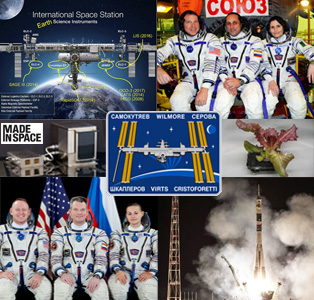
International Space Station Expedition 42/43 crew (TR) Samantha Cristoforetti of ESA, Terry Virts of NASA and Anton Shkaplerov of Roscosmos are set to launch to LEO November 24 at 03:01 in Soyuz TMA-15M from Baikonur Cosmodrome in Kazakhstan. They will travel on a 4-orbit, 6-hour journey before joining (BL) Commander Barry Wilmore of NASA, Alexander Samokutyaev of Roscosmos and Yelena Serova of Roscosmos. Virts will take Command of the ISS March 12 when Exp 42 crew returns to Earth. Soyuz TMA-15M will return the Exp 43 crew to Earth May 11, 2015. The international team will work with the first 3D printer in Space, and experiments involving vegetable plant growth, colloids, antibiotic effectiveness, mouse stem cells and human physical / psychological changes. ISS external experiments Alpha Magnetic Spectrometer (particle physics experiment), RapidScat (ocean wind observation) and Optical Payload for Lasercomm Science (OPALS – optical communications investigation) continue collecting and transmitting data. Cumulative crew time on the ISS has now exceeded 5,135 days, and ISS has been in orbit more than 5,848 days. Expedition 42 is depicted in the film Gravity, and a poster was created to commemorate its connection to Hitchhikers Guide to Galaxy. (Image Credit: NASA)
MONDAY
Nov 24 — ISS, LEO: Expedition 42 installing & calibrating Made in Space 3D printer, working with Seedling Growth experiment, transferring cargo from ATV-5 & Progress 57P; new crew undergoing ISS orientation.
Nov 24 — Lunar Reconnaissance Orbiter,Moon Orbit: Traveling in elliptical 30 x 180-km altitude orbit passing over lunar South Pole, collecting data on radiation, permanently shadowed regions, landing sites.
Nov 24 — Juno,Jupiter Trajectory: In excellent health, operating nominally, ~626M km from Earth & 588 days from Jupiter Orbit Insertion; traveling at 47,043 kph with 35-minute one-way radio signal.
Nov 24 — RSA, Launch Soyuz TMA-15M / ISS 41S, Baikonur Cosmodrome, Kazakhstan: An RSA Soyuz rocket set to launch members of Expedition 42/43 to ISS: Samantha Cristoforetti of ESA, Terry Virts of NASA, Anton Shkaplerov of RSA; 03:01 local time, live coverage available.
Nov 24 — Ad Astra Rocket Co., Webster TX: NewSpace company working to develop Variable Specific Impulse Magnetoplasma Rocket (VASIMR) engine with NASA collaboration; could be used for future ISS reboost, lunar cargo delivery, satellite repositioning / refueling, deep-space robotic missions.
Nov 24 — Blue Origin LLC,Kent WA: New unfunded Space Act Agreement milestones for NASA Commercial Crew Development to be met including testing of propellant tank, BE-3 engine, and pusher escape system.
Nov 24 — BoldlyGo Institute,New York NY: Planning to build, launch scientific space missions including Mars sample return mission & ASTRO-1 space telescope; BoD includes Jon Morse, Laurie Leshin, Scott Parazynski.
= All times for terrestrial events in local time unless noted.
= All times for international terrestrial events in local time unless noted.
= All times for space events, and…
= All times for international space / astro events in Hawaii Standard Time unless noted. Add 10 hours to obtain UT (‘Universal Time;’ Greenwich, England).
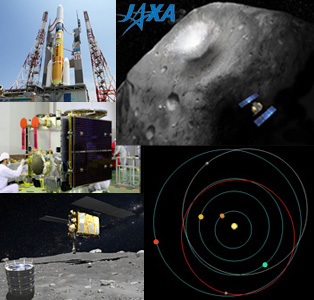
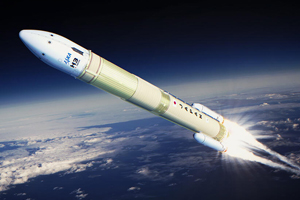
The Japan Aerospace Exploration Agency is set to launch Hayabusa 2 asteroid explorer mission on H-2A Launch Vehicle No. 26 from Tanegashima Space Center on Sunday November 30. The 590-kg spacecraft is intended to reach the Asteroid 1999 JU3 by 2018, using specially built ion engines capable of producing 10 millinewtons thrust, improving on the original Hayabusa engines by over 20%. The selected 920-meter long asteroid is thought to be a C-type rocky asteroid with more organic or hydrated minerals than the S-type Itokawa asteroid explored previously by Hayabusa. The mission will spend about 1.5 years collecting data and samples, including the use of a “crackup installation” to impact and break up the surface in order to collect sub-surface regolith. The mission also carries 3 micro-rovers, MINERVA, and a small secondary lander, MASCOT, provided by Germany DLR and France CNES with additional instruments and the capability to jump from an initial landing site to another location. Near the end of 2019 Hayabusa 2 is expected to depart 1999 JU3. Upon arrival back to Earth orbit, a specialized re-entry capsule will detach and enter Earth atmosphere at 12 km/s, hopefully carrying the samples safely back to scientists. It is hoped that these experiments and related research will shed light on the origins and evolution of the Solar System and materials for life. (Image Credit: JAXA, Akihiro Ikeshita)
Nov 27 — Moon: At perigee (distance 369,454 km), 12:54.
Nov 27 — Asteroid 2014 WR6: Near-Earth flyby (0.045 AU).
Nov 27 — Asteroid 2014 WA5: Near-Earth flyby (0.057 AU).
Nov 27 — Asteroid 2014 TX57: Near-Earth flyby (0.072 AU).
FRIDAY
Nov 28 — International Launch Services, Launch Proton / Astra 2G, Baikonur Cosmodrome, Kazakhstan: International Launch Services Proton rocket with Breeze M upper stage to launch ASTRA 2G communications satellite for SES of Luxembourg.
Nov 28 — Space Center Houston, Houston TX:Lunch with an Astronaut, Leroy Chiao; US$49.95 adult.
SATURDAY
Nov 29 – Dec 4 — Northwestern University Center for Interdisciplinary Exploration and Research in Astrophysics,Waikoloa HI:Extreme Solar Systems III.
Nov 29 — Moon: At first quarter, 00:06.
SUNDAY
Nov 30 — JAXA, Launch H-2A / Hayabusa 2, Tanegashima Space Center, Japan: JAXA Hayabusa 2 Asteroid Explorer mission to launch today; expected to arrive at C-type asteroid “1999 JU3” in 2018, study for about 1.5 years and return to Earth 2020.
Nov 30 — ISC Kosmotras, Launch Dnepr / ASNARO 1,Dombarovsky, Russia: Dnepr rocket to launch the ASNARO 1 Earth observation satellite for Japan Institute for Unmanned Space Experiment Free Flyer, and 4 microsatellites.
Includes ~150 meetings covering the fields of COSPAR Scientific Commissions / Panels / Task Groups, such as SC B: The Earth-Moon System, Planets, and...
From 02 to 07 August 2026, a few thousand geoscientists across diverse disciplines will gather at the 23rd annual meeting of the Asia Oceania Geosciences...
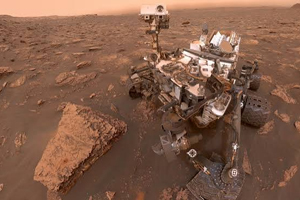
NASA Curiosity (Mars Science Laboratory) rover surpasses another full year of operations on Mars surface today; launched Nov 26, 2011 – landed Aug 5,...
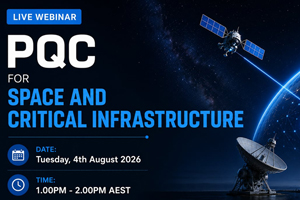
Virtual Series 2026 will offer deeper conversations on why PQC matters and the practical steps businesses should be taking; starts 1:00 pm AEST. Featuring:...
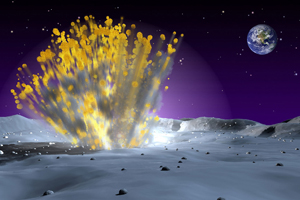
This international lunar science meeting has two objectives: to provide a platform for leading experts to review recent advances across lunar research, from the...
At CSIR International Convention Centre. Key topics are Earth Observation, Developing Space Tourism, Space Supply Manufacturing. Cultural tours are offered.
Participants will receive theoretical and hands-on training in electron imaging and X-ray spectroscopy for application to planetary samples. This training opportunity is targeted at...
"Leading Australia’s Space Future for Our Strategic Advantage". Southern Space 2026 brings together decision-makers who set the direction for Australia’s space sector. It is...
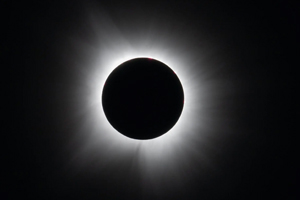
A total solar eclipse with a magnitude of 1.0386 (greatest eclipse 17:47:06 UTC) will be visible in parts of Greenland, Iceland, northern Russia, the Atlantic...
Includes presentation of the Neil Armstrong Award of Excellence, activities for the new class of Astronaut Scholars, 2-day Technical Conference where Scholars present their...
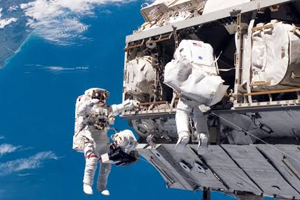
During U.S. spacewalk 97, two astronauts will replace a Space-to-Ground antenna on the orbital complex. The antenna is a critical communication system NASA uses...

 = All times for terrestrial events in local time unless noted.
 = All times for international terrestrial events in local time unless noted.
 = All times for space events, and…
 = All times for international space / astro events in Hawaii Standard Time unless noted. Add 10 hours to obtain UT (‘Universal Time;’ Greenwich, England).