SpaceX To Launch DSCOVR Mission, Attempt 2nd Falcon 9 Booster Landing on Platform
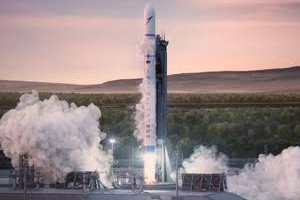
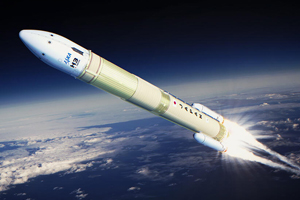
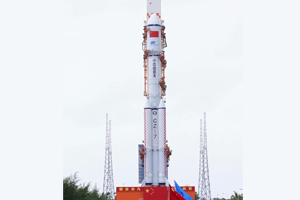
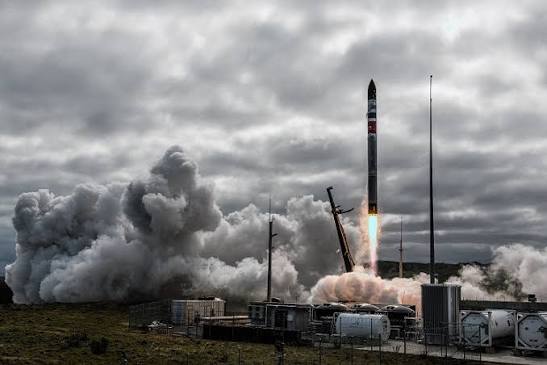
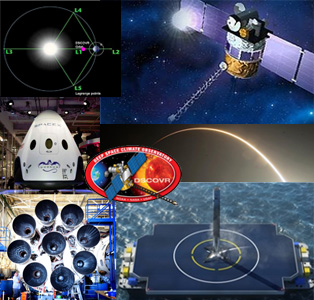
SpaceX is preparing to launch its Falcon 9 v1.1 rocket on February 8 from Cape Canaveral AFS SLC-40 in Florida at 18:10 EST. It will loft Deep Space Climate Observatory (DSCOVR) to the Sun-Earth L1 Lagrange Point about 1.5M km from Earth to provide real-time solar wind and Coronal Mass Ejection monitoring capabilities. It will also measure radiation reflected and emitted by Earth and provide multispectral images of the sunlit side of Earth. This will be the first of two Orbital/Suborbital Program-3 (OSP-3) launches for the US Air Force. SpaceX will conduct a second attempt to land the Falcon 9 core stage on the Autonomous Spaceport Drone Ship (ASDS) floating platform which will be located 320 km northeast of the launch site, and is outfitted with thrusters and able to hold a position within 3 meters. The reentry burn utilizes 3 of the 9 Merlin 1D engines to rotate the booster and perform a supersonic retropropulsion burn. Elon Musk puts the chance of successful recovery at 50%. Eventually the goal will be to return the boosters to designated site on land and reuse them in future launches. SpaceX is also on track for getting humans into space by 2017 for NASA CCiCap. The first uncrewed flight of the Dragon Crew Module is planned for late 2016, and crewed test flight early 2017. (Image Credit:NASA / WMAP Science Team, SpaceX, AP Photo/John Raoux)
MONDAY
Feb 2 — ISS, LEO: Expedition 42 preparing batteries & checking fans / components in spacesuits for upcoming EVAs, transferring cargo to / from Dragon CRS-5, Progress 57 & ATV-5; working with Magvector Earth magnetic field study, ‘Coarsening in Solid Liquid Mixtures-2’ experiment.
Feb 2 — Mars Odyssey, Mars Orbit: NASA spacecraft studying Mars for water, ice, geology, radiation & providing communications relays for craft on Mars surface; holds record for longest-surviving continually active spacecraft in orbit around a planet other than Earth.
Feb 2 — New Horizons, Pluto Trajectory: Now more than 9 years in space, craft imaging Pluto system from more than 1.6B km away, will help team gauge distance to Pluto & keep trajectory on course; images to be released to public next month.
Feb 2 — Bigelow Aerospace LLC, Las Vegas NV: NewSpace company to send BEAM inflatable module to ISS in Sep, first step toward commercial space station; aiming to land functional lunar bases on surface of Moon within 10 years.
Feb 2 — Made in Space Inc., Moffett Field CA: 3D printer at ISS will continue testing technologies for manufacturing in space; successful 4 months of testing resulted in 14 unique objects, 25 total parts printed.
Feb 2 — Dhruva Space, Bengaluru, India: Developing 12-kg satellite for AmSat India, partnering with Berlin Space Technologies to establish first commercial small satellites manufacturing facility in India.
Feb 2 — NASA, Multiple Locations USA: NASA centers open to media & social media for “State of NASA” events, to discuss agency work on its journey to Mars; featuring Charles Bolden, live coverage available, starts 13:30 EST.
= All times for terrestrial events in local time unless noted.
= All times for international terrestrial events in local time unless noted.
= All times for space events, and…
= All times for international space / astro events in Hawaii Standard Time unless noted. Add 10 hours to obtain UT (‘Universal Time;’ Greenwich, England).
Paris Space Week and Launch of ESA Experimental Reentry Vehicle
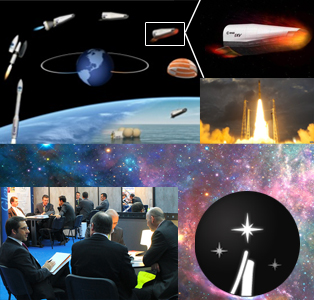
A premier global B2B space event dedicated to launch vehicles, satellites, and space-related technologies, Paris Space Week, takes place February 4-5 at Paris-Orly Airport, France. It brings together global decision-makers involved in the design, building and testing of all kinds of space related systems. The event is organized by ASTECH Paris Region and PROXIMUM Group with support from OL&DI Consulting, Royal Aeronautical Society, Society of Satellite Professionals International and Euclid Consortium as a place for end-users to connect with solution providers, a meeting place for industry leaders, suppliers, buyers, manufactures and the supply chain for civil and commercial space. The event is expected to include 12,500 pre-scheduled business meetings, and 1,000 participating decision-makers from 40 countries, including CNES, ISA, ESA and other major space agency representatives. A feature of the event will be an introduction to Euclid, the ESA space mission to map the Dark Universe, provided by Professor Yannick Mellier from the Astrophysics Institute of Paris-CNRS-UPMC. On February 11, ESA plans to use a Vega rocket to launch the Intermediate eXperimental Vehicle on a 100-minute suborbital flight test to an altitude of about 420 km before it returns to glide through Earth atmosphere at hypersonic speeds of about 7.5 km/s making use of a lifting body design and two movable flaps for reentry flight control. The primary objective of this pathfinder is to test and qualify technologies for use in orbital transportation systems of the future. (Image Credit: Paris Space Week, ESA)
Feb 2 — The Space Show, Online / Tiburon CA: Dr. David Livingston talks with Dr. Cameron Smith of Professor at Portland State College about Icarus Interstellar.
Feb 3 — Moon: Full (Snow / Wolf / Hunger Moon), 13:09; 5.0° SSW of Jupiter, 20:00.
Feb 3 — Asteroid 2013 BZ45: Near-Earth flyby (0.065 AU).
WEDNESDAY
Feb 4 — INTErnational Gamma-Ray Astrophysics Laboratory (INTEGRAL) OTM-3, LEO: ESA / NASA / RSA INTEGRAL space telescope 3rd Orbital Trim Maneuver planned for today; will set spacecraft on path to continue science observations until early 2020s when fuel supply runs out; expected to reenter Earth atmosphere due to natural orbit decay in Feb 2029.
Feb 4 — Silicon Valley Space Center, AIAA San Francisco Section, Mountain View CA: Tech Talks: An Affordable Global Satellite Ground Network; Mike Carey to discuss the developing ATLAS commercial global ground network for micro-, nano- and CubeSats.
Feb 5 — ISS, LEO: Expedition 42 In-Flight Educational Event with the University of California – Davis and Barry Wilmore & Terry Virts of NASA, Samantha Cristoforetti of ESA; live coverage available, 17:45 UT.
Feb 5 — Moon: At apogee (distance 405,705 km), 20:00.
Feb 5 — Asteroid 2015 BX509: Near-Earth flyby (0.091 AU).
FRIDAY
Feb 6 — Jupiter: At opposition, 08:00.
SATURDAY
Feb 7 — Asteroid 2015 BF92: Near-Earth flyby (0.022 AU).
Feb 7 — Asteroid 2009 DT10: Near-Earth flyby (0.055 AU).
SUNDAY
Feb 8 — SpaceX, Launch Falcon 9 / DSCOVR,Cape Canaveral AFS FL: SpaceX Falcon 9 rocket set to launch USAF, NOAA, NASA Deep Space Climate Observatory to monitor space weather, Earth climate.
Feb 8 — Alpha Centaurid Meteor Shower Peak: Appearing to radiate from Centaurus & traveling at ~56 km/sec, shower can produce up to 7 meteors per hour, peak at 02:00; visibility mostly contained to Southern Hemisphere.
Includes ~150 meetings covering the fields of COSPAR Scientific Commissions / Panels / Task Groups, such as SC B: The Earth-Moon System, Planets, and...
From 02 to 07 August 2026, a few thousand geoscientists across diverse disciplines will gather at the 23rd annual meeting of the Asia Oceania Geosciences...
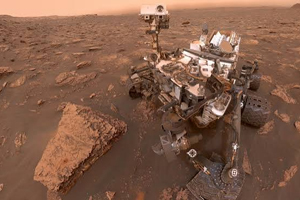
NASA Curiosity (Mars Science Laboratory) rover surpasses another full year of operations on Mars surface today; launched Nov 26, 2011 – landed Aug 5,...
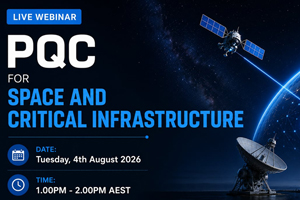
Virtual Series 2026 will offer deeper conversations on why PQC matters and the practical steps businesses should be taking; starts 1:00 pm AEST. Featuring:...
This international lunar science meeting has two objectives: to provide a platform for leading experts to review recent advances across lunar research, from the...
At CSIR International Convention Centre. Key topics are Earth Observation, Developing Space Tourism, Space Supply Manufacturing. Cultural tours are offered.
Participants will receive theoretical and hands-on training in electron imaging and X-ray spectroscopy for application to planetary samples. This training opportunity is targeted at...
"Leading Australia’s Space Future for Our Strategic Advantage". Southern Space 2026 brings together decision-makers who set the direction for Australia’s space sector. It is...
A total solar eclipse with a magnitude of 1.0386 (greatest eclipse 17:47:06 UTC) will be visible in parts of Greenland, Iceland, northern Russia, the Atlantic...
Includes presentation of the Neil Armstrong Award of Excellence, activities for the new class of Astronaut Scholars, 2-day Technical Conference where Scholars present their...
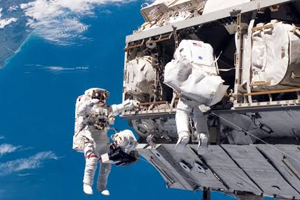
During U.S. spacewalk 97, two astronauts will replace a Space-to-Ground antenna on the orbital complex. The antenna is a critical communication system NASA uses...

 = All times for terrestrial events in local time unless noted.
 = All times for international terrestrial events in local time unless noted.
 = All times for space events, and…
 = All times for international space / astro events in Hawaii Standard Time unless noted. Add 10 hours to obtain UT (‘Universal Time;’ Greenwich, England).