Rosetta Skimming by Comet Surface, New Horizons Imaging Pluto System, Dawn Approaching Ceres
The ESA Rosetta spacecraft orbiting the Jupiter-family Comet 67P/Churyumov-Gerasimenko is planning to come within 6 km of its surface on February 14 in order to take high resolution images and collect data on the comet surface, coma and tail, with 12 science instruments. The Philae lander may become responsive again in late March, but more likely May or June, when enough solar illumination may be available to power its instruments. Rosetta orbiter will observe and track the comet through perihelion (August 13), with an end of mission planned for December 31. The NASA New Horizons spacecraft is beginning observations of the Pluto system from about 1.6B km away. It is set to fly by Pluto at 12,391 km and its largest moon Charon at 28,968 km, on July 14, making history as the first craft dedicated to explore Pluto and head into the Kuiper Belt. On March 6 NASA Dawn is scheduled to arrive at protoplanet Ceres (975 x 909 km) after orbiting and studying Vesta (578 x 560 x 458 km) from 2011-2012. It is set to become the first craft to orbit 2 different unexplored solar system bodies, furthering our knowledge of the geology and evolution of the two most massive objects in the Main Asteroid Belt. (Image Credit:ESA, Southwest Research Institute, NASA, JHU/APL, JPL, Caltech, MPS/UPD/LAM/IAA/SSO/INTA/UPM/DASP/IDA)
MONDAY
Feb 9 — ISS, LEO: Expedition 42 six-member crew with 3 RSA, 2 NASA, 1 ESA astronauts making final preparations for Dragon CRS-5 undocking Feb 10, ATV-5 undocking Feb 14, upcoming EVAs & Progress 58 arrival; harvesting plants for APEX-03 botany experiment.
Feb 9 — Chang’e-5 T1, Moon Orbit: In nearly circular ~193-km altitude orbit around Moon, will be practicing mock rendezvous techniques required for 2017 Chang’e-5 sample return mission.
Feb 9 — Juno, Jupiter Trajectory: NASA spacecraft is in excellent health, operating nominally, now 511 days away from Jupiter orbit insertion, traveling at 41,598 kph with 35-minute one-way radio signal travel time to Earth.
Feb 9 — Bigelow Aerospace LLC, Las Vegas NV: NewSpace company non-interference request addressing need to protect private sector territory, assets, activity on Moon supported by FAA.
Feb 9 — York Space Systems, Denver CO: Planning to complete AESV S-Class 3-axis stabilized spacecraft intended for constellations / earth observation / communication, capable of supporting 90 kg payloads with up to 100W of Orbit Average Power by Q3 2016.
Feb 9 — SpaceWorks Enterprises Inc., Atlanta GA: Partner of Georgia Space Grant Consortium, aerospace engineering concept design & systems analysis firm tracking progress of ~1,100 nano- & microsatellites with masses between 1-50 kg currently under development.
Feb 9 — Asteroid 2013 BS45: Near-Earth flyby (0.089 AU).
= All times for terrestrial events in local time unless noted.
= All times for international terrestrial events in local time unless noted.
= All times for space events, and…
= All times for international space / astro events in Hawaii Standard Time unless noted. Add 10 hours to obtain UT (‘Universal Time;’ Greenwich, England).
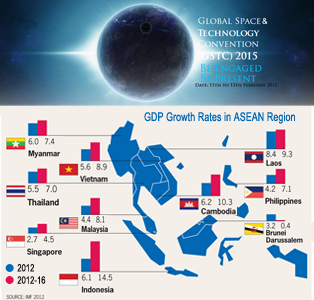
The Singapore Space & Technology Association (SSTA) is hosting GSTC 2015 on February 11-13 at Sheraton Towers, Singapore. The event is designed to showcase the latest technology in space engineering and design with Keynote speakers from Thales Alenia, ASTRIUM, UK Space Agency, EIAST, JAXA, Surrey Satellite, Arianespace, ATK, ANGKASA, LAPAN, GISTDA, Vietnam Space Center, and Philippine Science Education Institute. SSTA is a leading Southeast Asia non-profit space association helmed by Jonathan Hung, who is also VP of Sales and Business Development at Contraves Group. Hung noted in an APRSAF Interview in 2011 that Singapore, deriving a large portion of GDP from manufacturing and engineering, is well placed to serve as a regional hub for accelerating, dynamic and diverse Southeast Asia space activities. Southeast Asia holds a large number of costal near-equatorial areas with clear easterly flight paths, and could be central to the evolution of Pacific Space Access facilities in the near future. Moreover, with about 4.5M km2 in area, 618M people and a combined 2012 GDP of US$3.7 Trillion, SEA has the potential to join Russia, USA, Europe, India, China, and Japan as the 7th major spacefaring power. This can be advanced by continuing to build regional cooperation and cohesiveness through organizations like ASEAN, SEAAN, APEC, APRSAF and SEAGames to support participation in ambitious next generation missions; while also developing and coordinating indigenous capabilities and leveraging existing economic and scientific assets, as well as geographical advantages, on a regional scale. Drawing together resources into internationally collaborative projects should help build experience and knowledge in leading 21st Century Exploration and Enterprise. (Image Credit: SSTA, IMF 2012)
Feb 4 — ESA, Paris, France: Welcomes Estonia as 21st member; Estonia has astronomy and astrophysics research facilities with Observatory of Tartu, and the Universities of Tartu & Tallinn.
TUESDAY
Feb 10 — ISS, Dragon CRS-5 Undocking, LEO: SpaceX Dragon CRS-5 craft to return to Earth with 1,662 kg of science experiments, cargo, samples; 18:45 UT, live coverage available.
Feb 10 — Asteroid 2015 BM510: Near-Earth flyby (0.035 AU).
WEDNESDAY
Feb 11 — ESA, Launch Vega / Intermediate eXperimental Vehicle, Kourou, French Guiana: Vega rocket, designated flight VV04, to launch IXV project to test critical technologies for future reentry vehicles; will reach 420-km altitude, splashdown in Pacific Ocean.
Feb 12 — INTErnational Gamma-Ray Astrophysics Laboratory (INTEGRAL) OTM-4, LEO: ESA / NASA / RSA INTEGRAL space telescope may perform 4th Orbital Trim Maneuver today; spacecraft planned to continue science observations until early 2020s when fuel runs out & reenter Earth atmosphere due to natural orbit decay in Feb 2029.
Feb 12 — Cassini, Saturn Orbit: Titan flyby scheduled at 1,200-km altitude.
Feb 13 — Peninsula Astronomical Society, Los Altos Hills CA:Lecture: Imaging Extrasolar Planets; presented by Dr. Bruce Macintosh of Stanford University.
Feb 13 — Johnson Space Center, NASA, Online / Houston TX: Last day to submit lunar sample requests for Spring 2015.
Feb 13 — Moon: 9.0° N of Antares, 00:00.
SATURDAY
Feb 14 — ISS, ATV-5 Undocking, LEO: Europe final Automated Transfer Vehicle “Georges Lemaitre” to undock at 13:41 UT, live coverage available; will burn up in Earth atmosphere on Feb 27 with ISS waste.
Feb 14 — Rosetta, Comet 67P / Churyumov-Gerasimenko Orbit: ESA spacecraft to fly within 6 km of comet surface.
Feb 14 — New Horizons, Pluto Trajectory: NASA spacecraft to begin observations of Pluto / Charon today; closest approach Jul 14.
Feb 14 — Asteroid 2015 AA44: Near-Earth flyby (0.049 AU).
Feb 14 — Asteroid 2015 BV4: Near-Earth flyby (0.066 AU).
Includes ~150 meetings covering the fields of COSPAR Scientific Commissions / Panels / Task Groups, such as SC B: The Earth-Moon System, Planets, and...
From 02 to 07 August 2026, a few thousand geoscientists across diverse disciplines will gather at the 23rd annual meeting of the Asia Oceania Geosciences...
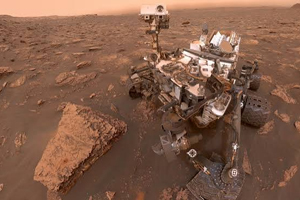
NASA Curiosity (Mars Science Laboratory) rover surpasses another full year of operations on Mars surface today; launched Nov 26, 2011 – landed Aug 5,...
Virtual Series 2026 will offer deeper conversations on why PQC matters and the practical steps businesses should be taking; starts 1:00 pm AEST. Featuring:...
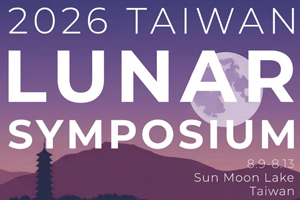
This international lunar science meeting has two objectives: to provide a platform for leading experts to review recent advances across lunar research, from the...
At CSIR International Convention Centre. Key topics are Earth Observation, Developing Space Tourism, Space Supply Manufacturing. Cultural tours are offered.
Participants will receive theoretical and hands-on training in electron imaging and X-ray spectroscopy for application to planetary samples. This training opportunity is targeted at...
"Leading Australia’s Space Future for Our Strategic Advantage". Southern Space 2026 brings together decision-makers who set the direction for Australia’s space sector. It is...
A total solar eclipse with a magnitude of 1.0386 (greatest eclipse 17:47:06 UTC) will be visible in parts of Greenland, Iceland, northern Russia, the Atlantic...
Includes presentation of the Neil Armstrong Award of Excellence, activities for the new class of Astronaut Scholars, 2-day Technical Conference where Scholars present their...
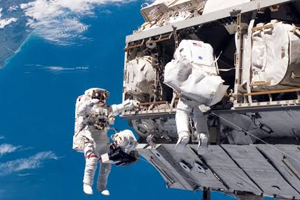
During U.S. spacewalk 97, two astronauts will replace a Space-to-Ground antenna on the orbital complex. The antenna is a critical communication system NASA uses...
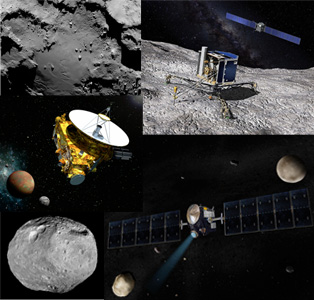 The ESA Rosetta spacecraft orbiting the Jupiter-family Comet 67P/Churyumov-Gerasimenko is planning to come within 6 km of its surface on February 14 in order to take high resolution images and collect data on the comet surface, coma and tail, with 12 science instruments. The Philae lander may become responsive again in late March, but more likely May or June, when enough solar illumination may be available to power its instruments. Rosetta orbiter will observe and track the comet through perihelion (August 13), with an end of mission planned for December 31. The NASA New Horizons spacecraft is beginning observations of the Pluto system from about 1.6B km away. It is set to fly by Pluto at 12,391 km and its largest moon Charon at 28,968 km, on July 14, making history as the first craft dedicated to explore Pluto and head into the Kuiper Belt. On March 6 NASA Dawn is scheduled to arrive at protoplanet Ceres (975 x 909 km) after orbiting and studying Vesta (578 x 560 x 458 km) from 2011-2012. It is set to become the first craft to orbit 2 different unexplored solar system bodies, furthering our knowledge of the geology and evolution of the two most massive objects in the Main Asteroid Belt. (Image Credit: ESA, Southwest Research Institute, NASA, JHU/APL, JPL, Caltech,
 = All times for terrestrial events in local time unless noted.
 = All times for international terrestrial events in local time unless noted.
 = All times for space events, and…
 = All times for international space / astro events in Hawaii Standard Time unless noted. Add 10 hours to obtain UT (‘Universal Time;’ Greenwich, England).