Astronomy from the Moon Validation Inspiring Next Steps of Exploration, Science & Enterprise
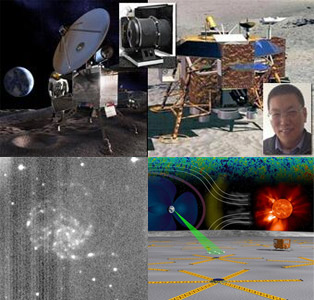
Chang’e-3 Lunar Ultraviolet Telescope – now in Lunar Night 15 – continues to send back unprecedented views of the cosmos from its unique vantage point, and with several International / Independent projects in development, the potential future for astronomy from the Moon has never been more exciting. The 150-mm diameter near ultraviolet telescope is the payload that has operated the longest and obtained the most data since the December 14, 2013 Chang’e-3 Moon landing. LUT has taken tens of thousands of images including collecting data on variable stars and imaging spiral galaxy M101 in collaboration with ILOA. Chang’e-3 data has also found that there is 100 times less water in the thin lunar atmosphere than previously believed, reinforcing that the Moon is an even more pristine venue for astronomy. Principal Investigator Jianyan Wei reports that NAOC will soon be releasing a catalog of all sky objects imaged by LUT. Future astronomy from the Moon projects are advancing as scientists continue to call for a radio telescope at the Moon’s radio-quiet far side, and as ILOA progresses on its mission to land and operate a multifunctional observatory near the Moon’s South Pole. In addition to collaborating with NAOC / CNSA on the LUT, ILOA is working with prime contractors Moon Express and Canadensys Aerospace to characterize the Malapert Mountain region, identifying locations where the ILO-1 instrument can best fulfill its observation and communication mission objectives, have access to plentiful solar power, and observe / support future human and robotic activities. (Image Credit: ILOA, NAOC, CNSA, University of Colorado)
MONDAY
Feb 16 — ISS, LEO: Expedition 42 crew to facilitate arrival of Progress 58P resupply ship, perform 2 EVAs this week & prepare for 2 more; working with Force Shoes study of exercise loads in space, Plant Rotation plant growth study, Ocular Health experiment for changes to vision during long duration space missions.
Feb 16 — ISS, U.S. EVA 29,LEO: Wilmore and Virts to perform spacewalk to install power and data cables and a communications gear, live coverage available.
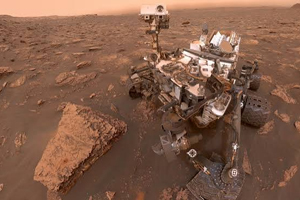
Feb 16 — Curiosity, Mount Sharp, Mars: Now about 5 months at Mount Sharp, continuing to analyze minerals of ‘Mojave 2’ sample, using cameras & spectrometer instruments to study features of interest at various levels of detail.
Feb 16 — New Horizons, Pluto Trajectory: Traveling at ~ 450,000 kph, craft is 147 days from Pluto closest approach; Long-Range Reconnaissance Imager will continue taking images of Pluto system; planning for course-correcting engine maneuver in Mar.
Feb 16 — Deep Space Industries, McLean TX: NewSpace company developing concept to use bioengineered microbes injected into space rocks to break down materials over a 10-to-20-year period ahead of mining mission.
Feb 16 — Planet Labs Inc., San Francisco CA: With newly raised US$95M investment, continuing to build 30 x 20 x 10-cm Dove Earth-imaging satellites; currently has seventy-three satellites in orbit.
Feb 16 — Mishaal Aerospace Corp., Miami FL: Testing M-SV propulsion system for first generation M-OV Orbital Vehicle to launch satellites under 500 kg to LEO; plans to develop M-LV Lunar Vehicle for lunar & inner Solar System missions.
= All times for terrestrial events in local time unless noted.
= All times for international terrestrial events in local time unless noted.
= All times for space events, and…
= All times for international space / astro events in Hawaii Standard Time unless noted. Add 10 hours to obtain UT (‘Universal Time;’ Greenwich, England).
Antarctica ‘McMurdo on the Moon’ Conference to Focus on Models for Human Space Exploration
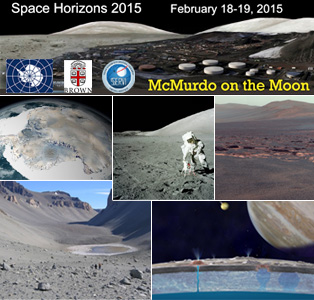
The Space Horizons 2015:McMurdo on the Moon conference – to be held February 18-19 in Providence RI at Brown University – will explore the knowledge gained from living, working and researching on the “7th continent” Antarctica, the most hostile environment on Earth, for advancing and sustaining human operations and scientific discoveries on the “8th continent” the Moon, and Mars. By accommodating commercial endeavors on other bodies in the Solar System, the Antarctic Treaty can be adapted for breakthroughs in space exploration. The Treaty (signed 1959, enacted 1961) designates Antarctica to be used for peaceful purposes, prohibits military activity and supports the freedom of scientific investigation and cooperation. Sponsored by Rhode Island Space Grant Consortia and Solar System Exploration Research Virtual Institute, the conference will include eight 30-minute sessions, a 45-minute panel discussion and 3D interactive “CAVE” tour of the Moon, Mars, and Antarctic Dry Valleys. Marco Lisi of ESA and S. Pete Worden of NASA Ames will speak on infrastructure technologies for facilitating and sustaining human exploration of the Moon and Mars. Antarctica is used as an analog for space missions because it is extreme and remote; for the Moon due to dry / cold environment, low air density, meteorite dust, high solar radiation; for Mars due to chemical weathering, dry permafrost, low temperatures, strong winds, presence of salts in the soils; and for Jupiter moon Europa for its icy surface features, and potential of a hidden liquid ocean layer and microbial life. (Image Credit: NASA, SVS, Brown University, SSERVI, RISG, JPL, Caltech, Cornell, ASU, Malcolm McLeod, Brown University)
Feb 17 — RSA, Launch Soyuz / Progress 58P, Baikonur Cosmodrome, Kazakhstan: An RSA Soyuz rocket set to launch 58th Progress cargo ship to ISS, live coverage available.
Feb 17-20 — NASA, San Francisco CA: Destination Station exhibit devoted to ISS education to travel to various SF Bay Area locations.
Feb 17-27 — Paris Institute of Astrophysics, Network of European Observatories in the North (NEON), Asiago, Italy:2015 NEON Observing School.
Feb 17 — Asteroid 2015 BF511: Near-Earth flyby (0.028 AU).
Feb 17 — Asteroid 2000 AC6: Near-Earth flyby (0.064 AU).
Feb 18-19 — SSERVI, NASA, Brown University, Providence RI:Space Horizons 2015: McMurdo on the Moon; to examine how McMurdo & other Antarctica stations can be studied as models for human bases on Moon & Mars.
Feb 18 — Moon: New Moon, 13:47; at perigee (distance 356,584 km) 21:24.
THURSDAY
Feb 19 — China Lunar New Year, Worldwide: China Lunar New Year 2015 Spring Festival marks the Year of the Goat.
Feb 19-20 — The Earthlight Foundation, New Worlds Institute, SEDS, Heinlein Prize Trust, SFF, NSS, CSF, Washington DC:Pioneering Space National Summit; gathering of national level decision makers, commercial space executives, leaders from space community with goal of creating basic SpaceMap for USA; at Ronald Reagan Building & International Trade Center.
Feb 19 — Moon: 3.6° NNW of Neptune, 01:00.
FRIDAY
Feb 20 — ISS, U.S. EVA 30,LEO: Wilmore and Virts to perform spacewalk to install power and data cables and a communications gear, live coverage available.
Feb 20 — Moon: 1.9° NNW of Venus, 14:00; 1.4° NNW of Mars, 15:00.
Feb 20 — Asteroid 416151 (2002 RQ25): Near-Earth flyby (0.051 AU).
Feb 22 — The Space Show, Online / Tiburon CA: Dr. David Livingston talks with space historian Dr. Asif Siddiqi.
Feb 22-24 — Space Exploration Alliance, Washington DC:Space Exploration Alliance Legislative Blitz; space advocates from around USA let Congress know that there is strong constituent support for an ambitious space program.
Includes ~150 meetings covering the fields of COSPAR Scientific Commissions / Panels / Task Groups, such as SC B: The Earth-Moon System, Planets, and...
From 02 to 07 August 2026, a few thousand geoscientists across diverse disciplines will gather at the 23rd annual meeting of the Asia Oceania Geosciences...
NASA Curiosity (Mars Science Laboratory) rover surpasses another full year of operations on Mars surface today; launched Nov 26, 2011 – landed Aug 5,...
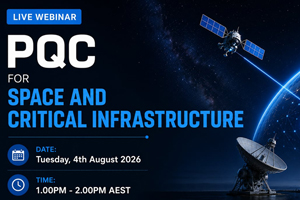
Virtual Series 2026 will offer deeper conversations on why PQC matters and the practical steps businesses should be taking; starts 1:00 pm AEST. Featuring:...
This international lunar science meeting has two objectives: to provide a platform for leading experts to review recent advances across lunar research, from the...
At CSIR International Convention Centre. Key topics are Earth Observation, Developing Space Tourism, Space Supply Manufacturing. Cultural tours are offered.
Participants will receive theoretical and hands-on training in electron imaging and X-ray spectroscopy for application to planetary samples. This training opportunity is targeted at...
"Leading Australia’s Space Future for Our Strategic Advantage". Southern Space 2026 brings together decision-makers who set the direction for Australia’s space sector. It is...
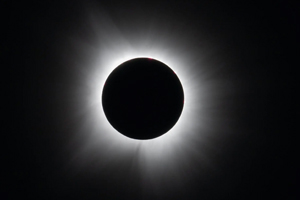
A total solar eclipse with a magnitude of 1.0386 (greatest eclipse 17:47:06 UTC) will be visible in parts of Greenland, Iceland, northern Russia, the Atlantic...
Includes presentation of the Neil Armstrong Award of Excellence, activities for the new class of Astronaut Scholars, 2-day Technical Conference where Scholars present their...
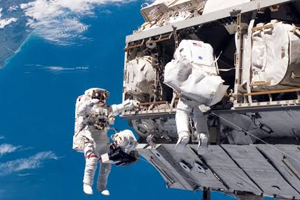
During U.S. spacewalk 97, two astronauts will replace a Space-to-Ground antenna on the orbital complex. The antenna is a critical communication system NASA uses...

 = All times for terrestrial events in local time unless noted.
 = All times for international terrestrial events in local time unless noted.
 = All times for space events, and…
 = All times for international space / astro events in Hawaii Standard Time unless noted. Add 10 hours to obtain UT (‘Universal Time;’ Greenwich, England).