Asteroid Day 2015: Respecting the Threat, Pursuing the Promise
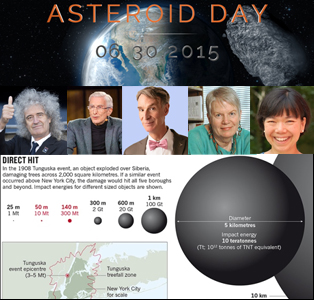
With over 50 events and counting listed around the world, Asteroid Day on June 30 is set to boost education and awareness for this issue of global importance, with a focus on how to better detect threats and how best to react. One of the highlights in the lead up to the event is the 100X Declaration, which calls for a 100-fold increase in the detection and tracking of asteroids or Near Earth Objects (NEOs) in the Solar System. The signatories include over 36 astronauts and cosmonauts as well as many other notable individuals, such as Astrophysicist and legendary rocker Brian May, UK Astronomer Royal Lord Martin Rees, President of the Planetary Society Bill Nye “The Science Guy”, SETI Institute Bernard M. Oliver Chair for SETI Jill Tarter, and co-discoverer of the Kuiper Belt Jane Luu (L-R). It is not just planetary security that leads humans to want to hunt for, analyze and rein in these objects, but also curiosity and resources. There is much to learn from asteroids about the formation and distribution of materials within solar and planetary systems, which among many things will help the search for potentially habitable exoplanets. Asteroids also bear an abundance of important resources for future recovery and utilization. Earth orbital debris mitigation may serve as a proving ground for Space enterprises interested in capture, grapple, salvage, ISRU and course alteration techniques that could scale up for use with NEOs. (Image Credit: AsteroidDay.org / Asteroid Day Foundation Ltd., Nature / G. Longo et al., 2005 (treefall); NRC, 2010 (impact energies))
MONDAY
Jun 29 — ISS, LEO: Commander Gennady Padalka & Scott Kelly to facilitate grapple / berthing of Dragon CRS 7, Mikhail Kornienko practicing telerobotically-operated rendezvous system for Progress 60 in case manual docking is required, Expedition 44 will transfer cargo & experiments from craft, work on life science, botany, technology & robotic studies.
Jun 29 — Mars Odyssey, Mars Orbit: With enough fuel to last at least 10 more years, NASA craft in extended mission phase continues to collect data on radiation environment & determine presence of 20 chemicals on surface & their distribution; launched 2001, over 60,000 orbits of Mars completed.
Jun 29 — Juno, Jupiter Trajectory: Approaching 1-year from Jupiter insertion, 2.5-meter wide craft in Quiet Cruise Phase traveling at 34,150 kph, now 745M km from Earth with one-way radio signal time of ~45 minutes.
Jun 29 — Moon Express, Moffett Field CA & KSC FL: NewSpace company flight testing MTV-1X lander, upgrading KSC complex 36, working with ILOA of Hawai`i to carry ILO-X telescope to Moon surface, as well as National Laboratories of Frascati & University of Maryland “MoonLIGHT” laser-reflecting arrays.
Jun 29 — Garvey Spacecraft Corp., Long Beach CA: To conduct Nanosat Launch Vehicle flight test program at Alaska Pacific Spaceport Complex on Kodiak Island due to location’s ability to enable access to polar orbit.
Jun 29 —Spaceflight Inc., Tukwila WA: Planning to launch SHERPA payload dispensing system at the end of 2015 to deploy 87 smallsats, arranging rideshare opportunities aboard Antares, Dnepr, Soyuz, Falcon 9 rockets & from ISS.
Jun 29 — International Space University, Glenn Research Center, NASA, Ohio University, Athens OH / Online:Webcast: The Future of Human Spaceflight; featuring Francois Spiero (CNES), Kathy Laurini (NASA), Astronaut Jean-Jacques Favier (ISU, CNES), David Kendall (ISU, Chair of UN COPUOS 2016-2017, formerly of Canadian Space Agency).
= All times
for terrestrial events in local time unless noted.
= All times for international terrestrial events in local time unless noted.
= All times for space events, and…
= All times for international space / astro events in Hawaii Standard Time unless noted. Add 10 hours to obtain UT (‘Universal Time;’ Greenwich, England).
Czech Republic Hosts 20th IAA
Humans in Space Symposium
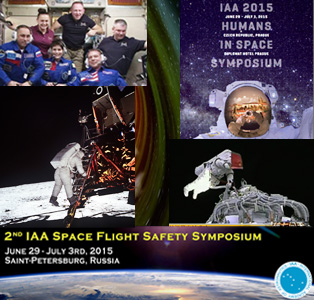
The International Academy of Astronautics and Czech Space Office are holding the 20th IAA Humans in Space Symposium in Prague on June 29 – July 3. Held every two years, the conference bolsters discussion for scientists, researchers, graduate students and instrument developers for recent advances and future plans in human spaceflight and related research. Plenary Session 1, titled Space Life Sciences: State of the Art, will feature F. Vazquez-Torres on “Strategy of the Mexican Space Agency to Enhance the Development of Space Science and Technology in Mexico,” M. Braun on “The German Space Life Sciences Program,” L. Zhao on “Life Science Experiments Onboard the Chinese (Tianzhou-1) TZ-1” and representatives from ESA and Russia. China plans to launch its Tiangong-2 core module lab to LEO in 2016, and establish permanent China human presence in space by 2022. Russia and China plan for human Moon missions around 2030. India is working toward a 2021 human space mission. NASA plans to launch humans to Cislunar space by 2021 and commercial Golden Spike Company is aiming for Moon surface missions NET 2020. Japan is hoping to launch its own astronaut around 2025. IAA is also hosting its 2nd Space Flight Safety Symposium in St. Petersburg, Russia, June 29 – July 3. Topics will include fire safety, protection of space structures from space debris collisions and micrometeoroids, propulsion systems, and radiation hazards. (Image Credit: IAA, DLR, ESA, NASA, BBC, CCTV)
Jun 29 — The Space Show, Online / Tiburon CA: Dr. David Livingston talks with Brent Sherwood from JPL about Discovery Missions.
Jun 29 – Jul 3 — International Academy of Astronautics, Czech Space Office, Prague, Czech Republic: 20th IAA Humans in Space Symposium; at Diplomat Hotel Prague.
Jun 29 – Jul 3 — International Academy of Astronautics, St. Petersburg State Polytechnical University, St. Petersburg, Russia: 2nd IAA Space Flight Safety Symposium.
Jun 30 — Leap Second Addition, Global: At very end of this day a leap second to be added to World’s clocks – which will read 11:59:60 (23:59:60); will be 16th leap second gained since 1972.
Jun 30 — ISS, SpaceX CRS 7 Rendezvous, Grapple & Berthing,LEO: ISS crew to aid in the grapple & berthing of Dragon CRS7 mission; grapple scheduled for 11:00 UT, live coverage available.
Jun 30 — Cassini, Saturn Orbit: NASA / ESA / ASI spacecraft enters 12th year of operations in Saturn orbit today; launched Oct 15, 1997.
Jun 30 — Asteroid Day Ltd., Global: Asteroid Day 2015; education, events, films and entertainment hosted by organizations and individuals to increase awareness about asteroids.
Jun 30 — B612 Foundation, California Academy of Sciences,San Francisco CA: Asteroid Day Events; featuring Ed Lu, Rusty Schweickart, Tamara Jernigan, Anousheh Ansari, Peter Jenniskens, Seth Shostak, Scott Manley, Steve Jurvetson, David Liddle, Clark Chapman, David Morrison, Ryan Wyatt; 10:00-17:00.
Jun 30 — SETI Institute,Mountain View CA: Asteroid Day Special Event; with presentations from SETI Asteroid scientists Michael Busch and Peter Jenniskens.
Jun 30 — International Space University, Glenn Research Center, NASA, Ohio University, Athens OH / Online:Webcast: The Human Side of the Columbia Accident; with guest speakers Doug Hamilton, John Connolly.
Jun 30 — Elsevier Inc. (Icarus Journal), Online: Due: Paper submissions with a focus on lunar and Solar System science relying on Lunar Reconnaissance Orbiter (LRO) data.
WEDNESDAY
NET Jul — International Launch Services, Launch Proton / Turksat 4B, Baikonur Cosmodrome, Kazakhstan: Proton rocket to deploy Turksat 4B communications satellite.
Jul 1 — Deep Space: Dawn orbiting dwarf planet Ceres, largest object in Main Asteroid belt, revealing pyramid-shaped mountain rising ~5 km from surface, unidentified bright spots in 88-km wide crater, landslides, flows, collapsed structures; continuing to search for signs of ice / potential subsurface liquid water.
Includes ~150 meetings covering the fields of COSPAR Scientific Commissions / Panels / Task Groups, such as SC B: The Earth-Moon System, Planets, and...
From 02 to 07 August 2026, a few thousand geoscientists across diverse disciplines will gather at the 23rd annual meeting of the Asia Oceania Geosciences...
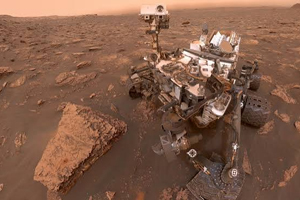
NASA Curiosity (Mars Science Laboratory) rover surpasses another full year of operations on Mars surface today; launched Nov 26, 2011 – landed Aug 5,...
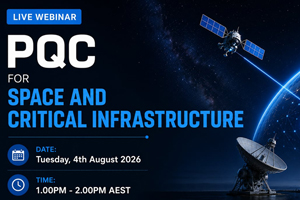
Virtual Series 2026 will offer deeper conversations on why PQC matters and the practical steps businesses should be taking; starts 1:00 pm AEST. Featuring:...
This international lunar science meeting has two objectives: to provide a platform for leading experts to review recent advances across lunar research, from the...
At CSIR International Convention Centre. Key topics are Earth Observation, Developing Space Tourism, Space Supply Manufacturing. Cultural tours are offered.
Participants will receive theoretical and hands-on training in electron imaging and X-ray spectroscopy for application to planetary samples. This training opportunity is targeted at...
"Leading Australia’s Space Future for Our Strategic Advantage". Southern Space 2026 brings together decision-makers who set the direction for Australia’s space sector. It is...
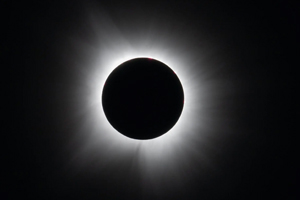
A total solar eclipse with a magnitude of 1.0386 (greatest eclipse 17:47:06 UTC) will be visible in parts of Greenland, Iceland, northern Russia, the Atlantic...
Includes presentation of the Neil Armstrong Award of Excellence, activities for the new class of Astronaut Scholars, 2-day Technical Conference where Scholars present their...
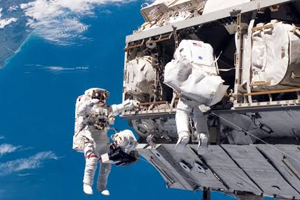
During U.S. spacewalk 97, two astronauts will replace a Space-to-Ground antenna on the orbital complex. The antenna is a critical communication system NASA uses...
 = All times
 = All times for international terrestrial events in local time unless noted.
 = All times for space events, and…
 = All times for international space / astro events in Hawaii Standard Time unless noted. Add 10 hours to obtain UT (‘Universal Time;’ Greenwich, England).