Jupiter / Saturn Systems Mission Planning and the Search for Life
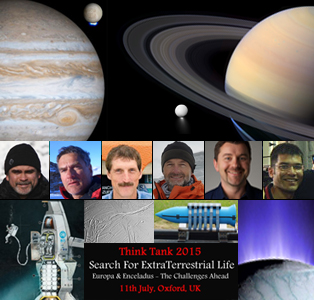
The second week of July “Space Month” overflows with excitement as New Horizons prepares for its close encounter with the Pluto system, Juno passes the 1-year mark from Jupiter insertion, and the USA and Europe solidify plans to visit the diverse water / ice / volcanic / rocky moons at the planetary center of the Solar System. On July 11 the University of Oxford, United Kingdom hosts Think Tank 2015 with the theme The Search for Extraterrestrial Life: Europa and Enceladus: The Challenges Ahead. Main topics will revolve around cost, funding, benefits and the current state of our knowledge for this strategic and comprehensive Solar System research. As stated by Dr. Alex Rogers (L-R), University of Oxford Department of Zoology, “This is not just about whether or not life is found, but also the benefits in terms of human and technical advance.” Some experts speaking at the conference will be Dr. Chris McKay (NASA Ames), Dr. Bill Stone (Stone Aerospace, Shackleton Energy Company), Dr. Andy Clarke (British Antarctic Survey), Dr. Kris Zacny (Honeybee Robotics) and Dr. Sanjay Vijendran (ESA Ice Penetrator Project). Proposals have been made for landers, orbiters and penetrator crafts to explore the potential salty, subsurface ocean worlds displaying tidal flexing from induced energy sources, water vapor and eruptive plumes. NASA 2016 budget request includes US$30M to plan its Europa orbiter mission intended for a 2020 launch. ESA is preparing to spend at least $1.1B on the 2022 JUICE (JUpiter ICy moon Explorer) mission, already under development, which may include a Russia Ganymede lander. (Image Credit: NASA, ESA, University of Oxford, IPSO, R. Silberman, iStar, Honeybee, BBC, T. Pike, M. Malmer, UCLA-MSSL, E. Twyford, Objective Europa)
MONDAY
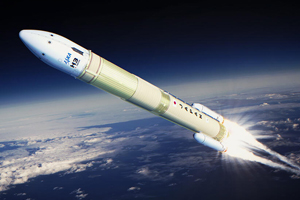
Jul 6 — ISS, LEO: Expedition 44 transferring cargo from Progress 60P, preparing for August arrival of Japan Kounotori HTV-5, continuing to study dynamic forces caused by vehicle dockings & spacewalks, collecting data on how plants sense gravity & how roots grow in space.
Jul 6 — Rosetta, Comet67P/Churyumov-Gerasimenko Orbit: Viewing more than 100 patches of water ice on surface – each a few meters in size, data indicates deep, circular pits on comet surface may be sinkholes formed when ices beneath surface sublimate or turn directly to gas.
Jul 6 — New Horizons, Pluto System Approach: Craft now one-week away from historic approach of Pluto and its moons, capturing detailed images of system, detecting frozen methane on Pluto, tracking moon orbits.
Jul 6 — Tethers Unlimited, Bothell WA: NewSpace company working to launch demo late 2015 of SpiderFab system capable of manufacturing 50-meter truss from carbon fiber spools on Earth, offering Terminator Tape for decommissioning satellites, researching ways for ISS to recycle packing material into tools or radiation shielding with 3D printer.
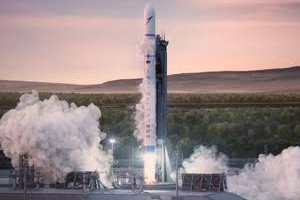
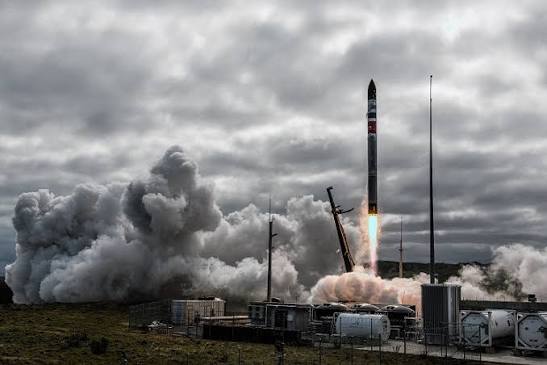
Jul 6 — Rocket Lab, Auckland, New Zealand: Developing carbon composite Electron rocket with battery-powered Rutherford engines composed mostly of 3D printed parts, planning to use Birdlings Flat in Canterbury to test & launch vehicles.
Jul 6 — Ellington Spaceport, Houston TX: Becomes the 10th FAA approved commercial Spaceport in the USA, will develop necessary infrastructure to accommodate Reusable Launch Vehicles.
Jul 6 — Earth: At aphelion, (1.01668 AU / 152,093,163 km from Sun), 10:00.
= All times
for terrestrial events in local time unless noted.
= All times for international terrestrial events in local time unless noted.
= All times for space events, and…
= All times for international space / astro events in Hawaii Standard Time unless noted. Add 10 hours to obtain UT (‘Universal Time;’ Greenwich, England).
AAS Holding ISS Research and Development Conference in Boston
The 4th International Space Station Research and Development Conference takes place July 7-9 at the Marriott Copley Hotel in central Boston MA. It is jointly organized by the American Astronautical Society, NASA and the Center for the Advancement of Science in Space (CASIS). The 3-day program includes leaders from across industry and academia connecting the latest innovations, breakthroughs and discoveries onboard ISS in areas such as microgravity, life sciences, materials development and remote sensing. There are sessions centered around teaching researchers how to take advantage of opportunities to send experiments to the ISS, and about game-changing innovations that will improve the way we live and work in space and on Earth. Featured speakers include SpaceX CEO Elon Musk, CNN Digital Correspondent Rachel Crane, Space Angels Network Director Chad Anderson, NASA Chief Technologist David Miller and Chief Scientist Ellen Stofan, Sierra Nevada Corporation VP Mark Sirangelo, NASA Director for ISS Sam Scimemi, Teledyne Brown Engineering Segment President Janice Hess, NanoRacks Managing Director Jeff Manber, and NRC Human Spaceflight Committee Member Mary Lynne Dittmar. Organizers are expecting almost 700 participants. Resupply of ISS is likely to be a high priority issue with failure of 3 different robotic resupply craft in the last 8 months. This may predicate opportunity and advantage of growing new ISS collaboration with rising space powers India and China. (Image Credit: NASA, AAS, CASIS)
Jul 7 — University of Hawai`i – Hilo, Hilo HI: Lecture: Exoplanets and the Kepler Mission; presented by Kepler project scientist Dr. Steve Howell at UH Hilo Science & Technology Building – Room 108, 19:00.
Jul 9 — Venus: At greatest illuminated extent, planet daytime side is covering more square area of sky than at any other time, therefore it is at its brightest, 19:00.
Jul 9 — Asteroid 2015 JH2: Near-Earth flyby (0.079 AU).
Jul 10 — ISRO, Launch PSLV / DMC3,Satish Dhawan Space Center, Sriharikota, India: India Polar Satellite Launch Vehicle, flying on PSLV-C28 mission, to launch DMC3 disaster monitoring satellites for Beijing-based imaging company AT21.
Jul 10 — Asteroid 2014 WU200: Near-Earth flyby (0.079 AU).
SATURDAY
Jul 11 — ARTEMIS P2, Moon Orbit: Craft begins 5th year in Moon orbit today; NASA craft collecting data on Moon interaction with Sun, originally launched with constellation of 5 satellites in 2007 to study Earth magnetosphere.
Includes ~150 meetings covering the fields of COSPAR Scientific Commissions / Panels / Task Groups, such as SC B: The Earth-Moon System, Planets, and...
From 02 to 07 August 2026, a few thousand geoscientists across diverse disciplines will gather at the 23rd annual meeting of the Asia Oceania Geosciences...
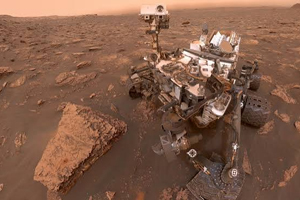
NASA Curiosity (Mars Science Laboratory) rover surpasses another full year of operations on Mars surface today; launched Nov 26, 2011 – landed Aug 5,...
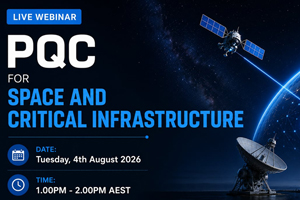
Virtual Series 2026 will offer deeper conversations on why PQC matters and the practical steps businesses should be taking; starts 1:00 pm AEST. Featuring:...
This international lunar science meeting has two objectives: to provide a platform for leading experts to review recent advances across lunar research, from the...
At CSIR International Convention Centre. Key topics are Earth Observation, Developing Space Tourism, Space Supply Manufacturing. Cultural tours are offered.
Participants will receive theoretical and hands-on training in electron imaging and X-ray spectroscopy for application to planetary samples. This training opportunity is targeted at...
"Leading Australia’s Space Future for Our Strategic Advantage". Southern Space 2026 brings together decision-makers who set the direction for Australia’s space sector. It is...
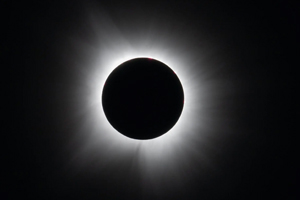
A total solar eclipse with a magnitude of 1.0386 (greatest eclipse 17:47:06 UTC) will be visible in parts of Greenland, Iceland, northern Russia, the Atlantic...
Includes presentation of the Neil Armstrong Award of Excellence, activities for the new class of Astronaut Scholars, 2-day Technical Conference where Scholars present their...
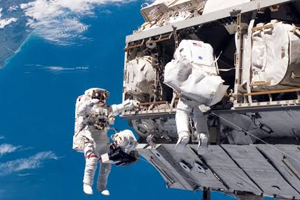
During U.S. spacewalk 97, two astronauts will replace a Space-to-Ground antenna on the orbital complex. The antenna is a critical communication system NASA uses...

 = All times
 = All times for international terrestrial events in local time unless noted.
 = All times for space events, and…
 = All times for international space / astro events in Hawaii Standard Time unless noted. Add 10 hours to obtain UT (‘Universal Time;’ Greenwich, England).