Lunar Exploration and Planetary Caves Meetings Showcase Solar System Priorities
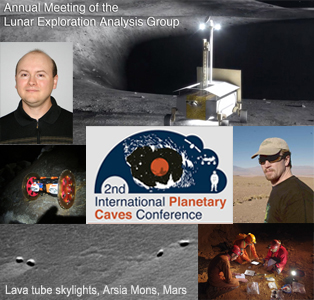
The 2015 Annual Meeting of the Lunar Exploration Analysis Group (LEAG) to be held October 20-22 at the Universities Space Research Association (USRA) Headquarters in Columbia MD. Scientists, engineers and commercial sector entrepreneurs will be working on issues involving science, exploration, and utilization of the Moon to create a sustained human space-faring capability — advancing exploration of the Solar System. Institutional support also comes from NASA and Lunar and Planetary Institute (LPI). Clive Neal of University of Notre Dame and Steve Mackwell of LPI are the Conveners with a distinguished Science Organizing Committee that includes Program Chair Samuel Lawrence (L) of Arizona State University, James Carpenter of ESA-ESTEC, Noah Petro of NASA/GSFC, Jeffrey Plescia of JHU/APL, Bob Richards of Moon Express, Greg Schmidt of NASA Ames and Charles Shearer of University of New Mexico. The 2nd International Planetary Caves Conference, at the Lowell Observatory in Flagstaff AZ on Oct. 20-23, highlights themes such as Extraterrestrial Cave Properties, Astrobiology and Biological Signatures, Cave Microclimates, Cave Detection, Robotic Exploration / Mapping and Human Habitation / Related Technologies. The program convened by J. Judson Wynne (R) includes a full day of excursions to local caves, and is supported by LPI, NASA/JPL, New Mexico Institute of Mining & Technology, Northern Arizona University, The Explorers Club, The SETI Institute (Carl Sagan Center), USRA, University of North Dakota (Grand Forks) and U.S. Geological Survey. (Image Credit: NASA / JPL-Caltech, Arizona State University, ESA)
MONDAY
Oct 19 — ISS,LEO: Expedition 45 reviewing procedures for upcoming EVA, working on spacesuits, participating in in-flight events with public, preparing coffee in specially designs cups for Capillary Beverage experiment, doing research to improve design and strength of buildings & bridges on Earth, maintaining ISS water supply system, exercise equipment & computers.
Oct 19 —Venus Climate Orbiter (Akatsuki), Heliocentric Orbit: JAXA US$300M spacecraft continuing to be monitored as trajectories for attempting Venus orbit in December & plans for observing Venus are being finalized.
Oct 19 — Rosetta, Comet 67P/Churyumov–Gerasimenko Orbit: About 216M km from Sun & 270M km from Earth, ESA craft mapping surface, studying water cycle & comet’s interaction with solar wind; layers of material reveal that comet’s “duck” shape is result of a low-speed collision between 2 separate comets in past.
Oct 19 — Bigelow Aerospace LLC,Las Vegas NV: NewSpace company 330-cubic meter volume “Bigelow Expandable Activity Module” to be delivered to ISS in Jan 2016 aboard SpaceX Falcon 9, planning to adapt modules for private space station and lunar surface.
Oct 19 — MoonSpike Limited, London, United Kingdom: Raising funds through KickStarter Campaign, aiming to build rocket to launch probe to Moon surface; team will be lead by Kristian von Bengtson (co-founder of Copenhagen Suborbital) and space entrepreneur Chris Larmour.
Oct 19 — Uwingu, Boulder CO: Founded by Alan Stern, company lets public nominate names for exoplanets & craters of Mars; working toward Nov 28 “Beam Me to Mars” message transmission to be sent through Universal Space Network at a rate of 1M bits per second.
Oct 19 — The Space Show, Online / Tiburon CA: Dr. David Livingston talks with Ben Haldeman from Planet Labs.
= All times
for terrestrial events in local time unless noted.
= All times for international terrestrial events in local time unless noted.
= All times for space events, and…
= All times for international space / astro events in Hawaii Standard Time unless noted. Add 10 hours to obtain UT (‘Universal Time;’ Greenwich, England).
JUICE Industry Day Keeps Europe Jupiter Mission on Track for 2022 Launch
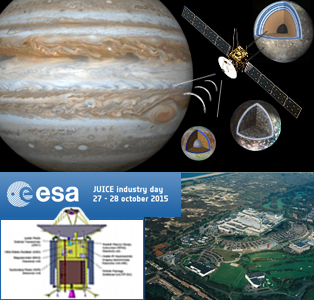
A two-day JUICE Industry Day themed Exploring the Emergence of Habitable Worlds Around Gas Giants is set to take place at ESA European Space Research and Technology Centre in Noordwijk, The Netherlands October 27-28. JUICE (JUpiter ICy moons Explorer) spacecraft prime contractor is Airbus Defence and Space SAS. This industry day will allow for competitive procurement to complete the building of the spacecraft, harmonizing and standardizing components, minimizing cost and meeting quality requirements. The 5,000-kg JUICE is intended to spend at least 3.5 years observing the gas giant’s atmosphere and plasma environment, and the surface and interior of the 3 largest icy moons, Ganymede, Europa and Callisto beginning in 2030. Ten science instruments will include radar to study subsurface structures, a magnetometer to characterize subsurface oceans on moons and Jupiter magnetic field, and a camera to image geology on moons, and Jupiter clouds, lightning and rings. Spectral-imaging from ultraviolet to sub-millimeter wavelengths will record temperatures, Jupiter aurorae, exospheres, atmospheres, and characterize ices / minerals. JUICE will look for signs of alien life, help to answer unknowns about the Jupiter system / the Solar System, and complement data found during the Juno mission. (Image Credit: ESA, NASA, JPL, Caltech)
Aug 11 – Oct 31 — International Astronomical UnionOffice for Astronomy Outreach, Online:NameExoWorlds Contest; public voting for 15 stars and 32 exoplanets.
Oct 20-22 — Lunar Exploration Analysis Group, NASA, USRA, LPI,Columbia MD:Lunar Exploration Analysis Group (LEAG) Meeting; with a focus on lunar resources & understanding the dynamic Moon; at Universities Space Research Association headquarters.
Oct 21 — Orionids Meteor Shower Peak: The 2nd of 2 showers that occur each year as a result of Earth passing through dust released by Halley’s Comet, Orionids appear to radiate from Constellation Orion, are swift (68 km/sec), can be bright & leave persistent trains; can produce between 20-70 meteors per hour.
Oct 24 — Mars Odyssey, Mars Orbit: NASA spacecraft enters 15th year in orbit around Mars today, holds record for longest-surviving continually active spacecraft in orbit around a planet other than Earth.
Includes ~150 meetings covering the fields of COSPAR Scientific Commissions / Panels / Task Groups, such as SC B: The Earth-Moon System, Planets, and...
From 02 to 07 August 2026, a few thousand geoscientists across diverse disciplines will gather at the 23rd annual meeting of the Asia Oceania Geosciences...
NASA Curiosity (Mars Science Laboratory) rover surpasses another full year of operations on Mars surface today; launched Nov 26, 2011 – landed Aug 5,...
Virtual Series 2026 will offer deeper conversations on why PQC matters and the practical steps businesses should be taking; starts 1:00 pm AEST. Featuring:...
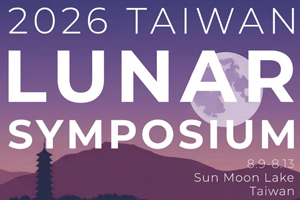
This international lunar science meeting has two objectives: to provide a platform for leading experts to review recent advances across lunar research, from the...
At CSIR International Convention Centre. Key topics are Earth Observation, Developing Space Tourism, Space Supply Manufacturing. Cultural tours are offered.
Participants will receive theoretical and hands-on training in electron imaging and X-ray spectroscopy for application to planetary samples. This training opportunity is targeted at...
"Leading Australia’s Space Future for Our Strategic Advantage". Southern Space 2026 brings together decision-makers who set the direction for Australia’s space sector. It is...
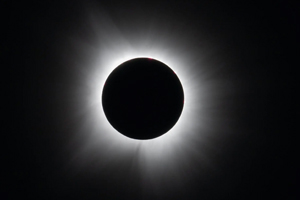
A total solar eclipse with a magnitude of 1.0386 (greatest eclipse 17:47:06 UTC) will be visible in parts of Greenland, Iceland, northern Russia, the Atlantic...
Includes presentation of the Neil Armstrong Award of Excellence, activities for the new class of Astronaut Scholars, 2-day Technical Conference where Scholars present their...
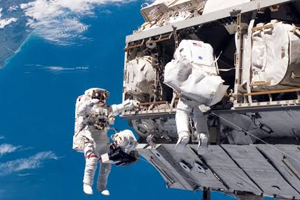
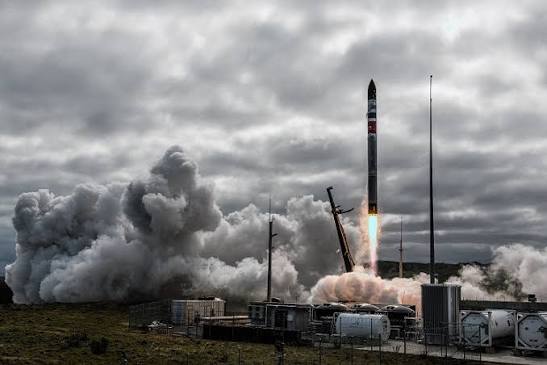
During U.S. spacewalk 97, two astronauts will replace a Space-to-Ground antenna on the orbital complex. The antenna is a critical communication system NASA uses...
 The 2015 Annual Meeting of the Lunar Exploration Analysis Group (LEAG) to be held October 20-22 at the Universities Space Research Association (USRA) Headquarters in Columbia MD. Scientists, engineers and commercial sector entrepreneurs will be working on issues involving science, exploration, and utilization of the Moon to create a sustained human space-faring capability — advancing exploration of the Solar System. Institutional support also comes from NASA and Lunar and Planetary Institute (LPI). Clive Neal of University of Notre Dame and Steve Mackwell of LPI are the Conveners with a distinguished Science Organizing Committee that includes Program Chair Samuel Lawrence (L) of Arizona State University, James Carpenter of ESA-ESTEC, Noah Petro of NASA/GSFC, Jeffrey Plescia of JHU/APL, Bob Richards of Moon Express, Greg Schmidt of NASA Ames and Charles Shearer of University of New Mexico. The 2nd International Planetary Caves Conference, at the Lowell Observatory in Flagstaff AZ on Oct. 20-23, highlights themes such as Extraterrestrial Cave Properties, Astrobiology and Biological Signatures, Cave Microclimates, Cave Detection, Robotic Exploration / Mapping and Human Habitation / Related Technologies. The program convened by J. Judson Wynne (R) includes a full day of excursions to local caves, and is supported by LPI, NASA/JPL, New Mexico Institute of Mining & Technology, Northern Arizona University, The Explorers Club, The SETI Institute (Carl Sagan Center), USRA, University of North Dakota (Grand Forks) and U.S. Geological Survey. (Image Credit: NASA / JPL-Caltech, Arizona State University, ESA)
 = All times
 = All times for international terrestrial events in local time unless noted.
 = All times for space events, and…
 = All times for international space / astro events in Hawaii Standard Time unless noted. Add 10 hours to obtain UT (‘Universal Time;’ Greenwich, England).