Celebrating Wernher von Braun at 8th AAS Symposium, and 15 Years of Humans at ISS
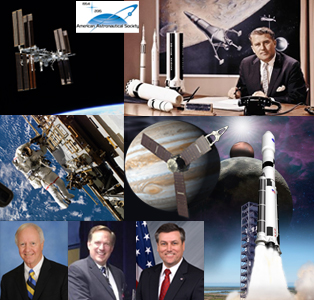
The American Astronautical Society 8th Wernher von Braun Memorial Symposium with the theme Space Exploration and Discovery: Expanding Human Knowledge is being held at the University of Alabama October 27-29. Welcome addresses will be given by (BL-BR) President of UAH Robert Altenkirch, Executive Vice President of AAS Walt Faulconer, and Director of MSFC Patrick Scheuermann (soon to retire). There will be updates on SLS and Orion, the space transportation industry and current space policy. During the “NASA’s Discovery & New Frontiers Program – New Missions” session Scott Bolton of SwRI will speak on the Juno mission and Dante Luaretta of LPL will discuss OSIRIS-REx. Jim Green of NASA will present a Science Spotlight on “The Martian – Science Fiction and Science Fact.” The 27th Annual Dr. Wernher von Braun Memorial Dinner will be at the U.S. Space & Rocket Center with featured speaker Astronaut Mike Massimino. Expanding upon Human knowledge and research in space, the ISS will begin its 16th year of continuous Human occupation on November 2. Two EVAs are planned for Oct 28 and Nov 6 to prepare the station for its next phase of operations which will include Commercial Crew spacecraft under competitive development by SpaceX and Boeing Co. (Image Credit: AAS, NASA, UAH, ATK)
MONDAY
Oct 26 — ISS,LEO: Six-member crew preparing for 6.5-hour EVAs to maintain & upgrade station, setting up mouse habitat inside Cell Biology Experiment Facility, assessing CubeSat deployer issues, performing scans on heart, eyes, muscles, lungs.
Oct 26 —Lunar Reconnaissance Orbiter, Moon Polar Orbit: Mission funded through Oct 2016, Scientists awaiting data collected from LRO radiometer “Diviner” during recent total lunar eclipse Sep 27-28; China Chang’e-3 Lunar Ultraviolet Telescope eclipse observations from Moon surface also expected.
Oct 26 —Juno, Jupiter Trajectory: Now 8.5 months from reaching Jupiter, activities at gas giant being reviewed in conjunction with recently released images of Jupiter produced by Hubble Telescope.
Oct 26 — Space Agency Updates,Worldwide: Russia working on Vostochny Cosmodrome, Japan focusing on Venus Akatsuki mission, S. Korea developing indigenous rocket & Moon missions, India working on GSLV, Canada optimistic new leadership will enhance Space activities, China planning for Moon, Mars, Jupiter, Asteroid missions.
Oct 26 — Deep Space Industries,Moffett Field CA: NewSpace company to receive funding from Metatron Global an international investment firm from Czech Republic; will begin building its first asteroid prospecting mission, Prospector 1.
Oct 26 — Celestis Inc.,Houston TX: Seventh Earth Rise mission & 14th memorial spaceflight planned for launch Nov 6 via Space Up SpaceLoft XL; has agreement with Moon Express & Astrobotic to launch payloads containing human cremated remains to Moon surface in 2017 (1 gram capsule for $12,500).
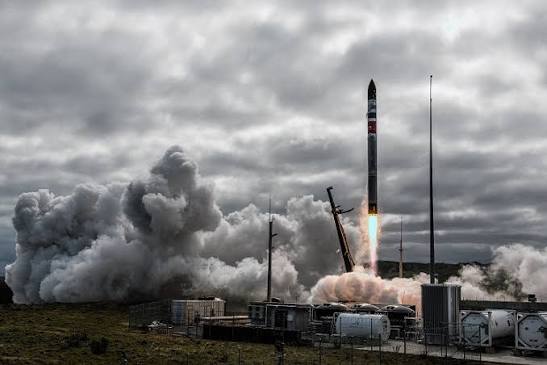
Oct 26 — Rocket Lab,Los Angeles CA & Auckland, New Zealand: Receiving US$6.95M contract from NASA to develop CubeSat launch services; NASA demonstration mission to be part of Electron rocket’s 5th flight in late 2016 or early 2017.
for terrestrial events in local time unless noted.
= All times for international terrestrial events in local time unless noted.
= All times for space events, and…
= All times for international space / astro events in Hawaii Standard Time unless noted. Add 10 hours to obtain UT (‘Universal Time;’ Greenwich, England).
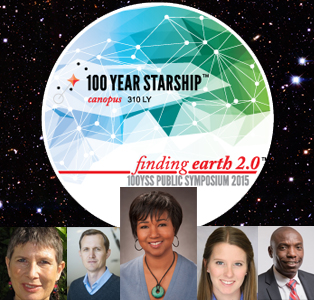
The 4th annual 100 Year Starship Public Symposium (100YSS 2015) is being held October 29 – November 1 in Silicon Valley CA, USA. Mae Jemison (C), physician, educator, engineer and entrepreneur, first woman of color in space and 6-year NASA Astronaut, is the Principal for 100YSS Foundation and is scheduled to make the Opening Keynote titled ‘Finding Earth 2.0: Evolutionary Step or Societal Imperative.’ Other notable speakers include Peter Swan (ISEC), Morgan Cable (JPL), Mickey Fisher (EXTANT), Pat Murphy (Writer, Scientist), Louis Friedman (The Planetary Society), Mmboneni Muofhe (DDG Technology) and George Whitesides (Virgin Galactic). Participants consider what specific capabilities and systems are required over the next 5-25 years to identify at least one definitive Earth 2.0 — with the Foundation’s overarching goal of making the capability of human travel beyond the solar system a reality within the next 100 years. The Symposium is designed to pursue an extraordinary tomorrow, in order to build a better world today recognizing that capabilities needed for successful human travel to another star are also critical to enhance and sustain human life here on Earth. The existence of 1,800+ exoplanets has been confirmed, with 132-160 thought to be habitable worlds within 10 parsecs (32.6 light years) of the Sun. Between 8.8 and 40 billion earth-sized planets are estimated to orbit within the habitable zone around stars in our galaxy, the Milky Way. (Image Credit: 100YSS, NASA / Hubble / STSci)
Aug 11 – Oct 31 — International Astronomical UnionOffice for Astronomy Outreach, Online:NameExoWorlds Contest; public voting for 15 stars and 32 exoplanets.
Oct 27 — Moon: Full Super Moon (Hunter’s, Frosty, Beaver), 02:05.
Oct 27 — Apollo Asteroid 2015 TL20: Near-Earth flyby (0.063 AU).
Oct 27 — Apollo Asteroid 2015 TF: Near-Earth flyby (0.077 AU).
WEDNESDAY
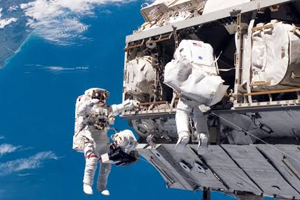
Oct 28 — ISS, U.S. EVA 32,LEO: Kelly & Lindgren to perform 6.5-hour spacewalk to install thermal cover onto Alpha Magnetic Spectrometer, tie down Multi-Layered Insulation on a Main Bus Switching Unit (MBSU), lubricate Latching End Effector on 17.6-meter Canadarm2 robotic arm; live coverage available, begins 12:15 UT.
Oct 28 — Cassini, Saturn Orbit: Spacecraft conducts Orbital Trim Maneuver #428 today; Enceladus flyby at 49-km altitude, Telesto 60,000 km, Pan 65,000 km, Daphnis 73,000 km.
Oct 28-29 — European Cooperation in Science and Technology (COST), Konkoly Observatory (MTA CSFK),Budapest, Hungary:Missions to Habitable Words.
Oct 28 — Moon: 8.5° S of Pleiades, 20:00.
THURSDAY
Oct 29 — U.S. Navy, Sandia National Laboratories, University of Hawaii Space Flight Laboratory, Launch SPARK / HawaiiSat-1 (ORS-4 Mission), USNPacific Missile Range Facility, Barking Sands, Kauai HI: Space-borne Payload Assist Rocket (SPARK) or ‘Super Strypi’ 3-stage vehicle to launch Earth observation HawaiiSat-1; will take off using rail launch structure.
Oct 29 — Moon: 3.8° NNE of Spica, 09:00; 0.60° N of Aldebaran, 13:00.
Oct 29 — Apollo Asteroid 410777 (2009 FD): Near-Earth flyby (0.042 AU).
Oct 29 — Apollo Asteroid 2015 TX24: Near-Earth flyby (0.076 AU).
FRIDAY
Oct 30 — ULA, Launch Atlas 5 / GPS 2F-11, Cape Canaveral AFS FL: United Launch Alliance Atlas 5 rocket to launch U.S. Air Force 11th Block 2F navigation satellite for Global Positioning System.
Oct 31 — Chinese Academy of Sciences, Online / Beijing, China:Last Day to submit entries to name China’s Dark Matter Explorer; planned to launch before 2016; 5 grand prize winners, 20 first prize winners, 50 second prize winners, 100 third prize winners, 500 memorial award winners.
Oct 31 – Nov 1 — SES Summit Organizing Committee, Houston TX:Sea, Earth and Space (SES) Summit; at South Shore Harbour Resort & Conference Center.
Oct 31 – Nov 1 — SpaceUp, SDSU Rocket Project, HighTech EdVentures, SDSU Schwartz Astronomical Society, San Diego CA:SpaceUP San Diego V Unconference; at Aztec Student Union on San Diego State University campus.
Oct 31 — Moon: 6.1° S of M35, 03:00.
Oct 31 — Apollo Asteroid 2015 TB145 “Halloween Asteroid”: Near-Earth flyby (0.003 AU); size is 500 meters across.
Oct 31 — Apollo Asteroid 2015 TN145: Near-Earth flyby (0.055 AU).
Oct 31 — Amor Asteroid 2015 UC: Near-Earth flyby (0.055 AU).
Nov 1 — The Space Show, Online / Tiburon CA: Dr. David Livingston talks with Michael Listner, Space law attorney.
Nov 1-4 — Geological Society of America, Baltimore MD: Geological Society of America (GSA) Annual Meeting; featuring numerous sessions devoted to planetary sciences including “Oceans, fire, and ice in the outer solar system” and “Exploring the sedimentary rock record of Mars.”
Nov 1 — Standard Time (USA): Change clocks back 1 hour from Daylight Saving to Standard Time; does not include Hawai’i, American Samoa or Arizona (except the Navajo Reservation).
Nov 1 — Moon: 15.0° S of Castor, 13:00; 11.5° S of Pollux, 18:00.
Nov 1 — Apollo Asteroid 2015 SC17: Near-Earth flyby (0.078 AU).
Includes ~150 meetings covering the fields of COSPAR Scientific Commissions / Panels / Task Groups, such as SC B: The Earth-Moon System, Planets, and...
From 02 to 07 August 2026, a few thousand geoscientists across diverse disciplines will gather at the 23rd annual meeting of the Asia Oceania Geosciences...
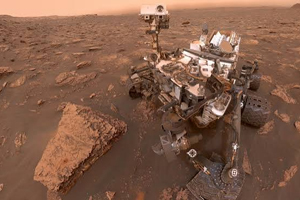
NASA Curiosity (Mars Science Laboratory) rover surpasses another full year of operations on Mars surface today; launched Nov 26, 2011 – landed Aug 5,...
Virtual Series 2026 will offer deeper conversations on why PQC matters and the practical steps businesses should be taking; starts 1:00 pm AEST. Featuring:...
This international lunar science meeting has two objectives: to provide a platform for leading experts to review recent advances across lunar research, from the...
At CSIR International Convention Centre. Key topics are Earth Observation, Developing Space Tourism, Space Supply Manufacturing. Cultural tours are offered.
Participants will receive theoretical and hands-on training in electron imaging and X-ray spectroscopy for application to planetary samples. This training opportunity is targeted at...
"Leading Australia’s Space Future for Our Strategic Advantage". Southern Space 2026 brings together decision-makers who set the direction for Australia’s space sector. It is...
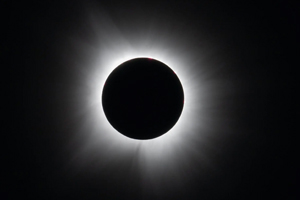
A total solar eclipse with a magnitude of 1.0386 (greatest eclipse 17:47:06 UTC) will be visible in parts of Greenland, Iceland, northern Russia, the Atlantic...
Includes presentation of the Neil Armstrong Award of Excellence, activities for the new class of Astronaut Scholars, 2-day Technical Conference where Scholars present their...
During U.S. spacewalk 97, two astronauts will replace a Space-to-Ground antenna on the orbital complex. The antenna is a critical communication system NASA uses...
 = All times
 = All times for international terrestrial events in local time unless noted.
 = All times for space events, and…
 = All times for international space / astro events in Hawaii Standard Time unless noted. Add 10 hours to obtain UT (‘Universal Time;’ Greenwich, England).