SpaceX Starship Flight 11 NET Oct 13, Increases Cadence Towards First Lunar Flights
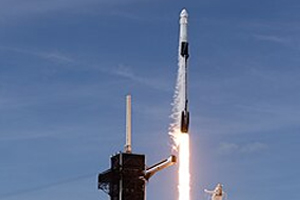
Flight 11 is set to launch from Starbase during a window opening 18:15 CT. Booster 15, with 33 Raptor engines delivering 7,500 metric tons of thrust, pairs with Ship 38 standing 121 meters tall. This test follows Flight 10 success where Super Heavy achieved 100% engine relight and precise splashdown. Objectives for Flight 11 include heatshield endurance under 1,650°C reentry temperatures, and Raptor 3 data and maneuvers simulating return-to-launch-site landings with 90% accuracy. The fully reusable Starship reduces launch costs to US$10M per flight, down from $100M, eventually enabling 100+ annual missions. NASA US$2.89B Human Landing System contract positions Starship HLS to ferry Artemis III astronauts from lunar orbit to South Pole surface and back by 2027. Up to 16 tanker Starships will refuel HLS in orbit, transferring 1,200 metric tons of propellant for 250,000-kilometer round trips. Gateway station docking supports Artemis IV in 2028. SpaceX Starship drives lunar economy, projected at US$1.8T by 2040, powering cargo hauls of 150 tons to Moon and habitats for sustained presence. Future roles include Artemis V competition with Blue Origin, fostering innovation for Moon bases and Mars gateways, marking a milestone in reusable rocketry. (Image Credits: SpaceX)
Interstellar Research Group Is Bellwether for Credibility of Interstellar Community
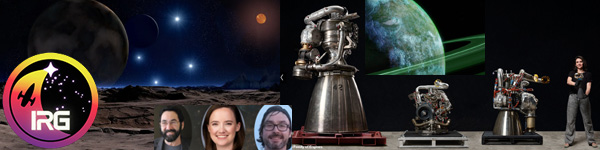
Interstellar Research Group (IRG) holds its 9th Interstellar Symposium Distant Worlds, Neighboring Opportunities Oct 12-15 in Texas with partners International Academy of Astronautics (IAA) and Center for Planetary Systems Habitability, of the University of Texas at Austin. Scientists of all disciplines and expertise levels are invited to participate in symposium goals of advancing interstellar travel, not only for exploring other stars and what lies between them, but also understanding formation of galaxies and their elements, searching for extraterrestrial life, and ensuring safety and future of our planet. Symposium elements include presentations, social events and art. They are held every 2 years and videos of the 10-13 July 2023 symposium – the first held outside the USA (Montréal, Canada) – are on the IRG website. IRG provided guidance for the First European Interstellar Symposium, held in Luxembourg. British Interplanetary Society has sponsored and supported IRG events. 3 pre-symposium seminars increase the Standard, Student, IAA Member or IRG Member registration fee as does a post-symposium tour of Firefly Aerospace Rocket Ranch, which does not offer public tours. Up to 100 student scholarships are available. Plenary speakers include physicists, entrepreneurs and those discussing fusion power, growing food in space, the Europa Clipper and other subjects. The IRG website has daily updates with links to new science studies.(Image Credits: IRG, Firefly Aerospace)
Humans in Space
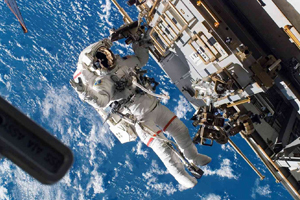
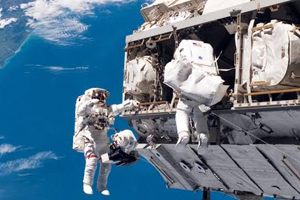
International Space Station, ~415-km LEO: Expedition 73 seven-member crew are maintaining life-support and electronics systems, installing and activating a technology demo for removing spacecraft moisture for recycling, and processing materials in the ultra-high-temperature module for measurement; Mike Fincke is installing: new physics research hardware to look at condensation when gas turns to liquid, and a bag that could be used to capture debris or samples outside the ISS; Zena Cardman is inspecting ventilation systems; Oleg Platonov took a fitness test while on a treadmill.
Tiangong Space Station, ~390-km LEO: Shenzhou 20 three-member crew, Chen Dong, Chen Zhongrui and Wang Jie, are observing ignition testing in Wenchang of Long March 10A, able to carry ~14,000kg (astronauts / cargo) to the station without side thrusters that would carry >27,000kg to Earth-Moon transfer; storing / analyzing samples from an extravehicular exposure experiment device to learn mechanisms of structural damage / performance degradation of advanced materials used for construction, shielding, solar wings and lubrication; measuring their fine motor skills under microgravity conditions; conducting combustion experiments of various fuels: gas / liquid / solid; using neuromuscular stimulators to relax and prevent muscle atrophy.
Lunar News: Weekly lunar advisories [coming soon]
Near-Earth Objects Close Approaches – Mon Oct 13: Apollo Asteroid 2025 TV2 (0.008 AU); Tue Oct 14: Apollo Asteroid 2022 AY5 (0.019 AU); Wed Oct 15: Aten Asteroid 2022 UY3 (0.026 AU); Thu Oct 16: Apollo Asteroid 2025 SX26 (0.022 AU).
Hawai'i Time for launch is 13:15. 11th test flight of 2-stage Starship launch vehicle. Super Heavy Booster 15-2 is planned to splash down near the launch site; it was also used for the 8th test flight.
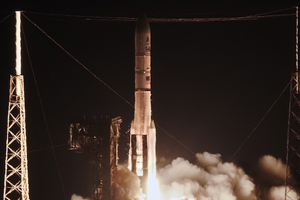
Taking 21 satellites made by Lockheed Martin, it is one of 6 launches for USSF SDA for worldwide connectivity, which will be via Optical Inter-Satellite Links (OISLs) that have significantly better performance than radio frequency crosslinks.
Presentation by Josh Wimpenny of Los Alamos National Laboratory: Behaviour of moderately volatile elements on the Moon. Join here: https://sservi.nasa.gov/casa-moon-seminar-series Hosted by CASA Moon, SSERVI, Institute of Meteoritics at UNM, University of New Mexico Grand Challenge, Lunar and Planetary Institute (LPI) and RASSLE (Research Activities Supporting Science and Lunar Exploration, […]
Detecting some of the most energetic radiation in space, ESA, NASA, Roscosmos spacecraft surpasses another year of operations in space, despite loss of its thrusters; launched 2002, expected to run out of fuel early 2020s and fall to Earth Feb 2029.
European Space Agency (ESA) and Roscosmos spacecraft surpasses another full year at Mars, launched 2016; craft continues collecting data on atmosphere, deployed Schiaparelli demonstration lander 19 Oct 2016 (unsuccessful).
European Space Agency / JAXA Mercury Planetary Orbiter (MPO) and Mercury Magnetospheric Orbiter (dubbed Mio ‘waterway or fairway’) starts its next year in space today, launched 2018; expected to reach Mercury polar orbit in Nov 2026 to map planet, investigate magnetosphere.
2025 LSIC Fall Meeting to be held 5-6 Nov will focus on mission-driven technology guiding us to the Moon. Through the years, our community has planned and executed, and now it's time to thrive! This Fall will be valuable to learn directly from core infrastructure technology providers, technologies in the […]
At the University of Southern California, the world's largest gathering dedicated to human Mars exploration. For nearly three decades, the International Mars Society Convention...
NASA spacecraft surpasses another full year in orbit around Mars today, holds record for longest-surviving continually active spacecraft in orbit around a planet other...
At the Spokane Convention Center. The meeting will have a broad scope, with a wide-ranging program of science and workforce topics, and celebrating planetary...
Convene, connect, and collaborate at the 19th annual von Braun Space Exploration Symposium! This year’s event will spotlight how bold ideas, emerging technologies, and...
Themes include: Space & the Arctic; Space & AI; Space & International Collaboration. There is a Student Session, a Technical Session, a Frontier Session,...
Oslo Spaceport Norway offers monthly a knowledgeable speaker and opportunity for networking, 17:00-20:00 local time; free entry but registration required. Ground Control is for...
45 satellites to launch for Amazon Leo, formerly named Project Kuiper. This LEO mega constellation will offer broadband internet access with 3,276 satellites.
Occurring 31 October from 09:00-11:00 local time (16:00-18:00 HST, 19:00-21:00 PDT, 22:00-24:00 EDT on 30 October), this Galaxy Forum will be in hybrid format...
Originally planned around this date for Wenchang, China -- TBC (to be confirmed); As the only professional association for astronauts, ASE supports the advancement of...
Coordinating Division Division C Education, Outreach and Heritage The IAU Symposium on Innovative Research and Techniques in Astronomy Communication will take place from November...
Change clocks back 1 hour from Daylight Saving to Standard Time; does not include Hawai’i, Arizona (except the Navajo Nation), American Samoa, Guam, Northern...
ESWW is the main annual event in the European Space Weather and Space Climate calendar. It is an international meeting organised annually within the...
IAU Symposium: IAUS409 - A Journey Towards Effective Astronomy Communication; online and at National Astronomical Observatory of Japan, 2-21-2 Osawa Mitaka, Tokyo. Topics include:...
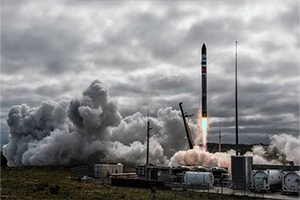
Launch Complex 1, ~39°S, Mahia Peninsula, New Zealand
iQPS Launch 9, an Earth observation satellite with Synthetic aperture radar for Japan-based imaging company iQPS, to launch on "The Sea God Surveys" mission...
 International Space Station, ~415-km LEO: Expedition 73 seven-member crew are maintaining life-support and electronics systems, installing and activating a technology demo for removing spacecraft moisture for recycling, and processing materials in the ultra-high-temperature module for measurement; Mike Fincke is installing: new physics research hardware to look at condensation when gas turns to liquid, and a bag that could be used to capture debris or samples outside the ISS; Zena Cardman is inspecting ventilation systems; Oleg Platonov took a fitness test while on a treadmill.
 Lunar News: Weekly lunar advisories [coming soon]
 Near-Earth Objects Close Approaches – Mon Oct 13: Apollo Asteroid 2025 TV2 (0.008 AU); Tue Oct 14: Apollo Asteroid 2022 AY5 (0.019 AU); Wed Oct 15: Aten Asteroid 2022 UY3 (0.026 AU); Thu Oct 16: Apollo Asteroid 2025 SX26 (0.022 AU).