Accelerating Asteroid Awareness, Detection and Protection Methods
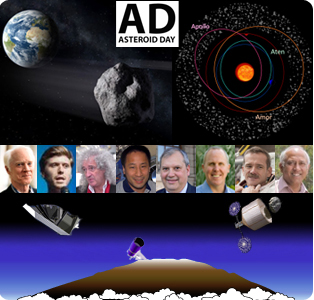
On February 9 the newly-established Asteroid Day is holding a press conference at ESA to announce new partners for global awareness events held annually on June 30, the observance of the 1908 Siberian Tunguska event destroying over 2,000 square km of forest. Co-founded by (L-R) Apollo Astronaut Rusty Schweickart, Grigorij Richters and Dr. Brian May, with the support of more than 100 astronauts, scientists, technologists and artists, Asteroid Day aims to heighten public awareness of asteroid hazards and increase discovery and tracking of NEAs to 100,000 per year within the next 10 years. Along with Asteroid Day co-founders, the press conference attendees include Astronauts Dr. Ed Lu, Dumitru Dorin Prunariu, Dr. Tom Jones, Chris Hadfield and Rakesh Sharma. The new NASA Planetary Defense Coordination Office will synchronize U.S. efforts to detect / classify NEOs and work within international forums at the UN COPUOS such as International Asteroid Warning Network and Space Mission Planning Advisory Group. ESA has a Space Situational Awareness Program Office, and Luxembourg will be pursuing a government-sponsored initiative to explore and commercialize NEOs. With the count of known NEOs growing (currently 13,534), private groups B612, Planetary Resources and Deep Space Industries are also working to detect asteroids, some for protection, some for profit. An IfA team at University of Hawaii expects the 2nd Asteroid Terrestrial-Impact Last Alert System (ATLAS) telescope to be operational this year on Mauna Loa, Hawaii Island; the 1st one operates on Haleakala, Maui; a 3rd could be placed in South Africa. (Image Credit: ESA, P. Carril, Asteroid Day, UH/IfA, B612, Rick Sternbach / KISS, IHMC, NASA, The Hindu / K. Ananthan)
MONDAY
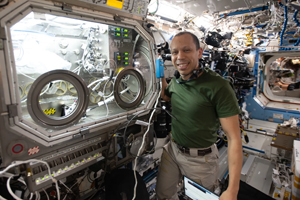
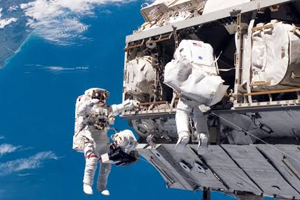
Feb 8 — ISS, LEO: Expedition 46 six-member crew finalizing Cygnus OA-4 craft for Earth atmosphere reentry disintegration next week, transferring cargo from Progress 62P / loading with waste, testing water samples throughout station, performing test fabrications with 3D printer, maintaining BioLab incubator and small satellite deployer in Kibo lab, EXPOSE-R experiment to be returned to Earth on Soyuz after 22 months of being exposed to space, next EVA in April/May will be #194.
Feb 8 — Kepler / K2 mission, Heliocentric Orbit: Planning for Campaign 9 large-area microlensing survey staring in April, operating nominally in K2 mission, observing Stars for exoplanets & astrophysical phenomena, Solar System planets & moons; exoplanet candidates found 4,706, confirmed 1,039, small habitable zone confirmed 12.
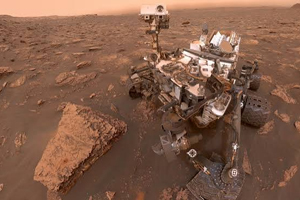
Feb 8 — Curiosity, Bagnold Dune Field, Mars Surface: Studying and mapping dark, active sand dune Namib, NASA rover sieving and analyzing samples, providing data on wind patterns in environment with low-atmosphere (100x thinner than Earth), low-gravity (38% of Earth).
Feb 8 — Cassini OTM-441, Saturn Orbit: Spacecraft conducts Orbital Trim Maneuver #440 today.
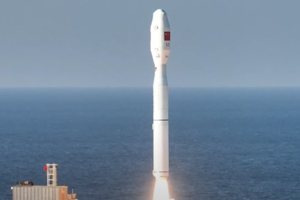
Feb 8-25 — Democratic People’s Republic of Korea (DPRK), Launch Unha / Kwangmyongsong, Sohae Satellite Launch Center, N Korea: DPRK plans to launch Earth observation satellite Kwangmyongsong (Bright Star) from Tongchang-ri launch base, launch window Feb 8-25.
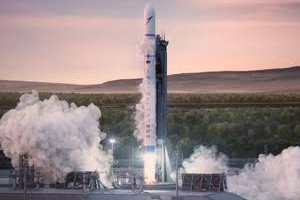
Feb 8 — XCOR Aerospace, Midland TX: NewSpace company first flight of Lynx spaceplane expected 2nd quarter of 2016, carrying 10 experiments initiated by Citizens in Space including Angelicvm Aerospace ‘Crystallization Rates in Microgravity’ and University High School of Orlando ‘Investigation of Lunar Regolith Hydration in Zero Gravity.’
Feb 8 — NanoRacks LLC, Houston TX: Hoping to get approval from NASA and Boeing to develop private airlock on ISS, for US$12-15M, to launch more satellites into space starting 2018; also working on “haybale” system to launch as many as 192 CubeSats at a time.
Feb 8 — Clyde Space Ltd., Glasgow, United Kingdom: To open its first subsidiary company in United States, producing small satellites, nanosatellites, CubeSats; working on various projects for ESA, Outernet Inc. of New York, National University of Singapore & Belgian Institute for Space Aeronomy.
= All times
for terrestrial events in local time unless noted.
= All times for international terrestrial events in local time unless noted.
= All times for space events, and…
= All times for international space / astro events in Hawaii Standard Time unless noted. Add 10 hours to obtain UT (‘Universal Time;’ Greenwich, England).
Global Space & Technology Convention in Singapore Showcases Latest Technology in Space Engineering and Design
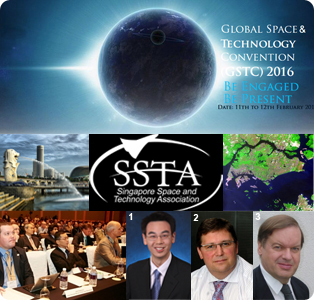
The Singapore Space & Technology Association (SSTA) hosts GSTC 2016 with the theme “Propelling Asia’s Space Technology Growth” on February 11-12 at the Sheraton Towers Singapore. The conference is highlighted by Space Agencies Dialogue on Priorities and Strategy for Investment, Development and International Cooperation, Industry Chiefs Dialogue on Emerging Space Programs for Dynamic End-User Needs; Space Tech Innovative Applications, and Updates on six Singapore Spacecraft launched in 2015. Organizers, lead by SSTA President Jonathan Hung (1), are focused on bringing together key members of space agencies, government bodies, international organizations / companies, and universities and research institutes from Singapore and around the World – expecting about 300-350 participants. Keynote and guest speakers include: Walter Peeters (3), President, International Space University and Director, International Institute of Space Commerce; Matt Perkins (2), CEO, Surrey Satellite; Rogel Mari. Sese, Focal Person, Philippine Science Education Institute, Department of Science and Technology; Salem Humaid Al Marri, Assistant Director General for Scientific and Technical Affairs, Emirates Institution for Advanced Science and Technology; Soewarto Hardhienata, Deputy Chairman, National Institute of Aeronautics, Indonesia; Vu Viet Phuong, Deputy Chairman, Vietnam Space Center Project Management Unit; Noordin Bin Ahmad, Deputy Director General, National Space Agency, Malaysia; and Chaowalit Silapathong, Deputy Director, Geo-Informatics and Space Technology Development Agency, Thailand. Wider Asian participation, from Beihang University, Mitsubishi Electric and JAXA (launching H-2A / ASTRO-H on Feb 12), highlights paths for constructive cooperation and open dialogue in the region, and further afield. (Image Credit: SSTA, USGS, SSTL, ISU)
Feb 8 — China Lunar New Year 4652, Zhong Guo / Worldwide: China Lunar New Year 2016 Spring Festival marks the Year of the Monkey.
Feb 8-14 — Southern Cross Astronomical Society, Big Pine Key FL:32nd annual Winter Star Party; expecting 600 international astronomers and astro-imagers; at Camp Wesumkee.
Feb 8 — Alpha Centaurids Meteor Shower Peak: Appearing to radiate from Alpha Centauri (α Cen), meteors are far south and below horizon for most in north, can produce ~3 meteors per hour.
Feb 8 — Moon: New Moon, 04:39.
Feb 8 — Apollo Asteroid 2013 VA10: Near-Earth flyby (0.032 AU).
Feb 8 — Amor Asteroid 2016 BC15: Near-Earth flyby (0.076 AU).
Feb 8 — Amor Asteroid 2016 BS: Near-Earth flyby (0.098 AU).
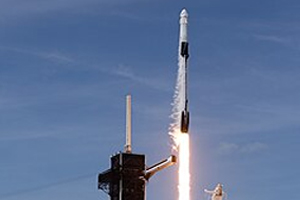
Feb 10 — United Launch Alliance, Launch Delta 4-Heavy / NROL-45, Cape Canaveral AFS FL: United Launch Alliance Delta 4-Heavy rocket to launch classified spy satellite cargo for U.S. National Reconnaissance Office.
Feb 10 — Moon: At perigee (distance 363,975 km), 16:38.
THURSDAY
Feb 11, 12 — Jet Propulsion Laboratory, NASA/Caltech, Pasadena CA: von Kármán Lecture Series: The Europa Mission; Europa Mission Project Manager Barry Goldstein & Europa Mission Project Scientist Dr. Bob Pappalardo.
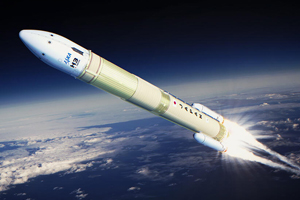
Feb 12 — JAXA, Launch H-2A / ASTRO-H,Tanegashima Space Center, Japan: JAXA ASTRO-H, an X-ray telescope made in collaboration with Canadian Space Agency, European Space Agency and NASA to launch to LEO.
Includes ~150 meetings covering the fields of COSPAR Scientific Commissions / Panels / Task Groups, such as SC B: The Earth-Moon System, Planets, and...
From 02 to 07 August 2026, a few thousand geoscientists across diverse disciplines will gather at the 23rd annual meeting of the Asia Oceania Geosciences...
2:45 pm EDT from Johnson Space Center, NASA astronaut Chris Williams will recap his recent eight-month mission aboard the International Space Station. Williams returned to...
NASA Curiosity (Mars Science Laboratory) rover surpasses another full year of operations on Mars surface today; launched Nov 26, 2011 – landed Aug 5,...
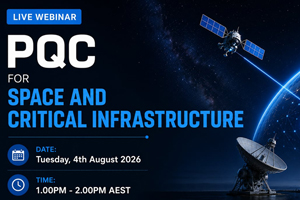
Virtual Series 2026 will offer deeper conversations on why PQC matters and the practical steps businesses should be taking; starts 1:00 pm AEST. Featuring:...
This international lunar science meeting has two objectives: to provide a platform for leading experts to review recent advances across lunar research, from the...
At CSIR International Convention Centre. Key topics are Earth Observation, Developing Space Tourism, Space Supply Manufacturing. Cultural tours are offered.
Participants will receive theoretical and hands-on training in electron imaging and X-ray spectroscopy for application to planetary samples. This training opportunity is targeted at...
"Leading Australia’s Space Future for Our Strategic Advantage". Southern Space 2026 brings together decision-makers who set the direction for Australia’s space sector. It is...

 = All times
 = All times for international terrestrial events in local time unless noted.
 = All times for space events, and…
 = All times for international space / astro events in Hawaii Standard Time unless noted. Add 10 hours to obtain UT (‘Universal Time;’ Greenwich, England).