Africa and Space: Astronomy Flourishing, Astronautics Focus Increasing
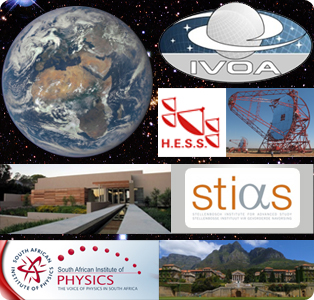
The South African Astroinformatics Alliance (SA3) is organizing the International Virtual Observatory Alliance IVOA Northern Spring 2016 Interoperability Meeting at the Stellenbosch Institute of Advanced Study near Cape Town, South Africa on 8-13 May 2016. The Virtual Observatory (VO) is an international community-based initiative to develop and maintain global electronic access to a suite of tools for collectively and systematically accessing and visualizing multi-wavelength data from a broad range of space and ground-based observatories. The 61st Annual conference of the South African Institute of Physics is being Jointly Hosted by the Departments of Astronomy and Physics at the University of Cape Town July 4-8. The High Energy Stereo-scopic System (HESS) in Namibia recently confirmed Sagittarius A* at Milky Way Galaxy center as most likely source for extremely high energy petaelectronvolt (PeV) cosmic gamma-rays. The Entonto Observatory and Research Center outside Addis Ababa originally developed by eager astronomers and funded by private donors has officially been handed over to state authority in Ethiopia. The country seeks to overhaul space efforts and invest in increasing the role of Space science in the economy. In Nigeria, with growing experience building and operating satellites, Minister of Science and Technology Ogbonnaya Onu declared for an astronaut in Space by 2030, possibly in partnership with China. ‘Africa rising’, the 30.37M km2 cradle of humanity and home to over a billion people across 54 nations, is the only major continent projected to increase its proportion of the world population by 2050. (Image Credit: IVOA, HESS, STIAS, SAIP, NASA)
MONDAY
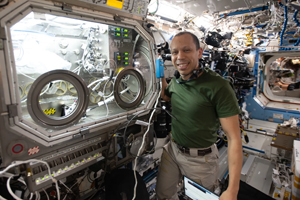
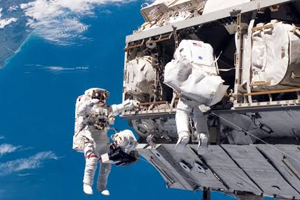
May 2 — ISS, LEO: Expedition 47 crew of 6 astronauts from 3 countries continues bone and muscle research and testing of new radios for communicating with future visiting spacecraft, British Astronaut Tim Peake completed the 42-km London Marathon from orbit in 3 hours, 35 minutes and 21 seconds.
May 2 — Hubble Space Telescope, LEO: Identifying new worlds at the outer edges of the Solar System like 160-km-wide moon ‘MK 2’ found orbiting dwarf planet Makemake in the Kuiper Belt.
May 2 — Juno, Jupiter Trajectory: More than 659M km from Earth having traveled 2.78B km (18.56AU) since launch spacecraft is preparing for July 4 arrival; public participation is encouraged through the JunoCam instrument and web platform.
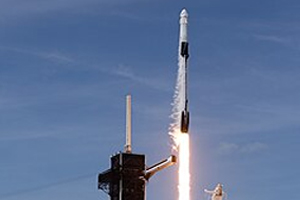
May 2 — SpaceX, Multiple Locations: NewSpace company announces Dragon 2 spacecraft designed to land ‘anywhere in the Solar System’, Red Dragon un-crewed 2018 Mars landing is first test flight in the series.
May 2 — Interstellar Technologies Inc., Taiki, Hokkaido, Japan: Building toward full test flights of suborbital LEAP rocket and aiming to offer the ‘world’s smallest’ orbital launcher, lead by CEO Takahiro Inagawa
May 2 — Space Angels Network, Global: Seeking out, evaluating and investing in early-stage NewSpace startups, maintains offices in New York, Los Angeles and Seattle, expecting global space economy to double by 2030 reaching US$600B.
May 2-4 — University of Western Ontario,London, Ontario, Canada: Great Lakes Quasar Symposium, featuring keynote by Karen Leighly (University of Oklahoma), first in series of regional conferences on super-massive black holes.
= All times
for terrestrial events in local time unless noted.
= All times for international terrestrial events in local time unless noted.
= All times for space events, and…
= All times for international space / astro events in Hawaii Standard Time unless noted. Add 10 hours to obtain UT (‘Universal Time;’ Greenwich, England).
Cornell University Advancing Astrophysics and Planetary Science
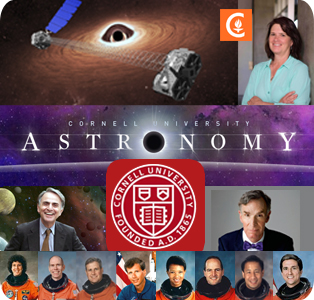
The Department of Astronomy at Cornell University in Ithaca NY hosts lectures May 2 and May 4 by Fiona Harrison of California Institute of Technology on A New view of the High Energy Universe: Science Highlights from the Nuclear Spectroscopic Telescope Array (NuSTAR) Mission and Observing Extremes of Accretion respectively. These lectures are under the auspices of the distinguished Salpeter Lectureship Series, honoring renowned 20th Century astrophysicist Professor Edwin E. Salpeter. The Cornell Center for Astrophysics and Planetary Science hosts a variety of open events to advance understanding of the universe, including Thomas Gold and Yervant Terzian Lectureship Series, Colloquia, Planetary Lunches (Nicholas Warner of SUNY Geneseo May 2, Daniel Angerhausen of NASA GSFC May 3 and Paul Corlies of Cornell May 9), Astrophysics Lunches (every Wednesday during academic year) and Galaxy Lunches (every Friday). The Ivy League school operates with an endowment of over US$6B serving more than 21,000 students with the multidisciplinary motto “…an institution where any person can find instruction in any study”. Notable faculty and alumni include legendary science popularizer and planetary scientist Carl Sagan, Bill Nye “The Science Guy” and 8 NASA Astronauts (Ellen Baker, Daniel Barry, Jay Buckey, Martin Fettman, Mae Jemison, David Low, Edward Lu and Donald Thomas). Sagan’s legacy continues as many of his former students push boundaries in Space science and exploration, including prolific Mars mission researcher Professor Steven Squyers. (Image Credit: CU, NASA, CIT)
May 2 — Southwest Research Institute, Commercial Spaceflight Federation, Suborbital Applications Researchers Group, Broomfield CO: Next-Generation Suborbital Researchers Conference 2016; poster abstracts due (extended from April 28).
May 2 — Moon: 1.6° NNW of Neptune, 01:00; 1.4° SSE of asteroid 18 Melpomene, 02:00.
May 2 — Comet C/2013 X1 PANSTARRS: 1.0° NNW of Moon, 17:00.
May 3 — Library of Congress – Science, Technology and Business Division, Washington DC: Lecture: The Science of Interstellar; NASA astrophysicist Jeremy Schnittman.
May 5 — Moon: At perigee (distance 357,413 km), 18:09; 2.6° SSE of Venus, 19:00.
May 5 — Eta Aquarids Meteor Shower Peak: The 1st of 2 showers that occur each year as a result of Earth passing through dust released by Halley’s Comet; Eta Aquarid meteors appear to radiate from Constellation Aquarius, likely to see about 10+ meteors per hour, while Southern Hemisphere observers may see up to 85+ per hour.
May 5 — Apollo Asteroid 388945 (2008 TZ3): Near-Earth flyby (0.034 AU).
FRIDAY
May 6 — Cassini,Saturn Orbit: Titan flyby scheduled at 971-km altitude.
May 6 — International Space Day 2016, Worldwide: Events and presentations to promote STEM education and inspire people to continue the work of Space explorers; originally began as ‘National Space Day’ in 1997 by Lockheed Martin Corp.
Includes ~150 meetings covering the fields of COSPAR Scientific Commissions / Panels / Task Groups, such as SC B: The Earth-Moon System, Planets, and...
From 02 to 07 August 2026, a few thousand geoscientists across diverse disciplines will gather at the 23rd annual meeting of the Asia Oceania Geosciences...
2:45 pm EDT from Johnson Space Center, NASA astronaut Chris Williams will recap his recent eight-month mission aboard the International Space Station. Williams returned to...
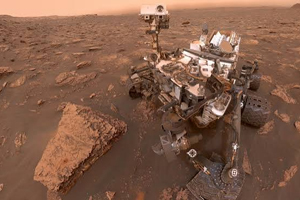
NASA Curiosity (Mars Science Laboratory) rover surpasses another full year of operations on Mars surface today; launched Nov 26, 2011 – landed Aug 5,...
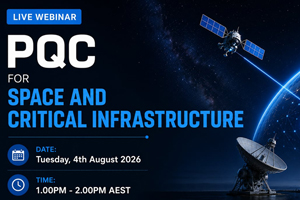
Virtual Series 2026 will offer deeper conversations on why PQC matters and the practical steps businesses should be taking; starts 1:00 pm AEST. Featuring:...
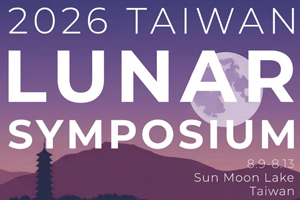
This international lunar science meeting has two objectives: to provide a platform for leading experts to review recent advances across lunar research, from the...
At CSIR International Convention Centre. Key topics are Earth Observation, Developing Space Tourism, Space Supply Manufacturing. Cultural tours are offered.
Participants will receive theoretical and hands-on training in electron imaging and X-ray spectroscopy for application to planetary samples. This training opportunity is targeted at...
"Leading Australia’s Space Future for Our Strategic Advantage". Southern Space 2026 brings together decision-makers who set the direction for Australia’s space sector. It is...
 = All times
 = All times for international terrestrial events in local time unless noted.
 = All times for space events, and…
 = All times for international space / astro events in Hawaii Standard Time unless noted. Add 10 hours to obtain UT (‘Universal Time;’ Greenwich, England).