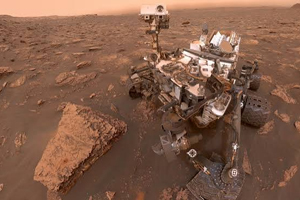
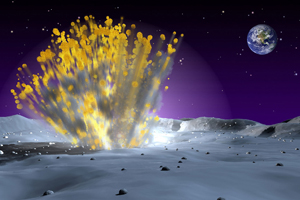
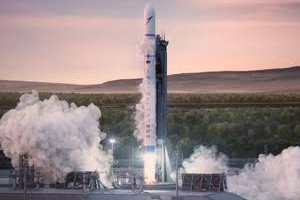
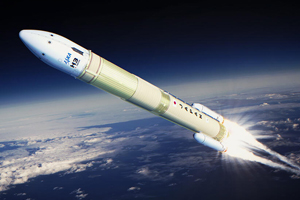
Around the world international, national, independent and commercial interests are increasing enterprise toward the Moon, embracing collaboration over confrontation. Science and policy leaders in the USA are only beginning to recognize the exceptional progress made by relative newcomers to the club of multiworld capabilities. The China Chang’e lunar exploration program, with the only active spacecraft operating on the surface of the Moon, is rapidly advancing toward sample return and potential crewed capabilities. India, while planning Chandrayaan 2 Moon lander for 2017, is operating the interplanetary Mangalyaan Mars Obiter mission and launching indigenous rockets at price points that frankly bewilder American heavyweights like NASA and Boeing. Japan, Korea, Europe, Russia all have lunar missions in various stages of development. NewSpace ventures with rapid-development, low-cost ethos are aspiring towards the Moon for commerce, science and culture. Alexandra Hall (Space Portal, NASA Ames) and Charles Miller (NexGen Space LLC) recently published a study proposing that America could develop an Evolvable Lunar Architecture with permanent human settlement on the Moon by leveraging commercial partnerships within the existing NASA deep space human spaceflight budget of US$3-4B per year. Long distracted from logic and reality of necessities / opportunities on the Moon, even prominent Mars mission advocates, are now heralding the importance of lunar base as stepping stone to sustainable Mars missions and wider Solar System exploration. (Image Credit: JPL, NASA, ISRO, CNSA, NexGen, Alliance for Space Development, A. Nesterova)
MONDAY
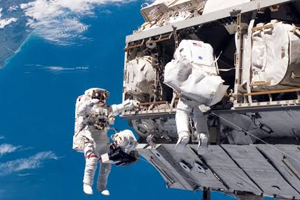
May 9 — ISS, LEO: Expedition 47 continues exploring the effects of gravity on astronauts and on technology in order to help plan for longer missions further out into the Solar System, ISS has reached approximately 6,400 days in orbit.
May 9 — Solar Dynamics Observatory, GEO: Multi-wavelength ‘Living With a Star’ program mission SDO in circular, geosynchronous Earth orbit at an altitude of 35,789 kilometers supporting NASA coverage of Mercury Transit, Solar and Heliospheric Observatory (NASA / ESA) and Hinode (JAXA, Japan) will also observe the event from space.
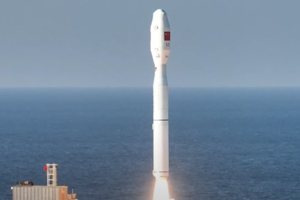
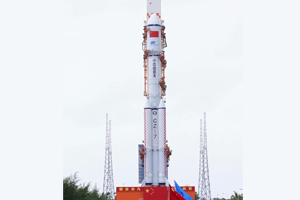
May 9 — Wenchang Satellite Launch Center, Hainan, PRC: Newest and southernmost China Spaceport is being prepared for maiden launch of Long March 7 rocket in June and launch of Chang’e-5 lunar sample return in 2017.
May 9 — Deep Space Industries, Moffett Field CA: NewSpace company working on Prospector-X mission, under newly formalized partnership agreement with Luxembourg Government and its banking institution Société Nationale de Crédit et d’Investissement to explore, use and commercialize space resources.
May 9 — Altius Space Machines, Honeybee Robotics,Paragon Space Development Corporation, Broomfield CO, Manhattan NY, Tucson AZ: Each advancing work after selection by NASA for various Small Business Innovation Research Phase I awards, Honeybee also won two Small Business Technology Transfer Research awards.
May 9 — SpaceVR, San Jose CA: Accelerating launch of Overview 1 (world’s first platform for creating cinematic, live, virtual space tourism) with additional US$1.25M seed financing round led by Shanda Group.
May 9 — Transit of Mercury: Planet, smallest and closest to Sun, passes directly between Earth and Sun; with safety precautions observers see small dot cross face of Sun; fully visible in eastern N. America, S. America, Western Europe; partial everywhere else except Australia and far eastern Asia; 01:12-08:42 HST.
= All times
for terrestrial events in local time unless noted.
= All times for international terrestrial events in local time unless noted.
= All times for space events, and…
= All times for international space / astro events in Hawaii Standard Time unless noted. Add 10 hours to obtain UT (‘Universal Time;’ Greenwich, England).
Record-breaking Astronaut Scott Kelly Highlights Human Space Endurance for Commencement Speech
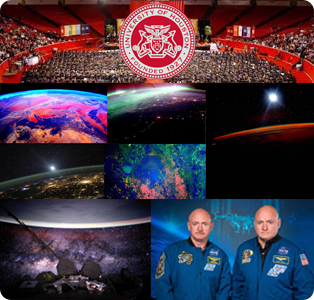
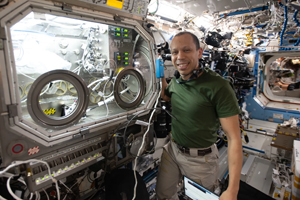
Captain Scott Kelly to discuss his personal life events and journey throughout his illustrious 20-year career with NASA as commencement speaker on 14 May for The University of Houston’s graduating class of 2016. Former Astronauts Scott Kelly (R), and his twin brother Mark Kelly (L), continue to participate in “twin-study”. Scott Kelly’s 340 days in space is contributing information in 7 key areas: Vision Impairment, Fine Motor Skills, Microbial, Tasks Functions, Behavioral Health, Metabolic, and Physical Performance. Benefits of these investigations will note the effects of prolonged spaceflight as scientists evaluate results and identify differences between brothers as a guide for planning extended Human Space missions. Further personal details of his incredible journey to be revealed as Astronaut S. Kelly writes his memoir with Alfred A. Knopf entitled ‘Endurance: My Year in Space and Our Journey to Mars,’ with anticipated global release in November 2017. With an impressive total of 520 days in space spanning 4 space missions, Kelly has surpassed previous USA records. During his final mission Kelly circled the Earth 5,440 times while soaring at 400 kilometers altitude witnessing 10,944 sunrise / sunsets, traveling 231,498,542 kilometers in total distance, and taking hundreds of photos – sharing them with an excited social media audience that continues to be inspired by his momentous journey. (Image Credit: University of Houston, NASA, Scott Kelly)
May 9 — Cassini OTM-449,Saturn Orbit: Spacecraft conducts Orbital Trim Maneuver #449 today.
May 9 — International Astronautical Federation, Online / Paris, France:Newsletter Submissions Due, open to IAF members, distributed to nearly 27,000 subscribers worldwide.
May 9-13 — ESA, Ministry of Transport, Ministry of Environment and Ministry of Education, Youth and Sports of the Czech Republic, Prague, Czech Republic:Living Planet Symposium 2016.
May 9 — Amor Asteroid 2016 EE158: Near-Earth Flyby (0.100 AU).
May 10-11 — Grand-Duchy of Luxembourg, ESA, ISU, Nereus, Kirchberg, Luxembourg:Space Forum 2016; over 6,000 attendees from 72 countries expected, at European Convention Center; held in conjunction with ICT Spring 2016.
May 10-13 — ESA, Climate and Cryosphere project (Clic), Prague, Czech Republic:Earth Observation and Cryosphere Science 2016, conference presenting state-of-the-art research and developments in the use of Earth Observation for cryosphere science.
May 10 — Moon: 14.54° S of Castor, 20:00.
May 10 — Amor Asteroid 2016 HM3: Near-Earth Flyby (0.069 AU).
WEDNESDAY
May 11 — ISS, Dragon CRS-8 Release, Undocking & Return to Earth, LEO: Dragon to return to Earth with up to 1,000 kg of science, cargo, equipment.
May 11 —GSFC, NASA, Greenbelt MD: Goddard Scientific Colloquium: The Martian: Science Fiction and Science Fact, by James Green, Director of Planetary Science Division (NASA HQ), in Building 3 Auditorium, 15:30.
May 11 — Rotary Club of North Hawai`i, Kamuela HI: Rotary Club of North Hawaii Meeting; guest speaker Dr. Warren Skidmore of Thirty Meter Telescope, at Anna Ranch, 12:00.
May 11-13 — Chianti Topics, Florence, Italy: 2nd International Focus Workshop: Use of Small Telescopes in the Giant Era workshop at Osservatorio Polifunzionale del Chianti.
May 11 — Moon: 10.9° S of Pollux, 01:00.
THURSDAY
May 12 — PROCYON (PRoximate Object Close flYby with Optical Navigation),Asteroid 2000 DP107 Flyby: University of Tokyo and JAXA / ISAS (Institute of Space and Astronautical Science) 50-kg PROCYON microsatellite to fly by binary asteroid 2000 DP107; launched Dec 4, 2014 as secondary payload with Hayabusa 2.
May 14 — The Astronomical League,Global: Astronomy Day 2016; astronomical societies, planetariums, museums, observatories sponsoring public viewing sessions, presentations, workshops.
May 14 — University of Houston, Houston TX: Astronaut Scott Kelly to deliver Commencement Address to over 5,000 graduating students at TDECU Stadium.
May 15 — Smithsonian National Air and Space Museum, Washington DC: Buzz Aldrin book signing for No Dream is Too High: Life Lessons From a Man Who Walked on the Moon, 11:00-13:00 at Museum Store.
May 15 — Journey Museum, Rapid City SD: Journey Into Space, a real-time trip through space using NASA supported Uniview Digital Universe Program.
May 15 — May Arietid Meteors : Radio Shower, 18:00.
Includes ~150 meetings covering the fields of COSPAR Scientific Commissions / Panels / Task Groups, such as SC B: The Earth-Moon System, Planets, and...
From 02 to 07 August 2026, a few thousand geoscientists across diverse disciplines will gather at the 23rd annual meeting of the Asia Oceania Geosciences...
2:45 pm EDT from Johnson Space Center, NASA astronaut Chris Williams will recap his recent eight-month mission aboard the International Space Station. Williams returned to...
NASA Curiosity (Mars Science Laboratory) rover surpasses another full year of operations on Mars surface today; launched Nov 26, 2011 – landed Aug 5,...
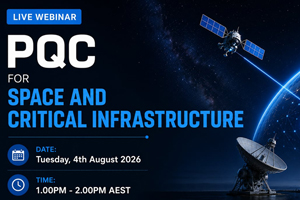
Virtual Series 2026 will offer deeper conversations on why PQC matters and the practical steps businesses should be taking; starts 1:00 pm AEST. Featuring:...
This international lunar science meeting has two objectives: to provide a platform for leading experts to review recent advances across lunar research, from the...
At CSIR International Convention Centre. Key topics are Earth Observation, Developing Space Tourism, Space Supply Manufacturing. Cultural tours are offered.
Participants will receive theoretical and hands-on training in electron imaging and X-ray spectroscopy for application to planetary samples. This training opportunity is targeted at...
"Leading Australia’s Space Future for Our Strategic Advantage". Southern Space 2026 brings together decision-makers who set the direction for Australia’s space sector. It is...
 = All times
 = All times for international terrestrial events in local time unless noted.
 = All times for space events, and…
 = All times for international space / astro events in Hawaii Standard Time unless noted. Add 10 hours to obtain UT (‘Universal Time;’ Greenwich, England).