HANBIT-Nano Debuts, Boosting Global SmallSat Access; Other S. Korea Launches in Pipeline
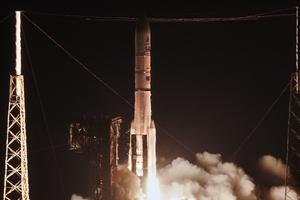
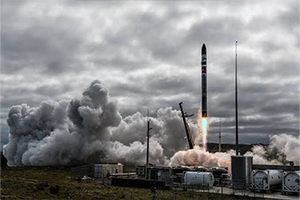
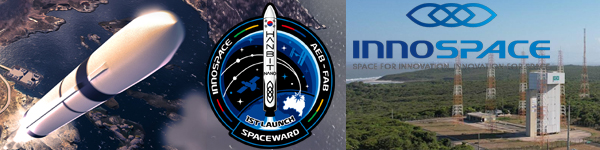
NET November 22, Innospace of Republic of Korea launches HANBIT-Nano rocket from Alcântara Space Center, Brazil (2.4°S). Innospace partners with AEB, Brazilian Air Force and Korea AeroSpace Administration (KASA) for safety and operations. A 2-stage vehicle, 21.8 meters tall, diameter 1.4m, ~25,000kg tons, it has 1st-stage hybrid engine using paraffin wax / liquid oxygen to produce 245 kN thrust. It can take 90kg to LEO or SSO and will take 18kg on this flight, including 5 satellites: 2 from Brazil space agency AEB, 2 from Universidade Federal do Maranhão of Brazil and 1 from Grahaa Space of Bengaluru (India). It also carries 2 inertial navigation system (INS) devices, from AEB and Castro Leite Consultoria of Brazil, and an empty aluminum cocktail can from Brewguru of Korea. INS devices are alternative to GPS. Innospace CEO Soojong Kim is its largest investor, contributing ~25% of its ~US$40M funding. Other investors include IMM Investment, Shinhan Venture Investment, et al. Per-kg launch cost of $27,000-$33,000 is below traditional rates. Such affordable access democratizes space, fosters international collaboration and promotes sustainable orbital economies. Korea Aerospace Research Institute will launch CAS500-3 aboard Nuri rocket NET November 26 from Naro Space Center, S. Korea, 34.2°N, and will have Arianespace launch KOMPSAT-7 on Vega C from Guiana Space Centre NET November 28. (Image Credits: Innospace)
APRSAF-31 in Philippines: Empowering Asia-Pacific Region through Space Initiatives in Action
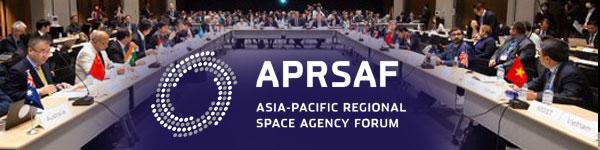
The 31st Asia-Pacific Regional Space Agency Forum (APRSAF-31) convenes under the banner “Empowering the Region through Space Ecosystems in Action,” November 18–21 at Shangri-La Mactan, Cebu, Philippines hosted by the Philippine Space Agency (PhilSA) with JAXA as a pivotal organizer. Building on APRSAF-30’s record over 700 participants from 30+ countries, the 31st edition promises even broader collaboration. This landmark gathering amplifies Asia-Pacific collaboration, uniting space leaders to harness technology for societal resilience, disaster management, and industry growth. Plenary sessions spotlight regional space ecosystems, disaster-risk applications, and workforce development, featuring Astronauts Takuya Onishi and Koichi Wakata, alongside visionaries from ISRO, KASA, and ASA. Working groups – Space Education for All Working Group (SE4AWG), Satellite Applications for Societal Benefit Working Group (SAWG), Space Frontier Working Group (SFWG), Enhancement of Space Capability Working Group (SCWG), Sentinel Asia, and Space Applications For Environment (SAFE) drive actionable initiatives. Key nations and participants include Philippines (PhilSA) as the host and general co-chair, Japan (JAXA, MEXT) as co-organizer and co-chair, Australia (ASA), India (ISRO), Republic of Korea (KASA), Taiwan (TASA), Indonesia (BRIN), Malaysia (MYSA), Singapore (OSTIn), Thailand (GISTDA), Vietnam (VNSC), UAE (UAESA), UNOOSA, ESA, ASEAN SCOSA. Culminating in the APRSAF Awards, joint statement, evening reception, APRSAF-31 charts the next orbit for inclusive, innovative space cooperation across the Asia-Pacific. (Image Credits: APRSAF)
Humans in Space
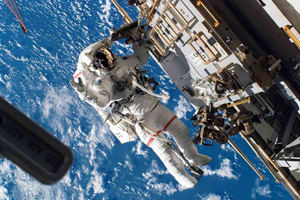
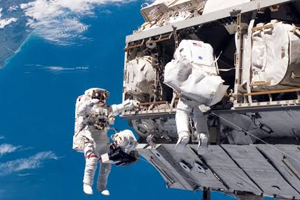
International Space Station, ~415-km LEO: Expedition 73 crew—consisting of Zena Cardman, Mike Fincke, Jonny Kim and Chris Williams of NASA; Kimiya Yui of JAXA; and Oleg Platonov, Sergey Ryzhikov, and Alexey Zubritsky of Roscosmos—continues a busy schedule including unloading gear and processing biological samples from recently arrived JAXA HTV-X1 cargo vehicle with 4.5 tons of supplies, advancing bone cell research in the Life Sciences Glovebox; and preparing for Soyuz MS-28 launch NET November 27.
Tiangong Space Station, ~390-km LEO: Shenzhou-21 crew working aboard the station with supplies from Tianzhou-9, while damage to Shenzhou-20 craft from space debris continues being evaluated by ground controllers; Sz-20 three-member crew now returned to Earth after using Sz-21 craft; Sz-22 ship will launch to TSS uncrewed with supplies to act as return vehicle for Sz-21 crew.
Near-Earth Objects Close Approaches – Mon Nov 17: Apollo Asteroid 2022 FG4 (0.047 AU); Wed Nov 19: Apollo Asteroid 3361 Orpheus 1982 HR (0.037 AU); Fri Nov 20: Apollo Asteroid 2013 NJ4 (0.032 AU); Sat Nov 22: Aten Asteroid 2020 YT (0.052 AU)
Commercial Lunar Operators' Perspectives on the Safety and Sustainability of Lunar Activities; session titles include: Working Group on Legal Aspects of Space Resources, World Intellectual Property Organization Video, Lunar Surface Issues, Top 3 Priorities for Lunar Safety and Sustainability, others; at Vienna International Centre.
“Space” is one of 9 conference tracks. One speaker is Andreas Heitmann, Program Director, SpaceFounders, a space-tech accelerator, supporting 70+ startups from 20 countries that have collectively raised over €220 million.
Dutch company T-Minus Engineering aims for suborbital launch of Barracuda hypersonic test platform; launch window open November 18 daily through November 24.
The Consultative Committee on Time & Frequency Task Group on Moon Timing is organizing an online workshop on the definition of Moon time, on November 18th, 2025, 13h-15 UTC. After this summer's discussions in La Plata we assume some of you could be interested in participating. You can register here: […]
Join over 10,000 professionals from the entire space supply chain. Meeting face-to-face plays a crucial role in propelling the space industry forward, and what better place to do it than at Europe's largest B2B space event. With over 900 exhibitors across five halls, connections aren't just possible, they're inevitable. Find […]
The APRSAF-31 will be held in Cebu City, Philippines on 18 November to 21 November 2025, under the theme “Empowering the Region through Space Ecosystems in Action”. APRSAF, as an open and flexible space forum for the Asia-Pacific region, consistently promotes international collaboration for the peaceful uses of space. In […]
15:30-18:30 HST; Please RSVP to info@iloa.org to join the ILOA Galaxy Forum and learn more about Hawai'i lunar and space initiatives! At the Forum, ILOA Director Steve Durst will highlight the non-profit's lunar missions: the ILO-C which is a small camera launching aboard China's Chang'E-7 lander in August 2026 to […]
11:00-12:00 MST; Presentation by Scott Eckley of NASA Johnson Space Center: Utilization of X-ray computed tomography during the preliminary examination of unopened Apollo drive tube samples 73001 and 73002. Join here: https://sservi.nasa.gov/casa-moon-seminar-series Hosted by CASA Moon, SSERVI, Institute of Meteoritics at UNM, University of New Mexico Grand Challenge, Lunar and […]
11:00-12:30 EDT; In this special program, Beyond Earth President Steve Wolfe invites some of his space evangelist friends to join in a dialogue on answering the perennial question of why we go to space. At a moment when the space policy discourse is dominated by concerns for economic growth and […]
Silicon Valley Astronomy Lecture Series, Celebrating its 26th anniversary, Presents Dr. Alfonso Davila (NASA Ames Research Center) for a free, illustrated, non-technical lecture entitled: The Search for Life on Saturn’s, Intriguing Moon Enceladus Location: Smithwick Theater, Foothill College, Los Altos Free Admission In 2005, the Cassini spacecraft made a groundbreaking […]
Latin America space event that gathers senior decision-makers from satellite companies. Organized by Novaspace, it serves as a platform for networking, business development and discussions on the future of the space industry in Latin America; at Hall 74 Event Center. 200+ attendees include 40+ executive-level speakers from 20+ countries Last […]
Conducted in French. Students will vote to made critical decisions about a Moon mission. Developed in a collaboration among Canadian Space Agency (CSA), Canadian National Library and Archives, et al. Led by CSA Senior Scientist Caroline-Emmanuelle Morisset. Four 55-minute sessions available, 09:00 and 13:00 each day.
Space Energy Insights, in partnership with Space Frontier Foundation, holds the world’s only conference dedicated to space-based solar power, uniting experts across energy, space, defense, policy, law, economics and beyond. At the Royal Aeronautical Society in London last year. This year’s theme is “Energy for Security”. Last year’s keynote talks, presentations and […]
Surpassing 21 full years in space, having launched in 2004, Swift is observing gamma-ray bursts & their afterglows in gamma-ray, X-ray, ultraviolet, optical wavelengths from LEO.
We will take this hour to hear from speakers who would have given surface-power-related presentations at the Fall Meeting: William Smith (Infinity Fuel Cell and Hydrogen) "Surviving the Lunar Night with PEM Fuel Cells” Vaibhav Bhosale (Georgia Institute of Technology) "Lighting Up the Moon: Scheduling Framework for Cislunar Space Solar […]
As China and international partners plan permanently occupied International Lunar Research Station and next-gen rockets for Solar System Complete exploration, observation of 1999 launch of Shenzhou-1, first experimental crewed spacecraft honored today.
Join “Space Industry Connect” Bridging the Asia-Pacific Space Ecosystem at APRSAF-31 in Cebu As a program partner, SPACETIDE is supporting the Space Industry Connect (SIC) business matching event as an official program of the 31st Asia-Pacific Regional Space Agency Forum (APRSAF-31), taking place in Cebu, Philippines, on November 20, 2025. […]
Presented by Megan Watzke of Harvard-Smithsonian Center for Astrophysics; 19:00 Eastern Time (New York); free Join Zoom Meeting https://us06web.zoom.us/j/8952645644?pwd=ZmozcWFlK0JJSXJ2MGdWeEMxQTVEUT09&omn=83922057002 Meeting ID: 895 264 5644 Passcode: 634305 Host William Waller has Doc Waller's Earth and Space Report, a YouTube channel.
Steve Frick, Space Shuttle Atlantis Commander (STS-122) and Pilot (STS-110), describes his route to become an astronaut and personal accounts and experiences with Q&A, Space Shuttle Atlantis® guided tour / pre-shows The Flight and Coming Home, Shuttle Launch Experience®; followed by self-tour of the Apollo/Saturn V Center.
In2Space brings together global and regional leaders from both traditional and new-space sectors alongside experts in ground-based satellite infrastructure. The conference will feature insightful presentations, interactive workshops and a dynamic exhibition floor highlighting the latest developments across the full satellite ecosystem. Features Sherif Sedky, CEO, Egyptian Space Agency, and Ali […]
Spacecraft to be launched without crew to replace Shenzhou-20 craft docked at Tiangong Space Station but damaged by orbital debris and deemed unsafe for crew. Launch window 12:11-12:41 China Time (18:11-18:41 Hawaii Time on Nov 24)
Kathryn Hadler of European Space Resources Innovation Centre (ESRIC) presents on In-Situ Resource Utilization, followed by Q&A. Will be recorded and later available at American Institute for Aeronautics and Astronautics (AIAA) Space Resources Technical Committee YouTube Channel, @aiaaspaceresources4398
At the University of Southern California, the world's largest gathering dedicated to human Mars exploration. For nearly three decades, the International Mars Society Convention...
NASA spacecraft surpasses another full year in orbit around Mars today, holds record for longest-surviving continually active spacecraft in orbit around a planet other...
At the Spokane Convention Center. The meeting will have a broad scope, with a wide-ranging program of science and workforce topics, and celebrating planetary...
Convene, connect, and collaborate at the 19th annual von Braun Space Exploration Symposium! This year’s event will spotlight how bold ideas, emerging technologies, and...
Themes include: Space & the Arctic; Space & AI; Space & International Collaboration. There is a Student Session, a Technical Session, a Frontier Session,...
Oslo Spaceport Norway offers monthly a knowledgeable speaker and opportunity for networking, 17:00-20:00 local time; free entry but registration required. Ground Control is for...
45 satellites to launch for Amazon Leo, formerly named Project Kuiper. This LEO mega constellation will offer broadband internet access with 3,276 satellites.
Occurring 31 October from 09:00-11:00 local time (16:00-18:00 HST, 19:00-21:00 PDT, 22:00-24:00 EDT on 30 October), this Galaxy Forum will be in hybrid format...
Originally planned around this date for Wenchang, China -- TBC (to be confirmed); As the only professional association for astronauts, ASE supports the advancement of...
Coordinating Division Division C Education, Outreach and Heritage The IAU Symposium on Innovative Research and Techniques in Astronomy Communication will take place from November...
Change clocks back 1 hour from Daylight Saving to Standard Time; does not include Hawai’i, Arizona (except the Navajo Nation), American Samoa, Guam, Northern...
ESWW is the main annual event in the European Space Weather and Space Climate calendar. It is an international meeting organised annually within the...
IAU Symposium: IAUS409 - A Journey Towards Effective Astronomy Communication; online and at National Astronomical Observatory of Japan, 2-21-2 Osawa Mitaka, Tokyo. Topics include:...
Launch Complex 1, ~39°S, Mahia Peninsula, New Zealand
iQPS Launch 9, an Earth observation satellite with Synthetic aperture radar for Japan-based imaging company iQPS, to launch on "The Sea God Surveys" mission...


 International Space Station, ~415-km LEO: Expedition 73 crew—consisting of Zena Cardman, Mike Fincke, Jonny Kim and Chris Williams of NASA; Kimiya Yui of JAXA; and Oleg Platonov, Sergey Ryzhikov, and Alexey Zubritsky of Roscosmos—continues a busy schedule including unloading gear and processing biological samples from recently arrived JAXA HTV-X1 cargo vehicle with 4.5 tons of supplies, advancing bone cell research in the Life Sciences Glovebox; and preparing for Soyuz MS-28 launch NET November 27.
 Lunar Enterprise News: Lunar Experts Favor More Moon Rock Returns: Selenology to Benefit Humanity │ Zarubin Highlights ISS Lessons for Cooperative International Lunar Program
  Near-Earth Objects Close Approaches – Mon Nov 17: Apollo Asteroid 2022 FG4 (0.047 AU); Wed Nov 19: Apollo Asteroid 3361 Orpheus 1982 HR (0.037 AU); Fri Nov 20: Apollo Asteroid 2013 NJ4 (0.032 AU); Sat Nov 22: Aten Asteroid 2020 YT (0.052 AU)