Japan Prepares 2 Upcoming Launches in Advance of Lunar and Galactic Missions
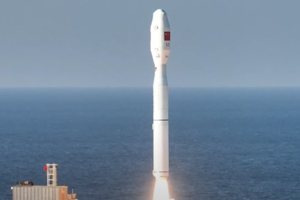
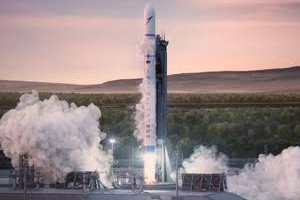
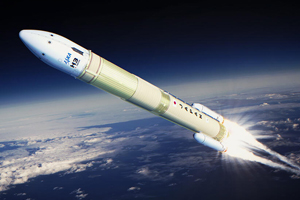
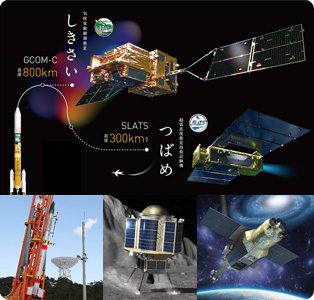
JAXA plans to launch 2 rockets from separate launch sites during the coming 2 weeks. From Tanegashima Space Center on December 23, Mitsubishi Heavy Industry Launch Services’ H-2A rocket #37 will for the first time attempt to deliver 2 satellites at different orbital altitudes: Global Change Observation Mission – Climate (GCOM-C) and Super Low Altitude Test Satellite (SLATS). The 2000-kg GCOM-C (also “Shikisai”) at an ~800 km orbit intends to monitor global changes related to the atmosphere and vegetation over a 5 year period using a second generation imager capable of observing in as many as 19 bands from near-UV to infrared wavelengths. SLATS (also “Tsubame”) will use an ion engine to test the potential use of very low orbital altitudes from 268 km to 180 km over at least a 2 year period, measuring atomic oxygen concentration and its damaging effects on satellite surfaces including multi-layer insulations. H-2A rocket’s new capability of launching multiple satellites into different altitudes will help with the proposed launch of SLIM lunar lander along with the X-ray Astronomy Recovery Mission for studying galactic plasma NET 2019. From Uchinoura Space Center on Dec 28, JAXA will attempt an experimental launch of a 52-cm diameter, 3-stage sounding rocket SS-520 #5 following a failure of #4 on Jan 15 this year. Capable of taking >4 kg to low earth orbit, it will carry a ~3 kg microsatellite TRICOM-1R developed by Tokyo University. (Image Credit: JAXA)
MONDAY
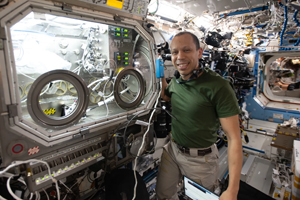
Ongoing… Dec 18 — ISS, 330-435-km LEO: Expedition 54 to have 3 newly arrived crew members Anton Shkaplerov of Roscosmos, Scott Tingle of NASA and Norishige Kanai of JAXA, as well as Dragon CRS-13 cargo ship; Space Debris Sensor to be mounted on ISS exterior to monitor impacts.
Dec 18 — NewSpace: Space Adventures future commercial circumlunar flight customer may be Anousheh Ansari; ispace Inc. of Japan announces 10.2 billion yen (US$90M) investments to launch mission to lunar orbit 2019, then land one year later; Blue Origin analyzing data from recent test launch of New Shepard in Texas.
Dec 18 — Solar System: New Horizons speeding 52,300 kph toward Kuiper Belt Object 2014 MU69, images and measurements of object reveals it could have a moon; Juno data research shows Jupiter Great Red Spot descends at least 322 km beneath clouds.
Dec 18 — USA: Space Policy Directorate 1 comes into action, calling for Human Return to Moon / strategic path into Solar System – question on budget allocation remains; NASA testing Orion parachutes at Yuma Proving Grounds, parachutes are meant to slow craft from 483 to 32 kph in under 10 minutes.
Dec 18 — Hawai`i: Astronomers from UH Institute for Astronomy, which discovered 1st interstellar object, acknowledges limited time (couple of weeks) to continue studying ‘Oumuamua; TMT developments and potential announcements expected early 2018 with potential construction permitted / planned for April.
= All times
for terrestrial events in local time unless noted.
= All times for international terrestrial events in local time unless noted.
= All times for space events, and…
= All times for international space / astro events in Hawaii Standard Time unless noted. Add 10 hours to obtain UT (‘Universal Time’).
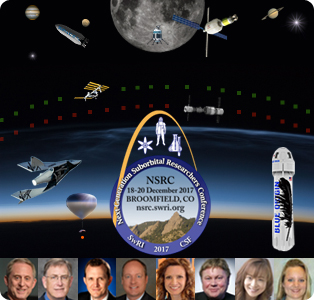
Next-Gen Suborbital Researchers Conference to Discuss New Technologies, Policies, Science
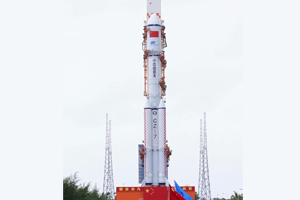
The 2017 Next-generation Suborbital Researchers Conference is being held December 18-20 in Broomfield, Colorado with support of SwRI, CSF, NASA, World View, Virgin Galactic, Moon Express and Blue Origin. Sponsors also include Spaceport America, Spaceport Colorado and Cecil Spaceport. The first day will have talks by (L-R) Alan Stern, Dan Dumbacher, George Whitesides, Eric Stallmer and Jane Poynter. Day two and three will have presentations by Bob Richards, Misuzu Onuki, Jane Kinney, Steve Jurczyk and Grant Anderson. There are tours planned for University of Colorado Hypervelocity Dust Impact Lab and Ball Aerospace. Blue Origin could be the first company to start regular suborbital tourism flights on New Shepard in 2018. It also is working toward orbital flights of New Glenn ~2020 and Lunar missions with the proposed New Armstrong. Hoping to revive its accomplishment of commercial human spaceflight in 2004, Virgin Galactic is making progress on SpaceShip Two VSS Unity flight testing. Sierra Nevada Dream Chaser (cargo) ship is passing glide / other tests for ISS transport, with the crewed Dream Chaser system to be developed after. Some companies are headed to the edge of Space including World View Enterprises and Zero2infinity, while Moon Express, Bigelow Aerospace, Astrobotic and SpaceX are working to transport / catalyze human expansion to the Moon, Mars and Deeper Space. (Image Credit: NGSRC, CSF, SwRI, NASA, VG, Blue Origin, Bigelow, World View Enterprises, Joel Kowsky)
Dec 18-19 — University of Aveiro, Higher Technical Institute (IST), Aveiro, Portugal:10th Black Holes Workshop.
Dec 19 — Gaia,Sun-Earth L2 Lagrange Point: ESA spacecraft reaches 4 years in orbit today; 5-year planned mission aims to map more than 1 billion stars; launched in 2013.
Dec 19 —Moon: 1.9° N of Pluto, 17:00.
Dec 19 — Aten Asteroid 2011 YD29: Near-Earth Flyby (0.045 AU).
Dec 21 — Winter Solstice: The Sun reaches the point where it is farthest South of the celestial equator, marking shortest day and longest night of the year (opposite in Southern Hemisphere); 06:28.
Dec 21 —Moon: 2.0° NNW of comet 2P Encke, 19:00.
Dec 21 —Saturn: At conjunction with Sun, 11:00.
Dec 21 — Apollo Asteroid 2017 WX12: Near-Earth Flyby (0.026 AU).
Dec 21 — Apollo Asteroid 2017 RP2: Near-Earth Flyby (0.058 AU).
Dec 21 — Amor Asteroid 2017 XN2: Near-Earth Flyby (0.086 AU).
FRIDAY
Dec 22 — New Horizons, KBO 2014 MU69 Trajectory: Spacecraft to go into hibernation today until 4 Jun 2018 at which point it will awaken to prepare for KBO approach and flyby KBO 1 Jan 2019.
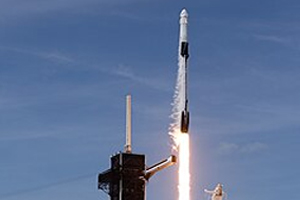
Dec 22 — SpaceX, Launch Falcon 9 / Iridium Next 31-40,Vandenberg AFB CA: SpaceX Falcon 9 rocket set to launch 10 satellites for Iridium next mobile communications fleet, using previously-flown first stage booster, and returning first stage to drone ship in Pacific Ocean.
Dec 22 — Space Center Houston,Houston TX:Lunch with an Astronaut, Tom Jones, adult US$69.95.
Dec 22 — The Space Show,Online / Tiburon CA: Dr. David Livingston talks with Jim Keravala, CEO of OffWorld.
Dec 22 — Ursid Meteor Shower Peak: Appearing to radiate from β star of Ursa Minor, Ursids are associated with comet 8P/Tuttle, they offer medium speed (33 km/sec), mostly faint with a few fireballs, 9-10 per hour, visible in northern Hemisphere, 05:00.
Dec 22 — Apollo Asteroid 2015 YQ1: Near-Earth Flyby (0.044 AU).
Dec 22 — Apollo Asteroid 2017 TS3: Near-Earth Flyby (0.047 AU).
Dec 22 — Apollo Asteroid 2017 XX2 : Near-Earth Flyby (0.071 AU).
Dec 22 — Apollo Asteroid 2007 KE: Near-Earth Flyby (0.072 AU).
Dec 22 — Apollo Asteroid 2015 HU9: Near-Earth Flyby (0.098 AU).
SATURDAY
Dec 23 — JAXA, Launch H-2A / GCOM-C & SLATS,Tanegashima Space Center, Japan: Japan H-2A rocket, designated H-2A F37, to launch Global Change Observation Mission-Climate (GCOM-C) and Super Low Altitude Test Satellite (SLATS) for JAXA; live stream video available.
Dec 23 — Mauna Kea Astronomy Outreach Committee, Mauna Kea HI, 2,800-meter level: Malalo o ka Po Lani; presentation covering cultural components that surround Mauna O Wakea, 18:00 – followed by stargazing program, at Mauna Kea Visitor Information Center.
Dec 23 — Space Center Houston,Houston TX:Lunch with an Astronaut, Clay Anderson, adult US$69.95.
Dec 23 —Mercury: 8.1° NNE of Antares, 15:00.
SUNDAY
NET Dec 24 — Roscosmos State Corporation, Launch Soyuz / Kanopus-V 3 and 4,Baikonur Cosmodrome, Kazakhstan: Russia Soyuz to launch Kanopus-V 3 and 4 Earth observation satellites to assist Russia government in disaster response, mapping and forest fire detection.
Dec 24 — Iridium 94, LEO: Iridium 94 satellite flare to occur over of Hawai`i Island at 06:05:37 HST, magnitude of -1, 60° altitude, distance to satellite will be about 886 km.
Dec 24 —Moon: 1.4° SSE of Neptune, 04:00.
Dec 24 — Aten Asteroid 2017 WZ14: Near-Earth Flyby (0.019 AU).
Dec 24 — Apollo Asteroid 2017 WD15: Near-Earth Flyby (0.069 AU).
Includes ~150 meetings covering the fields of COSPAR Scientific Commissions / Panels / Task Groups, such as SC B: The Earth-Moon System, Planets, and...
From 02 to 07 August 2026, a few thousand geoscientists across diverse disciplines will gather at the 23rd annual meeting of the Asia Oceania Geosciences...
2:45 pm EDT from Johnson Space Center, NASA astronaut Chris Williams will recap his recent eight-month mission aboard the International Space Station. Williams returned to...
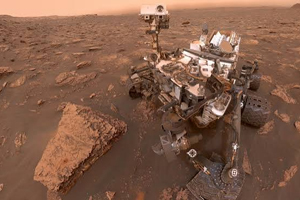
NASA Curiosity (Mars Science Laboratory) rover surpasses another full year of operations on Mars surface today; launched Nov 26, 2011 – landed Aug 5,...
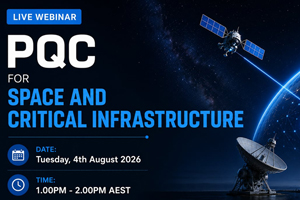
Virtual Series 2026 will offer deeper conversations on why PQC matters and the practical steps businesses should be taking; starts 1:00 pm AEST. Featuring:...
This international lunar science meeting has two objectives: to provide a platform for leading experts to review recent advances across lunar research, from the...
At CSIR International Convention Centre. Key topics are Earth Observation, Developing Space Tourism, Space Supply Manufacturing. Cultural tours are offered.
Participants will receive theoretical and hands-on training in electron imaging and X-ray spectroscopy for application to planetary samples. This training opportunity is targeted at...
"Leading Australia’s Space Future for Our Strategic Advantage". Southern Space 2026 brings together decision-makers who set the direction for Australia’s space sector. It is...
 Dec 18 —
  Dec 18 — NewSpace:
  Dec 18 — USA:
 = All times
 = All times for international terrestrial events in local time unless noted.
 = All times for space events, and…
 = All times for international space / astro events in Hawaii Standard Time unless noted. Add 10 hours to obtain UT (‘Universal Time’).