Building a 21st Century Sustainable, International Human Moon Civilization
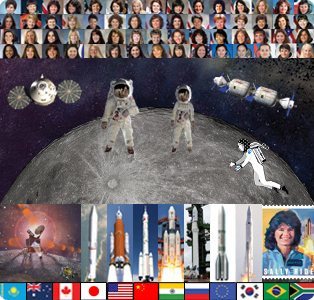
U.S. Space Policy Directive-1 is positioning NASA and commercial enterprises to focus on 3-7 year Human Return to Moon and Deep Space Gateway. ESA is advancing its Moon Village concept. India will attempt 1st ever Moon South Pole landing early 2018, while progressing indigenously-built GSLV Mk 3 capable of Human transport. China is the only country operating on Moon with Chang’e-3, and planning CE-4 lunar far side landing 2018, sample return and Human missions. Moon exploration developments in Japan SLIM mission and South Korea Naro-2 / Korea Pathfinder Lunar Orbiter. Canadian Space Agency designing robotics to support Deep Space Gateway / future Lunar missions. A 21st Century truly global / interglobal, sustained Human presence on the Moon likely requires an inclusive IAF “3G” (geography, generation, gender) approach with international & commercial / independent collaboration, and putting the First Woman on the Moon – a step toward fulfilling Apollo 11 “In Peace For All”; in contrast to 20th Century, single nation led competition which so far resulted in nearly 50-year delay to develop lunar settlement, ISRU science and exploration. Celebrating the 60 Women in Space and looking to the future – Sally Ride, the 1st American Woman in Space will feature on 2018 U.S. postal stamps; 2017 NASA and Canadian Space Agency astronaut candidates are ~50% female; a private venture in Germany is searching for 1st German woman astronaut; UAE is collecting applicants for its astronaut program; and Space Age Publishing Company invites readers to vote on its New Year’s poll “First Woman on the Moon: From Where?”, as well as emailing news@spaceagepub.com a nomination for the First Woman on the Moon. (Image Credit: NASA, USPS, ILOA, JAXA, Roscosmos, Bigelow, ISRO, KARI, CNSA, ESA, SPC)
MONDAY
Ongoing… Dec 25 — ISS, 330-435-km LEO: Expedition 54 six-member crew transferring cargo from Dragon CRS-13 including 711 kg of experiments & research equipment and 165 kg of EVA gear, will have Holiday and New Year 2018 celebrations in Space; next gen Total and Spectral Solar Irradiance Sensor to be installed on station; new crew Anton Shkaplerov, Norishige Kanai, Scott Tingle becoming oriented with ISS, scheduled to stay aboard until June 3.
Dec 25 — Solar System: JAXA Akatsuki orbiter taking measurements of Venus atmospheric winds; research suggests Mars basalt rocks can hold 25% more water than those on Earth, resulting in water being drawn into Mars interior; LPSC 2018 will feature special session on Cassini spacecraft and data on Saturn.
Dec 25 — Global: Korea Aerospace Research Institute planning to launch its first Moon mission on Falcon 9 by 2020; Algeria working on 2020-40 space program; Italy Space Agency (ASI) contracts suborbital flight SpaceShip Two for science research; Europe ArianeGroup building first Ariane 6 launch vehicle; UAE developing spacecraft to arrive at Mars in 2021.
India to Begin 2018 with PSLV-C40 Launch and 105th Indian Science Congress
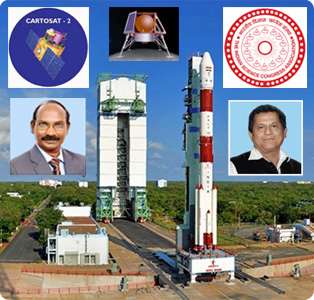
ISRO plans to launch Polar Satellite Launch Vehicle from Satish Dhawan Space Center First Launch Pad in early January, possibly the 10th. It will be the first launch since August when PSLV failed for the first time after 37 consecutive successes. This launch will carry ISRO Cartosat-2F satellite and UK NovaSAR-S, along with 3 microsats and 25 nanosats from various international customers. Cartosat-2F, weighing ~700 kg, is a land observation satellite for cartographic purposes, while the 430-kg NovaSAR-S is a synthetic aperture radar platform for applications such as disaster monitoring and maritime surveillance. The 3 microsats are Carbonite 2, LEO Vantage 1, and Iceye-X1 — Finland’s 1st commercial satellite. Piggybacking nanosats include 4 Doves from Planet Labs, 4 Lemur-2s from Spire, a pair of CANYVAL-X astronomy satellites by Yonsei University in South Korea, and Arkyd 6A by Planetary Resources. ISRO Chairman A.S. Kiran Kumar stated “We are planning to have at least one launch mission a month in 2018”. This will include 2 Moon landers: Chandrayaan-2 on GSLV and the Team Indus mission on PSLV-C41, both slated for Q1. PSLV also remains a possible launcher for ILO-1. The 105th Indian Science Congress is being held January 3-7 at Osmania University in Hyderabad. It will feature an Earth System Sciences section recorded by Rimjhim B. Singh of ISRO Space Applications Centre. The Mathematical Sciences section, presided by M. Xavier James Raj of ISRO Vikram Sarabhai Space Centre, will discuss promotion of space science through educations and research. The Congress will also have a special session covering space science and technology, as well as Women’s Science Congress. (Pictured: VSSC Director K. Sivan, ISCA President Achyuta Samanta; Image Credit: ISRO, ISCA, Team Indus)
Dec 25 — Mars Express, Mars Orbit: ESA spacecraft begins 15th year in orbit today; will continue to study Mars atmosphere & climate, planet structure, mineralogy, geology, and to search for traces of water.
Dec 25 —Moon: At first quarter, 23:19.
Dec 25 —Venus: 1.1° S of Saturn, 07:00.
Dec 25 — Aten Asteroid 2016 YA1: Near-Earth Flyby (0.080 AU).
Dec 19 – Mar 6, 2018 — CNSA, Online / Beijing, China: CNSA collecting 20,000 digital messages from public to be stored in Chang’e-4 relay satellite launching May-June 2018 to Earth-Moon L2 Lagrange Point to support Moon South Pole missions.
NET Dec 24 — Roscosmos State Corporation, Launch Soyuz / Kanopus-V 3 and 4,Baikonur Cosmodrome, Kazakhstan: Russia Soyuz to launch Kanopus-V 3 and 4 Earth observation satellites to assist Russia government in disaster response, mapping and forest fire detection.
TUESDAY
Dec 26 — Roscosmos State Corporation, Launch Zenit 3F / AngoSat, Baikonur Cosmodrome, Kazakhstan: Ukraine Zenit rocket with Russia Fregat upper stage to launch AngoSat communications satellite – Angola’s first satellite (built by RSC Energia).
Dec 26-28 — CNSA, Launch Long March 2D / Superview 1-03 and 04, Taiyuan Satellite Launch Center, China: Two-day launch window for Long March 2D deploying two SuperView 1 (GaoJing) Earth observation, sub-meter high-resolution satellites for Beijing Space View Technology Co.
Dec 26 — Aten Asteroid 2007 AG: Near-Earth Flyby (0.058 AU).
Dec 26 — Apollo Asteroid 2015 AF45: Near-Earth Flyby (0.076 AU).
WEDNESDAY
Dec 27 — JAXA, Launch SS-520-5 / TRICOM 1R,Uchinoura Space Center, Japan: Second orbital launch attempt of Japan SS-520 rocket, a modified sounding rocket with added 3rd stage, to launch on experimental demo flight with TRICOM 1R CubeSat.
Dec 27 — Apollo Asteroid 2014 RJ11: Near-Earth Flyby (0.063 AU).
THURSDAY
Dec 28 — Space Center Houston,Houston TX:Lunch with an Astronaut, Ken Cameron, adult US$69.95.
FRIDAY
Dec 29 — ‘Imiloa Astronomy Center,Hilo HI:Stargazing LIVE @ ‘Imiloa; view the Mauna Kea night sky from ‘Imiloa planetarium in a guided tour, starts 19:00.
Dec 29 — The Space Show,Online / Tiburon CA: Dr. David Livingston talks with Tom Olson for the annual year end space industry summary discussion.
Dec 29 — Space Center Houston,Houston TX:Lunch with an Astronaut, Jerry Ross, adult US$69.95.
Dec 29 —Moon: 9.1° SSE of Pleiades, 23:00.
Dec 29 — Apollo Asteroid 2017 XG1: Near-Earth Flyby (0.042 AU).
Dec 29 — Apollo Asteroid 2017 XJ1: Near-Earth Flyby (0.083 AU).
Dec 29 — Apollo Asteroid 504680 (2009 EO2): Near-Earth Flyby (0.090 AU).
Dec 29 — Apollo Asteroid 140158 (2001 SX169): Near-Earth Flyby (0.090 AU).
SATURDAY
Dec 30 — Space Center Houston,Houston TX:Lunch with an Astronaut, Brian Duffy, adult US$69.95.
Dec 30 —Moon: 0.74° NNW of Aldebaran, 15:00.
Dec 30 — Apollo Asteroid 2017 QL33: Near-Earth Flyby (0.034 AU).
Dec 30 — Apollo Asteroid 2017 QL33: Near-Earth Flyby (0.067 AU).
Dec 31 — Langley Research Center, NASA,Hampton VA / Online: Submissions due for 2018 National Student Art Contest: The Next 100 Years; students grades K-12 invited to submit artwork illustrating innovation, science and technologies over the next 100 years.
MONDAY
NET 2018 — CNSA, Launch Long March 5 / Chang’e-5, Wenchang Satellite Launch Center, Hainan Island, China (19° N): Original date for launch of CE-5, could be late this year or early 2019; craft to collect up to 2 kg of lunar regolith over 2-day period near Mons Rumker Region 40.8° N, 58.1° W and transport back to Earth (Siziwang Banner, Inner Mongolia) within 1 month from launch; is precursor to CE-6 sample return mission and human missions.
NET 2018 — CNSA, Launch Long March 5 / Tianhe-1, TBD, China: China Space Station experimental core module Tianhe-1 (“Heavenly River” / Milky Way) expected to launch on new heavy lift Long March 5 rocket to LEO this year (orbit between 350 – 450 km), followed by launch of laboratory modules in 2020 and 2022.
NET 2018 — Canadian Space Agency, Launch RADARSAT Constellation, TBD: CSA RADARSAT Constellation Mission with 3 satellites will provide complete coverage of Canada vast land mass and oceans.
NET Q1 2018 — Rocket Lab, Moon Express, Launch Electron Rocket / MX-1 Lander, Mahia Peninsula, New Zealand: Launch of Moon Express lunar spacecraft to advance Moon exploration and commercial development, attempt to win grand prize US$20M from Google Lunar XPRIZE competition; craft to carry ILO-X Moon telescope, MoonLIGHT from the University of Maryland, Celestis Luna-02 mission for cremated remains.
NET Q1 2018 — ISRO, Launch PSLV / Team Indus, Satish Dhawan Space Center, Sriharikota, India: ISRO Polar Satellite Launch Vehicle to loft GLXP Team Indus craft to Earth orbit 880 km x 70,000 km; craft will attempt to soft land in Mare Imbrium, deploy rover & travel 500 meters for Google Lunar XPrize; also carrying Japan Team Hakuto rover SORATO.
NET Q1 2018 — Up Aerospace, Launch SpaceLoft XL / 8th Earth Rise Mission,Las Cruces NM: Up Aerospace to launch 8th suborbital Earth Rise mission (The Starseeker Flight) for Celestis Inc.
NET Jan — ISRO, Launch GSLV Mk. 3 – D2,Satish Dhawan Space Center, Sriharikota, India: India Geosynchronous Satellite Launch Vehicle Mk. 3 with lift off mass of more than 640 ton, set to launch second demonstration orbital flight with TBD payload.
NET Jan — SpaceX, Launch Falcon Heavy Demo,Cape Canaveral AFS FL: SpaceX maiden falcon heavy to launch this month; rocket consists of standard Falcon 9 rocket core with two additional strap-on boosters (total of 27 Merlin engines).
NET Jan — Orbital ATK, Launch Pegasus XL / ICON,Kwajalein, Marshall Islands: Orbital ATK Pegasus XL rocket to launch NASA Ionospheric Connection Explorer (ICON) satellite into orbit
NET Jan — TBA, Celestis, Launch Heritage Flight,Cape Canaveral AFS FL: Launch cremated remains to Earth Orbit for customers of Celestis Inc. hosted aboard OTB (Orbital Test Bed) satellite built by Surrey Satellite Technology; Earth Orbit Service #7, Celestis Memorial Spaceflight: #16.
NET Jan — Hawaii Space Exploration Analog and Simulation (HI-SEAS), 2,500-meter Elevation, Mauna Loa HI: HI-SEAS 6 six-member ‘Lavanaut’ crew to begin 8-month space mission simulation.
Jan 1 —Deep Space,Kuiper Belt Trajectory: New Horizons heading into ‘3rd Zone’ of Solar System, aiming to reach KBO 2014 MU69 (which may have a moon) on 1 Jan 2019 and potentially observe 15-20 other objects in its lifetime.
Jan 1 — Iridium 32 Flare, LEO: Iridium 32 satellite flare to occur over Hawai`i Island at 05:26:37 HST, magnitude of -4, 45° altitude, distance to satellite will be about 1,050 km.
Jan 1 —Moon: At perigee (distance 356,566 km) 11:54; Full (Wolf / Super Moon), 16:24.
Jan 1 — Apollo Asteroid 2017 YD: Near-Earth Flyby (0.049 AU).
TUESDAY
Jan 2-7 — CERN European Organization for Nuclear Research,Skeikampen, Norway:25th Nordic Particle Physics Meeting (Spatind 2018); lectures on particle physics, gravity, gravitational waves, dark matter, dark sector, future circular colliders.
Jan 2 — Earth: At Perihelion (distance 0.98329 AU), 20:00.
Jan 2 — Aten Asteroid 2015 RT1: Near-Earth Flyby (0.050 AU).
Jan 3 — Quadrantids Meteor Shower Peak: Appearing to radiate from constellation Quadrans Muralis; can produce up to 40 meteors per hour; visibility limited due to closest and largest Full Moon of 2018; peak 10:00.
Jan 3 —Moon: 2.3° S of Beehive Cluster, 09:50.
Jan 3 — Apollo Asteroid 2017 UY4: Near-Earth Flyby (0.067 AU).
Jan 3 — Apollo Asteroid 2017 XQ61: Near-Earth Flyby (0.089 AU).
THURSDAY
Jan 4 — SpaceX, Launch Falcon 9 / Zuma, Cape Canaveral AFS FL: SpaceX Falcon 9 rocket to launch classified Zuma payload, built by Northrop Grumman for U.S. government; launch window 20:00-22:00.
Jan 4 — Frontier Development Lab (FDL), NASA,Online: FDL 2018 Challenges Virtual Briefing; slated to run Jun 25 – Aug 17, FDL is an AI R&D accelerator that tackles knowledge gaps useful to NASA space program; 2018 topics are space resources, orbital debris, NEOs, Earth observation, space weather, astrobiology.
Jan 4-7 — IEEE Antennas and Propagation Society, U.S. National Committee, International Union of Radio Science (URSI), Boulder CO:National Radio Science Meeting (NRSM).
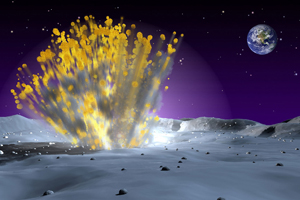
Includes ~150 meetings covering the fields of COSPAR Scientific Commissions / Panels / Task Groups, such as SC B: The Earth-Moon System, Planets, and...
From 02 to 07 August 2026, a few thousand geoscientists across diverse disciplines will gather at the 23rd annual meeting of the Asia Oceania Geosciences...
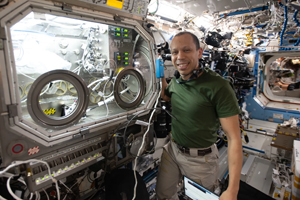
2:45 pm EDT from Johnson Space Center, NASA astronaut Chris Williams will recap his recent eight-month mission aboard the International Space Station. Williams returned to...
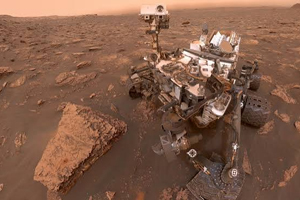
NASA Curiosity (Mars Science Laboratory) rover surpasses another full year of operations on Mars surface today; launched Nov 26, 2011 – landed Aug 5,...
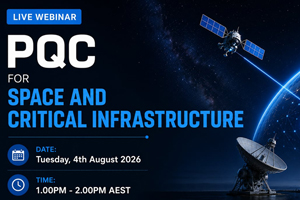
Virtual Series 2026 will offer deeper conversations on why PQC matters and the practical steps businesses should be taking; starts 1:00 pm AEST. Featuring:...
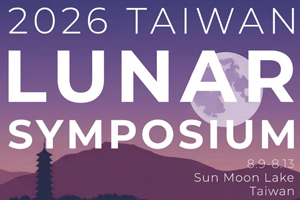
This international lunar science meeting has two objectives: to provide a platform for leading experts to review recent advances across lunar research, from the...
At CSIR International Convention Centre. Key topics are Earth Observation, Developing Space Tourism, Space Supply Manufacturing. Cultural tours are offered.
Participants will receive theoretical and hands-on training in electron imaging and X-ray spectroscopy for application to planetary samples. This training opportunity is targeted at...
"Leading Australia’s Space Future for Our Strategic Advantage". Southern Space 2026 brings together decision-makers who set the direction for Australia’s space sector. It is...
 U.S. Space Policy Directive-1 is positioning NASA and commercial enterprises to focus on 3-7 year Human Return to Moon and Deep Space Gateway. ESA is advancing its Moon Village concept. India will attempt 1st ever Moon South Pole landing early 2018, while progressing indigenously-built GSLV Mk 3 capable of Human transport. China is the only country operating on Moon with Chang’e-3, and planning CE-4 lunar far side landing 2018, sample return and Human missions. Moon exploration developments in Japan SLIM mission and South Korea Naro-2 / Korea Pathfinder Lunar Orbiter. Canadian Space Agency designing robotics to support Deep Space Gateway / future Lunar missions. A 21st Century truly global / interglobal, sustained Human presence on the Moon likely requires an inclusive IAF “3G” (geography, generation, gender) approach with international & commercial / independent collaboration, and putting the First Woman on the Moon – a step toward fulfilling Apollo 11 “In Peace For All”; in contrast to 20th Century, single nation led competition which so far resulted in nearly 50-year delay to develop lunar settlement, ISRU science and exploration. Celebrating the 60 Women in Space and looking to the future – Sally Ride, the 1st American Woman in Space will feature on 2018 U.S. postal stamps; 2017 NASA and Canadian Space Agency astronaut candidates are ~50% female; a private venture in Germany is searching for 1st German woman astronaut; UAE is collecting applicants for its astronaut program; and Space Age Publishing Company invites readers to
  Dec 25 —
  Dec 25 — NewSpace:
  Dec 25 — USA:
 = All times
 = All times for international terrestrial events in local time unless noted.
 = All times for space events, and…
 = All times for international space / astro events in Hawaii Standard Time unless noted. Add 10 hours to obtain UT (Universal Time).
 ISRO plans to launch Polar Satellite Launch Vehicle from Satish Dhawan Space Center First Launch Pad in early January, possibly the 10th. It will be the first launch since August when PSLV failed for the first time after 37 consecutive successes. This launch will carry ISRO Cartosat-2F satellite and UK NovaSAR-S, along with 3 microsats and 25 nanosats from various international customers. Cartosat-2F, weighing ~700 kg, is a land observation satellite for cartographic purposes, while the 430-kg NovaSAR-S is a synthetic aperture radar platform for applications such as disaster monitoring and maritime surveillance. The 3 microsats are Carbonite 2, LEO Vantage 1, and Iceye-X1 — Finland’s 1st commercial satellite. Piggybacking nanosats include 4 Doves from Planet Labs, 4 Lemur-2s from Spire, a pair of CANYVAL-X astronomy satellites by Yonsei University in South Korea, and Arkyd 6A by Planetary Resources. ISRO Chairman A.S. Kiran Kumar stated “We are planning to have at least one launch mission a month in 2018”. This will include 2 Moon landers: Chandrayaan-2 on GSLV and the Team Indus mission on PSLV-C41, both slated for Q1. PSLV also remains a possible launcher for ILO-1. The 105th Indian Science Congress is being held January 3-7 at Osmania University in Hyderabad. It will feature an Earth System Sciences section recorded by Rimjhim B. Singh of ISRO Space Applications Centre. The Mathematical Sciences section, presided by M. Xavier James Raj of ISRO Vikram Sarabhai Space Centre, will discuss promotion of space science through educations and research. The Congress will also have a special session covering space science and technology, as well as Women’s Science Congress. (Pictured: VSSC Director K. Sivan, ISCA President Achyuta Samanta; Image Credit: ISRO, ISCA, Team Indus)