Human Activities in Space: ISS, TSS and Future Commercial Stations
The International Space Station is now running under Expedition 74, with crew including Commander Mike Fincke, Kimiya Yui, Zena Cardman, Chris Williams, Oleg Platonov, Sergey Kud-Sverchkov and Sergei Mikaev. Experiments are helping push forward Artemis tech, such as radiation shielding and 3D bioprinting. Plans for deorbiting the station are moving ahead with a SpaceX contract worth up to $843M, aiming for 2030 and a smooth handover to commercial stations. Over on Tiangong Space Station, the Shenzhou 21 crew is currently aboard, Zhang Lu, Wu Fei and Zhang Hongzhang. Shenzhou 22 craft is docked as their ride home, after a debris issue with the previous ship. Expansion plans call for new modules by around 2028, with research in areas like hydroponics and quantum optics. The station is opening up to international partners and will host its first international Astronaut, from Pakistan. Starlab, a joint project from Voyager Space, Airbus, Mitsubishi and MDA, is a single-module station with three levels inside. It’s slated for 2029 launch on Starship, with research volume matching the ISS and more than half dedicated to commercial users. Vast Haven-1 is a single-module station, heading for launch NET May 2026 on a Falcon 9. Blue Origin and Sierra Space are teaming up on Orbital Reef, a multi-module setup for up to 10 people in 830 cubic meters (~100 less than the ISS), targeting operations in the late 2020s. Axiom is building a modular station that starts attached to the ISS, with the first module aiming for 2028, before going independent. Max Space is working on scalable inflatable modules, with a demo planned for 2026. (Image Credits: Vast, Blue Origin, CNSA, NASA)
James Webb Space Telescope Begins 5th Year in Space December 25
Webb 5th year in space begins this week, now in halo orbit around L2, ~1.5M km from Earth. 18 hexagonal mirror segments, of beryllium coated with ~48 grams of gold, must be kept <223°C to preserve precise alignment. A 5-layer sunshield protects even from sunlight reflected off Earth / Moon. ~6.5 square meter light-collecting area of Webb is about 6x that of Hubble, but with ~1/2 the mass at ~6,000kg. Webb can detect objects ~100x fainter–-much earlier in the history of the universe and has just found the earliest known supernova. Webb infrared-range images reveal galaxy formation, exoplanet atmospheres such as of Trappist-1, and first measurements of chemical / physical properties of a potential moon-forming disk encircling large exoplanet “CT Cha b”. Webb views Mars, Jupiter, Saturn, Uranus, Neptune, Pluto and their satellites, and Kuiper Belt Objects. Webb also views comets, asteroids and minor planets at or beyond the orbit of Mars. Recent findings from Webb include a supermassive black hole moving at 1,000+ km /second, an exoplanet with a helium-and-carbon-dominated atmosphere, and a lemon-shaped exoplanet orbiting a dead star. Partners NASA Space Telescope Science Institute, ESA and CSA-ASC provide the US$10B+ over 20+ years for the Webb. (Image Credits: mirror by Drew Noel at Ball Aerospace, NASA STScl / ESA / CSA-ASC, sunshield at Northrop Grumman
Humans in Space
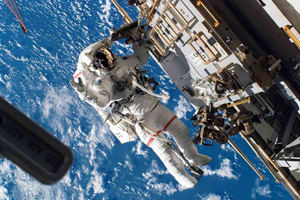
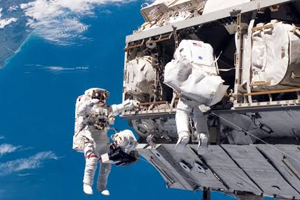
International Space Station, ~415-km LEO: Expedition 74 seven-member crew led by Mike Fincke, with members Zena Cardman, Chris Williams, Kimiya Yui, Oleg Platonov, Sergey Kud-Sverchkov and Sergei Mikaev, are conducting science research via stem cell studies, robotics experiments, heart health monitoring, physics investigations; other activities include cargo transfers, Earth observations, station upkeep, and spacesuit maintenance for 2026 EVAs.
Tiangong Space Station, ~390-km LEO: Shenzhou-21 three-member crew with Commander Zhang Lu, Wu Fei and Zhang Hongzhang continue their 6-month mission performing cargo transfers, microgravity research and biological studies; while Tianzhou is the state-owned resupply craft for TSS, carrying 7,400kg of cargo, China is developing 2 commercial alternatives: Haolong and Qingzhou, potentially launching next year.
Near-Earth Objects Close Approaches – Mon Dec 22: Amor Asteroid 2025 WT3 (0.040 AU); Wed Dec 24: Apollo Asteroid 488789 (2004 XK50) (0.053 AU); Fri Dec 26: Apollo Asteroid 2025 XP3 (0.034 AU); Sun Dec 28: Aten Asteroid 2021 AB1 (0.026 AU)
The 290-seat Samuel Oschin Planetarium boasts a spectacular Zeiss star projector, digital projection system, state-of-the-art aluminum dome, comfy seats, sound system and theatrical lighting.
Satish Dhawan Space Center, ~14°N, Sriharikota, India
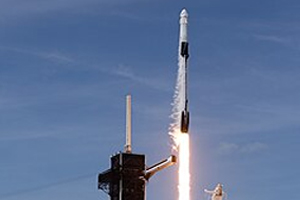
India Launch Vehicle Mark-3 (LVM3), also called Bahubali, to launch 6,500-kg Bluebird 6 for AST SpaceMobile; launch was coordinated by New Space India Limited (NSIL), commercial arm of ISRO.
From 11:00 - 14:00 HST, three planetarium showings will highlight international, cultural and indigenous astronomy, where we 'fit in' in the Galaxy, and how Gemini Observatory works together with observatories.
ESA spacecraft surpasses 22 full years / starts 23rd year in Mars orbit today; will continue to study Mars atmosphere & climate, planet structure, mineralogy, geology, and to search for traces of water; launched June 2, 2003 and arrived at Mars in Dec 2003.
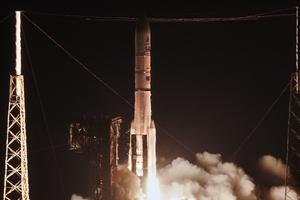
Surpassing 4 full years / beginning 5th in space, NASA (STSci) / ESA / CSA infrared astronomy telescope designed to observe the earliest galaxies, study star and planet formation, and analyze the atmospheres of exoplanets, launched on this day via Ariane 5 ECA rocket in 2021.
CSG-3 Earth observation satellite to Sun-Synchronous Orbit for Italian Space Agency (ASI), part of a reconnaissance constellation using synthetic aperture radars operating in the X-band.
Journey back 2000 years to Bethlehem as recorded sightings of significant astronomical occurrences during related historical events are examined to offer a possible scientific explanation for the Star the wise men followed.
At the University of Southern California, the world's largest gathering dedicated to human Mars exploration. For nearly three decades, the International Mars Society Convention...
NASA spacecraft surpasses another full year in orbit around Mars today, holds record for longest-surviving continually active spacecraft in orbit around a planet other...
At the Spokane Convention Center. The meeting will have a broad scope, with a wide-ranging program of science and workforce topics, and celebrating planetary...
Convene, connect, and collaborate at the 19th annual von Braun Space Exploration Symposium! This year’s event will spotlight how bold ideas, emerging technologies, and...
Themes include: Space & the Arctic; Space & AI; Space & International Collaboration. There is a Student Session, a Technical Session, a Frontier Session,...
Oslo Spaceport Norway offers monthly a knowledgeable speaker and opportunity for networking, 17:00-20:00 local time; free entry but registration required. Ground Control is for...
45 satellites to launch for Amazon Leo, formerly named Project Kuiper. This LEO mega constellation will offer broadband internet access with 3,276 satellites.
Occurring 31 October from 09:00-11:00 local time (16:00-18:00 HST, 19:00-21:00 PDT, 22:00-24:00 EDT on 30 October), this Galaxy Forum will be in hybrid format...
Originally planned around this date for Wenchang, China -- TBC (to be confirmed); As the only professional association for astronauts, ASE supports the advancement of...
Coordinating Division Division C Education, Outreach and Heritage The IAU Symposium on Innovative Research and Techniques in Astronomy Communication will take place from November...
Change clocks back 1 hour from Daylight Saving to Standard Time; does not include Hawai’i, Arizona (except the Navajo Nation), American Samoa, Guam, Northern...
ESWW is the main annual event in the European Space Weather and Space Climate calendar. It is an international meeting organised annually within the...
IAU Symposium: IAUS409 - A Journey Towards Effective Astronomy Communication; online and at National Astronomical Observatory of Japan, 2-21-2 Osawa Mitaka, Tokyo. Topics include:...
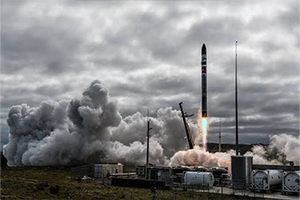
Launch Complex 1, ~39°S, Mahia Peninsula, New Zealand
iQPS Launch 9, an Earth observation satellite with Synthetic aperture radar for Japan-based imaging company iQPS, to launch on "The Sea God Surveys" mission...

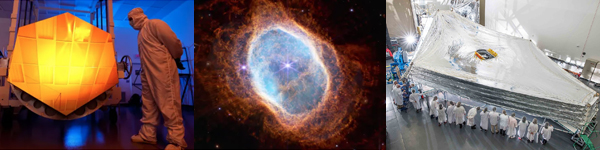 Webb 5th year in space begins this week, now in halo orbit around L2, ~1.5M km from Earth. 18 hexagonal mirror segments, of beryllium coated with ~48 grams of gold, must be kept <223°C to preserve precise alignment. A 5-layer sunshield protects even from sunlight reflected off Earth / Moon. ~6.5 square meter light-collecting area of Webb is about 6x that of Hubble, but with ~1/2 the mass at ~6,000kg. Webb can detect objects ~100x fainter–-much earlier in the history of the universe and has just found the earliest known supernova. Webb infrared-range images reveal galaxy formation, exoplanet atmospheres such as of Trappist-1, and first measurements of chemical / physical properties of a potential moon-forming disk encircling large exoplanet “CT Cha b”. Webb views Mars, Jupiter, Saturn, Uranus, Neptune, Pluto and their satellites, and Kuiper Belt Objects. Webb also views comets, asteroids and minor planets at or beyond the orbit of Mars. Recent findings from Webb include a supermassive black hole moving at 1,000+ km /second, an exoplanet with a helium-and-carbon-dominated atmosphere, and a lemon-shaped exoplanet orbiting a dead star. Partners NASA Space Telescope Science Institute, ESA and CSA-ASC provide the US$10B+ over 20+ years for the Webb. (Image Credits: mirror by Drew Noel at Ball Aerospace, NASA STScl / ESA / CSA-ASC, sunshield at Northrop Grumman
 International Space Station, ~415-km LEO: Expedition 74 seven-member crew led by Mike Fincke, with members Zena Cardman, Chris Williams, Kimiya Yui, Oleg Platonov, Sergey Kud-Sverchkov and Sergei Mikaev, are conducting science research via stem cell studies, robotics experiments, heart health monitoring, physics investigations; other activities include cargo transfers, Earth observations, station upkeep, and spacesuit maintenance for 2026 EVAs.
 Lunar Enterprise News: Intuitive Machines Forges Ahead with US$4.82B Lunar Relay Network │ Astrobotic Clavius-S to Assist Lunar Surface and Cislunar Safety
 Near-Earth Objects Close Approaches – Mon Dec 22: Amor Asteroid 2025 WT3 (0.040 AU); Wed Dec 24: Apollo Asteroid 488789 (2004 XK50) (0.053 AU); Fri Dec 26: Apollo Asteroid 2025 XP3 (0.034 AU); Sun Dec 28: Aten Asteroid 2021 AB1 (0.026 AU)